Apixaban and Obesity: What You Need to Know
When dealing with apixaban obesity, the intersection of the oral anticoagulant apixaban and the clinical condition of obesity. Also known as apixaban in overweight patients, it requires special attention because excess body fat can change how the drug is absorbed, distributed, and cleared. Anticoagulant therapy, the use of medication to prevent clot formation is a cornerstone for conditions like atrial fibrillation and venous thromboembolism, and apixaban is one of the most prescribed agents. However, Weight‑based dosing, adjusting drug amount according to patient body weight is not a simple linear calculation; it involves evaluating renal function, age, and other risk factors. In short, apixaban obesity demands a nuanced approach that balances clot‑prevention benefits with bleeding risk.
Key Clinical Factors to Consider
First, the pharmacokinetic profile of apixaban changes with higher body mass. Studies show that the drug’s volume of distribution expands, potentially lowering plasma concentrations in patients with a BMI over 40 kg/m². This means the usual fixed dose may under‑protect some individuals, prompting clinicians to ask: Should we increase the dose, or rely on clinical monitoring? Second, renal clearance remains a pivotal factor because apixaban is eliminated partly by the kidneys. Obese patients often have heightened glomerular filtration rates, which can accelerate drug elimination. Therefore, the triple check of renal function, body weight, and age becomes essential before deciding on dose adjustments. Third, bleeding risk does not disappear in larger bodies; in fact, tissue injury from minor trauma can be amplified by anticoagulation. Using validated tools like the HAS‑BLED score helps quantify bleeding potential, while the CHA₂DS₂‑VASc score guides stroke prevention needs. Finally, real‑world data suggest that standard apixaban dosing (5 mg twice daily) remains effective for most obese patients, but clinicians should stay alert for outlier cases where dose reduction to 2.5 mg is indicated—typically when at least two of the following are present: age ≥80 years, body weight ≤60 kg, or serum creatinine ≥1.5 mg/dL.
Putting these pieces together creates a clear decision pathway: assess body mass and renal function, apply risk scores, then choose the appropriate dose. If uncertainty remains, measuring anti‑Xa activity can give an objective snapshot of drug exposure, although most U.S. labs do not offer this test routinely. In practice, many providers opt for close clinical follow‑up, checking for signs of bleeding (such as unexplained bruising, hematuria, or melena) and confirming that thrombotic events are not occurring. Education is also vital—patients need to understand why they might feel different after a dose change and when to seek medical help.
Below you’ll find a curated collection of articles that dive deeper into each of these topics. From detailed dosing guides to safety checklists, the posts cover practical steps you can take right now to manage apixaban therapy in the setting of obesity. Explore the resources to sharpen your knowledge and improve patient outcomes.
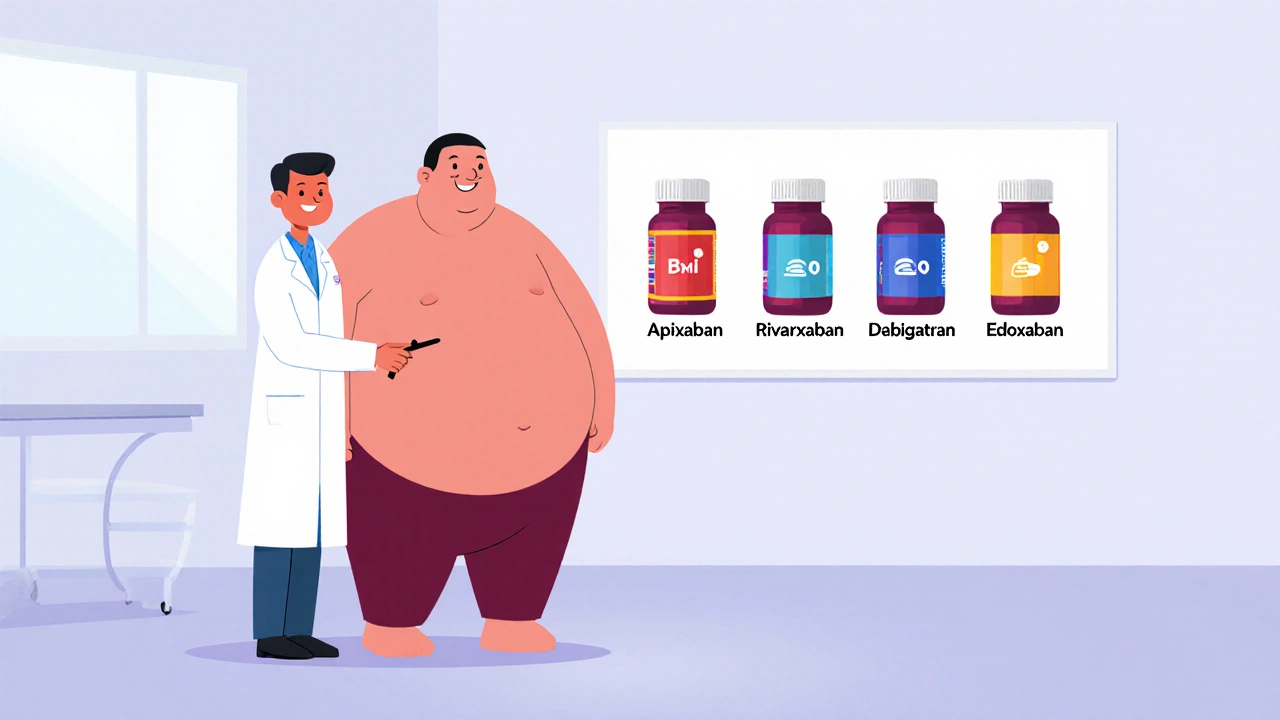
DOAC Dosing for Obesity: Efficacy, Safety & Side Effects
A concise guide on how direct oral anticoagulants work in obese patients, covering dosing, efficacy, safety, and side‑effect considerations for apixaban, rivaroxaban, dabigatran and edoxaban.