Cordarone: What You Need to Know About Amiodarone and Heart Rhythm Management
When your heart skips, races, or flutters in a way that feels wrong, Cordarone, a potent antiarrhythmic drug also known as amiodarone, used to treat life-threatening irregular heartbeats. Also known as amiodarone, it's not a first-line choice — it's the medicine doctors turn to when other treatments fail or when arrhythmias could kill you. This isn’t a casual pill. It stays in your body for weeks, even months, after you stop taking it. That’s why doctors don’t hand it out like aspirin.
Cordarone works by slowing down the electrical signals in your heart, which helps reset abnormal rhythms like ventricular tachycardia or atrial fibrillation. But here’s the catch: it doesn’t just fix your heart. It affects your lungs, liver, thyroid, and even your eyes. People on Cordarone need regular blood tests, chest X-rays, and eye exams. It’s not uncommon for someone to feel fine for months, then suddenly develop a cough that won’t go away — only to find out it’s lung damage from the drug. That’s why it’s reserved for serious cases, not mild palpitations.
It’s also not something you can take with just any other medication. Cordarone interacts with blood thinners, statins, beta-blockers, and even some antibiotics. One wrong combo can send your heart into worse trouble. If you’re on Cordarone, your pharmacist needs to know every pill you take — including over-the-counter ones. And if you ever stop it cold turkey, your heart might go haywire again. Tapering off requires medical supervision.
There are alternatives — drugs like sotalol, dofetilide, or flecainide — but none work the same way or last as long. For some, Cordarone is the only thing that keeps them alive. For others, the risks outweigh the benefits. That’s why the decision to start it is never simple. It’s a balancing act between preventing sudden cardiac death and avoiding slow, silent damage to your organs.
Below, you’ll find real-world guides on how Cordarone fits into the bigger picture of heart health, drug safety, and medication management. You’ll see how it compares to other antiarrhythmic drugs, what the FDA’s black box warnings mean for users, and how side effects like thyroid dysfunction or liver stress are monitored. These aren’t theoretical discussions — they’re based on actual patient experiences and clinical data. Whether you’re on Cordarone, caring for someone who is, or just trying to understand why this drug is so tightly controlled, you’ll find answers here.
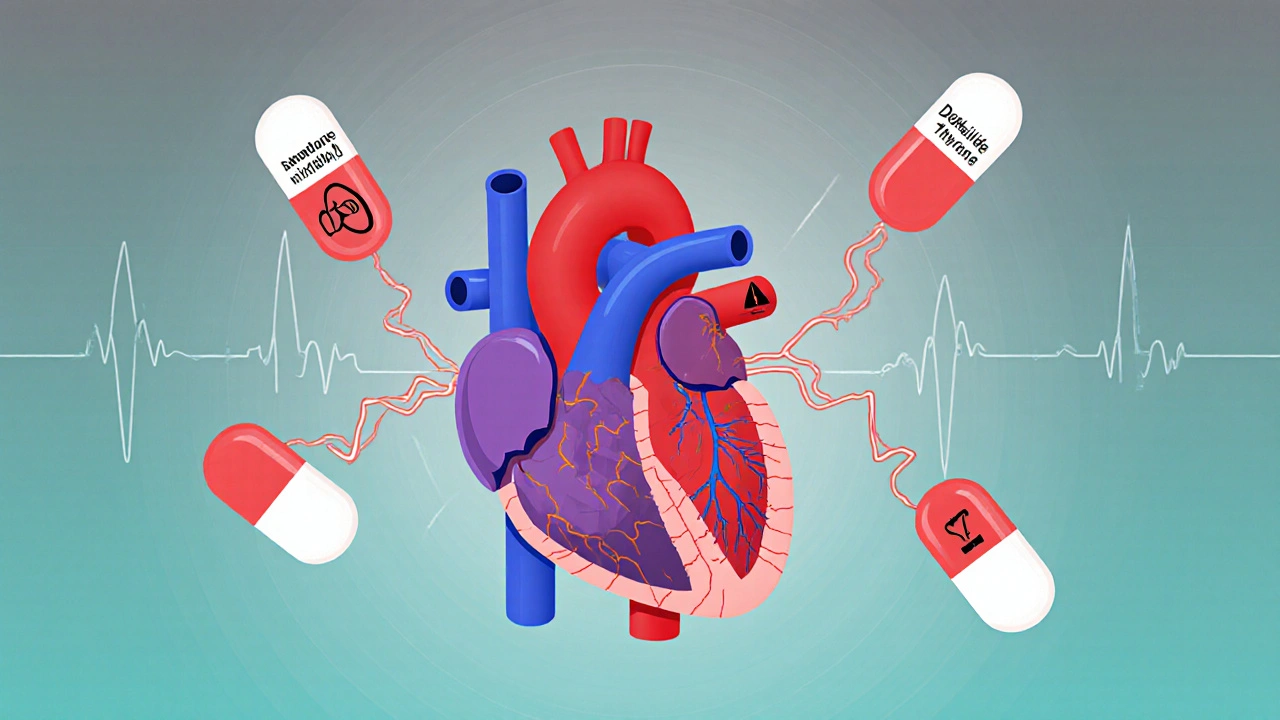
Compare Cordarone (Amiodarone) with Alternatives: What Works Best for Arrhythmias
Cordarone (Amiodarone) is a powerful but risky heart rhythm drug. Learn how it compares to safer alternatives like sotalol, dofetilide, and dronedarone - and when each option makes sense.