H2 Blockers: What They Are, How They Work, and What You Need to Know
When your stomach makes too much acid, it can cause heartburn, ulcers, or GERD. That’s where H2 blockers, a class of medications that reduce stomach acid by blocking histamine receptors in the stomach lining. Also known as histamine H2 receptor antagonists, they work by telling acid-producing cells to slow down—without shutting down digestion entirely. Unlike proton pump inhibitors (PPIs), which block acid at the source, H2 blockers act faster but don’t last as long. They’re often used for short-term relief or when PPIs aren’t the right fit.
Common H2 blockers include famotidine (Pepcid), cimetidine (Tagamet), ranitidine (Zantac), and nizatidine (Axid). But here’s the thing: ranitidine was pulled from the market in 2020 after contamination concerns. That left famotidine as the go-to choice for most people. Cimetidine still works, but it’s got more drug interactions—especially with blood thinners and antidepressants. If you’re on other meds, ask your doctor or pharmacist before starting any H2 blocker. These aren’t harmless supplements. Even though they’re available over the counter, they can still mess with how your body absorbs things like iron, vitamin B12, and certain antibiotics.
People often turn to H2 blockers after trying antacids like Tums or Maalox and realizing they don’t last. H2 blockers give you hours of relief, not minutes. They’re also used in hospitals to prevent stress ulcers in critically ill patients. For some, they’re part of a longer plan to heal a stomach ulcer caused by H. pylori—usually paired with antibiotics. But they’re not a cure-all. If you’re still having symptoms after two weeks of use, it’s not just acid. It could be something else: gallbladder issues, esophagitis, or even a heart problem. Don’t keep popping pills and hoping it goes away.
What you’ll find below is a curated collection of posts that connect directly to H2 blockers and the issues they treat. You’ll read about how stomach acid affects other meds, why some people can’t use certain acid reducers, and how drugs like famotidine interact with kidney function or heart rhythm treatments. There are also deep dives into alternatives, side effects you might not know about, and what to do when your usual H2 blocker doesn’t work anymore. This isn’t just a list of articles—it’s a practical guide built from real-world concerns people have when managing acid-related conditions. Whether you’re switching from Zantac, worried about long-term use, or just trying to understand why your doctor picked one drug over another, the posts here give you the facts without the fluff.
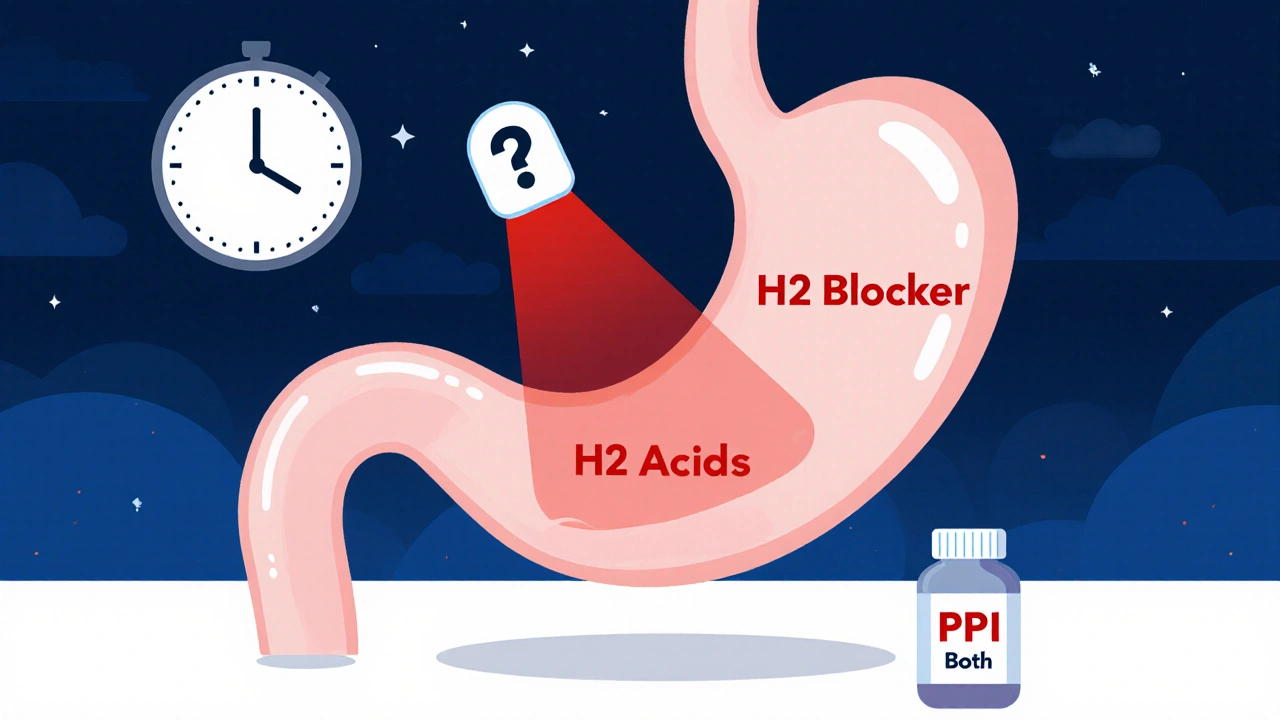
H2 Blockers and PPIs: When Combining Acid Reducers Does More Harm Than Good
Combining H2 blockers and PPIs is common but often unnecessary. Learn why this practice increases risks without improving outcomes-and what to do instead.