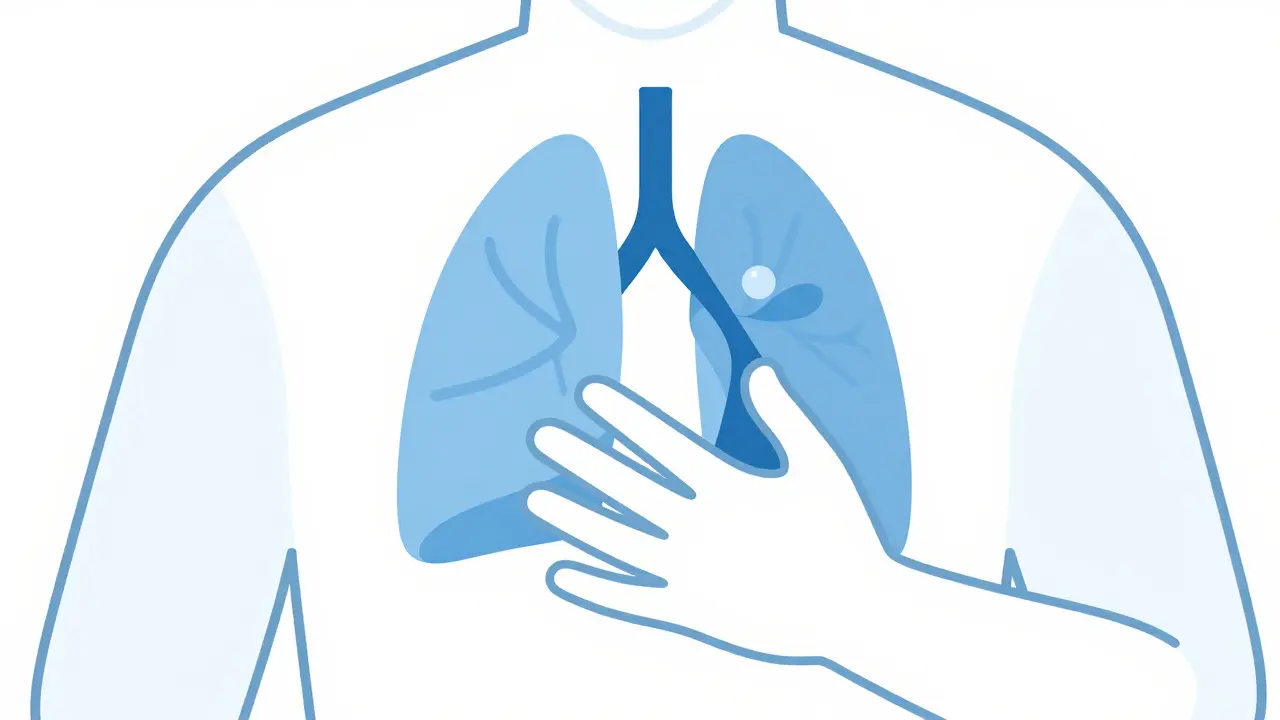
Pneumothorax is a medical condition where air leaks into the space between the lung and chest wall. This trapped air puts pressure on the lung, causing it to collapse. It’s a true emergency that can be fatal if untreated. First described by René Laennec in 1819, pneumothorax affects 7.4 to 18 per 100,000 people annually. Recognizing symptoms quickly and seeking immediate care is crucial.
Recognizing Pneumothorax Symptoms
Symptoms appear suddenly and worsen rapidly. Here’s what to watch for:
| Symptom | Prevalence |
|---|---|
| Sharp chest pain | 92% of cases |
| Shortness of breath | 85-92% of cases |
| Absent breath sounds | 98.7% of confirmed cases |
| High heart rate | 89% in tension pneumothorax |
| Low blood pressure | Common in tension cases |
Sharp chest pain is often described as stabbing and worsens with breathing or coughing. It frequently radiates to the shoulder. Shortness of breath varies by severity-patients with over 30% lung collapse usually experience breathlessness even at rest. In tension pneumothorax, symptoms escalate quickly: heart rate may exceed 134 beats per minute, blood pressure drops below 90 mmHg, and oxygen saturation falls below 90%. Tracheal deviation (windpipe shifting) is a late sign, present in only 32% of cases.
Emergency Care Steps for Pneumothorax
Time is critical. Follow these steps based on symptoms:
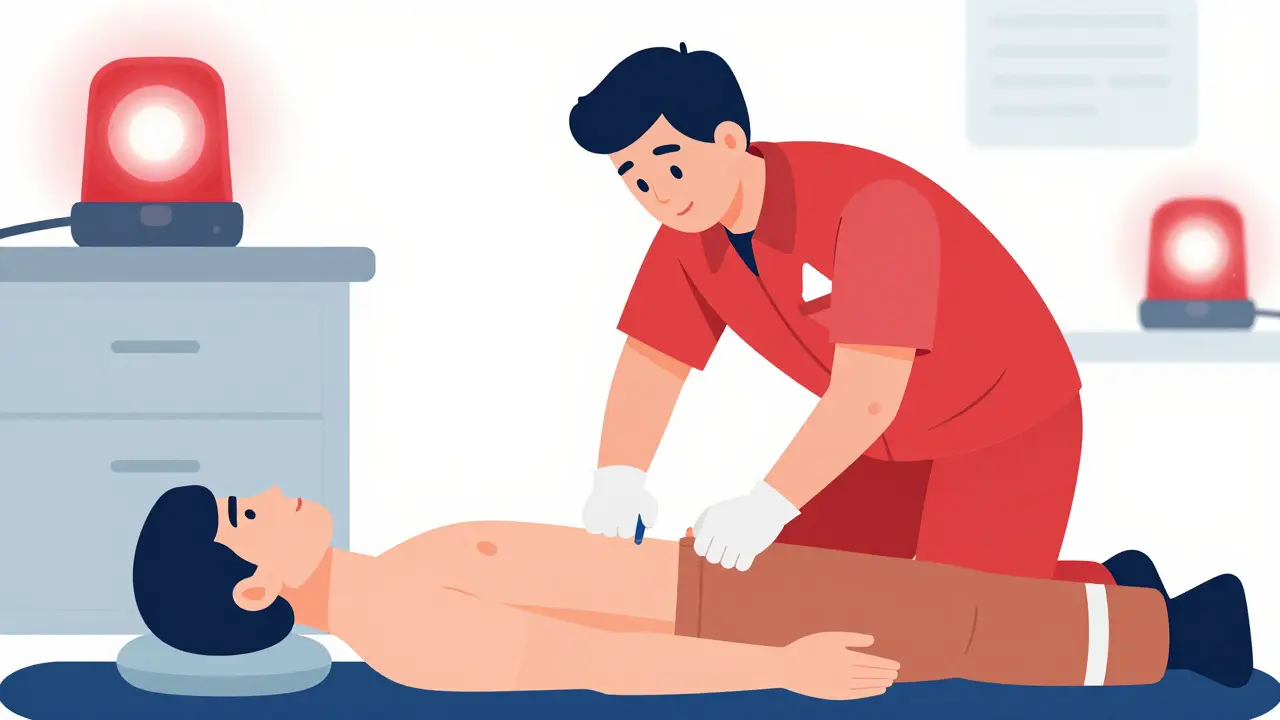
- Check for tension pneumothorax: Look for low blood pressure, high heart rate (>134 bpm), blue lips, or trouble breathing. If present, needle decompression must happen within 2 minutes. Do not wait for an X-ray.
- Call emergency services: Even if symptoms seem mild, pneumothorax can worsen rapidly. Get professional help immediately.
- For stable patients: Doctors will insert a chest tube within 30 minutes if oxygen saturation is below 92% or breathing is labored. Oxygen therapy may help speed recovery.
The American Heart Association emphasizes that unstable patients need immediate intervention without imaging confirmation. Waiting for test results can be fatal.
How Doctors Diagnose Pneumothorax
Accurate diagnosis is key to proper treatment. Here’s how it’s done:
Chest X-ray is the standard first test. It detects pneumothorax in 85-94% of cases but misses up to 30% in trauma patients lying down.
Point-of-care ultrasound is faster in emergencies. Experienced doctors using the 'lung point' sign achieve 94% accuracy in seconds.
CT scan is the most accurate but is used only when X-rays are unclear. It can detect as little as 50mL of air but involves radiation exposure.
Arterial blood gas tests often show low oxygen levels (PaO2 <80 mmHg) and respiratory alkalosis. These help confirm the severity of the condition.
Treatment Options for Pneumothorax
Treatment depends on the type and severity of pneumothorax:
- Observation and oxygen therapy: For small pneumothoraces (<30% collapse), doctors may monitor while giving high-flow oxygen. This resolves 82% of cases within 14 days.
- Needle aspiration: Used for larger primary pneumothoraces. Success rate is 65% but may require repeat procedures.
- Chest tube insertion: The most common treatment for moderate to severe cases. It has 92% success but carries 15-30% complication risk like infection.
- Surgery (VATS): For recurrent cases, video-assisted thoracoscopic surgery reduces recurrence to 3-5%. It requires 2-4 days hospital stay and costs about $18,500 in the U.S.
Patients with underlying lung disease (secondary pneumothorax) have higher risks. Their 1-year mortality rate is 16.2% compared to 0.16% for primary cases. This makes timely treatment even more critical.

Preventing Recurrence and Aftercare
Preventing future episodes is vital. Key steps include:
- Quit smoking: This reduces recurrence risk by 77% within a year. Smoking is the strongest risk factor, with a 22.1x higher risk for heavy smokers.
- Avoid air travel: Wait 2-3 weeks after full recovery before flying. FAA guidelines prohibit air travel earlier due to pressure changes.
- Scuba diving: Never dive without surgery. The recurrence rate during dives is 12.3%, which can be fatal.
- Follow-up X-rays: Get a chest X-ray 4-6 weeks after treatment to confirm healing. Delayed complications occur in 8% of patients without monitoring.
Structured discharge education reduces return visits by 32%. Patients who know warning signs-like sudden chest pain, blue lips, or inability to speak-know to call emergency services immediately.
Frequently Asked Questions
Can pneumothorax happen again?
Yes. Primary spontaneous pneumothorax has a 15-40% recurrence rate within 2 years. Smoking increases this risk significantly. After two episodes, the recurrence rate jumps to 62%, making surgery a common recommendation.
What causes pneumothorax?
Causes include trauma (like car accidents), underlying lung diseases (COPD, cystic fibrosis), or spontaneous leaks in healthy people. Risk factors are tall stature, male gender, and smoking. About 80% of primary cases occur in tall, thin young men.
How long does recovery take?
Small pneumothoraces may heal in a few days with oxygen therapy. Chest tube cases usually take 1-2 weeks. Surgery recovery involves a 2-4 day hospital stay and full healing in 4-6 weeks. Follow-up care is essential to prevent complications.
Is surgery necessary for a collapsed lung?
Surgery (like VATS) is typically reserved for recurrent cases or when other treatments fail. It has a 95% success rate at one year and reduces recurrence to 3-5%. For first-time cases, doctors usually try less invasive options first.
What should I do if I suspect pneumothorax?
Call emergency services immediately. Do not wait. Symptoms like sharp chest pain, trouble breathing, or blue lips require urgent care. If someone has tension pneumothorax signs (low blood pressure, high heart rate), immediate needle decompression is critical-waiting for tests can be fatal.







lance black February 4, 2026
Call 911 immediately if you have chest pain and shortness of breath.
Brendan Ferguson February 6, 2026
As a physician, I can confirm the symptoms listed. If you experience sharp chest pain with shortness of breath, seek immediate help. Tension pneumothorax requires urgent intervention. Don't wait for X-rays if unstable.
Georgeana Chantie February 6, 2026
Not always. Sometimes it's just a pulled muscle. Overreacting causes more harm. 😠
Lisa Scott February 7, 2026
Big Pharma created pneumothorax to sell chest tubes. X-rays are useless. Only ultrasound works. The stats are fake.
Rene Krikhaar February 7, 2026
As a nurse with over 10 years of experience in emergency care, I've encountered numerous cases of pneumothorax.
Early intervention is absolutely critical; every minute counts.
When patients present with sharp chest pain and shortness of breath, especially if it's worsening, immediate medical attention is required.
Oxygen therapy can help stabilize the patient, but in many cases, a chest tube insertion is necessary to relieve the pressure.
I've seen patients recover quickly when treated promptly, but delays can lead to severe complications.
It's important to recognize that even mild symptoms shouldn't be ignored.
Tension pneumothorax is particularly dangerous and requires urgent action.
Don't wait for an X-ray if the patient is unstable; needle decompression may be needed right away.
In my experience, patients who get care within 30 minutes have much better outcomes.
Always trust your instincts if something feels wrong.
Call 911 immediately.
It's better to be safe than sorry.
I've had patients who thought it was just a pulled muscle and it turned out to be pneumothorax.
Don't take chances with your health.
Carl Crista February 9, 2026
Pneumothorax is caused by 5G. The stats are fake. Doctors lie. Trust me I know
Joyce cuypers February 9, 2026
Im an EMT and this info is correct. Always call for help. Even if its just a little pain. Better safe than sorry
Elliot Alejo February 10, 2026
The chest tube insertion is critical. Oxygen therapy helps but the tube is necessary. Always follow medical protocol.
Cullen Bausman February 11, 2026
In the United States we have the best protocols for pneumothorax. Other countries don't follow these standards. Always trust American medicine.
Diana Phe February 12, 2026
This is all a government conspiracy. The real cause is secret weapons. I've had pneumothorax and it's not what they say. Trust me
Cole Streeper February 13, 2026
Exactly! They're hiding the truth. The real cause is alien technology. I've seen it with my own eyes
jan civil February 15, 2026
Pneumothorax affects all ages. Children can have it too. Always seek help.