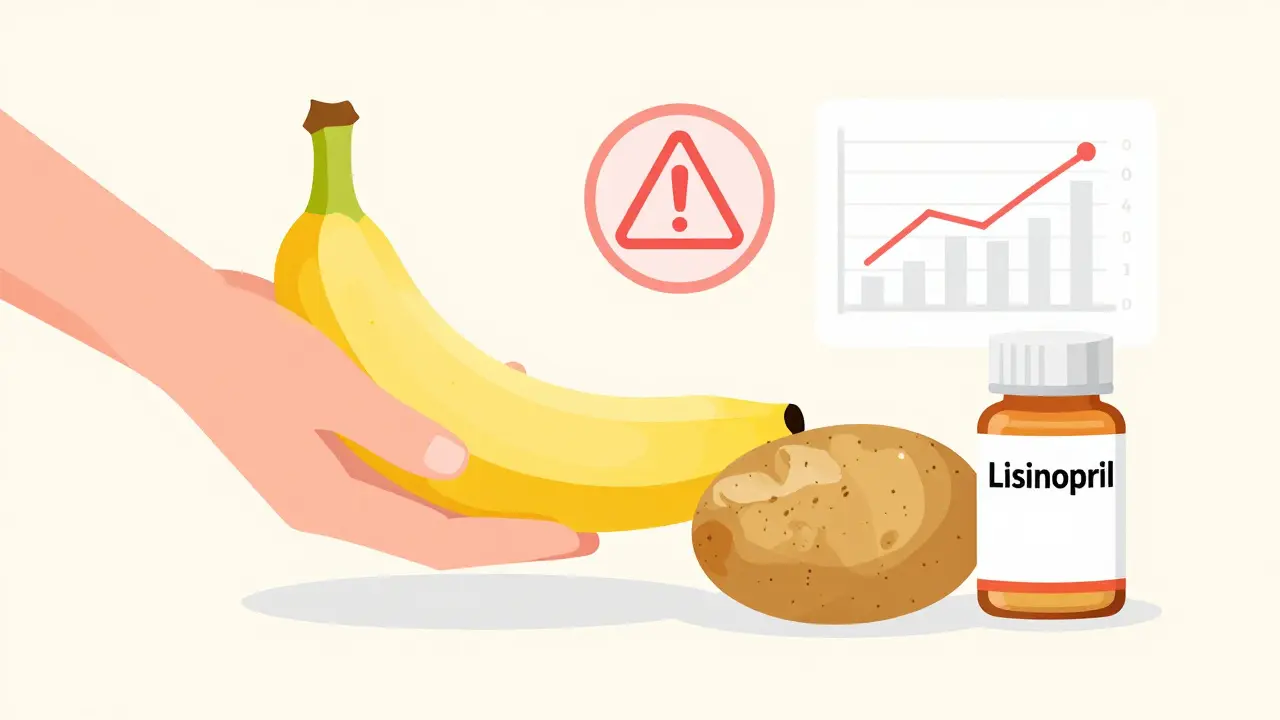
When you’re taking an ACE inhibitor like lisinopril or enalapril to manage high blood pressure or protect your kidneys, you might not think twice about eating a banana or a baked potato. But here’s the thing: those foods could be quietly raising your potassium levels - and that’s not always safe.
Why ACE Inhibitors and Potassium Don’t Always Mix
ACE inhibitors work by blocking a chemical in your body called angiotensin-converting enzyme. This helps relax your blood vessels and lowers your blood pressure. But there’s a side effect you won’t always hear about: they reduce how much potassium your kidneys flush out. Normally, your body gets rid of extra potassium through urine. When you’re on an ACE inhibitor, that system slows down. The result? Potassium builds up in your blood.That buildup is called hyperkalemia. It’s not just a lab number - it can be dangerous. Levels above 5.0 mmol/L are considered high. Above 6.0 mmol/L? That’s a medical emergency. Symptoms can be subtle at first: muscle weakness, nausea, an irregular heartbeat, or just feeling unusually tired. In worst-case scenarios, it can cause your heart to stop.
It’s not just about how much potassium you eat - it’s about how your body handles it. People with kidney problems, especially those with stage 3 or 4 chronic kidney disease, are at much higher risk. One study found that while only 1.2% of people with healthy kidneys develop high potassium on ACE inhibitors, that number jumps to 12.7% in those with moderate kidney damage. Diabetics are also at greater risk - about 3 times higher than non-diabetics on the same medication.
Which Foods Are the Biggest Concern?
You don’t need to give up fruits and vegetables. But some foods pack a serious potassium punch. Here’s what to watch out for:- Bananas: One medium banana has about 326 mg of potassium.
- Avocados: Half an avocado? That’s 507 mg.
- White and sweet potatoes: A medium baked potato has 379 mg - and that’s before butter or sour cream.
- Tomatoes and tomato products: A cup of tomato sauce has nearly 900 mg.
- Dried fruits: Apricots, raisins, prunes - a small handful can hit 500 mg or more.
- Coconut water: One serving (about 11 oz) contains 1,500 mg - more than four bananas.
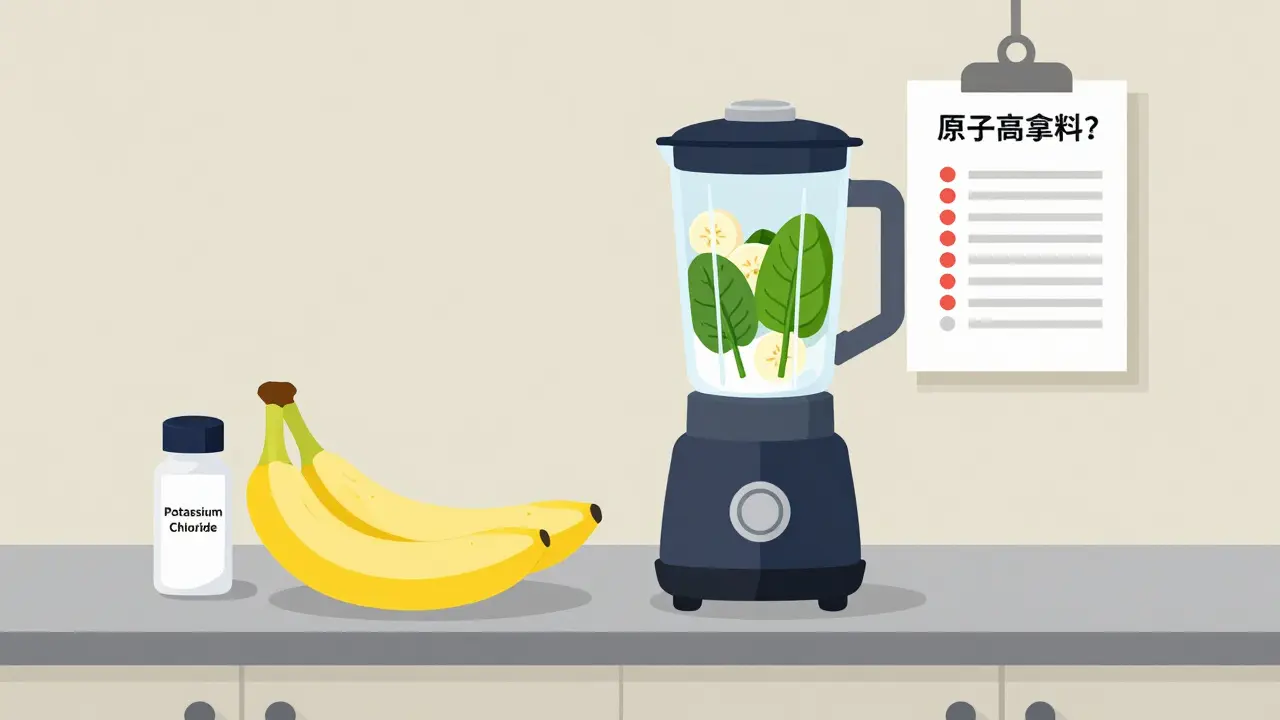
- Salt substitutes: Products like Nu-Salt or NoSalt are loaded with potassium chloride. Just 1.25 grams has 525 mg of potassium.
It’s not just about eating one of these foods. It’s about combining them. A smoothie with banana, spinach, and coconut water? That’s easily over 2,000 mg in one meal. For someone on an ACE inhibitor, that kind of spike can push potassium levels into the danger zone - especially if they’re older or have undiagnosed kidney issues.
Not Everyone Needs to Avoid These Foods
Here’s where things get confusing. Some studies say you don’t need to cut back on potassium at all - if your kidneys are working fine. A 2016 study in the Journal of the American College of Cardiology found that people with normal kidney function who ate 3,400-4,700 mg of potassium daily didn’t develop dangerous levels, even while taking ACE inhibitors or ARBs.So what’s the real rule? It depends on you.
If you’re young, healthy, and your kidneys are strong, moderate amounts of high-potassium foods are likely fine. But if you’re over 65, have diabetes, or your kidney function is even slightly reduced, you need to be more careful. The American Heart Association suggests keeping potassium intake under 2,600 mg per day for women and under 3,400 mg for men - but that’s a general guideline. Your doctor might recommend less.
The key is not blanket restriction - it’s smart awareness. You don’t have to eliminate these foods. You just need to know how much you’re eating and how your body responds.
Other Medications Can Make It Worse
Potassium isn’t the only thing that can spike your levels. Many common drugs make the problem worse when taken with ACE inhibitors.- Potassium-sparing diuretics: Like spironolactone or eplerenone. Combining these with ACE inhibitors can raise your risk of hyperkalemia by 300-400%.
- NSAIDs: Ibuprofen, naproxen - even over-the-counter ones - can reduce kidney function and trap potassium.
- Trimethoprim: An antibiotic sometimes used for UTIs. It acts like a potassium-sparing diuretic.
If you’re on any of these, your doctor should be checking your potassium levels more often. Many patients don’t realize their meds are working together to create a hidden risk.
Monitoring Is Non-Negotiable
You can’t guess your potassium levels. You need a blood test.Here’s what most doctors recommend:
- Test potassium before you start an ACE inhibitor.
- Test again 1-2 weeks after starting or changing the dose.
- For people with normal kidney function: every 3-6 months.
- For people with diabetes or kidney disease: every month, or even more often if levels are rising.
Some patients think, “I feel fine, so I don’t need a test.” But hyperkalemia often has no symptoms until it’s too late. A 2023 study showed that nearly half of patients hospitalized for high potassium had no warning signs before their levels became dangerous.
Telehealth and home testing are helping. Some clinics now offer remote monitoring - you get a simple blood test done at a local lab, and your results are reviewed by your provider within 24 hours. That’s cut hospitalizations by nearly 30% in recent trials.
Timing Matters - When You Eat Matters
It’s not just what you eat - it’s when. Research shows that if you eat a high-potassium meal two hours before or after taking your ACE inhibitor, your blood potassium spike is about 25% lower than if you eat it at the same time.That’s a simple trick: take your pill in the morning, have your banana at lunch. Or take your pill at night, eat your potatoes at breakfast. It doesn’t eliminate the risk, but it smooths out the peak.
What About Salt Substitutes?
This one catches people off guard. Many people switch to “low-sodium” salt substitutes thinking they’re being healthier. But most of them replace sodium chloride with potassium chloride. One tiny teaspoon can give you nearly 1,000 mg of potassium.If you’re on an ACE inhibitor, these aren’t a safe alternative. They’re a hidden danger. Talk to your doctor or dietitian before using any salt substitute.
What’s New? Personalized Risk Is the Future
Science is moving past one-size-fits-all advice. In 2023, researchers found that a genetic variation in the WNK1 gene makes some people far more likely to develop high potassium on ACE inhibitors - up to 5 times more likely.That means in the future, your doctor might test your genes to tailor your diet and monitoring plan. It’s not routine yet - but it’s coming.
There’s also a new medication called patiromer (brand name Veltassa). It’s a potassium binder - it grabs extra potassium in your gut and removes it through stool. It’s approved for people who need to stay on ACE inhibitors but can’t tolerate high potassium. In trials, 89% of patients who used it were able to continue their blood pressure meds without stopping.
Bottom Line: Don’t Panic - Be Informed
You don’t need to live on plain rice and boiled chicken. But you do need to know your risk.If you’re on an ACE inhibitor:
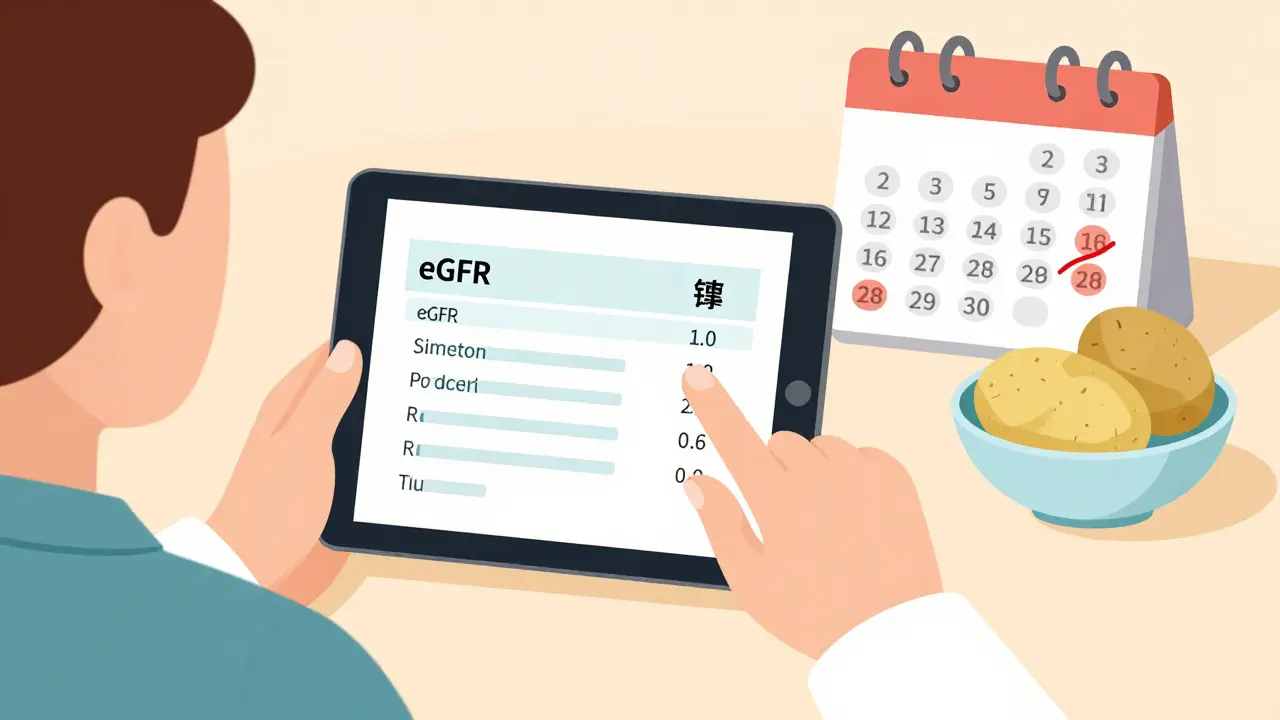
- Know your kidney function - ask your doctor for your eGFR number.
- Get your potassium checked regularly - don’t wait for symptoms.
- Watch how much potassium you get from food, especially if you’re older or diabetic.
- Avoid salt substitutes with potassium chloride.
- Space out high-potassium meals from your medication time.
- Tell your doctor about every supplement, herb, or OTC drug you take.
High potassium isn’t a myth. But it’s also not inevitable. With the right knowledge and monitoring, you can safely enjoy a healthy diet while keeping your blood pressure under control.
Can I still eat bananas if I’m on lisinopril?
Yes - but only if your kidneys are healthy and you’re not eating multiple high-potassium foods in one day. One banana a day is usually fine for someone with normal kidney function. But if you have diabetes, kidney disease, or your potassium levels have ever been high, you should limit bananas and other high-potassium fruits. Always check your levels with your doctor before making big dietary changes.
What are the early signs of high potassium?
Early signs are often mild and easy to miss: muscle weakness, fatigue, nausea, or a strange tingling sensation. You might feel like you’re just tired or have a stomach bug. But if you start having heart palpitations, chest discomfort, or sudden weakness in your arms or legs, that’s a red flag. Don’t wait - get your potassium checked immediately.
Do all ACE inhibitors raise potassium the same way?
No. While all ACE inhibitors can raise potassium, some do it more than others. Studies show enalapril has a slightly higher risk than lisinopril - about 15% higher at the same dose. That’s because of how the body absorbs and processes each drug. If you’ve had high potassium before, your doctor might switch you to a different ACE inhibitor or consider an ARB like losartan, which carries a lower risk.
Is it safe to use salt substitutes on ACE inhibitors?
No. Most salt substitutes contain potassium chloride - a concentrated form of potassium. One teaspoon can have over 1,000 mg. That’s more than three bananas. For someone on an ACE inhibitor, especially with kidney issues, this can cause a dangerous spike in potassium. Stick to regular salt in moderation, or ask your doctor about sodium-free alternatives that don’t contain potassium.
How often should I get my potassium checked?
If you have normal kidney function and your first test was normal, check every 3-6 months. If you have diabetes, chronic kidney disease, or are taking other medications that raise potassium (like spironolactone), get tested every month - or as your doctor advises. Many people skip these tests because they feel fine. But high potassium often has no symptoms until it’s too late.
Can I stop eating potassium-rich foods altogether?
Not recommended. Potassium-rich foods like vegetables, legumes, and fruits are linked to lower blood pressure and reduced stroke risk. Completely avoiding them can hurt your heart health. The goal isn’t elimination - it’s balance. Work with a dietitian to find safe portions and alternatives. For example, leaching potatoes by soaking them in water reduces potassium by up to 50%. Small changes make a big difference.




Juan Reibelo January 23, 2026
Just got my labs back-potassium at 5.4. Scared the hell out of me. I was eating two bananas a day, avocado toast for lunch, and that coconut water ‘health hack’ everyone raves about. Turns out, I’ve had stage 2 CKD for two years and didn’t even know it. My doc said if I’d kept going, I could’ve ended up in the ER with cardiac arrhythmia. Now I track everything. No more ‘healthy’ smoothies. Just plain oats and boiled chicken. Boring, but alive.
Don Foster January 23, 2026
Everyone’s panicking over potassium like it’s radioactive but nobody talks about how the real villain is the medical-industrial complex pushing these drugs on people who don’t need them. ACE inhibitors were never meant for mild hypertension. They’re for post-MI patients or diabetics with proteinuria. You’re not a statistic. Stop letting Big Pharma dictate your diet. Eat the banana. Your kidneys aren’t broken just because you’re 55.
siva lingam January 24, 2026
So let me get this straight. I can’t eat a potato because some guy in a lab coat says my kidneys might one day fail? Cool. I’ll just eat plastic. And drink tap water. And call it a day. Thanks for the fear porn, doc.
Shelby Marcel January 26, 2026
wait so if i eat a banana and then take my lisinopril 2 hrs later its safer?? i thought the timing thing was a myth?? also is it ok to eat sweet potato fries??
blackbelt security January 27, 2026
Small wins matter. I used to eat 3 avocados a week. Now I do one, and I space it from my med. I also got a $5 kitchen scale. Weighing my tomatoes? Game changer. You don’t have to be perfect. Just consistent. Your heart will thank you. Keep going.
Patrick Gornik January 28, 2026
Here’s the ontological paradox: we’re told to consume potassium-rich foods for cardiovascular health, yet the very pharmacological intervention designed to protect that same cardiovascular system renders that consumption potentially lethal. The system is self-contradictory-it prescribes life while simultaneously pathologizing its sustenance. We are not patients. We are biochemical paradoxes trapped in a regulatory matrix of conflicting protocols. The WNK1 gene isn’t just a marker-it’s a mirror. And it’s asking: who gave them the authority to dictate your diet based on a single biomarker? The answer? Nobody. And that’s the real danger.
Luke Davidson January 29, 2026
Man I used to think potassium was just for athletes and smoothie bowls. Then my mom got hospitalized after a routine check-up. She was on lisinopril, ate prunes every morning, and used that NoSalt stuff like it was magic. She didn’t feel sick. Nothing. Just tired. Turned out her potassium was 6.8. She’s fine now but she doesn’t touch salt substitutes anymore. If you’re on these meds, just ask your doc for a quick blood test. It takes 5 minutes. Could save your life. Seriously.
Shanta Blank January 29, 2026
So let me get this straight. I’m supposed to avoid bananas, potatoes, tomatoes, coconut water, AND salt substitutes? What am I supposed to eat? Boiled cardboard and tap water? This is why people stop taking their meds. You turn healthy food into a minefield and then act surprised when they stop listening. You’re not helping. You’re just scaring people into compliance. And for what? A 12.7% risk? That’s not a warning-it’s a guilt trip wrapped in a lab report.