
By the time you hit 65, there’s a better than 50% chance you’ll develop cataracts. It’s not a disease you catch-it’s a natural part of aging. The clear lens inside your eye slowly turns cloudy, like a fogged-up window. Colors fade. Glare from headlights or sunlight becomes blinding. Reading becomes a chore. You might not even realize it’s happening until one day, you look at your grandchild’s face and realize you haven’t seen their eyes clearly in years.
What Exactly Happens in Your Eye?
Your eye’s lens is made of protein and water. Over time, those proteins start to clump together. It’s like boiling an egg-the clear liquid turns white and opaque. This clouding blocks light from reaching the retina, the part of your eye that sends images to your brain. The result? Blurry, dim, or yellowed vision.
It doesn’t happen overnight. Most people notice changes gradually-over months or even years. You might start squinting more, needing brighter lights to read, or finding your old glasses don’t help anymore. It’s not painful. It doesn’t cause redness or swelling. That’s why many wait too long to get checked.
According to the National Eye Institute, about 24.4 million Americans over 40 have cataracts. That number will keep rising as the population ages. In Canada, the trend is the same. By 80, nearly everyone has some degree of lens clouding.
How Cataract Surgery Changed Everything
For centuries, the only "treatment" was couching-pushing the cloudy lens out of the way with a needle. It didn’t restore vision; it just made it less blurry. Then, in 1949, British surgeon Sir Harold Ridley did something revolutionary: he implanted the first artificial lens inside a patient’s eye. That lens didn’t just replace the clouded one-it restored focus.
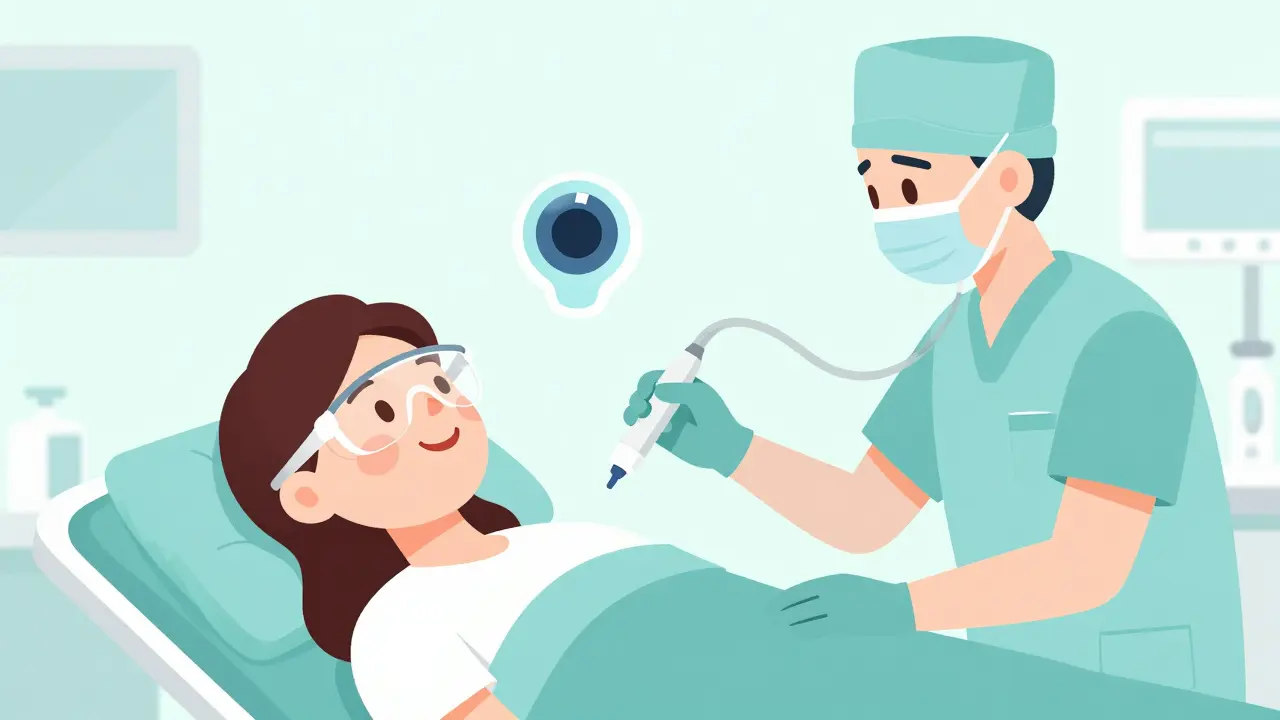
Today, cataract surgery is the most common surgery in the United States. Around 3.8 million procedures are done every year. In Canada, it’s just as routine. Most are done in outpatient clinics under local anesthesia. You’re awake, but you won’t feel anything. The whole thing takes less than 20 minutes.
The standard method now is called phacoemulsification. A tiny probe uses ultrasound waves to break up the cloudy lens into small pieces. Those pieces are suctioned out through a cut smaller than 3mm-so small, it often doesn’t need stitches. Then, a foldable artificial lens, called an intraocular lens (IOL), is slipped in. It unfolds and settles into place, right where your natural lens used to be.
What Kind of Lens Will You Get?
Not all lenses are the same. The most common type is a monofocal IOL. It gives you sharp distance vision-like watching TV or recognizing faces across the room. But you’ll still need reading glasses for close work. That’s fine for many people, and it’s covered by most insurance plans.
If you want to cut down on glasses, there are premium options. Toric IOLs correct astigmatism. Multifocal IOLs let you see at multiple distances-near, intermediate, and far. Trifocal lenses, like Alcon’s PanOptix, give you 81% freedom from glasses, according to clinical trials. Johnson & Johnson’s Tecnis Symfony offers extended focus, with 89% of patients achieving 20/25 vision or better at all distances.
These premium lenses cost between $2,500 and $4,500 per eye out-of-pocket. Insurance usually only covers the basic monofocal version. The rest is an upgrade, like choosing leather seats in a car.
What to Expect After Surgery
You’ll walk out of the clinic with a protective shield over your eye. Things will look blurry at first. That’s normal. Your brain needs time to adjust to the new lens. Some people see better within a day. Others take a week or two.
It’s common to feel scratchy, itchy, or like there’s something in your eye. Mild discomfort lasts a couple of days. You won’t be able to drive until your doctor clears you-usually within 24 to 48 hours, depending on how your vision recovers.
You’ll get eye drops: antibiotics to prevent infection, and steroids to reduce swelling. You’ll use them four times a day for the first week, then taper off over the next few weeks. Missing doses increases your risk of complications.
For the first week, you can’t get water in your eye. No swimming, no hot tubs, no washing your hair with your head tilted back. You’ll sleep with that shield on for the first few nights. Heavy lifting, bending over, and intense exercise? Avoid those for at least two weeks.
Recovery Timeline: Realistic Expectations
Some clinics say recovery takes four weeks. Others say six to eight. The truth? It depends on you.
Most people notice a big improvement in 1 to 3 days. Colors look brighter-like you’ve turned up the contrast on your TV. Night driving gets easier. The glare from streetlights fades.
But full recovery? That takes time. Your eye needs to heal completely. The capsule holding the new lens needs to settle. Your brain needs to relearn how to process visual input. For some, that takes up to three months.
And here’s something most people don’t tell you: your depth perception might feel off. One Reddit user described it as "my brain had to relearn how far things were." That’s because your eyes are now seeing with a new lens, and your brain has to recalibrate. Simple exercises-like focusing on a pen held close, then shifting to a distant object-help your eyes adapt faster.
When Vision Doesn’t Fully Return
Success rates are high-95% of patients report major vision improvement. But it’s not guaranteed.
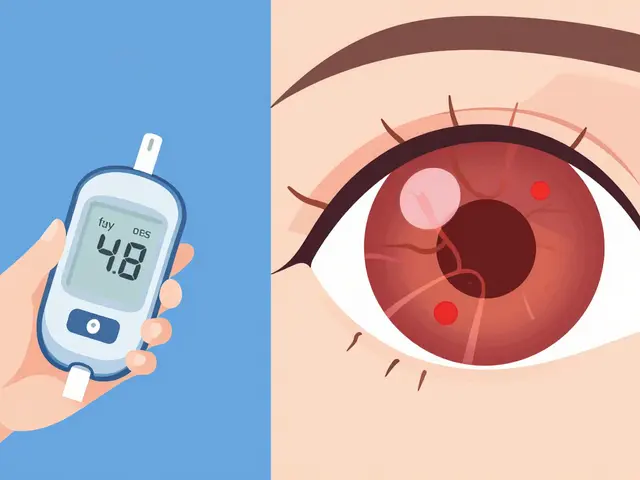
If you’ve had long-standing cataracts, or if you have other eye conditions like glaucoma, macular degeneration, or diabetes, your results may be limited. Surgery can remove the cloud, but it can’t fix damage already done to the retina or optic nerve.
Also, some people still need glasses after surgery-even with premium lenses. That’s not a failure. It’s just how vision works. Monofocal lenses correct distance. You’ll still need readers for your phone or book. Multifocal lenses reduce dependence on glasses, but not always completely.
What Can Go Wrong?
Complications are rare-only 2% to 5% of cases. But they happen.
The most common issue is posterior capsule opacification (PCO). About 20% to 30% of patients develop a secondary clouding behind the new lens. It’s not a cataract returning-it’s just cells growing on the membrane holding the lens. It’s easily fixed with a quick, painless laser procedure called YAG capsulotomy. No incisions. No recovery time. You’re back to normal in a day.
Other risks include infection (extremely rare), swelling, retinal detachment, or lens dislocation. These are serious but happen in less than 1% of cases. That’s why choosing an experienced surgeon matters.
Visual Rehabilitation: More Than Just Healing
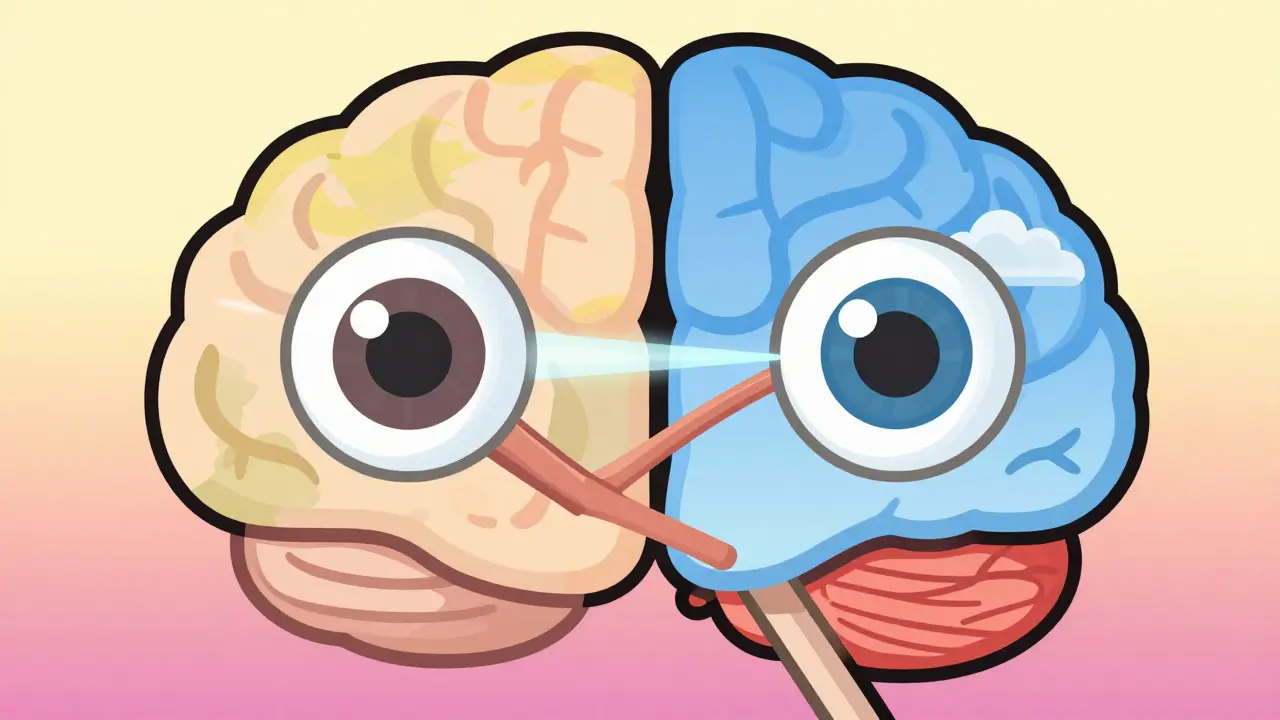
After surgery, your eyes are physically healed. But your brain? It’s still learning.
That’s where vision therapy comes in. It’s not a gimmick. It’s a set of targeted exercises designed to help your eyes and brain work together again. If you’re struggling with eye strain, trouble focusing, or feeling mentally tired after reading, vision therapy can help.
Therapists use tools like prisms, balance boards, and computer-based programs to retrain your visual system. It’s especially helpful if you’ve had cataracts for a long time or if you’re using a multifocal lens and your brain is overwhelmed by the different focal zones.
Some clinics start these exercises as early as 24 hours after surgery. Simple tasks-tracking a moving object, shifting focus between near and far-can make a real difference in how quickly you adapt.
What’s Next for Cataract Surgery?
Technology keeps improving. New IOLs are being designed to mimic the natural lens’s ability to change focus-called accommodating lenses. These are in late-stage trials and could be available soon.
Zeiss’s AT LISA tri 839MP IOL, approved in early 2023, offers better intermediate vision for computer work. That’s a big deal for people who spend hours on screens.
The global market for cataract devices is expected to hit $6.32 billion by 2027. That’s not just about profit-it’s about making better lenses accessible to more people.
One thing won’t change: cataract surgery remains one of the safest, most effective procedures in all of medicine. A 2022 meta-analysis of over 1.2 million surgeries found a 99.5% safety rate. That’s better than most elective surgeries.
When to See a Doctor
If you’re having trouble with glare, fading colors, blurry vision, or needing brighter lights to read-it’s time for an eye exam. You don’t need to wait until you can’t see at all. Early detection means you can plan your surgery on your timeline, not because you’re struggling to drive or recognize faces.
There’s no pill, no eye drop, no supplement that can reverse cataracts. Surgery is the only cure. And it works.
Don’t let fear of surgery keep you from seeing clearly again. This isn’t risky. It’s life-changing. People describe it as "seeing in HD for the first time in decades." That’s not hyperbole. It’s what happens when you give your eyes back their clarity.
Can cataracts come back after surgery?
No, cataracts cannot return because the natural lens is removed. But in about 20% to 30% of cases, the membrane holding the new lens can become cloudy over time. This is called posterior capsule opacification (PCO). It’s easily fixed with a quick, painless laser treatment called YAG capsulotomy, which takes less than five minutes and requires no recovery time.
Will I still need glasses after cataract surgery?
It depends on the type of lens you choose. With a standard monofocal IOL, you’ll likely need glasses for reading and close work. Premium lenses like multifocal or toric IOLs reduce or eliminate the need for glasses for most daily tasks. But even with advanced lenses, some people still need reading glasses for fine print or extended screen time.
How long does recovery take after cataract surgery?
Most people notice better vision within 1 to 3 days. Full healing takes 4 to 8 weeks. During this time, you’ll use eye drops, avoid heavy lifting, and keep water out of your eye. Your brain may take up to 3 months to fully adjust to the new lens, especially if you’ve had cataracts for a long time or if you’re using a multifocal lens.
Is cataract surgery covered by insurance?
Basic cataract surgery with a standard monofocal IOL is typically covered by Medicare and most private insurance plans. Premium lenses-like multifocal, toric, or trifocal IOLs-are considered upgrades and are not covered. You’ll pay out-of-pocket for those, usually between $2,500 and $4,500 per eye.
Can cataract surgery fix other vision problems?
Cataract surgery removes the cloudy lens and replaces it with a clear one, but it doesn’t fix other eye conditions. If you have glaucoma, macular degeneration, or diabetic retinopathy, your vision may still be limited after surgery. The surgery improves clarity, but not the underlying damage to the retina or optic nerve.
Are there non-surgical treatments for cataracts?
No. There are no eye drops, supplements, or lifestyle changes that can reverse or cure cataracts. The only effective treatment is surgical removal of the cloudy lens and replacement with an artificial lens. Delaying surgery won’t make the cataract worse in a dangerous way, but it will continue to limit your vision and quality of life.
What’s the success rate of cataract surgery?
Over 95% of patients report significant improvement in vision after surgery. The procedure has a 99.5% safety rate based on studies of more than a million surgeries. Complications are rare and usually minor. Most patients regain 90% of their visual acuity, especially when no other eye conditions are present.





jeremy carroll December 16, 2025
I got my cataracts taken care of last year and holy hell, it’s like someone swapped my eyes for new ones. Colors are insane now-my grandkid’s blue shirt actually looks BLUE. I didn’t even realize how dull everything had become until it was gone. Best $0 (thanks Medicare) I ever spent.
Edward Stevens December 17, 2025
Ah yes, the great American cataract industrial complex. $4,500 for a lens that lets you read your phone without glasses? Sure, why not. Meanwhile, my cousin in India got the same surgery for $300 and a free chai. Guess we’re just paying for the ambiance.
Alexis Wright December 19, 2025
Let’s be brutally honest: the entire cataract industry is built on the illusion of necessity. You’re told you ‘need’ a premium lens, but the truth? Your brain is just lazy. The monofocal works fine. The rest is marketing dressed up as innovation. And don’t get me started on ‘vision therapy’-it’s just expensive eye yoga for people who can’t accept that aging is a process, not a bug to be fixed.
Tim Bartik December 20, 2025
I swear to god if one more corporate eye doc tries to sell me a $4k lens like I’m buying a Tesla, I’m gonna scream. We’re talking about a piece of plastic shoved into my eyeball, not a damn Apple Watch. And why the hell do I need ‘extended focus’? I just wanna see my damn dog without squinting. #StopTheHustle
Sinéad Griffin December 21, 2025
I had the PanOptix lenses and OMG 😍 I haven’t worn glasses since surgery! My husband says I’ve been staring at the ceiling like I’ve never seen it before 😂😂😂 Literally crying happy tears. Also, no more reading glasses = more time scrolling TikTok. Win win.
Wade Mercer December 21, 2025
I waited until I couldn’t read my medication labels. That’s when I knew it was time. Surgery was easy. The hardest part? Accepting that I’d spent ten years squinting at street signs like a fool. Don’t wait like I did. Your future self will thank you.
Sarthak Jain December 22, 2025
In India, we call this 'netra shuddhi'-eye purification. The tech here is solid, but access? Not so much. My uncle got surgery in a rural clinic-no fancy IOL, just monofocal. He sees well enough to tend his fields. The real issue isn’t the lens-it’s the system that makes it expensive. Simple fix: public funding. Simple solution: stop treating vision like a luxury.
Daniel Thompson December 23, 2025
I am a retired ophthalmologist with 37 years of clinical experience. I performed over 12,000 cataract surgeries. The data is unequivocal: 99.5% safety rate, 95% patient satisfaction, and 80% reduction in fall-related injuries post-op. To suggest this is ‘marketing’ is not merely incorrect-it is dangerously misleading. Vision is not a commodity. It is a fundamental human right. If you are hesitant, consult a board-certified specialist-not Reddit.