
Imagine a tiny balloon forming on one of the arteries in your brain. It looks harmless enough until it bursts. That is essentially what a cerebral aneurysm is-a weakened spot on a blood vessel wall that bulges outward. For most people, this sounds like a nightmare scenario, but here is the reality: about 3.2% of the global population has an unruptured intracranial aneurysm (UIA). The vast majority of these never cause symptoms or problems. However, when they do rupture, the consequences are severe, leading to a subarachnoid hemorrhage with a mortality rate of 30-40% within the first 24 hours.
If you or a loved one has been diagnosed with a cerebral aneurysm, the immediate question isn't just "what is it?" but rather "will it burst?" and "how do we fix it?" The answer depends on a complex mix of size, shape, location, and your personal health history. Let’s break down the science behind rupture risks and look at the modern treatment options available today, moving beyond fear-based headlines to clear, actionable medical facts.
Who Is at Risk? Unpacking the Factors
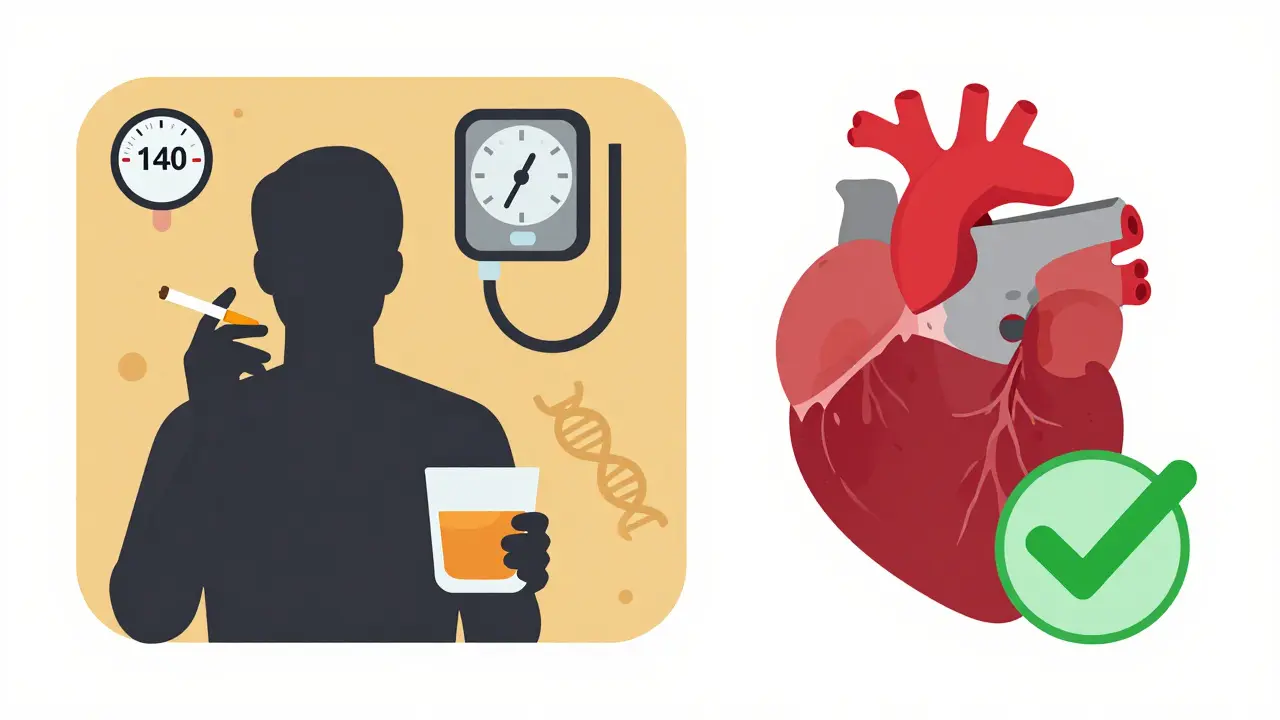
Not all aneurysms are created equal. Doctors don’t just guess whether an aneurysm will rupture; they use data. Research from the Frontiers in Physiology study by Kleinloog et al. (2018) highlights that rupture risk is determined by non-modifiable factors (things you can’t change) and modifiable factors (lifestyle choices).
Let’s start with what you can control. High blood pressure is a major driver. If your systolic blood pressure stays above 140 mmHg, your risk of rupture jumps by 2.3 times. Then there is smoking. Current smokers face a 3.1-fold higher risk compared to non-smokers. It gets worse if you smoke heavily-more than 10 cigarettes a day increases that risk by another 47%. Alcohol also plays a role; drinking more than 14 units a week raises your risk by 32%. The good news? Quitting smoking can reduce your rupture risk by 54% within just two years.
On the other hand, some factors are out of your hands. Age matters significantly. People over 65 have a 2.7-fold increased risk compared to younger patients. Gender is another factor; women have a 1.6-fold higher prevalence of aneurysms than men. Genetics also play a heavy role. If two or more of your first-degree relatives had an aneurysm, your risk skyrockets by four times.
Anatomy Matters: Size, Shape, and Location
Beyond lifestyle, the physical characteristics of the aneurysm itself are critical predictors. Think of it like inspecting a tire for wear. Some tires look fine but have dangerous internal damage.
- Size: This is the biggest predictor. Aneurysms measuring 7 mm or larger have a hazard ratio (HR) of 3.1 for rupture compared to smaller ones. Small aneurysms (<5mm) in the anterior circulation have a very low 5-year rupture risk of just 0.2%.
- Shape: Smooth, round aneurysms are generally safer. Irregular shapes carry an HR of 2.9 for rupture. If the aneurysm has "daughter sacs" (little bumps off the main sac), the risk increases by 68%.
- Location: Where the aneurysm sits on the artery network changes everything. Middle cerebral artery aneurysms have an HR of 3.6. Anterior communicating artery (AComm) aneurysms are particularly notorious, showing a 2.4 times higher rupture risk than other locations, even when they are small.
Hemodynamic forces-the way blood flows and hits the walls of the aneurysm-also matter. Computational studies show that low and oscillatory wall shear stress correlates with 83% of ruptured cases. Essentially, turbulent blood flow weakens the vessel wall over time.
Predicting the Future: Risk Scoring Systems
How do doctors decide whether to operate or wait? They use scoring systems. The most widely used is the PHASES score. This tool evaluates Population, Hypertension, Age, Size, Earlier Subarachnoid Hemorrhage, and Site. It predicts the 5-year rupture risk.
| Score Points | Estimated 5-Year Rupture Risk | Typical Recommendation |
|---|---|---|
| 0 - 3 | ~3% | Conservative monitoring (annual MRI/MRA) |
| 4 - 5 | ~10-15% | Shared decision-making based on patient health |
| 6+ | Up to 45% | Intervention usually recommended |
Another model, the ELAPSS score, focuses on 1-year probabilities, while the triple-S model (Size, Site, Shape) helps predict growth and rupture over shorter terms. If you have multiple aneurysms, your risk is 3.8 times higher than someone with just one. If you’ve had a prior rupture, the risk of another is 5.2 times higher.
Treatment Options: Clipping vs. Coiling vs. Flow Diversion
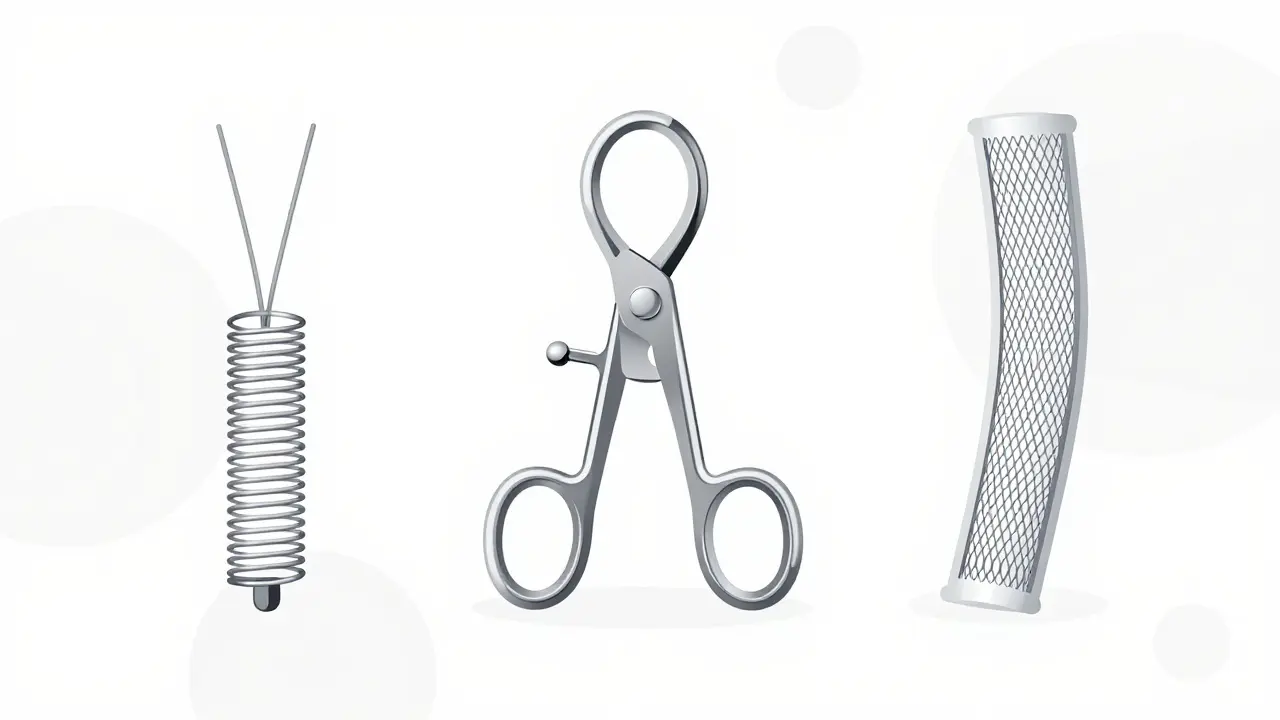
If intervention is needed, you aren’t stuck with just one path. Modern neurosurgery offers three primary approaches, each with distinct pros and cons.
1. Microsurgical Clipping
This is the traditional method, pioneered by Walter Dandy in 1937. A neurosurgeon performs a craniotomy (opens the skull) and places a titanium clip across the neck of the aneurysm to stop blood flow into the sac. It’s highly effective, achieving complete occlusion in 95% of cases. The cure rate is permanent in 88-92% of patients. However, it is invasive. Complication rates include 4.7% permanent morbidity and 1.5% mortality. Patients over 70 face a 35% higher surgical complication rate.
2. Endovascular Coiling
First performed by Guido Guglielmi in 1991, this is a less invasive approach. Doctors thread a catheter through an artery in the groin up to the brain. They then pack platinum coils into the aneurysm sac to induce clotting. Success rates are high, with 78-85% complete occlusion at 6 months. The landmark ISAT trial showed that coiling reduced 1-year mortality by 22.6% compared to clipping. The downside? Recurrence. About 15.7% of coiled aneurysms need retreatment within 12 years, compared to only 6.2% for clipped ones.
3. Flow Diversion
This newer technique uses devices like the Pipeline Embolization Device (FDA approved 2011). Instead of packing the sac, a porous stent is placed in the parent artery. It redirects blood flow away from the aneurysm, causing it to shrink and heal over time. It’s excellent for large or giant aneurysms, achieving 76.4% complete occlusion at 6 months. Morbidity is around 5.2%, with a low mortality rate of 0.8%. For wide-necked aneurysms (>4mm), this is often the preferred choice.
| Feature | Surgical Clipping | Endovascular Coiling | Flow Diversion |
|---|---|---|---|
| Invasiveness | High (Craniotomy) | Low (Catheter-based) | Low (Catheter-based) |
| Complete Occlusion Rate | 95% | 78-85% | 76.4% (large/giant) |
| Retreatment Rate (12 yrs) | 6.2% | 15.7% | Varies, generally lower than coiling |
| Mortality Risk | 1.5% | 1.1% | 0.8% |
| Best For | Wide-necked, young patients | Most standard aneurysms | Large/Giant, wide-necked |
Living with an Aneurysm: Management and Monitoring
For many people, especially those with small, low-risk aneurysms (PHASES score <6), the best treatment is no treatment at all-just careful monitoring. This involves annual MRA (Magnetic Resonance Angiography) scans to check for growth. The UCAS Japan study supports this conservative approach, noting that small posterior circulation aneurysms have a negligible rupture risk.
Medical management is crucial during this period. You must keep your blood pressure strictly controlled, ideally below 130/80 mmHg. Smoking cessation is non-negotiable if you want to lower your risk. Alcohol should be moderated. Recent advances also include devices like the WEB (Woven EndoBridge), FDA-approved in 2019 for bifurcation aneurysms, which offer a middle ground between coiling and flow diversion with a 71.4% complete occlusion rate at 1 year.
Long-term outcomes are promising. Successful treatment reduces the 10-year re-rupture risk from a staggering 68% down to just 2.3%. Quality of life scores (EQ-5D) tend to be higher for endovascular approaches (0.82) compared to surgery (0.76) at one year post-procedure.
Frequently Asked Questions
What are the symptoms of an unruptured cerebral aneurysm?
Most unruptured aneurysms are asymptomatic and found incidentally during scans for other issues. However, if an aneurysm grows large enough, it may press on nearby nerves or brain tissue, causing pain above or behind one eye, a dilated pupil, double vision, numbness on one side of the face, or difficulty speaking.
Can a cerebral aneurysm go away on its own?
No, an existing aneurysm will not disappear on its own. However, with treatments like flow diversion, the aneurysm can shrink and become thrombosed (clotted off) over time, effectively neutralizing the risk without removing the sac entirely.
Is surgery for a brain aneurysm dangerous?
All brain procedures carry risks, but modern techniques have made them much safer. Mortality rates for elective repair are low (around 1-1.5%). The risk of leaving a high-risk aneurysm untreated (potential rupture) often outweighs the procedural risks. Your neurosurgeon will evaluate your specific anatomy and health to determine the safest option.
How often should I get scanned if I have an unruptured aneurysm?
For stable, small aneurysms with low PHASES scores, annual MRA imaging is typically recommended. If the aneurysm shows signs of growth or has high-risk features, scans may be required every 6 months. Always follow the specific schedule set by your neurologist or neurosurgeon.
Does high blood pressure cause aneurysms to form?
Chronic hypertension is a significant risk factor for both the formation and rupture of aneurysms. The constant high pressure weakens the arterial walls over time. Keeping blood pressure under control (target <130/80 mmHg) is one of the most effective ways to manage risk.


Emily Schor July 9, 2026
I found the section on modifiable risk factors particularly useful. It is reassuring to know that quitting smoking can reduce rupture risk by 54% within two years. Many people feel helpless after a diagnosis, but having actionable steps like blood pressure management and lifestyle changes makes a tangible difference in long-term outcomes.
anna arifiana July 10, 2026
While the statistics presented are certainly interesting, one must consider that the study cited from Frontiers in Physiology has its limitations regarding sample diversity. The hazard ratios for size might be overstated when considering irregular shapes which are not fully accounted for in standard PHASES scores. Furthermore, the emphasis on coiling ignores the higher recurrence rates which necessitate lifelong follow-up imaging, a burden often underplayed in these summaries. It is crucial to look at longitudinal data beyond five years to truly assess the efficacy of endovascular treatments versus surgical clipping.
Marie-Gladys Darcelin July 12, 2026
It is absolutely imperative that individuals do not rely solely on internet articles for medical decisions. The complexity of cerebral aneurysms requires specialized neurovascular expertise. Ignoring professional advice in favor of self-diagnosis based on general population statistics is reckless and potentially fatal. One must consult with a board-certified neurosurgeon who can evaluate specific anatomical details through high-resolution angiography rather than guessing based on broad risk categories.
Kyle Bonnette-Lykens July 12, 2026
people always panic about the size but shape matters more. wide necks are tricky regardless of millimeters. clipping feels old school but it works better for some cases. stop worrying so much if your doctor says monitor it
Jasmine Agito July 13, 2026
I appreciate the clear breakdown of treatment options, especially the comparison table. For those newly diagnosed, it is important to remember that many small aneurysms never rupture. Regular monitoring with MRA or CTA scans allows doctors to track any changes in size or morphology. If you have family history, genetic counseling might also provide valuable insights into hereditary patterns. Please ensure you discuss all concerns with your healthcare provider to create a personalized surveillance plan.
Tony Malvagna July 15, 2026
hey everyone lets stay positive here. stress kills just as fast as the aneurysm itself. i know someone who got clipped and is running marathons now. dont let fear control ur life. take care of ur body and mind. yoga helps me alot with bp control. keep fighting the good fight folks we r in this together
Kevin Burke July 16, 2026
The philosophical implication of living with a ticking time bomb is profound. We are forced to confront our mortality daily. Yet, modern medicine offers us a reprieve, allowing us to continue our existence despite the fragility of our vascular systems. It is a testament to human ingenuity that we can intervene in such delicate structures. However, we must remain humble before the complexity of the brain's architecture.
neal vince July 17, 2026
You are missing the critical point about flow diversion technology. The Pipeline Embolization Device has revolutionized treatment for wide-necked aneurysms. Your table shows low mortality but fails to mention the mandatory dual antiplatelet therapy required post-procedure which carries its own bleeding risks. This is a significant consideration for elderly patients or those with comorbidities. A comprehensive analysis must include pharmacological implications alongside procedural success rates.
Samuel Friday July 19, 2026
Oh look another layperson trying to explain neurosurgery. How quaint. You clearly don't understand the hemodynamic forces at play. The wall shear stress distribution is what actually predicts rupture not just simple diameter measurements. Stop spreading misinformation with your oversimplified tables. Real experts use computational fluid dynamics models. Your article is dangerously reductive and contributes to medical illiteracy among the masses. Typical. :/
Arun Krishnan July 20, 2026
This is very helpful information. I think it is good to know the facts. Small aneurysms are common. Do not worry too much. Just see your doctor. Keep blood pressure down. Quit smoking if you smoke. These are simple steps. Stay healthy and listen to your medical team. Good luck to everyone reading this.
Bobby Christiansen July 22, 2026
I am so tired of seeing these scare tactics everywhere!! People need to chill out! My aunt had one and she is fine! Why do they always make it sound like you are going to die? It is just a balloon! Stop being so dramatic and negative. We need more positivity not fear-mongering statistics. Everyone should just relax and eat kale instead of panicking over numbers. Seriously! :)
Sinead Doyle July 22, 2026
Wake up sheeple! The pharmaceutical industry wants you scared so they can sell you lifelong meds. The real cause of aneurysms is fluoride in the water supply and 5G radiation weakening arterial walls. They hide the truth about natural healing methods. Big Pharma profits from your fear. Do your own research on chelation therapy and detox protocols. They dont want you to know the cure because it would bankrupt their billion dollar empire. Trust no one. #HealthFreedom