Mood Stabilizer Interaction Checker
Check for Interactions
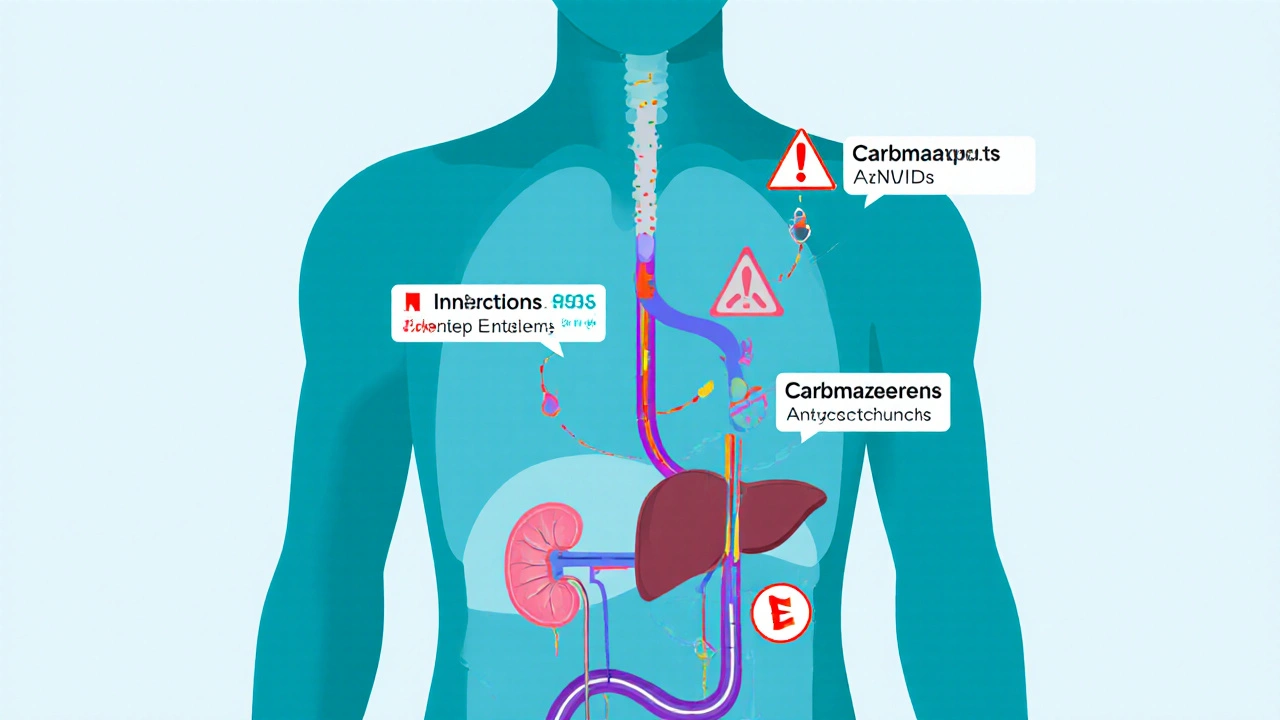
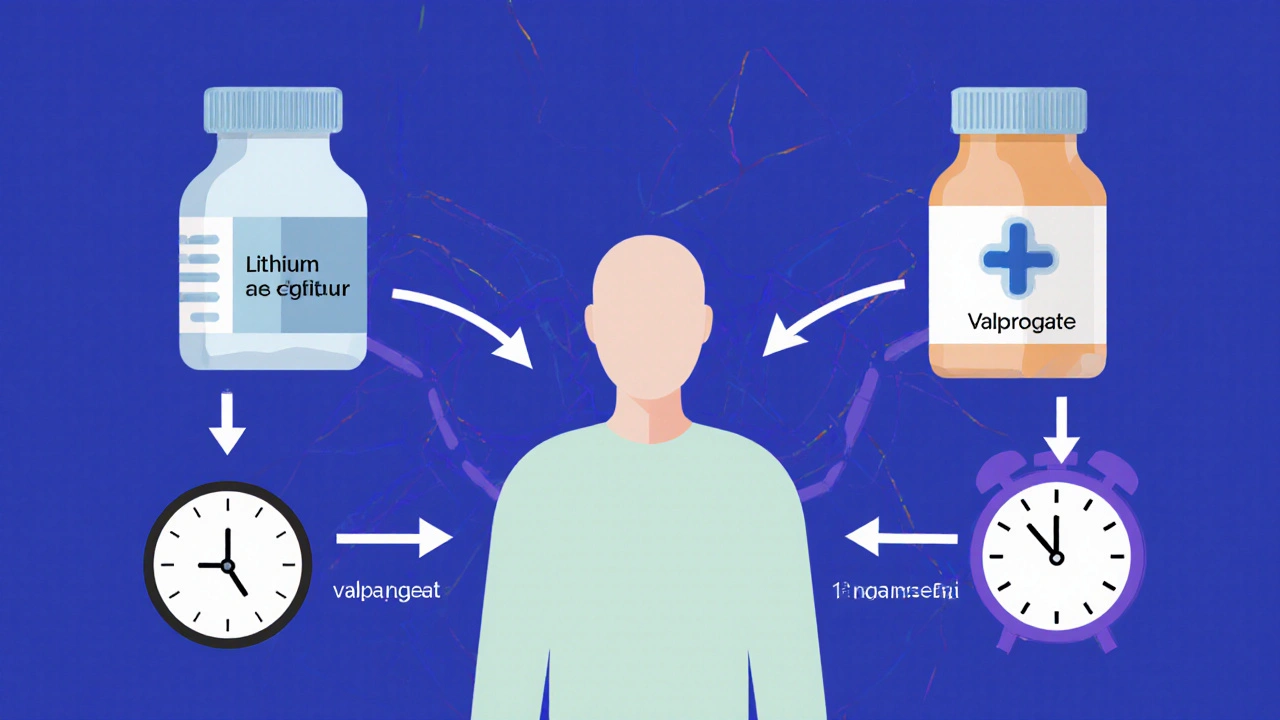
When you're managing bipolar disorder, finding the right mood stabilizer is only half the battle. The real challenge often comes from what happens when that medication meets others in your system. Lithium, valproate, and carbamazepine are the old guard of mood stabilization-used for decades, effective, but packed with hidden risks when combined with common drugs. Many people don’t realize that a simple ibuprofen for a headache could push lithium into toxic territory, or that switching from carbamazepine to valproate might suddenly make their antidepressant overdose them. These aren’t rare edge cases. They happen every day in clinics and homes across North America.
Why Lithium Is the Most Fragile
Lithium doesn’t get broken down by your liver. It doesn’t bind to proteins. It doesn’t get filtered out by enzymes. It just rides through your bloodstream until your kidneys flush it out. That simplicity is what makes it so dangerous. Anything that messes with your kidney function or sodium balance changes how much lithium stays in your body. A 2021 survey of 1,247 bipolar patients found that 68% needed a lithium dose change after starting a diuretic. That’s nearly 7 out of 10 people.NSAIDs like ibuprofen, naproxen, or even high-dose aspirin can reduce lithium clearance by 25-30%. That means if your lithium level was safely at 0.8 mmol/L, it could jump to 1.1 or even 1.3 mmol/L in just a few days. Symptoms? Tremors, confusion, nausea, dizziness. In severe cases, seizures or kidney damage. One patient on the NAMI forum described going from mild hand shakes to needing ER care after taking Advil for back pain. Their lithium level had spiked from 0.8 to 1.3 in under a week.
Even common blood pressure meds like ACE inhibitors (lisinopril, enalapril) can raise lithium levels by 25%. Diuretics-especially thiazides like hydrochlorothiazide-are even worse. They make your body hold onto sodium, which tricks your kidneys into reabsorbing more lithium. That’s why doctors now recommend keeping lithium levels at the low end of the therapeutic range (0.6-0.8 mmol/L) if you’re on any of these drugs. And you need a blood test 5-7 days after starting the new medication. No guessing. No hoping. Just testing.
Valproate: The Silent Thief and the Heavy Hitter
Valproate works differently. It’s metabolized in the liver through three pathways, which makes it more forgiving than lithium or carbamazepine. But it’s not safe just because it’s complex. It has two dangerous tricks. First, it can steal other drugs from their protein bindings. That means if you’re on a medication that’s 90% bound to proteins, valproate can push it into the free, active form-making it stronger than intended. Second, it blocks enzymes that break down other drugs, especially lamotrigine.If you’re on lamotrigine for bipolar depression and your doctor adds valproate, your lamotrigine levels can double or even triple. That’s not theoretical. Reddit user "StabilizedMind" described going from 400mg of lamotrigine down to 200mg after switching from carbamazepine to valproate. Their neurologist said it was because valproate was slowing down the breakdown. That’s exactly what happens. The 1994 Epilepsia study showed a 100-200% increase in lamotrigine levels with valproate co-use. Without dose adjustment, you risk skin rashes, dizziness, or even Stevens-Johnson syndrome-a rare but deadly reaction.
Valproate also fights back when other drugs try to lower its levels. Carbamazepine, for example, speeds up valproate metabolism through glucuronidation. Studies show that when taken together, valproate levels drop by 30-50%. That means if you were stable on 1,000mg of valproate alone, adding carbamazepine could drop your level to a point where it’s no longer controlling your mania. You might feel like you’re relapsing-when really, your drug levels just crashed.

Carbamazepine: The Self-Adjusting Firestorm
Carbamazepine is the most unpredictable of the three. It doesn’t just interact with other drugs-it changes itself. When you start taking it, your liver slowly turns on enzymes that break it down faster. That’s called autoinduction. Your half-life drops from 35-40 hours to 12-17 hours in just 3-5 weeks. So a dose that worked at week one might be useless by week four. Many patients think they’re getting worse, when really, their body is just metabolizing the drug too fast.But here’s the twist: when you add valproate to carbamazepine, things get even weirder. Valproate doesn’t lower carbamazepine levels-it raises the toxic metabolite. Carbamazepine breaks down into an active compound called carbamazepine-10,11-epoxide (CBZ-E). Normally, your body turns that into a harmless byproduct. Valproate blocks that cleanup process. The result? CBZ-E levels spike by 40-60%. That’s the real culprit behind dizziness, ataxia, and confusion in patients on this combo. A 2019 survey of 853 psychiatrists found that 42% saw increased neurotoxicity in patients on this mix.
Doctors now recommend checking both carbamazepine and CBZ-E levels when combining them with valproate. The target for CBZ-E is under 3.5 mcg/mL. If it’s higher, you need to reduce carbamazepine by 25%-even if the carbamazepine level looks fine. Many clinicians miss this. They only check the parent drug and wonder why the patient is dizzy.
What Happens When You Mix All Three?
There’s no standard protocol for combining lithium, valproate, and carbamazepine. But it happens. Sometimes because a patient didn’t respond to one or two. Sometimes because a doctor is trying to cover all bases. But the risks multiply.Lithium’s kidney vulnerability meets valproate’s enzyme blocking meets carbamazepine’s autoinduction. A patient might start on lithium, then add valproate for better mood control. Then carbamazepine gets added because the mania isn’t fully under control. Within weeks, lithium levels creep up because valproate may slightly reduce kidney clearance. Carbamazepine levels drop because of autoinduction, so the dose gets increased. But valproate is still blocking the cleanup of CBZ-E, so toxicity builds. And now the patient’s sodium is low from dehydration, pushing lithium even higher.
This isn’t hypothetical. A 2022 case study in the Journal of Affective Disorders followed a patient with 12 failed medication trials who finally stabilized on all three. But it took meticulous monitoring: weekly blood tests for the first month, then biweekly. Lithium stayed at 0.8 mmol/L, valproate at 95 mcg/mL, carbamazepine at 6 mcg/mL, and CBZ-E at 2.9 mcg/mL. No side effects. No toxicity. But this level of vigilance isn’t common. Most clinics check lithium monthly and never test CBZ-E.
What You Should Do If You’re on One of These
If you’re taking lithium, valproate, or carbamazepine, here’s what you need to do right now:- Know your levels. Ask your doctor for your last lithium, valproate, and carbamazepine (and CBZ-E if applicable) blood test results. Don’t assume they’re fine just because you feel okay.
- Check every new medication. Even over-the-counter painkillers, cold meds, or antibiotics can interact. Always tell your pharmacist you’re on a mood stabilizer. Ask: “Could this affect my lithium or carbamazepine?”
- Track symptoms. If you suddenly feel unsteady, confused, nauseated, or have hand tremors, don’t wait. Get your levels checked. These aren’t “just side effects”-they’re warning signs.
- Don’t stop cold turkey. Abruptly stopping carbamazepine or valproate can trigger seizures or rebound mania. Always taper under supervision.
- Ask about alternatives. Lamotrigine, quetiapine, or lurasidone have fewer interactions. If you’re on multiple drugs and constantly adjusting doses, it might be time to explore safer options.
The Bigger Picture: Why These Drugs Are Still Used
You might wonder why we still use these drugs when they’re so tricky. The answer is simple: they work. Lithium reduces suicide risk by 47% in bipolar patients, according to the STEP-BD study. Valproate brings acute mania under control in 50-60% of people within two weeks. Carbamazepine helps those who don’t respond to anything else. But they’re not first-line anymore. Newer drugs like lamotrigine, lurasidone, and cariprazine have better safety profiles and fewer interactions.Prescriptions for lithium have dropped from 35% of new starts in 2012 to just 15% in 2022. Valproate use has fallen too-mainly because of its risk to unborn babies. But for some, these older drugs are still the only thing that works. That’s why understanding their interactions isn’t optional. It’s life-or-death.
The future is moving toward personalized medicine. By 2027, genetic testing for CYP3A4 variants may become standard before prescribing carbamazepine. New formulations of lithium and valproate are being designed to reduce peaks and troughs. But for now, the rules are simple: know your levels, know your drugs, and never assume a medication is safe just because it’s common.
Can I take ibuprofen if I’m on lithium?
No-not without medical supervision. Ibuprofen and other NSAIDs can raise lithium levels by 25-30%, pushing you into toxic territory. Even a few days of use can be dangerous. If you need pain relief, talk to your doctor about acetaminophen (Tylenol), which doesn’t interact with lithium. Always get your lithium level checked 5-7 days after starting any new medication.
Why does valproate make lamotrigine more dangerous?
Valproate blocks the enzyme (UGT) that breaks down lamotrigine. This causes lamotrigine levels to double or triple. High lamotrigine levels increase the risk of severe skin reactions like Stevens-Johnson syndrome. If you’re switching to valproate while on lamotrigine, your dose must be cut in half-and monitored closely. Never adjust this yourself.
What’s the real danger with carbamazepine and valproate together?
The danger isn’t that carbamazepine levels rise-it’s that its toxic metabolite, carbamazepine-epoxide (CBZ-E), spikes by 40-60%. This causes dizziness, confusion, and loss of coordination. Many doctors only check carbamazepine levels and miss the real problem. Always ask for CBZ-E testing if you’re on both drugs. Dose reductions of 25% are often needed.
Can I stop my mood stabilizer if I feel better?
No. Stopping lithium, valproate, or carbamazepine suddenly can trigger mania, depression, or even seizures. These drugs stabilize brain activity over time. Stopping abruptly removes that buffer. Always work with your doctor to taper slowly-usually over weeks or months. If you’re having side effects, talk about alternatives, not stopping.
Are there safer alternatives to these three drugs?
Yes. Lamotrigine has far fewer drug interactions and is often used for bipolar depression. Quetiapine and lurasidone are antipsychotics approved for bipolar disorder with more predictable profiles. They don’t require frequent blood tests and don’t interact dangerously with common medications. If you’re struggling with side effects or interactions, ask your doctor about switching. These newer options are now first-line for many patients.
How often should I get my blood tested?
When you start or change a mood stabilizer, test levels weekly for the first month. Once stable, test every 3-6 months. But if you start a new medication-especially antibiotics, NSAIDs, diuretics, or blood pressure drugs-test within 5-7 days. Also test if you get sick, dehydrated, or start exercising more. Your kidney function changes, and so do your drug levels.




Tina Dinh November 30, 2025
OMG I just realized I took ibuprofen for my period cramps last week 😱 My lithium level was at 0.8 and now I’m shaking like a leaf-thank you for this post!! Going to the doc tomorrow for a blood test 💪❤️
linda wood December 1, 2025
So let me get this straight-you’re telling me my 20-year-old carbamazepine prescription is basically a ticking time bomb because my liver decided to speed-run a marathon? 🤯 And nobody told me? I’m not mad, I’m just… deeply disappointed. Also, why do doctors act like we’re supposed to memorize pharmacology textbooks just to survive?
Mary Kate Powers December 1, 2025
I was on lithium for 8 years and never knew NSAIDs could spike levels like that. I used to take Advil for migraines like it was candy. I’m so grateful for this post-it saved me from a potential ER trip. If you’re on any mood stabilizer, please, please, please talk to your pharmacist. They’re the real MVPs.
Sara Shumaker December 2, 2025
There’s a quiet tragedy in how we treat mental health meds like they’re interchangeable snacks. We prescribe lithium like it’s aspirin, then act shocked when someone ends up in the hospital because they took a cold pill. But here’s the deeper truth: we don’t just need better drug education-we need a healthcare system that treats patients like humans, not data points. You can’t monitor levels every week if you don’t have insurance, transportation, or time off work. The science is clear. The system? Not so much.
Scott Collard December 3, 2025
Lithium’s simplicity is its flaw. It’s not a drug-it’s a mineral. You wouldn’t take salt pills without monitoring your electrolytes. Why treat lithium differently? The answer: because the pharmaceutical industry doesn’t profit from minerals. Hence, the neglect.
Steven Howell December 4, 2025
It is worth noting that the pharmacokinetic interactions described herein are well-documented in peer-reviewed literature spanning the past four decades. The clinical relevance of these phenomena is not speculative but empirically validated. One must, therefore, exercise due diligence in polypharmacy management, particularly in the context of mood stabilization. The burden of vigilance, regrettably, falls disproportionately upon the patient.
Robert Bashaw December 4, 2025
I took valproate and carbamazepine together for six months and felt like I was slowly turning into a zombie who forgot how to walk. Dizziness? More like I was on a tilt-a-whirl made of regret. My neurologist said, 'It's just side effects.' I said, 'I can't tie my shoes.' He said, 'Try yoga.' I said, 'I can't stand up.' He said, 'Maybe it's stress.' I said, 'I'm on two drugs that turn my brain into a glitchy video game.' He didn't call back. I switched to lamotrigine. Now I can hug my dog without feeling like I'm about to fall into a black hole. Thank god for small miracles.
Peter Axelberg December 5, 2025
I’ve been on lithium since I was 19. I’m 38 now. I’ve had my levels checked maybe 12 times total. I’ve had a dozen colds, two kidney infections, a broken ankle, and two rounds of antibiotics. I never thought any of it mattered. Turns out, every single one of those things could’ve killed me. I just got my first CBZ-E test last month-because I read this post. I didn’t even know that was a thing. I’m not a doctor. I’m not a pharmacist. I’m just a guy who didn’t want to die from a stupid headache pill. If you’re on one of these meds, stop scrolling and call your doctor. Right now. Don’t wait.
jamie sigler December 6, 2025
I’m tired of being told to ‘be vigilant.’ I’m tired of blood tests. I’m tired of feeling like my body is a minefield. I just want to take a pill and not have to think about it. But I guess that’s too much to ask.