Why We Need Patient Safety Goals in Pharmacy
Mistakes happen. In the high-stress environment of a hospital or community pharmacy, a split-second error can have life-altering consequences. When we talk about medication dispensing, which is the process of preparing and providing medications to patients under the direction of a pharmacist, accuracy isn't just a nice-to-have; it's the baseline expectation. Yet, despite our best efforts, errors still occur. The Institute of Medicine’s landmark 1999 report, 'To Err is Human,' highlighted that medical errors contribute significantly to mortality, with medication-related issues being a major culprit.
To combat this, healthcare organizations rely on structured frameworks. The most prominent of these are the National Patient Safety Goals (NPSGs) developed by The Joint Commission, which is a nonprofit organization that accredits and certifies health care organizations and programs in the United States. Established in 1951, The Joint Commission sets annual objectives to address critical safety areas. For pharmacists and pharmacy technicians, understanding these goals is not just about passing an accreditation survey-it’s about building a culture where safety is woven into every workflow.
The Core NPSG Framework for Medication Safety
The NPSGs cover six primary areas, but for us in pharmacy practice, one stands out: "Use medicines safely." This goal targets the entire lifecycle of medication use, from ordering to monitoring. The Joint Commission identifies medication-related errors as contributing to at least 1 out of every 131 outpatient deaths and 1 in every 8,548 inpatient deaths based on 2021 data from the Agency for Healthcare Research and Quality. These numbers are stark reminders of why standardized practices matter.
In 2025, the NPSGs continue to prioritize medication safety with updated standards addressing emerging risks. Two specific elements of performance often cause friction in daily operations:
- NPSG.03.04.01 (Label medications correctly): This standard requires labeling all medications, containers, and solutions, both on and off the sterile field in perioperative settings. Labels must include the drug name, strength, and concentration, using a minimum 10-point font size for readability. It sounds simple, but in the rush of a code blue or a busy OR, unlabeled syringes remain a persistent issue. Data shows that 27% of operating rooms still use unlabeled syringes despite this requirement.
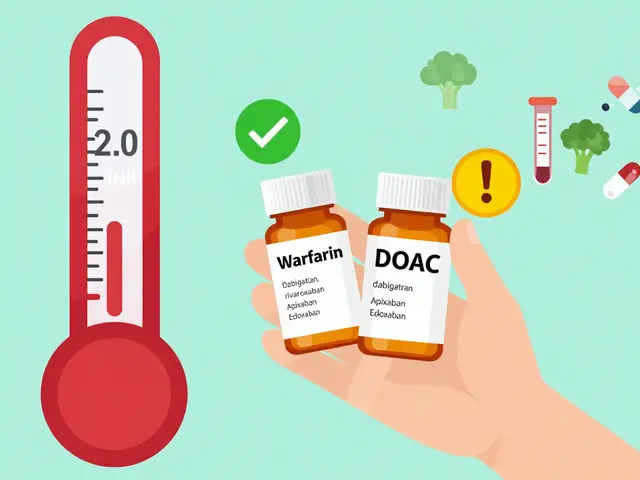
- NPSG.03.05.01 (Reduce harm from anticoagulant therapy): Anticoagulants are high-alert medications. This goal mandates standardized practices, including patient education, International Normalized Ratio (INR) monitoring protocols, and documentation of therapeutic ranges. The target implementation rate is 95% compliance, measured quarterly.
Beyond the Checklist: ISMP Best Practices
While the NPSGs provide a mandatory framework for accredited organizations, many facilities look to the Institute for Safe Medication Practices (ISMP) for deeper guidance. The ISMP Targeted Medication Safety Best Practices for Hospitals identifies 19 specific high-risk scenarios requiring intervention. Unlike the NPSGs, which are mandatory for the approximately 4,700 Joint Commission-accredited hospitals in the U.S., ISMP recommendations are voluntary consensus guidelines. However, their impact is significant, with 68% of large hospital systems adopting them according to a 2023 ECRI survey.
Some of the most critical ISMP interventions include:
- Preventing tissue injuries from injectable promethazine: Between 2006 and 2018, there were 37 documented amputations linked to improper administration of this drug. Standardizing dilution and administration routes has been key to reducing these horrific outcomes.
- Verifying patient opioid status: Before administering opioids, clinicians must verify the patient’s current opioid status to prevent respiratory depression.
- Barcode verification: Implementing barcode scanning beyond just inpatient care units, with a recommended 98% scanning compliance rate.
Dr. Michael Cohen, President Emeritus of ISMP, notes that while NPSGs drive improvements, they represent minimum standards rather than best practices. To truly enhance safety, pharmacies need to go beyond compliance and adopt these targeted, evidence-based interventions.
The Myth of the "Five Rights" and System-Level Solutions
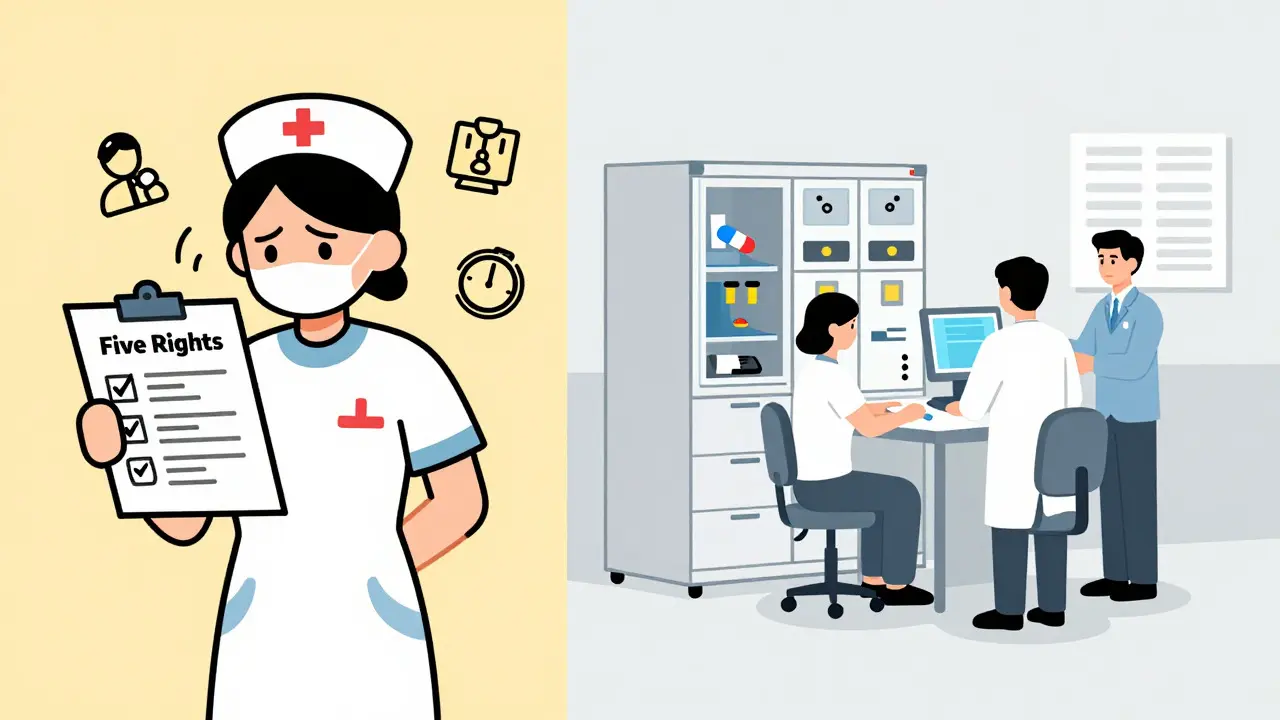
If you’ve worked in pharmacy, you know the "Five Rights": right patient, right drug, right dose, right route, right time. Traditionally considered the gold standard, this framework has come under scrutiny. The Institute for Healthcare Improvement (IHI) points out that 83% of medication errors occur even when nurses confirm all five rights. Why? Because the Five Rights place the burden entirely on the individual clinician, ignoring system failures.
A 2023 survey of 1,200 nurses published in the American Journal of Nursing found that 78% believe the Five Rights framework places undue responsibility on individuals rather than addressing system design. One nurse commented, "We're taught to memorize the five rights but not given the tools to actually verify them during 12-hour shifts with 8 patients."
This is where Australia’s approach offers a valuable perspective. ASHP guidelines emphasize system-level interventions over individual blame. They recommend standardized procedures, robust barcode systems, and regular staff training focused on checking medication accuracy and managing high-risk drugs. By shifting the focus from "who made the mistake" to "how did the system allow the mistake," we create a safer environment for everyone.
| Framework | Nature | Adoption Rate | Key Focus |
|---|---|---|---|
| National Patient Safety Goals (NPSGs) | Mandatory for accredited orgs | ~96% of U.S. acute care hospitals | Standardized minimum requirements (labeling, anticoagulants) |
| ISMP Best Practices | Voluntary consensus | 68% of large hospital systems | High-risk scenario interventions (promethazine, opioids) |
| Five Rights | Traditional clinical standard | Universal (but criticized) | Individual clinician verification |
| ASHP Guidelines (Australia) | System-level focus | Varies by region | Process standardization and technology integration |
Technology as a Double-Edged Sword
Technology is central to modern pharmacy practice, but it’s not a silver bullet. Automated Dispensing Cabinets (ADCs) have revolutionized access to medications, yet they introduce new risks. ADC override rates-when a clinician bypasses the electronic check to pull a drug manually-are a major concern. The Joint Commission recommends keeping override rates below 5%. However, Reddit discussions among pharmacists reveal that 34% report override rates exceeding this threshold, primarily for "stat" medications during emergencies.
Facilities with override rates above 5% show 3.7 times more medication errors. This suggests that overrides aren’t just a convenience issue; they’re a safety red flag. Similarly, Barcode-Assisted Medication Administration (BCMA) has proven effective. A hospital pharmacy director reported that implementing BCMA reduced wrong-drug errors by 86%. However, it also increased nurse workflow time by 7.2 minutes per dose, highlighting the need for adequate staffing and workflow redesign alongside technology adoption.

Implementing Safety Goals: A Practical Roadmap
So, how do you actually implement these goals in your pharmacy? The Joint Commission recommends a 12-18 month timeline for full implementation. Here’s a breakdown of what that looks like:
- Initial Assessment (2-4 weeks): Evaluate current practices against NPSG and ISMP standards. Identify gaps in labeling, anticoagulant management, and ADC usage.
- Staff Training (8-12 hours per clinician): Move beyond basic orientation. Train staff on root cause analysis, risk assessment, and the specific protocols for high-alert medications. Only 38% of facilities currently provide more than 4 hours of annual medication safety training per staff member.
- System Integration (6-12 months): Integrate Electronic Health Record (EHR) systems with clinical decision support. Ensure barcode scanners are functional and integrated with ADCs. Establish audit trails for all dispensing activities.
Documentation is crucial. You need to maintain error reports, staff training records, and quarterly performance metrics. Aim for a minimum 90% documentation completeness rate. High-performing facilities that score above 85% on ECRI’s self-assessment worksheet achieve 63% fewer medication-related adverse events.
The Future of Medication Safety
As we look ahead, the landscape of medication safety is evolving. The global patient safety software market, valued at $1.87 billion in 2022, is projected to reach $4.03 billion by 2028. This growth is driven by regulatory pressures and the increasing complexity of care. The Centers for Medicare & Medicaid Services (CMS) now link 2% of hospital reimbursement to patient safety outcomes through the Hospital-Acquired Condition Reduction Program, making safety a financial imperative as well as a clinical one.
Future trends include greater integration of artificial intelligence for predictive error detection. Pilot programs at Mayo Clinic have shown a 47% reduction in potential adverse drug events through AI-powered clinical decision support. Additionally, the World Health Organization’s Global Patient Safety Action Plan 2021-2030 calls for universal adoption of medication safety standards by 2030, emphasizing patient and family engagement. Facilities with robust patient involvement programs report 42% fewer medication errors.
Ultimately, patient safety in medication dispensing is not a destination but a continuous journey. It requires leadership commitment, adequate resources, and a willingness to challenge outdated norms like the sole reliance on the Five Rights. By embracing system-level solutions, leveraging technology wisely, and fostering a culture of transparency, we can significantly reduce dispensing errors and protect our patients.
What are the National Patient Safety Goals (NPSGs)?
The NPSGs are annual objectives developed by The Joint Commission to address critical areas of patient safety in healthcare settings. They cover six primary areas: identifying patients correctly, improving staff communication, using medicines safely, preventing infection, identifying patient safety risks, and preventing mistakes in surgery. For pharmacy practice, the "Use medicines safely" goal is particularly relevant, focusing on reducing errors during ordering, dispensing, administering, and monitoring phases.
Why are automated dispensing cabinet (ADC) override rates important?
ADC override rates measure how often clinicians bypass electronic checks to retrieve medications manually. The Joint Commission recommends keeping these rates below 5%. High override rates (above 5%) are associated with a 3.7-fold increase in medication errors. Overrides often occur during emergencies or when technology fails, but frequent overrides indicate systemic issues that need addressing, such as inadequate formulary availability or poor workflow design.
How does the ISMP differ from The Joint Commission?
The Joint Commission sets mandatory standards for accredited healthcare organizations, while the Institute for Safe Medication Practices (ISMP) provides voluntary, evidence-based best practices. ISMP focuses on specific high-risk scenarios, such as preventing tissue injuries from injectable promethazine or verifying opioid status. While NPSGs provide a broad framework, ISMP offers detailed, actionable interventions for complex medication safety challenges.
Are the "Five Rights" of medication administration still relevant?
The Five Rights (right patient, drug, dose, route, time) remain a foundational concept, but they are increasingly viewed as insufficient on their own. Studies show that 83% of medication errors occur even when clinicians confirm all five rights. Modern safety frameworks emphasize system-level interventions, such as barcode scanning and standardized protocols, to support individual verification and reduce reliance on human memory alone.
What role does technology play in medication safety?
Technology plays a dual role. Tools like Barcode-Assisted Medication Administration (BCMA) can reduce wrong-drug errors by up to 86%. However, technology can also introduce new risks if not implemented correctly. For example, poor integration between Electronic Health Records (EHR) and Automated Dispensing Cabinets (ADCs) can lead to workflow disruptions. Successful implementation requires careful planning, staff training, and ongoing evaluation to ensure technology enhances rather than hinders safety.
How long does it take to implement patient safety goals effectively?
The Joint Commission recommends a 12-18 month timeline for full implementation. This includes 2-4 weeks for initial assessment, 8-12 hours of training per clinician, and 6-12 months for system integration. Effective implementation requires sustained effort, including regular audits, staff education, and leadership support to ensure long-term sustainability and compliance with standards.