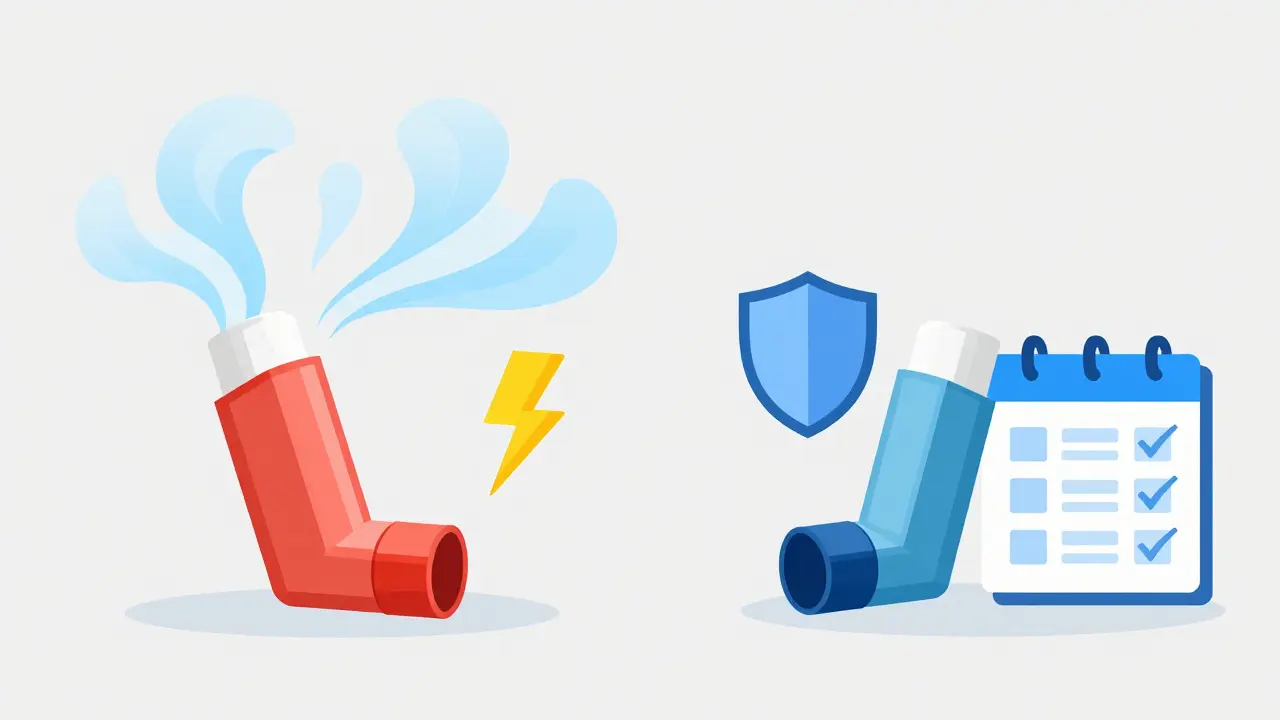
Imagine you are at work, suddenly struggling to breathe. Your chest feels tight, and every inhale is a fight. You reach into your bag for an inhaler, but panic sets in because there are two devices that look nearly identical. One opens your airways instantly; the other fights inflammation over weeks. Using the wrong one could mean the difference between a quick recovery and an emergency room visit.
This confusion isn't just hypothetical. It is a leading cause of preventable asthma hospitalizations. Understanding the distinct roles of rescue inhalers and maintenance inhalers is not just medical trivia-it is a safety protocol. Millions of people worldwide rely on this dual-system approach to manage respiratory health, yet many still treat these devices as interchangeable tools rather than specialized medications with different mechanisms, timelines, and risks.
The Emergency Brake: How Rescue Inhalers Work
Rescue inhalers are exactly what their name suggests: emergency tools designed for immediate relief. Medically classified as short-acting beta-agonists (SABAs), these devices contain active ingredients like albuterol (found in brands such as Ventolin, ProAir, or Proventil) or levalbuterol (Xopenex). Their job is singular and urgent: to relax the smooth muscles surrounding your bronchial tubes within minutes.
Albuterol is a medication that binds to beta-2 adnergic receptors in the lungs, triggering rapid relaxation of constricted airways. This mechanism allows air to flow more freely, providing relief from acute symptoms like wheezing, coughing, and shortness of breath.
When you use a rescue inhaler during an attack, the effects begin almost immediately-typically within 1 to 5 minutes. According to clinical data from the UNC Adult Asthma Program, albuterol can improve peak expiratory flow by up to 85% within 10 minutes of administration. This rapid response makes it indispensable for sudden triggers like exercise, cold air, allergens, or viral infections. However, this relief is temporary. The bronchodilation effect usually lasts only 4 to 6 hours, meaning the underlying issue causing the constriction remains unaddressed once the medication wears off.
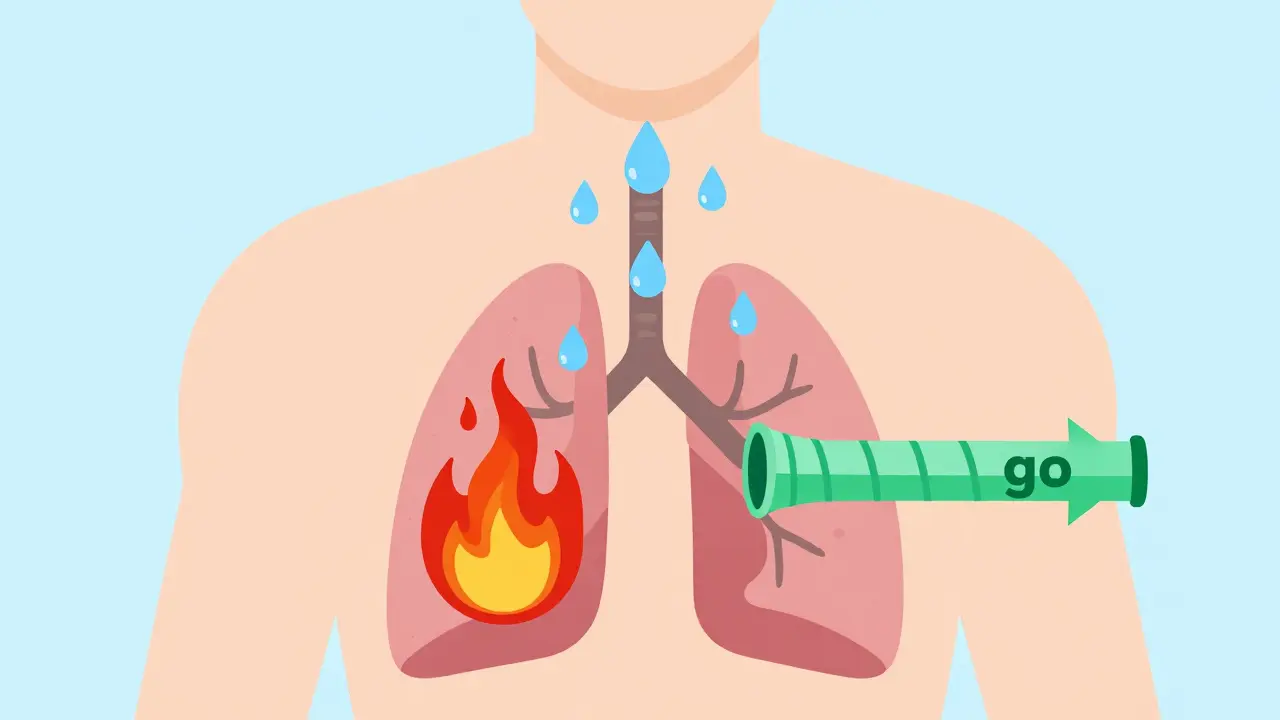
A critical limitation of rescue inhalers is that they do not reduce inflammation. They simply open the door wider while the house is still on fire. Relying solely on a rescue inhaler for long-term control is dangerous because it masks worsening disease progression without treating the root cause. If you find yourself needing your rescue inhaler more than twice a week, it is a clear signal that your asthma is not under control and requires a change in strategy.
The Daily Shield: The Role of Maintenance Inhalers
If rescue inhalers are the emergency brake, maintenance inhalers are the daily shield. Also known as controller medications, these devices are designed to prevent symptoms before they start. Unlike the instant gratification of SABAs, maintenance inhalers work slowly and steadily to reduce the chronic inflammation that characterizes persistent asthma.
The primary class of maintenance medications includes inhaled corticosteroids (ICS) such as fluticasone (Flovent) or budesonide (Pulmicort). Some patients also use long-acting beta-agonists (LABAs) like formoterol or salmeterol, often combined with steroids in single-device combination inhalers like Symbicort or Advair. These drugs target the immune system's overreaction in the airways, swelling, and mucus production that lead to attacks.
Inhaled Corticosteroids are anti-inflammatory medications that require consistent daily use to suppress airway swelling and prevent asthma exacerbations. They do not provide immediate relief during an attack but significantly reduce the frequency and severity of future episodes.
Patience is key with maintenance inhalers. They do not work instantly. Clinical guidelines from the Cleveland Clinic indicate that these medications take 24 to 48 hours to initiate effects and require 1 to 3 weeks of regular use to achieve maximum therapeutic benefit. A 2022 Cochrane Review of 22 clinical trials involving over 15,000 participants found that consistent use of maintenance inhalers reduces asthma exacerbations by 40-60% compared to placebo. This statistic underscores why adherence is non-negotiable. Missing just 20% of scheduled doses can reduce effectiveness by nearly half, according to real-world data from the UNC Adult Asthma Program.
The goal of maintenance therapy is to make the rescue inhaler unnecessary. When your airways are calm and inflammation is controlled, triggers that previously caused severe attacks may result in mild or no symptoms at all. This shift from reactive to proactive management transforms quality of life, allowing for better sleep, increased physical activity, and reduced anxiety about breathing.
Why Confusing Them Is Dangerous
The danger lies in the similarity of the devices. Many inhalers come in similar shapes, sizes, and even colors. Red is commonly associated with rescue inhalers, but some maintenance devices share this hue, leading to fatal errors. In June 2023, a documented case involved a 9-year-old child who grabbed his red Symbicort (maintenance) inhaler instead of his ProAir (rescue) inhaler during an attack at summer camp. Because Symbicort does not provide immediate bronchodilation, the child experienced a dangerous 12-minute delay in appropriate treatment, worsening his breathing difficulties.
Dr. Emily Mendez, Chief Medical Officer at Allergy & Asthma Centers of Texas, identifies confusing these inhalers as one of the top five preventable causes of asthma-related hospitalizations in children. The American College of Allergy, Asthma & Immunology reports that 38% of near-fatal asthma cases involve inappropriate reliance on rescue inhalers without adequate maintenance therapy. Conversely, using a maintenance inhaler during an acute attack creates a false sense of security while the airways continue to close.
Another common mistake is overusing rescue inhalers due to poor maintenance adherence. Data from Express Scripts Pharmacy shows that 68% of patients who overused rescue inhalers (more than 12 times monthly) improved their control after implementing reminder systems for their maintenance medication. Within three months, their average rescue use dropped from 18.7 to 4.3 uses per month. This highlights that frequent rescue use is often a symptom of neglected maintenance therapy, not a sign that the rescue inhaler "isn't working strong enough."
Comparison: Key Differences at a Glance
| Feature | Rescue Inhaler (SABA) | Maintenance Inhaler (ICS/LABA) |
|---|---|---|
| Primary Purpose | Immediate relief of acute symptoms | Prevention of inflammation and attacks |
| Onset of Action | 1-5 minutes | 24-48 hours to initiate; 1-3 weeks for full effect |
| Duration of Effect | 4-6 hours | Continuous with daily use |
| Frequency of Use | As needed (should be <2x/week) | Daily, regardless of symptoms |
| Active Ingredients | Albuterol, Levalbuterol | Fluticasone, Budesonide, Formoterol |
| Anti-Inflammatory? | No | Yes |
Modern Approaches: The SMART Strategy
Medical guidelines are evolving to address the confusion and complexity of managing two separate devices. The Global Initiative for Asthma (GINA) 2023 and 2024 updates now endorse Single Maintenance and Reliever Therapy (SMART) as a first-line treatment for moderate-to-severe asthma. This approach uses a single inhaler containing both an inhaled corticosteroid and a fast-acting LABA, such as budesonide-formoterol (Symbicort).
In the SMART model, you take your prescribed daily dose for maintenance. If you experience symptoms, you use the same inhaler as a rescue. This eliminates the risk of grabbing the wrong device and ensures that every time you get relief, you also receive an anti-inflammatory dose. Early pilot programs suggest this method could reduce confusion-related errors by an estimated 45%. By 2027, the American Academy of Allergy, Asthma & Immunology predicts that 60% of new asthma patients will receive single-inhaler regimens.
However, this approach is not suitable for everyone. Mild intermittent asthma may still be managed effectively with occasional SABA use alone, though recent guidelines increasingly favor low-dose ICS-formoterol even for mild cases to prevent exacerbations. Always consult your healthcare provider to determine if SMART is appropriate for your specific condition.

Practical Tips for Safe Management
To ensure you are using your inhalers correctly and safely, consider these practical steps:
- Color-Coding: While not universal, many providers recommend associating red with rescue and blue/green with maintenance. Check your specific devices and label them clearly if necessary.
- Proper Technique: For rescue inhalers, inhale slowly for 5-7 seconds, then hold your breath for 10 seconds. This technique achieves 30-40% lung deposition versus only 10-15% with incorrect usage. For maintenance inhalers, consistency is more critical than speed.
- Storage: Keep inhalers below 30°C (86°F). Extreme heat or cold can affect the propellant and drug delivery. Do not store them in a hot car.
- Expiration Dates: Rescue inhalers typically last 12 months after opening, while maintenance inhalers may expire in 3-6 months depending on the formulation. Check the date on the canister regularly.
- Track Usage: Keep a log of how often you use your rescue inhaler. More than two uses per week indicates poorly controlled asthma and warrants a doctor's visit.
Cost is another significant barrier. Generic albuterol costs $35-$50 per inhaler without insurance, while branded maintenance inhalers like Symbicort can cost $300-$350 monthly. A 2024 Kaiser Family Foundation survey found that 42% of patients skip maintenance doses due to high copays. If cost is an issue, ask your pharmacist about generic alternatives or patient assistance programs. Never sacrifice maintenance therapy for affordability without consulting your doctor, as the cost of an ER visit far exceeds the price of medication.
Frequently Asked Questions
Can I use my maintenance inhaler as a rescue inhaler?
Generally, no. Most maintenance inhalers, particularly those containing only inhaled corticosteroids, do not provide immediate relief and can delay effective treatment during an asthma attack. However, certain combination inhalers like Symbicort (budesonide-formoterol) are approved for use as both maintenance and reliever therapy under the SMART protocol. Always follow your specific doctor's instructions.
How do I know if my asthma is well-controlled?
Well-controlled asthma means you have minimal daytime symptoms (no more than twice a week), no nighttime awakenings due to asthma, no limitations on physical activity, and little to no need for your rescue inhaler. If you use your rescue inhaler more than twice a week, your asthma is likely not controlled, and you should consult your healthcare provider about adjusting your maintenance therapy.
Why do I need a maintenance inhaler if I rarely have attacks?
Even if you rarely have severe attacks, underlying inflammation may still be present in your airways. Maintenance inhalers reduce this chronic inflammation, preventing future exacerbations and protecting your lung function over time. Skipping maintenance therapy because you feel fine can lead to sudden, severe attacks later.
What should I do if I miss a dose of my maintenance inhaler?
If you miss a dose, take it as soon as you remember unless it is almost time for your next scheduled dose. Do not double up on doses to make up for a missed one. Consistency is crucial for maintaining anti-inflammatory effects. Setting phone reminders or linking inhaler use to a daily habit like brushing teeth can help improve adherence.
Are there side effects to long-term maintenance inhaler use?
Inhaled corticosteroids are generally safe for long-term use when taken at prescribed doses. Common local side effects include oral thrush (a fungal infection in the mouth) and hoarseness. To minimize these risks, rinse your mouth with water and spit it out after each use. Systemic side effects are rare at standard doses but should be discussed with your doctor.