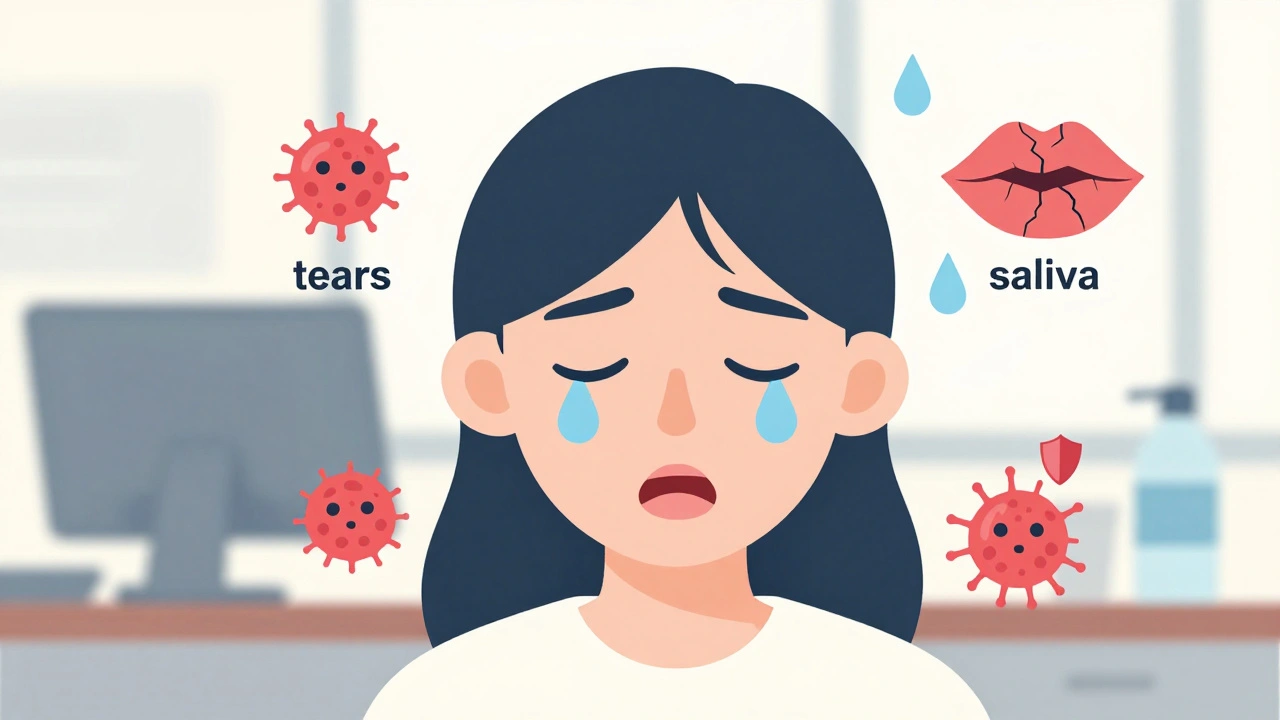
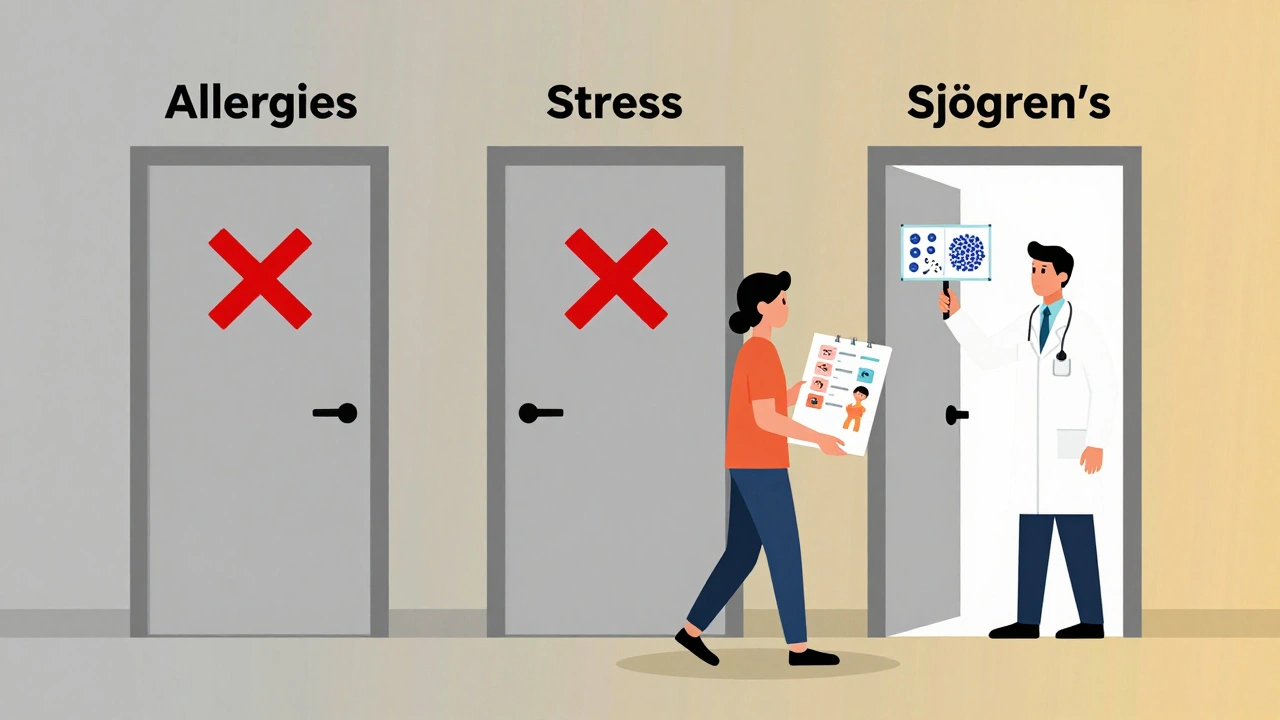
Sjögren’s Syndrome isn’t just about being thirsty or having gritty eyes. It’s when your immune system turns on the very glands that keep you moist - the ones that make tears, saliva, and other fluids. For millions of people, this isn’t a minor annoyance. It’s a constant battle against dryness that affects eating, speaking, seeing, and even sleeping. And because the symptoms mimic everyday problems like allergies or stress, most people wait years before getting the right diagnosis.
It Starts with Dryness - But It Doesn’t Stop There
The most obvious signs of Sjögren’s Syndrome are dry eyes and dry mouth. You might feel like sand is in your eyes, even after using artificial tears. Your mouth feels like cotton, making it hard to swallow dry foods like crackers or bread. You need to sip water constantly just to get through a meal. These aren’t temporary issues. They’re caused by your immune system attacking your lacrimal and salivary glands, slowly destroying their ability to produce fluid. But here’s what most people don’t realize: Sjögren’s isn’t just a mouth-and-eye problem. It’s a systemic autoimmune disease. That means it can hit multiple organs. About 70% of people with Sjögren’s report extreme fatigue that doesn’t go away, no matter how much they sleep. Around 50% of women experience vaginal dryness, which is rarely discussed but deeply impacts relationships. Up to 25% develop a persistent dry cough from lung involvement. Numbness or tingling in hands and feet happens in 10-15% of cases. Joint pain is common - similar to arthritis - but without the same level of joint damage. The disease doesn’t follow a straight line. Symptoms come and go. One month you feel okay; the next, you’re exhausted, your eyes burn, and your mouth is so dry you can’t talk. This unpredictability makes it hard to plan life. People often feel dismissed by doctors who think they’re just stressed or aging.Why Does This Happen? The Science Behind the Attack
No one knows exactly why the immune system targets moisture-producing glands. But we do know it’s not random. Genetics play a role - certain gene changes increase your risk. Environmental triggers like past viral or bacterial infections may set it off in people who are genetically prone. Unlike other autoimmune diseases that attack joints (like rheumatoid arthritis) or skin (like lupus), Sjögren’s focuses on exocrine glands - the ones that secrete fluids outside the bloodstream. That’s why it’s called a “sicca syndrome” - but unlike simple dryness from aging or medications, Sjögren’s comes with specific autoantibodies: anti-SSA/Ro and anti-SSB/La. These are found in 60-70% of patients and help confirm the diagnosis. A biopsy of a minor salivary gland from the inner lip often shows clusters of immune cells (lymphocytes) infiltrating the gland tissue. That’s the hallmark of the disease. It’s not just dryness - it’s inflammation. And once that inflammation starts, it can spread. The glands may stop working entirely over time, leading to permanent damage.Diagnosis Is a Maze - And It Takes Years
The average time from first symptom to diagnosis is 2.8 years. Many patients see three or more doctors before someone puts the pieces together. Why? Because the symptoms are vague and overlap with so many other conditions. A doctor will look for:- At least three months of persistent dry eyes or dry mouth
- A Schirmer’s test showing tear production under 5mm in 5 minutes
- An unstimulated salivary flow rate under 1.5mL in 15 minutes
- Positive blood tests for anti-SSA or anti-SSB antibodies
- Biopsy findings showing lymphocytic infiltration in salivary glands
What Treatments Actually Work?
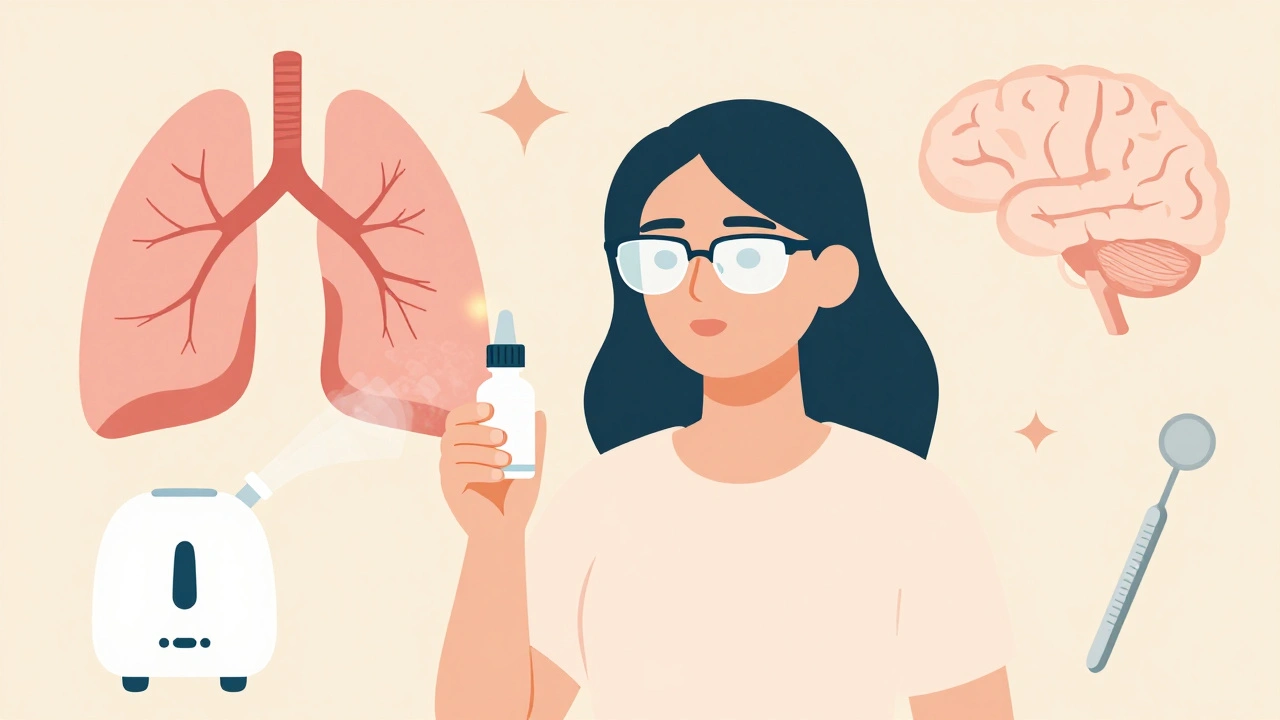
There’s no cure. But there are ways to manage it - and new options are emerging. For dry eyes: Preservative-free artificial tears used 8-10 times a day help. Some people need prescription eye drops like cyclosporine (Restasis) or lifitegrast (Xiidra) to reduce inflammation. Wearing moisture-chamber glasses at night can help prevent overnight drying. For dry mouth: Sugar-free gum or lozenges stimulate saliva. Saliva substitutes like Biotène or MouthKote can be used 5-7 times daily. Prescription drugs like pilocarpine (5mg three times a day) or cevimeline (30mg three times a day) can boost natural saliva production - about 60-70% of patients see noticeable improvement. Dental care is critical. People with Sjögren’s have 5-10 times higher risk of cavities. That means dental check-ups every 3-4 months, not 6. Fluoride treatments, antibacterial rinses, and avoiding sugary drinks are non-negotiable. For joint pain and fatigue: Hydroxychloroquine (Plaquenil) is often prescribed. It helps about 30-40% of patients, though it can take months to work. For more severe systemic symptoms - like lung or kidney involvement - immunosuppressants or biologics may be used. In June 2023, the FDA approved Efgartigimod (Vyvgart Hytrulo), the first new drug for Sjögren’s in 20 years. In trials, it improved dry mouth symptoms by 35% compared to placebo. It works by lowering disease-causing antibodies in the blood.Life With Sjögren’s: Daily Adjustments That Make a Difference
Managing Sjögren’s isn’t just about medicine. It’s about changing your environment and habits.- Use a humidifier in your bedroom - aim for 40-60% humidity
- Avoid air conditioning, fans blowing directly on your face, and smoky or windy places
- Drink water constantly, even if you’re not thirsty
- Choose soft, moist foods. Avoid dry bread, crackers, or salty snacks
- Use lubricating gels for vaginal dryness - over-the-counter options like Replens or prescription estrogen creams help
- Practice good oral hygiene: brush with fluoride toothpaste, floss daily, rinse with alcohol-free mouthwash
- Take breaks during screen time to blink more often - staring at screens reduces blinking by 60%
The Hidden Costs - Mental Health, Work, and Isolation
The invisible nature of Sjögren’s takes a heavy toll. Brain fog - trouble finding words, memory lapses, mental fatigue - is one of the most frustrating symptoms. People are often mistaken for being lazy or disinterested in meetings. One patient on a support forum said, “My coworkers thought I was incompetent. I was just too tired to think clearly.” Depression affects 42% of Sjögren’s patients - more than five times the rate in the general population. The constant discomfort, the lack of understanding from others, and the isolation from not being able to enjoy simple things like eating a sandwich or kissing someone without discomfort can wear you down. Work life suffers too. A 2022 survey found 87% of patients struggled with daily activities because of dry mouth. 79% said eye pain affected their job performance. The condition costs the U.S. $3.8 billion annually in lost productivity.What’s New? Hope on the Horizon
The last few years have brought real progress. The National Institutes of Health launched the Sjögren’s Precision Medicine Network in 2023, studying 5,000 patients to match treatments to individual biomarkers. Researchers have identified a T-cell signature present in 78% of patients - a potential new diagnostic tool. Twelve new therapies are in clinical trials. Three are biologics targeting B-cells, which are central to the immune attack in Sjögren’s. The TARGET initiative, a $15 million research program, is looking for genetic markers that predict who will develop severe disease. The European League Against Rheumatism updated its guidelines in 2022 to include salivary gland ultrasound as a diagnostic tool. The American College of Rheumatology now recommends earlier use of systemic drugs - not just waiting for symptoms to worsen.You’re Not Alone - And You’re Not Imagining It
Sjögren’s Syndrome affects about 4 million Americans, mostly women between 45 and 55. But it can strike children and men too. Despite how common it is, it’s one of the least understood autoimmune diseases. If you’ve been told your dryness is “just aging” or “all in your head,” you’re not crazy. You’re likely dealing with something real - and treatable. The key is finding a doctor who knows what to look for. Start with a rheumatologist. Bring your symptom log. Mention fatigue, joint pain, and brain fog - not just dry eyes. The road is long, but it’s getting clearer. With the right care, 90% of people with Sjögren’s live a normal lifespan. The goal isn’t just survival - it’s reclaiming your life. One sip of water, one blink without pain, one bite of food without struggle at a time.Is Sjögren’s Syndrome the same as dry eye syndrome?
No. Dry eye syndrome can happen from screen use, aging, or environmental factors, and it usually doesn’t involve other symptoms. Sjögren’s is an autoimmune disease that attacks moisture-producing glands and often comes with dry mouth, fatigue, joint pain, and other systemic issues. Blood tests and biopsies can confirm if it’s autoimmune.
Can Sjögren’s Syndrome cause dental problems?
Yes. Without enough saliva, your mouth can’t neutralize acids or wash away food particles. This leads to rapid tooth decay, gum disease, and oral infections. People with Sjögren’s have 5-10 times higher cavity rates. Regular dental visits every 3-4 months, fluoride treatments, and sugar-free products are essential.
Is Sjögren’s Syndrome hereditary?
It’s not directly inherited like a single-gene disorder, but certain genes increase your risk. If a close family member has Sjögren’s or another autoimmune disease like lupus or rheumatoid arthritis, your chance of developing it is higher. Environmental triggers - like infections - are usually needed to start the disease in genetically prone people.
Can men get Sjögren’s Syndrome?
Yes, but it’s rare. About 90% of cases are in women. Men who develop Sjögren’s often have more severe systemic symptoms and may be diagnosed later because doctors don’t expect it. The disease affects men and women the same way - dry eyes, dry mouth, fatigue - but men are underdiagnosed.
Does Sjögren’s Syndrome increase cancer risk?
Yes. People with Sjögren’s have a 4-5% lifetime risk of developing non-Hodgkin lymphoma - much higher than the general population’s 0.5%. This usually happens when the immune system’s inflammation becomes chronic and leads to abnormal cell growth in the salivary glands. Regular check-ups and monitoring for swollen glands, night sweats, or unexplained weight loss are important.
Are there new treatments on the way?
Yes. In 2023, the FDA approved Efgartigimod (Vyvgart Hytrulo), the first new drug for Sjögren’s in 20 years. It reduces harmful antibodies and improved dry mouth in 35% of patients. Twelve other therapies are in clinical trials, including biologics that target B-cells. Research is also focusing on personalized medicine based on genetic and biomarker profiles.
How do I know if I should see a doctor about my dryness?
If your dry eyes or dry mouth last more than three months, and you also have fatigue, joint pain, brain fog, or vaginal dryness, see a rheumatologist. Don’t wait for your doctor to notice - bring a list of symptoms. If you’ve tried artificial tears, increased water, or changed your diet and nothing helps, it’s time for a deeper evaluation.




Mellissa Landrum December 5, 2025
lol so now the gov is spraying lithium in the water to make us all dry as hell so they can sell us $500 eye drops? 🤡 i read this article and immediately thought: who benefits? big pharma. they got the FDA to approve some new drug called Efgartigimod? sounds like a chem lab named it after a failed space shuttle. dry mouth? drink water. dry eyes? stop staring at your phone. it's not an autoimmune disease-it's capitalism.
Mark Curry December 7, 2025
i think what's really sad is how we've normalized suffering. we don't ask why our bodies are breaking down-we just buy more drops, more gum, more gels. maybe the real question isn't 'how do we treat it?' but 'why are so many of us suddenly being attacked from within?' not just by antibodies... but by stress, pollution, processed food. we treat symptoms like puzzles to solve, not warnings to listen to.
Manish Shankar December 7, 2025
Thank you for this comprehensive and meticulously researched exposition. The clinical accuracy and empathetic tone are commendable. As a medical professional from India, I have encountered several cases of Sjögren’s Syndrome in middle-aged female patients, often misdiagnosed due to lack of awareness. The emphasis on early rheumatological consultation and the inclusion of salivary gland ultrasound as a non-invasive diagnostic tool is particularly valuable. May this awareness continue to spread globally.
Annie Grajewski December 8, 2025
oh wow you mean it's not just because i drank too much coffee and forgot to moisturize my eyeballs?? 🤦♀️ i thought my brain fog was just from scrolling tiktok at 3am. turns out my immune system is staging a coup. cool. so now i gotta take pills to make my mouth not feel like a desert? sure. why not. next up: i'm sure my liver is gonna start a union.
Mark Ziegenbein December 10, 2025
Let me be perfectly clear: the entire narrative surrounding Sjögren’s is a textbook case of medical reductionism disguised as enlightenment. You’ve got this beautifully complex, systemic, immune-mediated dysregulation-rooted in genetic predisposition, environmental triggers, and epigenetic silencing-and what do we do? We hand people artificial tears and call it a day. We don’t interrogate the microbiome. We don’t investigate the role of chronic viral latency. We don’t question why 90% of sufferers are women-because that would require confronting hormonal immunomodulation, and god forbid we acknowledge that the female body is not a malfunctioning male prototype. This isn’t dryness. This is the body screaming. And we’re giving it a lollipop.
Rupa DasGupta December 10, 2025
ok but what if it's not the immune system attacking? what if it's the body just giving up? like... i mean i've seen people with this and they just look so tired. not the kind of tired from work. the kind where your soul is out of juice. maybe we're all just too stressed and our bodies are like 'nah i'm done'. also i cried reading the part about kissing someone without discomfort. that hit me. 💔
Marvin Gordon December 11, 2025
you’re not alone. i’ve been living with this for 8 years. no one believes you until you’re in the ER because your tongue cracked open. i started carrying a water bottle everywhere. i use a humidifier in my car. i say no to dry snacks. i found a rheumatologist who listens. it’s not easy. but you can still live. you can still laugh. you can still eat pizza if you dunk it in sauce. small wins. keep going.
ashlie perry December 13, 2025
they’re lying about the lymphoma risk. it’s not 4-5% it’s 27%. they just don’t want you to know because then you’d stop taking the pills and start eating turmeric and doing moon baths. also the FDA is owned by Pfizer. and why do you think they made the drug so expensive? so you’ll keep paying. and the ‘new research’? just a distraction so you don’t ask why your tap water tastes like metal.