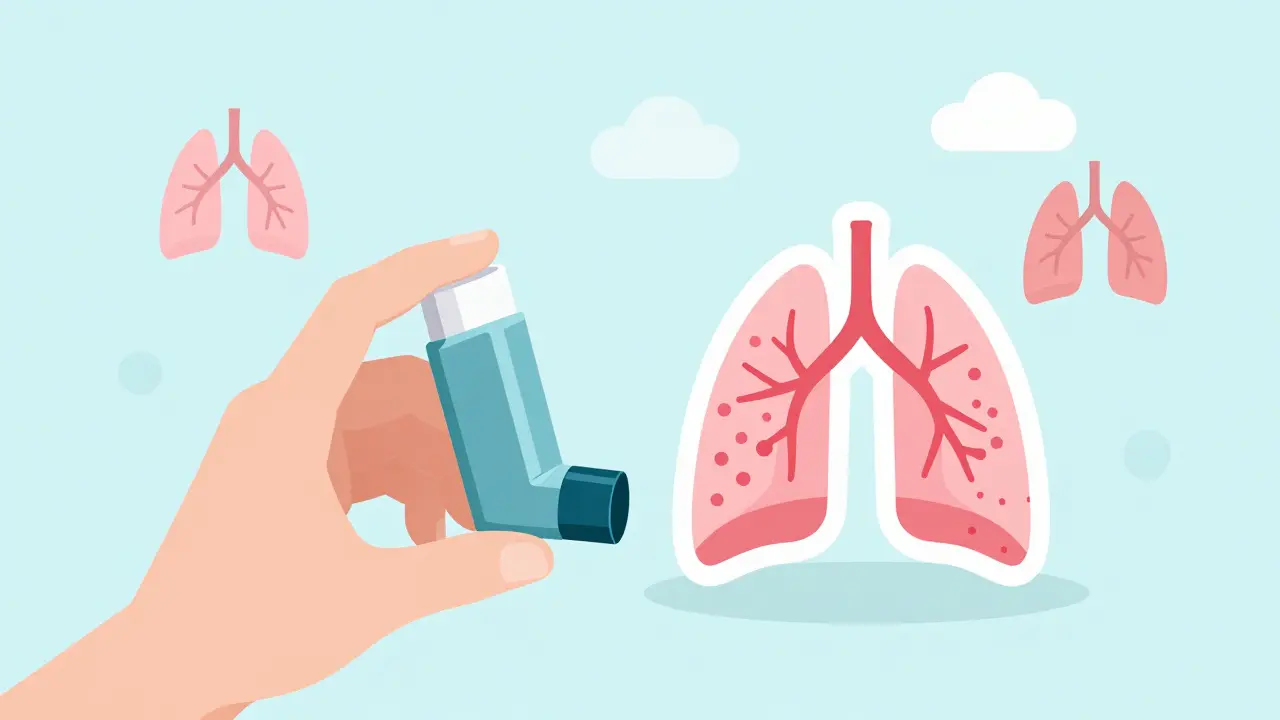
When you pick up a generic pill at the pharmacy, you expect it to work just like the brand-name version. That’s the promise. But for some drugs-especially complex ones-that promise is incredibly hard to keep. These aren’t simple tablets with one active ingredient. They’re inhalers that deliver medicine deep into your lungs, creams that need to penetrate skin layers, or injectables that release drug slowly over weeks. And proving they work the same as the original? That’s where things get messy.
What Makes a Generic Drug "Complex"?
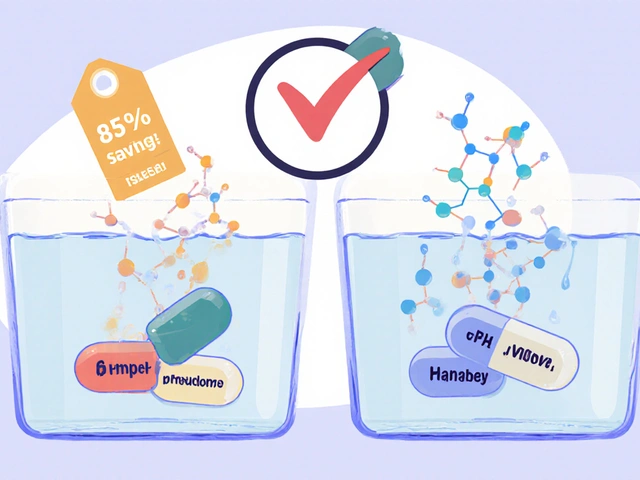
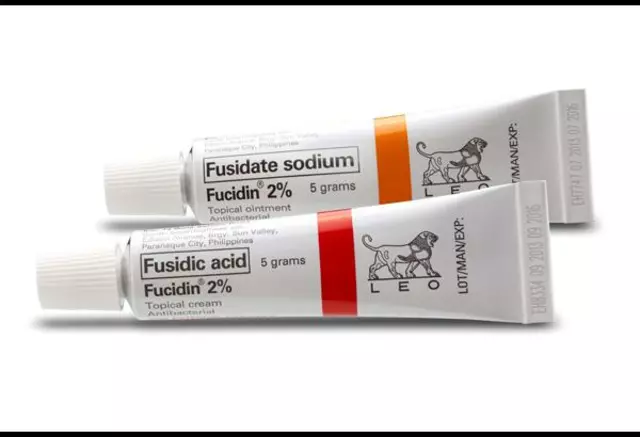
Not all generics are created equal. The FDA calls them "complex generics" when they involve tricky ingredients or delivery systems. Think liposomes, nanoparticles, gels, inhalers, or transdermal patches. These aren’t just copies of old-school pills. They’re engineered to control how and where the drug is released in your body. That’s good for patients-it means better results, fewer side effects. But it makes proving bioequivalence a nightmare.Take a topical corticosteroid cream for eczema. The active ingredient doesn’t need to enter your bloodstream to work. It acts right on your skin. So measuring blood levels, the usual way to check if two drugs are equivalent, doesn’t tell you anything. You need to know if the cream delivers the same amount of drug into the skin layers. But how? There’s no standard test for that. Same with an asthma inhaler. You can’t just measure how much drug ends up in your blood-you need to know if the particles are the right size, if they land in the right part of your lungs, and if the spray pattern matches the brand. That’s not easy to measure. And even if you could, regulators in Europe, the U.S., and elsewhere don’t always agree on how to do it.
Why Bioequivalence Testing Falls Short
For simple pills, bioequivalence is straightforward. You give volunteers the brand and the generic, take blood samples over time, and compare two numbers: AUC (how much drug is absorbed overall) and Cmax (how fast it peaks). If both are within 80% to 125% of the brand, you’re good. That’s been the gold standard since the 1980s.But that method breaks down for complex products. For inhaled drugs, the drug doesn’t even enter the blood in meaningful amounts. For topical products, it’s designed to stay local. For extended-release injectables, the drug is released over days or weeks-so a single blood draw won’t capture the full picture. The traditional test was built for drugs that act systemically. It’s not built for drugs that act locally.
And it’s not just the method. The tools to measure these products don’t exist at a consistent level. One lab might use laser diffraction to measure particle size in an inhaler. Another might use cascade impaction. The results can vary wildly. Without a single accepted standard, manufacturers can’t be sure their test will satisfy regulators. That’s why many complex generic applications get stuck in limbo for years.

The Reverse-Engineering Problem
Here’s the real kicker: generic makers don’t get the original formula. They don’t know the exact ratio of ingredients, the manufacturing temperature, the mixing speed, or the type of coating used. All they have is the product on the shelf. So they have to reverse-engineer it-like trying to recreate a secret recipe by tasting the dish and guessing the spices.That’s called "de-formulation." It’s expensive, time-consuming, and often fails. One small change in an inactive ingredient-a stabilizer, a surfactant, even the water purity-can alter how the drug behaves. For example, a change in the emulsifier in a topical cream might make it spread differently on skin, which affects how much drug actually gets absorbed. That’s not a defect. It’s just a different formulation. But under regulatory rules, it’s enough to fail bioequivalence.
Manufacturers spend millions trying to match the original. They test dozens of versions. Some fail at the stability stage-when the product degrades under heat or humidity. Others pass lab tests but fail in human trials because the delivery mechanism doesn’t behave the same way in real people. The failure rate? Over 70% at the bioequivalence stage. That’s why only 10-15% of complex generic applications get approved, compared to over 80% for simple pills.
Regulatory Chaos and Global Delays
Even if a company gets it right in the U.S., they’re not done. The European Medicines Agency (EMA) might require different tests. Japan might ask for additional data on particle size distribution. Canada might want more stability data under extreme humidity. That means companies have to run parallel development programs-doubling or tripling costs just to enter multiple markets.It’s not just different rules. It’s different science. The FDA might accept a new in vitro model for skin penetration. The EMA might demand a clinical endpoint study instead. There’s no global agreement on what constitutes proof for complex products. This lack of harmonization slows down access to affordable versions of high-cost drugs-like biologics, inhaled steroids, or testosterone gels-that could save patients and healthcare systems billions.

What’s Changing? New Tools and New Thinking
The good news? Things are starting to shift. The FDA has created a special committee just for complex generics. They’re funding research into better testing methods. One promising approach is physiologically-based pharmacokinetic (PBPK) modeling. Instead of relying on blood samples, these computer models simulate how a drug moves through the body based on its physical properties-particle size, solubility, release rate. If the model shows the generic will behave like the brand, regulators might accept it without human trials.Other tools are emerging too. Imaging techniques can now track how a cream penetrates skin. Lung deposition models can show where inhaled particles land. These aren’t perfect yet-but they’re getting closer. The FDA published 15 new guidance documents in 2022 and 2023 alone, covering everything from topical corticosteroids to metered-dose inhalers. These aren’t just paperwork. They’re roadmaps for developers.
Companies that engage with the FDA early-before they spend millions on development-have a 35% higher chance of approval. That’s a game-changer. It means talking to regulators before building the first batch, not after failing a trial. That’s how you avoid wasting years and money.
The Real Cost of Delay
The stakes are high. There are about 400 complex drug products on the market with no generic alternatives. These include treatments for asthma, psoriasis, cancer, and hormone replacement. Many cost over $10,000 a year. Patients can’t afford them. Insurance companies won’t cover them without a cheaper option. So people go without-or pay out of pocket.The market for complex generics is growing fast. It was $15 billion in 2023. By 2028, it could hit $45 billion. But that growth depends on solving the bioequivalence problem. If regulators keep using outdated methods, innovation will stall. If they embrace new science, we could see affordable versions of these drugs within five years.
It’s not about lowering standards. It’s about raising the science. We don’t need more tests. We need smarter tests. We don’t need more trials. We need better models. And we need global alignment. The technology exists. The will is starting to form. The question is: how long will it take for the system to catch up?
Why can't we just use blood tests for all generic drugs?
Blood tests work for drugs that need to enter the bloodstream to work-like antibiotics or painkillers. But for inhalers, creams, or eye drops, the drug is meant to act locally. Measuring blood levels tells you nothing about whether the drug reached the skin, lung, or eye. That’s why regulators are turning to new methods like imaging and computer modeling.
How long does it take to develop a complex generic compared to a regular one?
Regular generics take 2-3 years to develop. Complex generics take 4-5 years-sometimes longer. They also cost 2.5 to 3 times more. Many fail at the bioequivalence stage, so companies often go through multiple failed attempts before getting it right.
What’s the biggest hurdle for manufacturers?
The biggest hurdle is the lack of standardized testing methods. Without a single accepted way to prove equivalence, manufacturers can’t be sure their approach will work. This leads to wasted time, money, and failed applications. The same product might pass in the U.S. but fail in Europe because the tests are different.
Are complex generics safe?
Yes-if they’re approved. The FDA only approves them after proving they’re as safe and effective as the brand. The problem isn’t safety-it’s proving equivalence. Many complex generics never make it to market because the science to prove equivalence is still evolving, not because they’re unsafe.
Why aren’t there more complex generics on the market?
Because the science and regulation haven’t kept up with the complexity of the drugs. Only about 10-15% of complex generic applications get approved, compared to over 80% for simple ones. The high cost, long timelines, and uncertain regulatory pathways make it a risky investment for manufacturers.
What’s the future for complex generics?
The future lies in better science-not more trials. Computer modeling, advanced imaging, and standardized analytical tools are making it possible to prove equivalence without always relying on human studies. Regulatory agencies are starting to accept these methods. If global harmonization follows, we could see a wave of affordable complex generics in the next 5-7 years.






Elaine Douglass December 19, 2025
This really hit home for me my mom uses that eczema cream and she’s been stuck with the brand name for years because nothing else works the same
It’s not just about cost it’s about quality of life
Takeysha Turnquest December 20, 2025
We think medicine is science but really it’s just a game of shadows
They give us pills and pretend they know what’s inside
The body doesn’t care about your paperwork it only cares if it works
Emily P December 21, 2025
I’m curious about the PBPK modeling part
How accurate are these simulations really
Do they account for individual differences like metabolism or skin thickness
I feel like that’s the missing piece
Dikshita Mehta December 23, 2025
From India we see this every day
Patients wait months for generics that never come
The regulatory chaos isn’t just American it’s global
But the science is catching up
Early engagement with agencies is the key
Manufacturers who skip this just waste money
And patients pay the price
Mark Able December 24, 2025
Wait so you’re telling me we’ve been using blood tests for 40 years and they don’t work for creams
How is this even possible
Are the FDA just asleep at the wheel
Why are we still paying $10k for asthma inhalers
Someone needs to get fired
James Stearns December 24, 2025
It is an undeniable fact that the current paradigm of bioequivalence assessment is fundamentally inadequate for the characterization of complex pharmaceutical formulations
Regulatory bodies must transcend antiquated methodologies and embrace a paradigm shift predicated upon physiologically informed computational modeling
Otherwise the integrity of the pharmaceutical supply chain is imperiled
Dominic Suyo December 25, 2025
Let’s be real
This whole system is a corporate circus
Big Pharma holds the recipe
The FDA lets them write the test
And generics? They’re stuck playing whack-a-mole with invisible variables
Meanwhile patients are getting fleeced
And regulators are too scared to say ‘we don’t know’
It’s not science it’s theater with lab coats
Alisa Silvia Bila December 26, 2025
Elaine’s comment about her mom made me think
What if we started with patient outcomes instead of lab numbers
What if the goal wasn’t to match the brand
But to make sure the patient gets relief
Maybe that’s the real standard we’re missing
Marsha Jentzsch December 28, 2025
HOW IS THIS STILL A THING????
WE HAVE LASERS AND AI AND WE CAN’T TELL IF A CREAM WORKS THE SAME AS ANOTHER CREAM????
IT’S NOT ROCKET SCIENCE IT’S JUST CHEMISTRY AND YOU’RE TELLING ME NO ONE CAN FIGURE IT OUT FOR 20 YEARS????
WHO’S GETTING PAID TO KEEP THIS GOING????
THIS IS A SCAM AND I’M SICK OF IT!!!!