DOAC Dosing in Obesity
When working with DOAC dosing in obesity, the practice of adjusting direct oral anticoagulant doses for patients with a body mass index of 30 kg/m² or higher. Also known as obese patient anticoagulant dosing, it requires a clear understanding of how excess body weight changes drug exposure and clinical outcomes.
One of the first things to realize is that Direct Oral Anticoagulants, including apixaban, rivaroxaban, dabigatran, and edoxaban are not one‑size‑fits‑all. Their absorption, distribution, metabolism, and excretion (ADME) can shift dramatically when a patient’s weight exceeds 120 kg. DOAC dosing obesity therefore encompasses Pharmacokinetics, the study of how the body handles a drug over time. In obese individuals, increased fat mass expands the volume of distribution, while higher cardiac output can speed up clearance. This means the usual fixed doses may lead to sub‑therapeutic levels, raising the risk of stroke or venous thromboembolism, or to excess exposure, increasing bleeding danger. The relationship can be expressed as: DOAC dosing in obesity requires pharmacokinetic adjustments; obesity influences drug distribution; and renal function affects DOAC clearance.
Practical Factors to Check Before You Adjust
The next step is to assess the patient’s Obesity, usually measured by body mass index (BMI) or by actual body weight alongside comorbidities like chronic kidney disease, liver impairment, or diabetes. A creatinine clearance estimate (e.g., Cockcroft‑Gault) remains critical because all DOACs are partially eliminated by the kidneys, and obese patients often have altered renal function. If the clearance is above 50 mL/min, many clinicians stick with standard dosing but monitor drug‑specific trough levels when available. When clearance drops below 30 mL/min, dose reduction is common, especially for dabigatran and edoxaban. Another key factor is the therapeutic indication—stroke prevention in atrial fibrillation versus treatment of deep‑vein thrombosis can call for different dose intensity.
Finally, remember that real‑world data show mixed outcomes. Some large registry analyses suggest that standard DOAC doses work fine up to 140 kg, while others report higher failure rates beyond that point. Because guidelines still list obesity as a “caution” rather than a strict contraindication, clinicians should adopt a balanced approach: start with the recommended dose, check anti‑factor Xa or diluted thrombin time assays if the lab is equipped, and adjust if the patient shows signs of under‑ or over‑anticoagulation. The articles below dive into specific drug comparisons, safety alerts, and step‑by‑step titration charts that help you make these decisions with confidence.
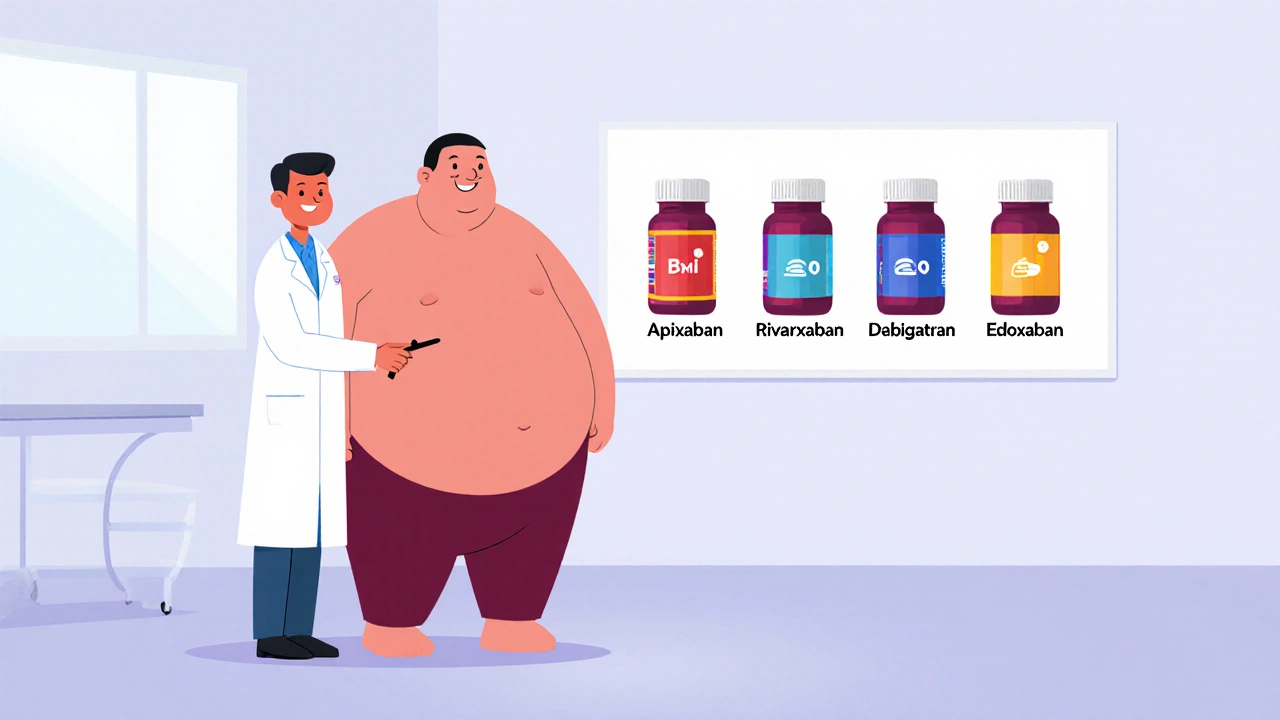
DOAC Dosing for Obesity: Efficacy, Safety & Side Effects
A concise guide on how direct oral anticoagulants work in obese patients, covering dosing, efficacy, safety, and side‑effect considerations for apixaban, rivaroxaban, dabigatran and edoxaban.