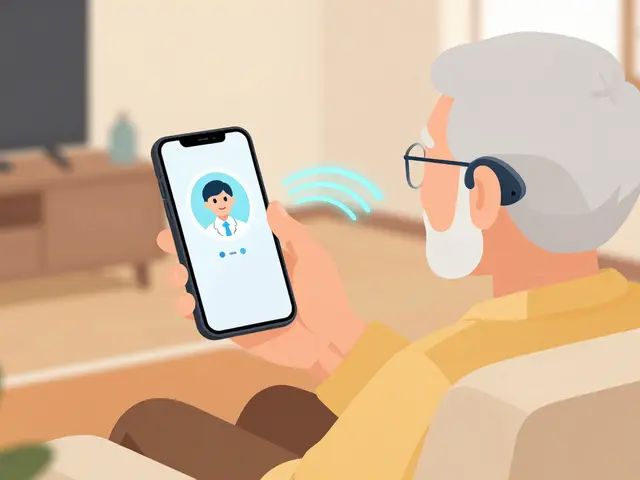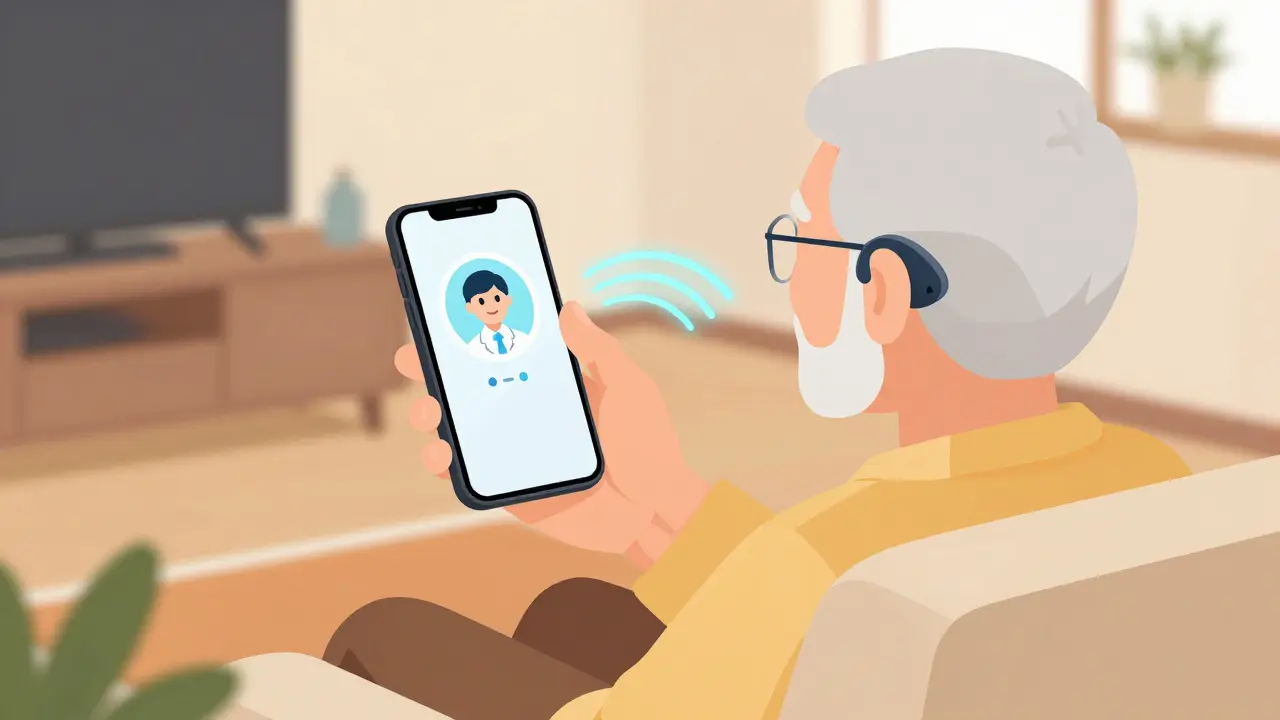
Imagine sitting in your living room, watching TV, when your hearing aids start whistling. In the past, this meant booking an appointment, driving to a clinic, waiting in a lobby, and spending twenty minutes in a soundproof booth while someone tweaked settings you couldn’t hear well anyway. Today, you can pick up your phone, tap an icon, and have an audiologist adjust those settings remotely while you’re still on the couch. This is teleaudiology, and it is rapidly changing how we manage hearing health.
For years, hearing care was strictly a brick-and-mortar service. You had to be physically present for every test and adjustment. But technology has closed that gap. Teleaudiology allows licensed hearing professionals to deliver diagnosis, treatment, and management services via telecommunications. It’s not just a video call; it’s a fully integrated system that lets doctors control your devices from miles away. If you are wondering whether remote care is as good as in-person visits, or if it’s right for you, let’s break down exactly how it works, what it costs, and where it falls short.
How Teleaudiology Actually Works
To understand teleaudiology, you need to know that it isn’t one single thing. It operates through two main methods: synchronous and asynchronous. Knowing the difference helps you choose the right service for your needs.
Synchronous Teleaudiology is real-time interaction. Think of it like a Zoom meeting with your audiologist. They can see you, hear you, and often control your hearing aids directly through their computer. Some advanced systems, like the Clinic-in-a-Box® used by providers such as hear.com, even include specialized remote testing equipment. The audiologist pushes buttons on their screen, and your device responds instantly. This method is best for initial fittings, complex adjustments, and detailed counseling.
Asynchronous Teleaudiology is store-and-forward. You complete a hearing test online or via a mobile app at your own pace. The results are sent securely to your provider, who reviews them later and sends back recommendations or prescriptions. There is no live conversation during the test itself. This is great for routine check-ups, monitoring progress, or patients in areas with poor internet connectivity who can’t sustain a long video call.
Both methods rely on three key components:
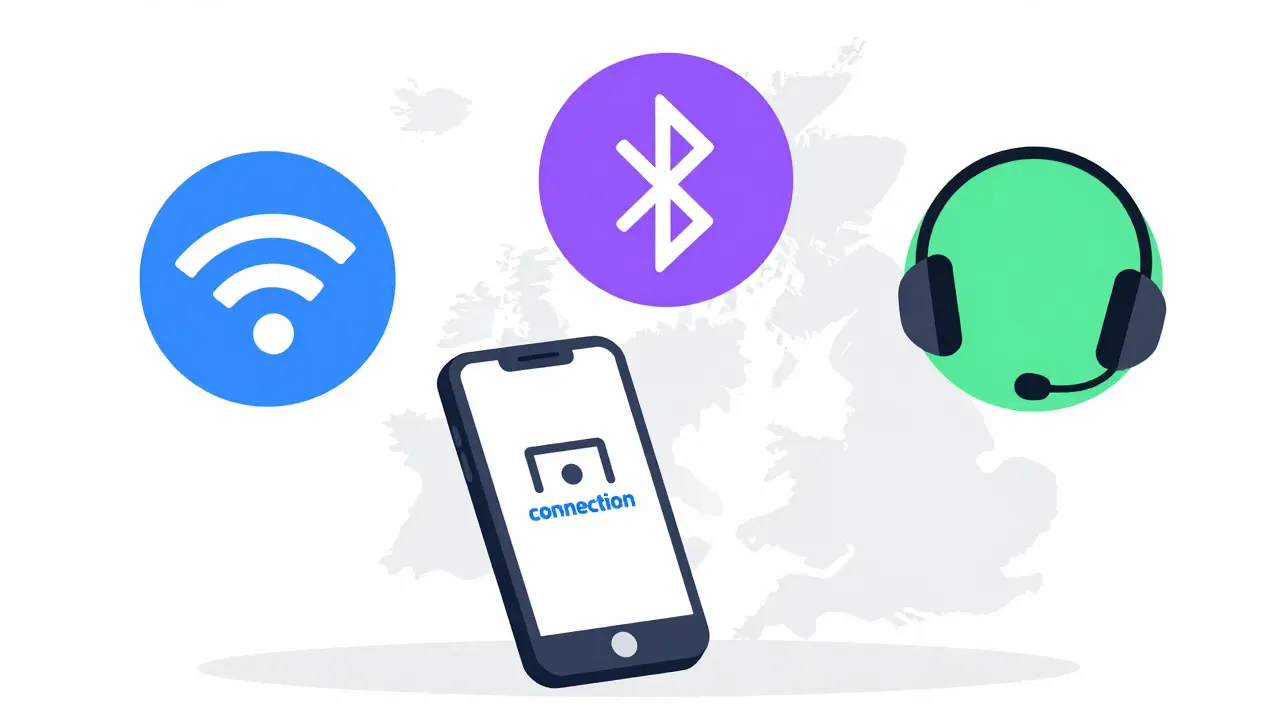
- Stable Internet: You need a broadband connection with at least 5 Mbps upload/download speed. Video calls lag if your Wi-Fi is weak.
- Compatible Devices: Your hearing aids must be Bluetooth-enabled prescription devices. Major manufacturers like Phonak, ReSound, Oticon, and Starkey have built remote access into their apps.
- User Interface: You’ll use a smartphone, tablet, or computer. Don’t worry if you aren’t tech-savvy; studies show 82% of users aged 65+ navigate these systems successfully after just a little guidance.
Remote vs. In-Person: What’s the Difference?
Is teleaudiology just a cheaper alternative, or does it offer something better? The answer depends on what you need. For follow-up care, remote wins. For comprehensive diagnostics, in-person still holds the edge.
| Feature | Teleaudiology (Remote) | Traditional In-Person Visit |
|---|---|---|
| Accessibility | High. Eliminates travel for rural patients (78% report improved access). | Low. Requires physical presence; average travel time 2.3 hours for rural users. |
| Cost per Visit | $120-$150 (approx. 15-20% less than in-person). | $140-$180. |
| Environment Testing | Excellent. Adjustments made in your actual home/listening environment. | Limited. Tests done in quiet, controlled clinical booths. |
| Physical Exam | Not possible. Cannot remove earwax or examine ear canal. | Yes. Includes otoscopy and cerumen removal. |
| Patient Satisfaction | 4.6/5.0 for remote adjustments. | 4.2/5.0 for in-person visits. |
The biggest advantage of teleaudiology is context. When you visit a clinic, the room is silent. But your hearing problems usually happen in noisy restaurants, family gatherings, or windy streets. With remote adjustments, your audiologist can tweak your device while you are actually in those challenging environments. Case studies from Hearzap in 2023 showed this approach improves patient outcomes by 31% in difficult listening situations.
However, there is a hard limit: teleaudiology cannot perform physical exams. An audiologist cannot look inside your ear canal via a webcam. This creates a 12-15% risk of missing medically significant conditions, such as severe earwax blockages or infections, which require in-person treatment. Dr. Charles Berlin, a professor at Louisiana State University Health Sciences Center, notes that this limitation means some patients will eventually need a physical visit regardless of how good the remote tech is.
Accuracy and Effectiveness: Does It Work?
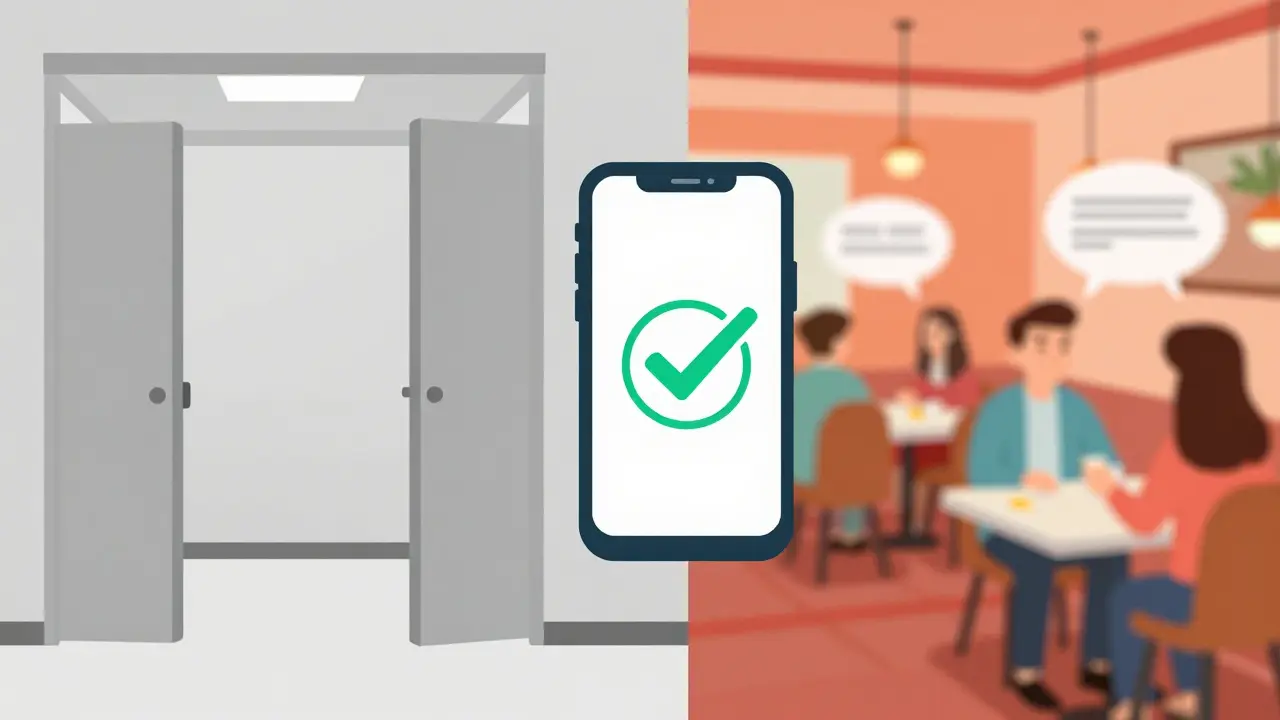
You might wonder if a hearing test taken at home is reliable. The data says yes, but with caveats. Clinical trials indicate that remote hearing tests achieve 92-95% accuracy compared to traditional in-clinic audiometry when conducted in controlled home environments. That is nearly identical to professional results.
But “controlled” is the keyword here. If your house is loud-kids playing, TV on, traffic outside-the accuracy drops to 78-85%. Ambient noise affects 37% of remote tests according to 2023 data. To get accurate results, you need a quiet room. Closed doors, headphones, and a calm environment are non-negotiable for precision.
For hearing aid adjustments, the evidence is even stronger. A multi-site randomized controlled trial published in the *Journal of Telemedicine and Telecare* found that remote adjustments demonstrate non-inferior outcomes to in-person care for 89% of routine follow-up scenarios. In other words, for most standard tweaks, you get the same result without leaving home.
Getting Started: What You Need to Know
If you decide to try teleaudiology, the setup process is straightforward but requires a bit of preparation. Here is how to ensure your first session goes smoothly.
- Check Compatibility: Confirm your hearing aids support remote programming. Most modern Bluetooth-enabled aids from major brands do. Older analog models likely won’t work.
- Download the App: Manufacturers provide specific apps. Phonak uses myPhonak, ReSound uses the Smart app, etc. Create your account and link your devices before your appointment.
- Test Your Tech: Ensure your internet speed is at least 5 Mbps. If your Wi-Fi is unstable, consider using your phone’s cellular data hotspot for the session.
- Prepare Your Space: Find a quiet room for testing. Have wired headphones ready; they often provide clearer audio than Bluetooth connections during diagnostic phases.
- Schedule Time: Allow 20-45 minutes for your first session. This includes onboarding and troubleshooting. Subsequent visits are usually shorter.
The learning curve is moderate. About 76% of users become proficient after just one 30-minute tutorial. Common hiccups include Bluetooth pairing issues (reported in 33% of initial sessions). If your device won’t connect, restart both your phone and hearing aids. It sounds simple, but it solves most connectivity errors.
Who Should Use Teleaudiology?
Teleaudiology isn’t for everyone, but it is ideal for specific groups. Consider it if:
- You Live Rurally: If you drive more than 50 miles to see an audiologist, teleaudiology saves you time and money. Studies show it cuts travel costs by $87 per appointment on average.
- You Have Mobility Issues: Elderly patients or those recovering from surgery appreciate avoiding long trips. One user in Montana avoided four 4-hour round trips by resolving feedback issues remotely.
- You Need Frequent Tweaks: If your hearing fluctuates or you move between different acoustic environments often, remote adjustments allow for quicker fine-tuning.
Avoid relying solely on teleaudiology if:
- You Have Ear Pain or Drainage: These symptoms require a physical exam to rule out infection.
- You Are Getting Fitted for the First Time: Initial comprehensive evaluations often benefit from an in-person visit to establish a baseline and check ear health.
- You Lack Tech Comfort: While many seniors adapt well, if you struggle with smartphones, the frustration may outweigh the convenience.
The Future of Remote Hearing Care
We are only scratching the surface. The global tele-audiology market grew from $1.2 billion in 2019 to $4.7 billion in 2023. By 2027, analysts predict it will handle 55-60% of all hearing aid follow-up appointments. Why? Because AI is stepping in. New features, like Widex’s Moment Adjust, use AI to automatically detect environments and suggest adjustments during remote sessions. This automation could handle 30-40% of routine tasks, freeing up audiologists for complex cases.
Regulations are also catching up. As of mid-2024, more U.S. states are allowing cross-state practice and Medicare reimbursement for tele-audiology services. This means wider access and potentially lower out-of-pocket costs for patients. The World Health Organization identifies tele-audiology as critical for addressing the projected global shortage of 200,000 hearing care professionals by 2030. It’s not just a convenience; it’s a necessity for future healthcare infrastructure.
Is teleaudiology covered by insurance?
Coverage varies significantly by location and provider. In the U.S., Medicare reimbursement for tele-audiology services is currently limited to 18 states, though this list is expanding. Private insurance plans increasingly cover remote consultations, especially for follow-up care. Always check with your insurer and audiologist beforehand to confirm if your specific plan covers virtual visits and remote device adjustments.
Can an audiologist remove earwax remotely?
No. Teleaudiology cannot perform physical procedures. If you suspect you have an earwax blockage, you will need an in-person visit. Audiologists can guide you on safe over-the-counter wax removal drops, but they cannot extract wax or examine your ear canal visually via video call. Ignoring a blockage can lead to inaccurate hearing test results and discomfort.
Do I need special equipment for teleaudiology?
You don’t need expensive medical gear. Most services require only a smartphone, tablet, or computer with a stable internet connection (minimum 5 Mbps) and Bluetooth-enabled hearing aids. Some providers may recommend wired headphones for testing accuracy, but these are standard consumer electronics. No specialized hardware is installed in your home unless you opt for premium "clinic-in-a-box" kits, which are rare.
Is remote hearing testing as accurate as in-clinic tests?
In quiet, controlled home environments, remote tests are 92-95% as accurate as in-clinic audiometry. However, accuracy drops to 78-85% if there is background noise. To ensure reliability, conduct tests in a silent room with closed doors. If results seem inconsistent, an in-person verification test is recommended.
What happens if my internet cuts out during a session?
If your connection drops, the session pauses. Most platforms allow you to reconnect quickly. If the issue persists, switch to cellular data if available. For asynchronous services, you can pause and resume tests later. Synchronous video calls may need to be rescheduled if stability cannot be restored. Always have a backup plan, like a mobile hotspot, for important appointments.