Orange Book TE Code Decoder
Type the two-letter code found on your prescription label or in the Orange Book (e.g., AB, AN, BC).
Substitution Verdict
What this means
Clinical Context
Enter a code like AB, AN, or BX to see if a generic can be substituted.
Common TE Codes Reference
| Code | Definition | Substitutable? |
|---|---|---|
| AB | Therapeutically equivalent with no known bioequivalence issues. | Yes |
| AN | Equivalent, but potential bioequivalence issues due to narrow therapeutic index. | Caution |
| AO | Equivalent, but bioequivalence studies not required (e.g., some topicals). | Varies |
| BC | Not therapeutically equivalent; clinical studies needed. | No |
| BX | Not therapeutically equivalent; insufficient evidence. | No |
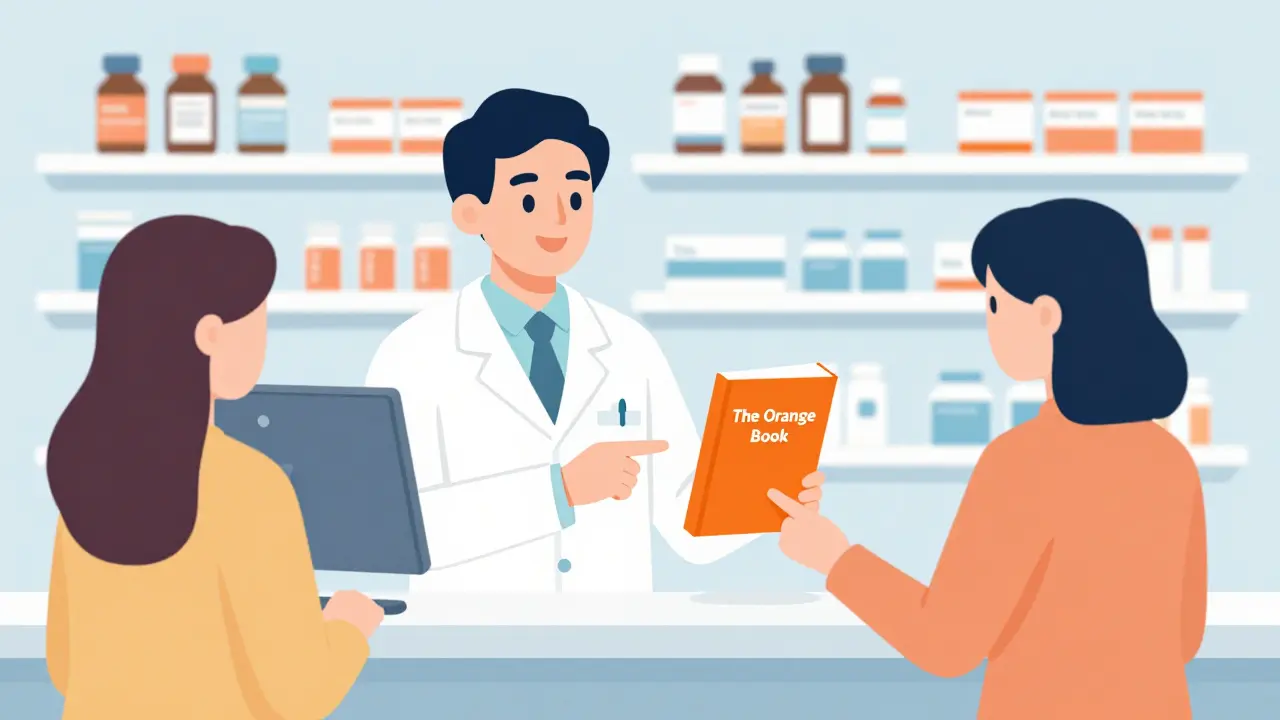
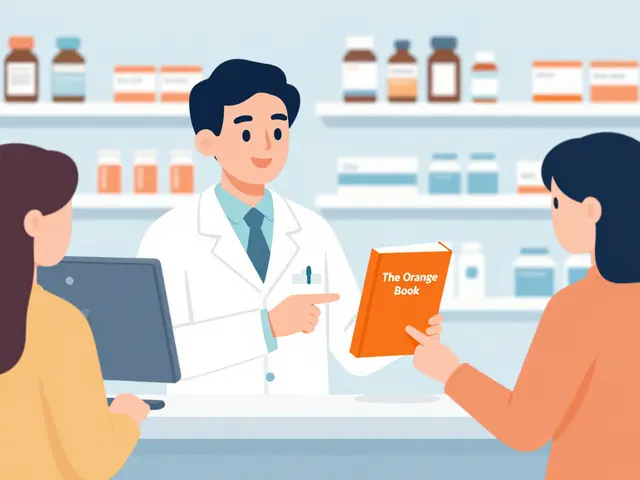
You’ve probably stood in a pharmacy line, watched the pharmacist type your prescription into the computer, and waited while they checked if a cheaper option was available. That split-second decision to swap a brand-name pill for a generic one isn’t just about saving you money-it’s governed by a specific government publication that most people have never heard of. It’s called The Orange Book, officially known as Approved Drug Products with Therapeutic Equivalence Evaluations. Published by the U.S. Food and Drug Administration (FDA), this document is the backbone of the American generic drug market.
Without the Orange Book, pharmacists wouldn’t have a standardized way to know if a generic medication is truly interchangeable with its brand-name counterpart. The system it created has saved the U.S. healthcare system an estimated $1.67 trillion between 2010 and 2019. But how does it actually work? And what do those cryptic two-letter codes on your prescription label really mean for your health?
What Is the Orange Book and Why Does It Exist?
To understand the Orange Book, you have to look back at 1984. Before then, the pharmaceutical industry faced a dilemma. Big pharma companies spent billions developing new drugs, but once patents expired, there was no clear legal pathway for smaller companies to make cheaper copies. Conversely, without patent protection, big pharma had little incentive to innovate. The solution was the Drug Price Competition and Patent Term Restoration Act, commonly known as the Hatch-Waxman Act.
This law struck a delicate balance. It allowed brand-name drug manufacturers to extend their patent terms slightly to compensate for the time lost during FDA approval. In exchange, it created a streamlined process for generic manufacturers to prove their products were equivalent to the original. The Orange Book was born out of this legislation to serve as the official reference point for these comparisons.
Today, the Orange Book lists every drug product approved by the FDA based on safety and effectiveness. It doesn’t just list them; it evaluates whether they are therapeutically equivalent. This distinction is crucial. The book does not compare different drugs used for the same condition-like comparing morphine to meperidine for pain. Instead, it compares identical active ingredients to see if a generic version performs exactly like the brand-name Reference Listed Drug (RLD).
Decoding Therapeutic Equivalence: It’s Not Just About Ingredients
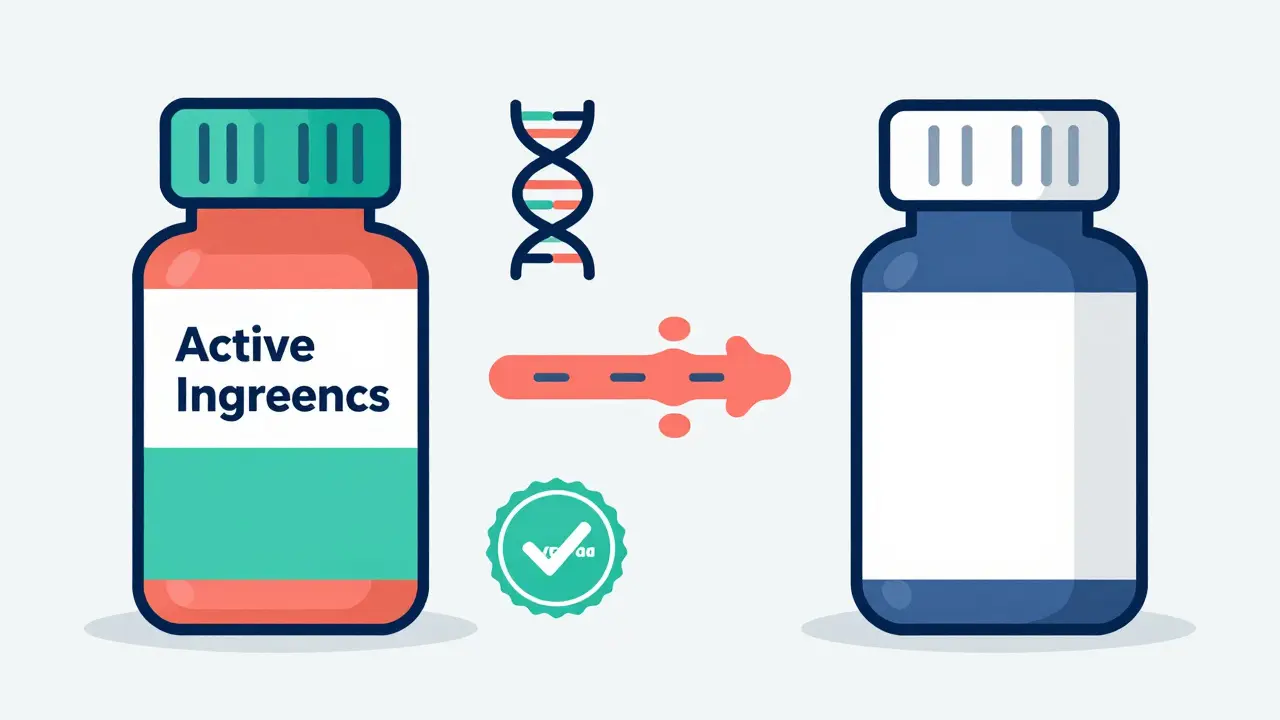
Many people assume that if a generic drug has the same active ingredient as the brand name, it’s automatically safe to substitute. While that’s a good starting point, the FDA requires three specific criteria to be met before assigning a therapeutic equivalence rating:
- Pharmaceutical Equivalence: The drugs must contain the identical active ingredient in the exact same amount, dosage form (e.g., tablet, capsule), and route of administration (e.g., oral, topical). They must also meet strict standards for strength, quality, purity, and identity.
- Bioequivalence: This is where science gets tricky. The drugs must be metabolized by the body in the same way. There should be no significant difference in the rate or extent to which the active ingredient enters the bloodstream. If bioequivalence problems exist, they must be resolved through rigorous testing.
- Official Recognition: The drug must be approved as safe and effective, adequately labeled, and manufactured in facilities that comply with Current Good Manufacturing Practice (CGMP) regulations.
If a generic meets all these hurdles, it earns an “A” code in the Orange Book. If it fails any part of this process, it receives a “B” code, indicating it is not therapeutically equivalent. This system ensures that when a pharmacist substitutes a generic, they aren’t guessing-they’re relying on data.
Understanding TE Codes: The Language of Substitution
The heart of the Orange Book is its Therapeutic Equivalence (TE) coding system. These two-letter codes determine whether a pharmacy can legally and safely swap a brand-name drug for a generic. Here is how to read them:
| Code | Meaning | Substitution Status |
|---|---|---|
| AB | Therapeutically equivalent with no known bioequivalence issues. | Generally substitutable in all states. |
| AN | Equivalent, but potential bioequivalence issues may exist due to narrow therapeutic index. | May require physician approval or monitoring. |
| AO | Equivalent, but bioequivalence studies were not required (e.g., some topical products). | Usually substitutable, but varies by state law. |
| BC | Not therapeutically equivalent; clinical studies needed to resolve bioequivalence concerns. | Not substitutable without specific justification. |
| BX | Not therapeutically equivalent; insufficient evidence to support equivalence. | Not substitutable. |
The first letter tells you the broad category: “A” means yes, it’s equivalent; “B” means no, it’s not. The second letter provides nuance. For example, an “AB” code is the gold standard. It means the FDA has confirmed that the generic is bioequivalent and poses no risk. A “BX” code, on the other hand, means the FDA lacks sufficient evidence to say the generic works the same way, so substitution is off the table.
Confusion often arises with codes like “BC” or “BD.” In a 2022 internal report, Walgreens found that misinterpreting these codes led to over $1.2 million in rejected insurance claims across thousands of stores. Pharmacists spend an average of 12.7 minutes verifying complex prescriptions using the Orange Book to avoid these costly errors. Getting the code right isn’t just administrative-it’s a patient safety issue.
Who Uses the Orange Book and How?
You might think the Orange Book is only for regulators, but it’s a daily tool for several key players in the healthcare ecosystem:
- Pharmacists: They use it to decide if they can fill a prescription with a generic. In many states, substitution laws mandate that if an “AB” rated generic is available, the pharmacist must offer it unless the doctor specifically writes “Dispense As Written.”
- Insurance Companies and PBMs: Pharmacy Benefit Managers (PBMs) use TE codes to build formularies. They will typically only cover generics that have an “A” rating because they are proven to be cost-effective and clinically comparable.
- Generic Manufacturers: When applying for an Abbreviated New Drug Application (ANDA), companies must cite the Reference Listed Drug (RLD) from the Orange Book. Their entire application hinges on proving their product matches the RLD’s profile.
- Physicians: Doctors consult the Orange Book when prescribing narrow therapeutic index drugs-medications where small changes in blood concentration can lead to toxicity or treatment failure. For these drugs, they may specify a particular manufacturer to avoid switching risks.
A survey published in the *Journal of the American Pharmacists Association* in May 2023 revealed that while 92% of pharmacists consider the Orange Book essential, only 41% felt very confident interpreting TE codes without reference materials. This gap highlights why organizations like the National Community Pharmacists Association offer specialized certification courses on Orange Book interpretation.

The Structure of the Orange Book
The publication is divided into four distinct parts, each serving a different purpose:
- Part I: Approved prescription drug products with therapeutic equivalence evaluations. This is the section most people interact with indirectly.
- Part II: Approved over-the-counter (OTC) drug products not covered by existing OTC monographs. Monographs are FDA rules that allow certain OTC drugs to be marketed without individual review, so Part II covers the exceptions.
- Part III: Drug products approved under Section 505 of the FD&C Act but administered by the Center for Biologics Evaluation and Research (CBER). This includes certain vaccines and blood products.
- Part IV: A cumulative list of products with various statuses, including those never marketed, discontinued, or withdrawn for reasons other than safety or efficacy.
It’s important to note what is not in the Orange Book. Drugs approved only on the basis of safety, such as those reviewed under the old DESI program (like Donnatal Tablets), are excluded. The book focuses strictly on products approved for both safety and effectiveness.
Challenges and Future Developments
As medicine advances, the Orange Book faces new challenges. Simple pills are easy to evaluate. Complex generics-like inhalers, injectables, and drug-device combinations-are much harder. For example, with an inhaler, the device itself affects how the drug is delivered. The FDA doesn’t require the generic device to be identical, but it must produce the same clinical effect. This requires case-by-case scientific justification.
In March 2022, the FDA released updated guidance to clarify how these complex products are evaluated. The agency acknowledged that inconsistent TE coding had caused confusion, particularly for topical products and inhalers. The goal was to make the Orange Book more approachable while maintaining rigorous standards.
Looking ahead, the FDA is modernizing the electronic Orange Book. Scheduled for full deployment in Q2 2024, the new platform will offer enhanced search functionality, allowing users to find application numbers, applicant names, and drug strengths alongside TE codes in a single interface. This digital transformation aims to reduce the friction pharmacists and insurers face when verifying substitution eligibility.
Despite these updates, debates continue. Critics argue that the current system doesn’t fully account for real-world variability in patient responses to different generic manufacturers. However, the data remains compelling: generic drugs now account for 90.7% of prescriptions dispensed in the U.S., yet represent only 22.8% of total drug spending. The Orange Book remains the critical engine driving this efficiency.
Can my pharmacist always substitute a generic for my brand-name drug?
Not always. Substitution depends on the TE code in the Orange Book. If the generic has an "A" code (like AB), it is generally substitutable. If it has a "B" code, it is not considered therapeutically equivalent. Additionally, your doctor can write "Dispense As Written" to prevent substitution, and state laws vary on how strictly substitution is enforced.
What is the difference between pharmaceutical equivalence and bioequivalence?
Pharmaceutical equivalence means the drugs have the same active ingredient, strength, dosage form, and route of administration. Bioequivalence goes further, ensuring that the drugs are absorbed into the bloodstream at the same rate and extent. Both are required for therapeutic equivalence.
Why are some generics more expensive than others?
While most generics are cheap, some may have higher prices due to limited competition, complex manufacturing processes (like inhalers or injectables), or supply chain issues. The Orange Book helps identify which generics are therapeutically equivalent, but market forces determine price.
Does the Orange Book cover biologics and biosimilars?
The Orange Book primarily covers small-molecule drugs. Biosimilars, which are similar to but not identical to biological products, are listed in a separate FDA publication called the Purple Book. However, some biologic-related products approved under specific sections of the FD&C Act appear in Part III of the Orange Book.
How often is the Orange Book updated?
The FDA updates the Orange Book monthly. New approvals, patent expirations, and changes in therapeutic equivalence status are added regularly. The electronic version is searchable online, making it easier for stakeholders to stay current.





Jennifer Legore June 3, 2026
This is such a fascinating deep dive into the mechanics of our healthcare system! :D I had no idea that the Orange Book was the silent guardian behind those generic substitutions we see every day. It’s wonderful to know that there’s rigorous science-like bioequivalence testing-ensuring our safety while keeping costs down. Thank you for sharing this informative piece! :)
Alyssa Zucker June 4, 2026
I’ve always been a bit nervous about switching from brand-name to generic medications, especially for my anxiety meds. Reading about the 'A' vs 'B' codes helps me understand why my pharmacist sometimes asks if it’s okay to substitute. It feels good to have some clarity on what’s happening behind the counter.
Rachel Harrypersad June 5, 2026
so basically the government decides what goes in your body and calls it science lol. its all just corporate shill stuff disguised as public service. who really benefits? not us. just pharma and insurance companies playing games with letters like AB or BC. typical.
Brian Irwin June 6, 2026
Great breakdown here. As someone who works in logistics for a pharmacy chain, seeing how TE codes impact claim rejections is eye-opening. That Walgreens stat about $1.2 million in errors really hits home. We spend so much time double-checking these codes because one mistake can delay patient care significantly.
Rosy Centire June 7, 2026
It is imperative that patients understand the distinction between pharmaceutical equivalence and bioequivalence. The article correctly notes that identical ingredients do not guarantee identical physiological effects. For narrow therapeutic index drugs, such as warfarin or levothyroxine, relying solely on an 'A' code without physician oversight can be dangerous. Precision matters.
Aswin Ashokan June 9, 2026
usa spends trillions on this bureaucracy while other countries get generics cheaper without all this red tape. the orange book is just another example of american inefficiency. why do we need four parts and complex codes when simple approval would suffice? typical over-regulation.
William Storm June 9, 2026
One must consider the philosophical implications of substituting one entity for another based on mere statistical equivalence. Is the generic truly the same if the inert ingredients differ? The FDA’s reliance on bioequivalence studies assumes a homogeneity in human metabolism that is, frankly, a simplification. The ‘AB’ code is a comforting fiction for the masses.
Wendy Engelmann June 10, 2026
I found the section on complex generics like inhalers particularly interesting. It makes sense that device mechanics play a huge role in drug delivery. I appreciate that the FDA is updating the electronic version to make this data more accessible. It’s a small step toward transparency in a very opaque industry.
Lisa Thomas June 10, 2026
Wow, I never realized how much work goes into verifying these prescriptions! 😲 My doctor always writes 'Dispense As Written' for my thyroid medication, and now I understand why. It’s scary to think about the potential risks if the wrong generic is substituted. Thanks for explaining the TE codes clearly! ❤️