Theophylline Toxicity Risk Estimator
Patient Parameters
Enter current medication details to simulate the interaction.
Simulation Results
Potential Symptoms:
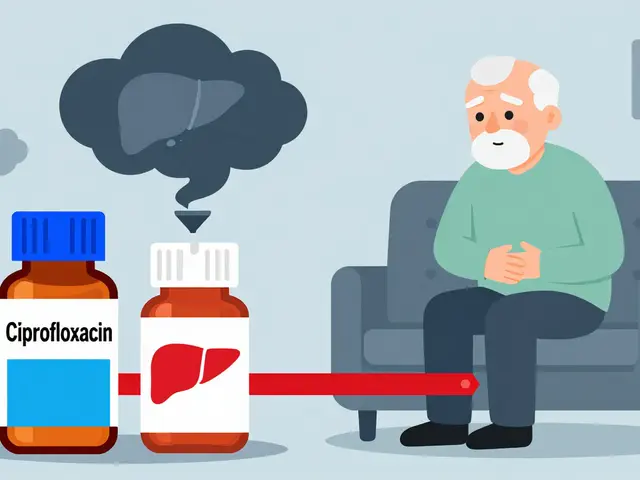
Imagine a patient with chronic obstructive pulmonary disease (COPD) who is stable on their daily medication. They develop a routine urinary tract infection or a mild respiratory infection. A doctor prescribes Ciprofloxacin, a widely used antibiotic belonging to the fluoroquinolone class. The patient takes it as directed. Within days, they aren't getting better from the infection; instead, they are vomiting, experiencing heart palpitations, or worse, suffering seizures. This isn't a rare anomaly. It is a predictable, well-documented pharmacokinetic disaster caused by mixing ciprofloxacin with Theophylline, a methylxanthine bronchodilator. This specific drug interaction represents one of the most significant safety warnings in modern clinical medicine. First identified in 1987 by researchers at the University of Glasgow, this combination can turn a life-saving antibiotic into a catalyst for severe toxicity. For patients taking theophylline for asthma or COPD, understanding this risk is not just academic-it is a matter of preventing hospitalization or death. You need to know why this happens, how dangerous it gets, and what safer alternatives exist.
The Mechanism: Why These Two Drugs Clash
To understand the danger, you have to look at how your body processes these medications. Theophylline has a very narrow therapeutic index. This means the difference between a dose that helps you breathe and a dose that poisons you is small. The safe blood concentration range is typically between 10 and 20 mg/L. If levels creep above 20 mg/L, side effects start. Above 30 mg/L, the risk of life-threatening events spikes dramatically. Your liver uses enzymes to break down drugs so they can be eliminated. The primary enzyme responsible for metabolizing theophylline is Cytochrome P450 1A2 (often abbreviated as CYP1A2). Here is where ciprofloxacin interferes. Ciprofloxacin is a potent inhibitor of CYP1A2. When you take ciprofloxacin, it essentially blocks this enzyme. Think of CYP1A2 as a garbage disposal unit in your kitchen. Theophylline is the waste that needs to be ground up and flushed away. Ciprofloxacin puts a lid on that disposal unit. The waste piles up quickly. Pharmacokinetic studies show that ciprofloxacin can increase theophylline's area under the curve (AUC)-a measure of total drug exposure-by 40% to 80%. It also prolongs the elimination half-life of theophylline from a normal 8-9 hours to 12-15 hours. In practical terms, the drug stays in your system longer and at higher concentrations than intended.Recognizing the Signs of Toxicity
You cannot see rising drug levels in your blood, but your body will signal distress. The symptoms of theophylline toxicity are dose-dependent, meaning they get worse as the concentration rises. Knowing these signs allows for early intervention before a crisis occurs.- Mild Toxicity (20-25 mg/L): Nausea, vomiting, abdominal pain, headache, and restlessness. Many patients mistake these for stomach bugs or stress, delaying care.
- Moderate Toxicity (25-30 mg/L): Tachycardia (rapid heart rate), cardiac arrhythmias, tremors, and insomnia. At this stage, the heart begins to struggle under the chemical load.
- Severe Toxicity (>30 mg/L): Seizures, hypotension (low blood pressure), and metabolic disturbances. Seizures are particularly dangerous because they can occur even in patients with no prior history of epilepsy. A landmark case report in JAMA Internal Medicine (1990) documented a 93-year-old woman with no seizure history who experienced a grand mal seizure solely due to this drug combination.
The Data: How Common Is This Risk?
This is not theoretical. The evidence linking ciprofloxacin to theophylline toxicity is robust. A massive population-based study published in the European Journal of Clinical Pharmacology in 2011 analyzed data from over 77,000 Ontario residents aged 66 and older. The researchers identified 180 cases hospitalized specifically for theophylline toxicity. The findings were stark. Patients taking ciprofloxacin had a nearly twofold increase in the risk of hospitalization for theophylline toxicity compared to those who did not (adjusted odds ratio 1.86). Crucially, this risk was specific to ciprofloxacin. Other common antibiotics like levofloxacin, trimethoprim-sulfamethoxazole, or cefuroxime showed no increased risk. This confirms that the issue lies with ciprofloxacin’s unique chemical structure and its affinity for inhibiting CYP1A2, not with antibiotics in general. Despite this clear data, the problem persists. A 2018 study found that 12.7% of older adults prescribed theophylline still received ciprofloxacin concurrently. Electronic health record alerts designed to warn doctors about this interaction are often overridden. Clinicians sometimes prioritize the urgency of treating an infection over the potential long-term risk, or they assume a patient tolerated the combination in the past without realizing that cumulative effects or age-related changes in metabolism can alter outcomes.
Who Is Most at Risk?
While anyone taking both drugs is at risk, certain groups face significantly higher dangers. Age is the biggest factor. Elderly patients naturally have reduced kidney and liver function, which slows drug clearance. A 2015 meta-analysis concluded that theophylline clearance is reduced by approximately 45% in patients over 65 when combined with ciprofloxacin, compared to only a 35% reduction in younger adults. Genetics also play a role. Emerging research, including trials at the University of Toronto, suggests that genetic polymorphisms in the CYP1A2 gene affect susceptibility. Patients with the CYP1A2*1F polymorphism may experience a 65% greater reduction in theophylline clearance when exposed to ciprofloxacin. While widespread genetic testing for this variant is not yet standard practice, it highlights why some patients crash while others seem fine-their biology handles the blockade differently. Other risk factors include:- High doses of ciprofloxacin: The interaction is dose-dependent. Taking 750 mg twice daily causes roughly 50% greater inhibition than 500 mg twice daily.
- Existing heart conditions: Theophylline toxicity-induced arrhythmias can be fatal for patients with underlying cardiac issues.
- Concurrent use of other CYP1A2 inhibitors: Medications like cimetidine or fluvoxamine can compound the effect.
Management Strategies and Safer Alternatives
The U.S. Food and Drug Administration (FDA) placed a black box warning regarding this interaction on ciprofloxacin labeling in 1994, updated in 2017. The American College of Chest Physicians and the American Thoracic Society explicitly recommend avoiding ciprofloxacin in patients receiving theophylline whenever possible. But what if you must treat an infection?| Antibiotic Class/Drug | Impact on Theophylline Levels | Clinical Recommendation |
|---|---|---|
| Ciprofloxacin | Increases levels by 40-80% | Avoid if possible. High risk of toxicity. |
| Levofloxacin | Minimal increase (10-15%) | Safer alternative within fluoroquinolones. |
| Moxifloxacin | No significant interaction | Preferred fluoroquinolone option. |
| Amoxicillin-Clavulanate | No interaction | First-line for many respiratory infections. |
| Azithromycin | Minimal interaction | Safe for respiratory infections. |
- Baseline Check: Measure serum theophylline levels immediately before starting ciprofloxacin.
- Dose Reduction: Reduce the theophylline dose by 30% to 50% upon initiating ciprofloxacin therapy.
- Frequent Monitoring: Recheck theophylline levels every 24 to 48 hours during co-administration.
- Symptom Watch: Educate the patient to report nausea, vomiting, or heart palpitations immediately.
- Reversal: Once ciprofloxacin is discontinued, theophylline clearance will return to normal. The dose should be gradually increased back to the original level to avoid under-treating the respiratory condition.

Why Does This Still Happen?
With such clear warnings, why do thousands of hospitalizations still occur annually? Part of the issue is the perception of theophylline itself. It is an older drug, often viewed as less "modern" than newer inhalers. Some clinicians underestimate its potency and narrow safety margin. Additionally, in emergency settings, the immediate need to treat a serious infection can overshadow the slower-moving risk of drug accumulation. There is also a lack of awareness among patients. Many people do not realize that "antibiotics" are not all the same. They might think, "I took ciprofloxacin last year with my breathing meds and was fine," not realizing that aging, weight changes, or concurrent illnesses can alter how their body processes drugs today versus then. Furthermore, 68.3% of electronic health record alerts for this interaction are overridden by clinicians, according to a 2017 study. The reasons cited include perceived urgency of treatment or belief in patient tolerance. This override culture contributes to the estimated 4,200 annual hospitalizations in the United States attributable to this specific interaction.Practical Steps for Patients and Caregivers
If you or a loved one takes theophylline, proactive communication is your best defense. Here is how to navigate medical appointments safely:- Keep a Current Medication List: Include theophylline on every list you give to doctors, dentists, and specialists. Specify the dosage and frequency.
- Ask About Alternatives: If prescribed ciprofloxacin, ask, "Is there an alternative antibiotic that doesn't interact with my theophylline, such as azithromycin or amoxicillin-clavulanate?"
- Clarify Monitoring Plans: If ciprofloxacin is deemed necessary, ask, "What is our plan for monitoring my theophylline levels? Will my dose need to be adjusted?"
- Know the Symptoms: Memorize the signs of toxicity: nausea, rapid heartbeat, tremors, and confusion. Treat them as emergencies.
- Use One Pharmacy: Consolidating prescriptions at a single pharmacy allows the pharmacist to run comprehensive interaction checks across all your medications.
Conclusion
The interaction between ciprofloxacin and theophylline is a classic example of how two effective drugs can become dangerous when combined. It is not a mystery; the mechanism is understood, the risks are quantified, and safer alternatives exist. The tragedy of this interaction is that it is largely preventable. By recognizing the role of CYP1A2 inhibition, respecting the narrow therapeutic window of theophylline, and advocating for alternative antibiotics, patients and providers can avoid severe toxicity. Always verify compatibility before combining medications, and never ignore early warning signs of adverse reactions.How long does it take for theophylline toxicity to appear after starting ciprofloxacin?
Symptoms can appear within 2 to 5 days of starting ciprofloxacin, as theophylline accumulates in the bloodstream due to inhibited metabolism. However, individual variation exists, and some patients may experience delayed onset depending on their baseline clearance rates and the dose of ciprofloxacin.
Can I take levofloxacin instead of ciprofloxacin if I am on theophylline?
Yes, levofloxacin is a much safer alternative. While it belongs to the same fluoroquinolone class, it has minimal effect on CYP1A2. Studies show it increases theophylline levels by only 10-15%, which is generally clinically insignificant compared to the 40-80% increase caused by ciprofloxacin.
What should I do if I accidentally took ciprofloxacin while on theophylline?
Contact your healthcare provider or pharmacist immediately. Do not stop your theophylline abruptly without medical advice, as this could worsen your respiratory condition. Your provider will likely advise you to monitor for symptoms like nausea or rapid heartbeat and may request a blood test to check your theophylline levels.
Does food affect the interaction between ciprofloxacin and theophylline?
Food does not significantly alter the pharmacokinetic interaction between these two drugs. The issue is enzymatic inhibition in the liver, which occurs regardless of dietary intake. However, high-fat meals can delay the absorption of ciprofloxacin, potentially altering the timing of peak drug levels, but not the overall magnitude of the interaction.
Are there other antibiotics that interact with theophylline besides ciprofloxacin?
Yes, norfloxacin (another fluoroquinolone) also inhibits CYP1A2 and poses a similar risk. Erythromycin and clarithromycin (macrolide antibiotics) can also increase theophylline levels, though through different mechanisms involving CYP3A4 inhibition. Always check for interactions with any new antibiotic prescription.