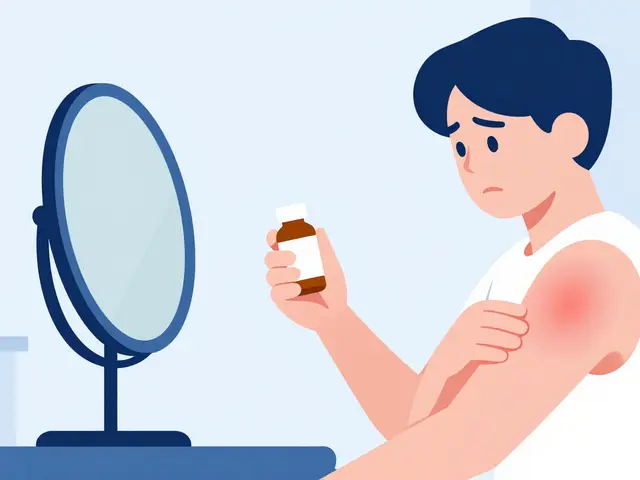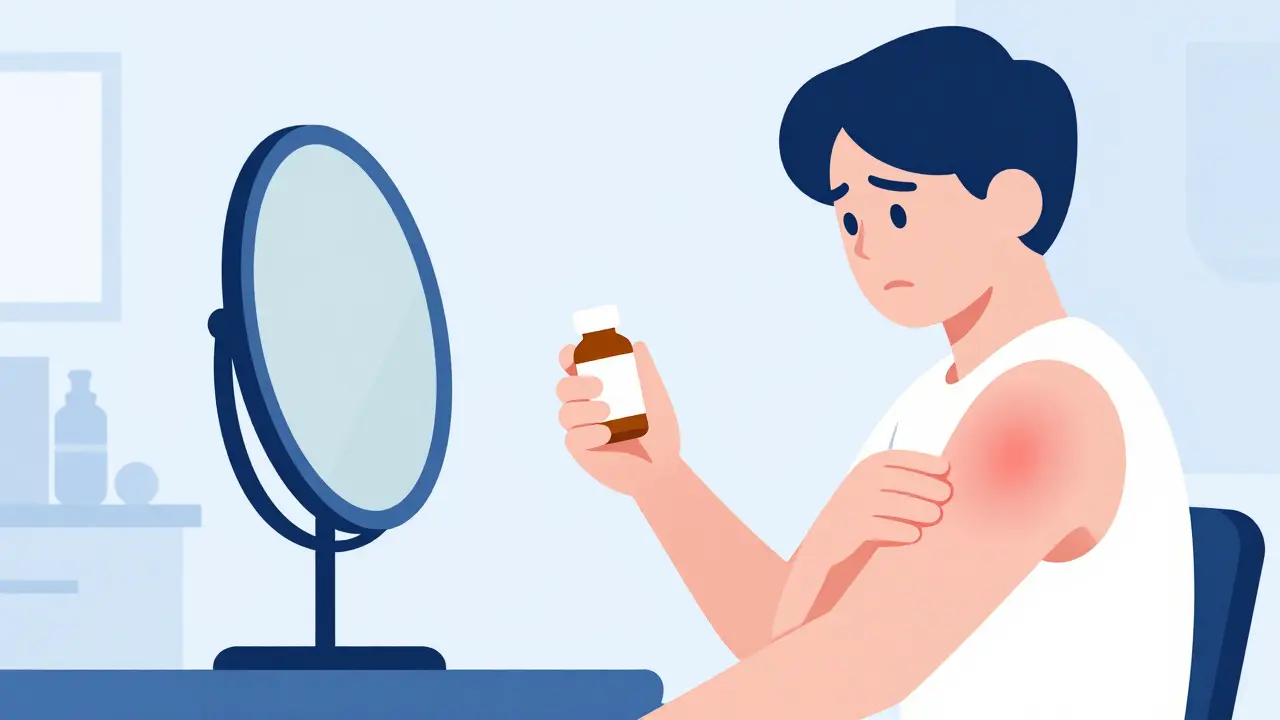
Seeing a new rash after starting antibiotics is terrifying. Your first instinct is likely to stop the medication immediately. But here is the hard truth: stopping your antibiotic prematurely can lead to treatment failure, worsen your infection, and force you onto stronger, more dangerous drugs. The real danger lies in not knowing whether that rash is a harmless side effect or a life-threatening allergic reaction.
Distinguishing between a non-allergic drug eruption and a true allergic reaction is a critical clinical skill that determines patient safety and treatment efficacy is often misunderstood by patients and even some healthcare providers. According to data from Cincinnati Children’s Hospital Medical Center, approximately 90% of people labeled as allergic to amoxicillin based solely on a history of rash are not actually allergic when formally tested. This mislabeling creates a cascade of negative health outcomes, including higher rates of antibiotic-associated diarrhea and increased risk of severe infections like Clostridioides difficile.
Understanding the Three Types of Antibiotic Skin Reactions
Not all rashes are created equal. To manage them correctly, you need to understand what type of reaction your body is having. Current medical guidelines recognize three primary categories of antibiotic-associated skin reactions, each with distinct timing, appearance, and risks.
- Immediate IgE-Mediated Allergic Reactions: These occur rapidly, usually within one hour of taking the dose. They involve the immune system releasing histamine, leading to hives (urticaria), swelling (angioedema), and potentially anaphylaxis. This is a true emergency.
- Delayed Non-Allergic Rashes: These typically appear later in the course of treatment, often between days 5 and 10. They are common with amoxicillin, especially in children with viral infections like Epstein-Barr virus (mono). These rashes are not caused by an immune allergy but by how the drug interacts with the virus or the body’s inflammatory response.
- Severe Cutaneous Adverse Reactions (SCARs): These are rare but life-threatening conditions, including Stevens-Johnson Syndrome (SJS) and toxic epidermal necrolysis (TEN). They require immediate hospitalization and have high mortality rates if not treated promptly in specialized burn units.
The American Academy of Allergy, Asthma & Immunology (AAAAI) reports that while non-allergic amoxicillin rashes occur in 5-10% of children receiving the antibiotic, true allergic reactions affect only 0.4-10% of patients, depending on the specific antibiotic class. Knowing which category you fall into is the key to deciding whether to continue or stop the drug.
How to Tell If It’s an Allergy or Just a Rash
You don’t need a lab test right now to get a good idea of what’s happening. Look closely at the timing, the look of the rash, and how it feels. Here is a breakdown of the clinical characteristics that help distinguish these reactions.
| Feature | Non-Allergic Rash (e.g., Amoxicillin) | True Allergic Reaction (Hives/Urticaria) |
|---|---|---|
| Timing | Late onset: Days 5-10 of treatment | Early onset: Within 1 hour of dosing |
| Appearance | Flat or slightly raised spots (maculopapular); may look 'bruised' | Raised, welts-like bumps (wheals); red or pale |
| Itchiness | Usually mild or non-itchy | Intensely itchy (pruritic) |
| Movement | Fixed location; does not change shape quickly | Migratory; lesions come and go, changing locations |
| Systemic Symptoms | None (no fever, no breathing issues) | May include swelling, wheezing, nausea, or dizziness |
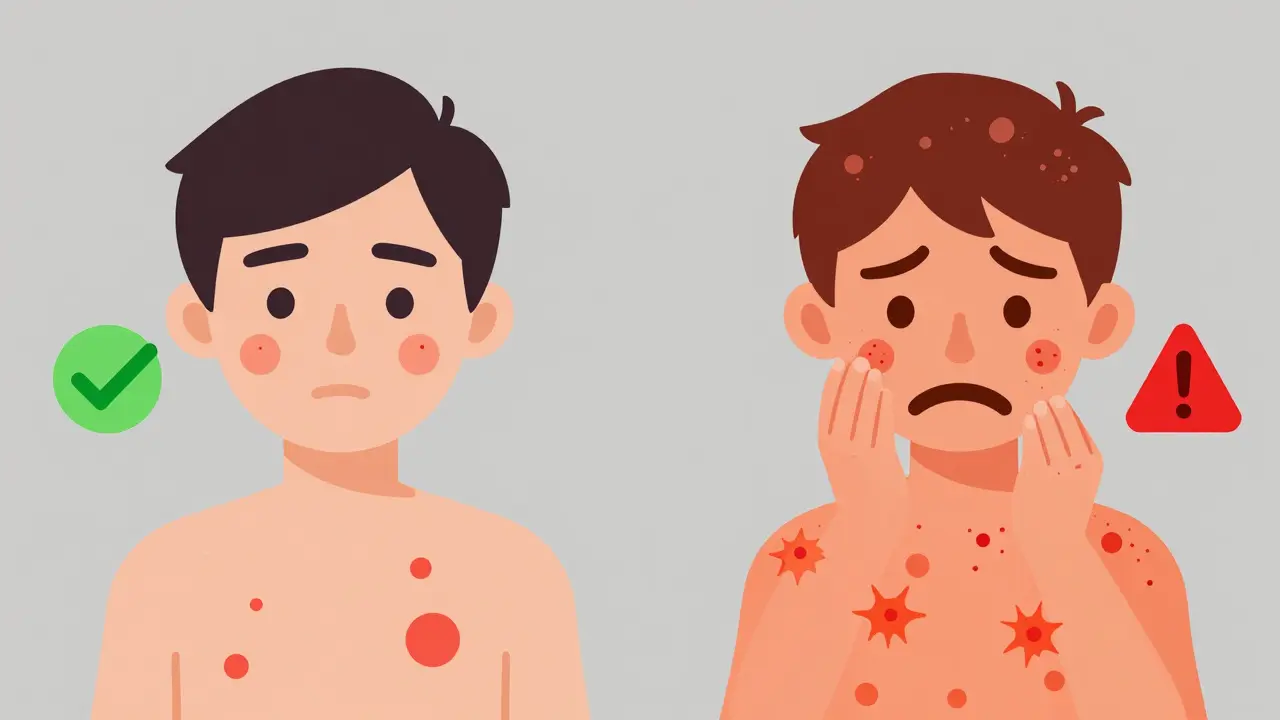
If your rash appeared around day 7, isn't terribly itchy, and stays in the same place, it is highly likely to be a non-allergic drug eruption. In contrast, if you developed raised, itchy welts within an hour of your last dose, or if you feel tightness in your throat, this is a true allergic reaction requiring immediate action.
When to Stop the Antibiotic Immediately
Safety must always come first. There are specific "red flag" symptoms that indicate a severe reaction. Do not wait for a doctor’s appointment if you experience any of the following. Stop the drug and seek emergency care.
- Anaphylaxis Signs: Difficulty breathing, wheezing, swelling of the lips, tongue, or face, rapid drop in blood pressure (dizziness/fainting).
- Mucosal Involvement: Sores or blisters inside the mouth, eyes, or genitals. This is a hallmark of Stevens-Johnson Syndrome (SJS).
- High Fever: A temperature above 38.5°C (101.3°F) accompanied by a rash, especially if you feel generally unwell or have swollen lymph nodes.
- Painful Skin: Skin that feels hot, tender, or begins to peel or blister. SJS and TEN cause skin detachment and have mortality rates of 5-15% and 30-50% respectively if not treated in a hospital setting.
Dr. Mariana Castells, Director of the Drug Hypersensitivity and Desensitization Center at Brigham and Women's Hospital, emphasizes that any rash accompanied by mucosal involvement, high fever, or lymphadenopathy requires immediate discontinuation and specialist referral due to the potential for DRESS syndrome or other severe cutaneous adverse reactions.
When You Can Safely Continue the Antibiotic
This is where most people make a mistake. If you have a classic non-allergic maculopapular rash-appearing late, flat, and mildly itchy-you should generally continue the antibiotic course unless your doctor advises otherwise. Stopping early leads to a 37% higher rate of treatment failure and forces the use of broader-spectrum alternatives, which carry higher risks of side effects like C. diff infection.
Research from Portland Pediatric shows that 92% of pediatricians continue antibiotics in cases of non-urticarial rashes without systemic symptoms. The CDC’s 2022 guidelines specify that for non-bothersome rashes, no treatment is necessary beyond continuing the antibiotic. If the rash is uncomfortable, you can manage the symptoms rather than stopping the cure.
Managing Symptoms Without Stopping Treatment
If your doctor confirms it is a non-allergic rash, you can still find relief. The goal is to reduce itching and inflammation so you can finish the course comfortably.
- Antihistamines: For mild itching, over-the-counter H1 antihistamines like cetirizine can help. In some cases, doctors recommend combining an H1 blocker (like cetirizine) with an H2 blocker (like famotidine) for better relief. Typical pediatric dosing for cetirizine is 0.25 mg/kg/dose twice daily, max 10 mg, but always consult your provider for adult or child-specific dosing.
- Topical Steroids: Hydrocortisone 1% cream applied twice daily can soothe localized itching. Note that topical steroids provide symptomatic relief but do not alter the duration of the rash.
- Cool Compresses: Applying cool, wet cloths to the affected area can reduce heat and itch sensation.
- Avoid Hot Showers: Heat can exacerbate itching and inflammation. Stick to lukewarm water.
Do not use systemic corticosteroids (oral prednisone) unless prescribed by a specialist. A 2021 NIH review cautioned against their routine use for simple drug rashes due to a 22% higher complication rate compared to supportive care alone.

The Hidden Cost of Mislabeling Allergies
Why does it matter if you label yourself as "allergic" to penicillin or amoxicillin? Because it limits your future medical options. Patients with documented penicillin allergies receive alternative antibiotics 69% more frequently. This leads to a 63% higher rate of antibiotic-associated diarrhea and a 30% increased risk of Clostridioides difficile infection, a serious gut condition.
Furthermore, in cases of severe infections like sepsis, penicillins are often the first-line, most effective treatment. Dr. David Khan from UT Southwestern Medical Center notes that mislabeling patients as penicillin-allergic based on rash history alone is associated with a 30% increased mortality in sepsis patients. The financial burden is also significant, costing the U.S. healthcare system an estimated $1.2 billion annually in unnecessary alternative antibiotic use.
Next Steps: Testing and De-labeling
If you have stopped an antibiotic in the past due to a rash, you may be carrying an unnecessary allergy label. The good news is that most of these labels can be removed safely.
The University of Pennsylvania’s PEN-FAST clinical decision rule helps identify low-risk patients who can safely undergo penicillin testing. Recent advancements, such as the FDA-approved PENtest (a rapid 15-minute test), have made this process much easier. As of 2023, 42% of U.S. allergists have adopted this rapid testing method. If you are identified as low-risk, a supervised oral challenge can confirm tolerance, effectively "de-labeling" you from the allergy list.
Don’t let a past rash dictate your future health. Talk to your doctor about whether you should see an allergist for formal testing. This simple step can expand your treatment options, reduce your risk of side effects, and save money.
How long does an antibiotic rash last?
Non-allergic antibiotic rashes typically resolve within 7 to 10 days after finishing the antibiotic course, even if you continue taking the medication. True allergic hives may disappear quickly once the drug is stopped, but can recur if re-exposed. Severe reactions like SJS require weeks of hospital care for healing.
Can I take Benadryl for an antibiotic rash?
Yes, diphenhydramine (Benadryl) or other antihistamines like cetirizine can help relieve itching associated with both allergic and non-allergic rashes. However, they do not treat the underlying cause. For non-allergic rashes, antihistamines may provide temporary comfort while you finish the antibiotic course.
Is an amoxicillin rash always an allergy?
No. In fact, about 90% of people who think they are allergic to amoxicillin because of a rash are not truly allergic. Non-allergic rashes are very common, especially in children with viral infections like mono. These rashes appear later in treatment (days 5-10) and are not dangerous.
What should I do if my child gets a rash on antibiotics?
First, check the timing and appearance. If it appears after day 5, is flat, and not intensely itchy, it is likely non-allergic. Contact your pediatrician before stopping the drug. Stopping early can lead to treatment failure. If the rash involves hives, swelling, or breathing difficulties, seek emergency care immediately.
How can I remove a penicillin allergy label from my medical record?
You can consult an allergist for formal testing. Using tools like the PEN-FAST criteria, doctors can determine if you are low-risk. Rapid tests like the PENtest or a supervised oral challenge can confirm you are not allergic. Once confirmed, your doctor can update your medical records to remove the allergy label, improving your future treatment options.