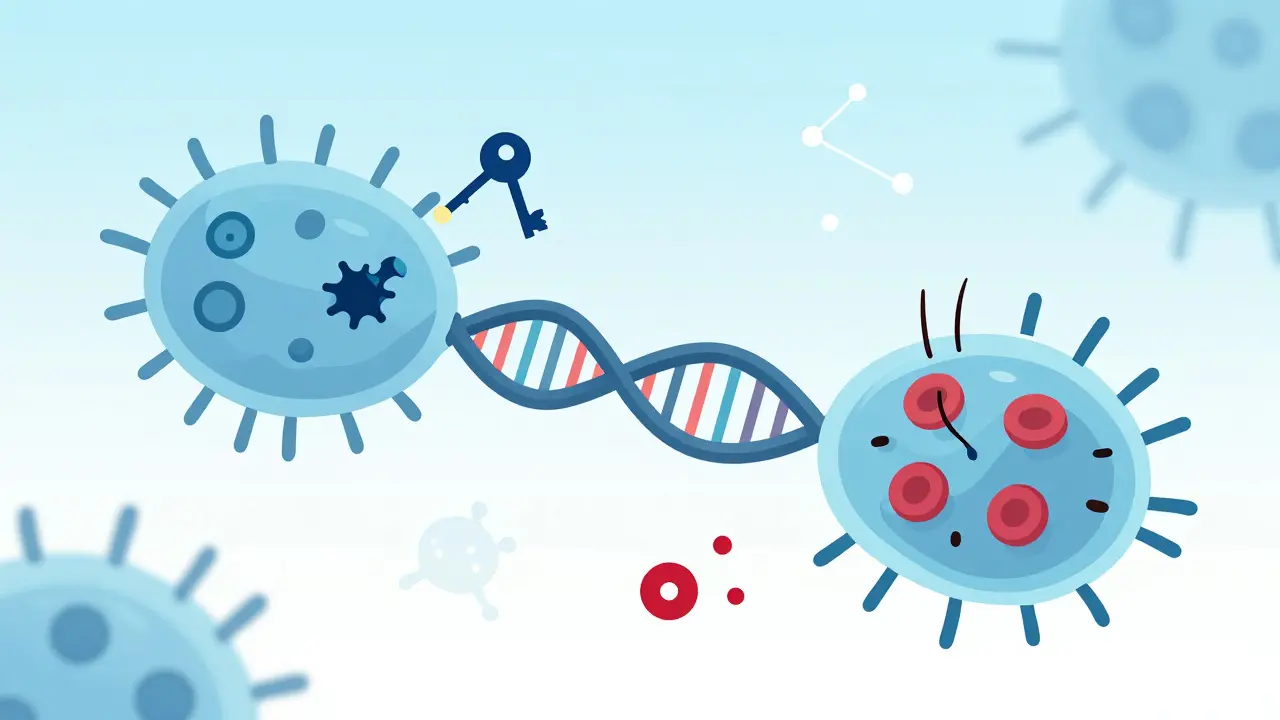
Chemotherapy isn't a single drug. It's a group of over 100 different cytotoxic drugs designed to kill cancer cells by attacking their ability to divide. These drugs don't care if a cell is cancerous or not-they go after anything that's dividing fast. That’s why they work against tumors, but also why they cause so many side effects. The first chemotherapy drug, nitrogen mustard, was used in 1942 on a patient with lymphoma. Since then, it’s become one of the most common cancer treatments worldwide, used in more than 6 million patients in the U.S. each year.
How Chemotherapy Drugs Actually Work
Chemotherapy drugs are grouped into six main types, each attacking cancer cells in a different way. Alkylating agents like cyclophosphamide stick chemical groups onto DNA, making it impossible for the cell to copy its genetic code before splitting. Antimetabolites such as 5-fluorouracil trick cells into using fake building blocks, which breaks DNA and RNA production. Anthracyclines like doxorubicin slip between DNA strands and block enzymes that untangle DNA during division, causing fatal breaks. Plant alkaloids like vincristine stop the tiny scaffolding (microtubules) that pulls chromosomes apart during cell division. Topoisomerase inhibitors like etoposide jam the enzymes that unwind DNA, leading to tangled, broken strands. And miscellaneous agents cover everything else that disrupts cell division in unique ways.
These drugs work best when cancer cells are actively dividing, which is why they’re given in cycles-usually every 2 to 6 weeks. This gives healthy cells time to recover. For example, paclitaxel (Taxol) is typically given at 175 mg per square meter of body surface every three weeks for breast cancer. Oral drugs like capecitabine (Xeloda) are taken twice daily for two weeks, then paused for a week. About 65% of chemotherapy is given through IV, while 15% is taken by mouth. Some are injected into the spinal fluid, abdomen, or arteries, depending on where the cancer is.
Why Chemotherapy Still Matters Today
Even with newer treatments like targeted therapy and immunotherapy, chemotherapy remains the first-line option for 78% of blood cancers like acute myeloid leukemia and diffuse large B-cell lymphoma. It’s also critical in early-stage breast cancer, where giving chemo before surgery (neoadjuvant chemo) can shrink tumors enough to make breast-conserving surgery possible. In the SWOG S1418 trial, patients who achieved a complete pathologic response after chemo had significantly better survival rates.
Chemotherapy is one of the few treatments that can reach cancer cells anywhere in the body-even in the brain. Drugs like methotrexate can cross the blood-brain barrier, making them essential for cancers that spread there. It’s also effective against tumors made up of many different cell types, something targeted therapies often struggle with. While targeted drugs like trastuzumab only work for HER2-positive breast cancer (about 15-20% of cases), chemotherapy helps in almost all subtypes.
Common Side Effects and Why They Happen
Because chemotherapy targets fast-dividing cells, it hits more than just cancer. Hair follicles, the lining of the mouth and gut, and bone marrow-all of which renew quickly-are collateral damage. That’s why side effects like hair loss, nausea, mouth sores, and low blood counts are so common.
Studies show 78% of patients report hair loss, and 82% experience fatigue. Nausea used to be unbearable-up to 80% of patients suffered severe vomiting in the 1980s. Today, thanks to drugs like ondansetron, that number has dropped to 10-20% for highly emetogenic regimens. But delayed nausea, which hits 24 hours after treatment, still affects many. Only 32% of patients find anti-nausea meds helpful for this type.
Peripheral neuropathy-tingling, numbness, or pain in hands and feet-affects 30-40% of people on taxanes or platinum drugs. For 5-10%, it can become permanent. Doctors now recommend avoiding cold objects, wearing gloves when handling things, and reporting symptoms early to prevent nerve damage. Fatigue is the most persistent issue. While 72% of patients feel better with hydration and light activity, 45% still struggle with severe tiredness even after treatment ends.
Chemo Brain: The Hidden Toll
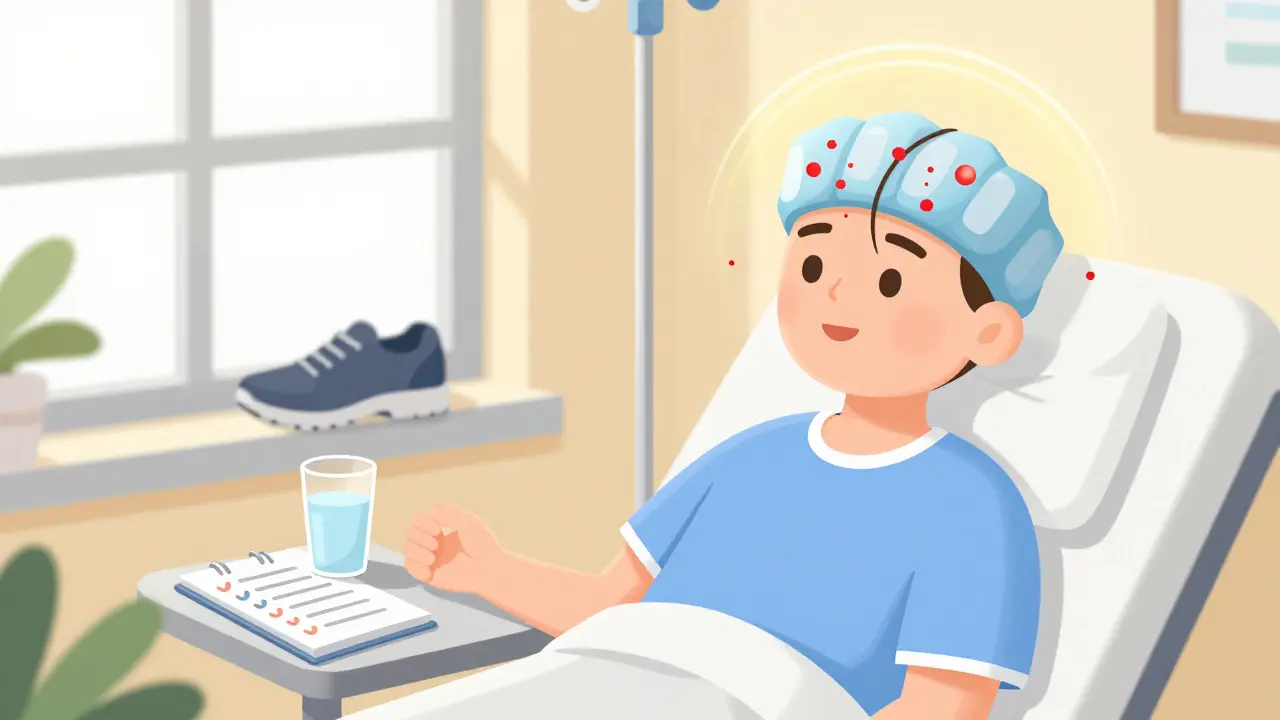
Many patients describe a foggy, forgetful feeling during and after chemo. It’s called “chemo brain.” Research shows 75% of patients experience it during treatment, and 35% still have trouble with memory or focus six months later. A 2021 study in JAMA Oncology found that patients who practiced 20 minutes of daily meditation using apps like Calm or Headspace reported a 30-40% reduction in cognitive complaints. Working patients are especially affected-57% say it interferes with job performance. There’s no pill for it, but sleep, exercise, and mental organization tools (like lists and reminders) help.
Managing Side Effects: What Actually Works
Modern chemo care isn’t just about the drug-it’s about managing the fallout. Drinking 1-2 liters of water daily helps prevent dehydration from vomiting or diarrhea. Eating small, bland meals (toast, rice, bananas) during nausea episodes reduces discomfort. Exercise is one of the most powerful tools: 30 minutes of moderate activity like walking five days a week cuts fatigue by 25-30%, according to 17 clinical trials.
For mouth sores, rinsing with salt water and avoiding spicy or acidic foods helps. Diarrhea can be managed with Imodium, but if it lasts more than 24 hours, contact your care team. Red urine after doxorubicin is normal-it’s the drug passing through your system. But black stools? That’s a red flag for internal bleeding and needs immediate attention.
Scalp cooling systems, now recommended in the 2024 NCCN guidelines, reduce hair loss from 65% to 25% in breast cancer patients on taxanes. These caps cool the scalp during infusion, shrinking blood vessels so less drug reaches hair follicles. Many patients say it’s life-changing.
What’s New in Chemotherapy
Chemotherapy isn’t standing still. In 2023, the FDA approved trilaciclib (Cosela), the first drug designed to protect bone marrow during chemo. It’s used in small cell lung cancer to reduce the risk of low white blood cell counts and infections. Another emerging option is medical cannabis. A 2023 study in the Journal of Pain and Symptom Management found that CBD:THC formulations reduced neuropathic pain by 55% in patients on chemo.
While targeted therapies and immunotherapies are replacing chemo in some cancers-like metastatic lung cancer with EGFR mutations-it’s still essential for many. The European Society for Medical Oncology predicts chemotherapy will remain a key part of treatment for at least the next 20 years, especially for cancers without clear genetic targets. Its role is shifting: less as a standalone cure, more as a partner to newer drugs.
When Chemotherapy Isn’t the Best Choice
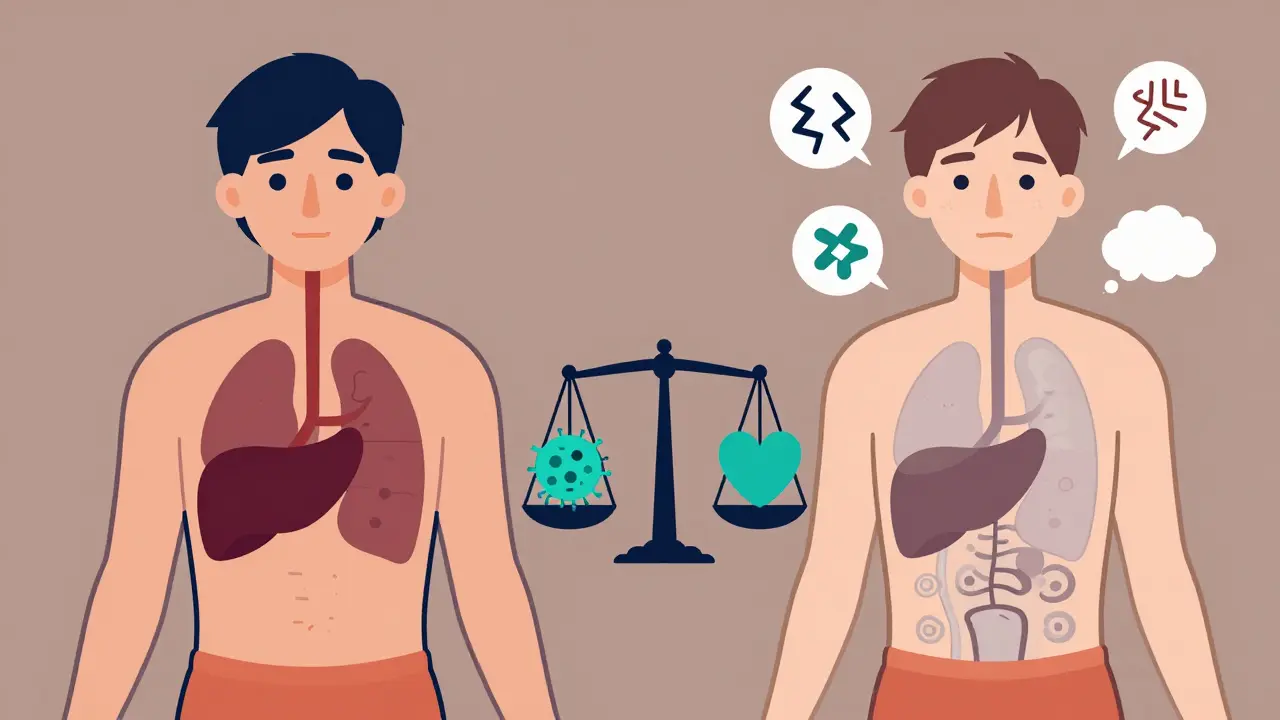
Not every cancer responds well to chemo. Some prostate cancers grow slowly and don’t divide often, so chemo has little effect. Hormone therapy works better there. Similarly, some early-stage, low-risk breast cancers don’t need chemo at all if genetic tests show a low recurrence risk. Doctors now use molecular profiling to decide who benefits most. If your tumor has a targetable mutation, you’re more likely to get a targeted drug first. But if it doesn’t? Chemo is still your best bet.
What Patients Say
On patient forums, the most common comments are about how much better nausea control is today compared to 10 years ago. But the emotional weight of hair loss remains. One patient wrote: “I could manage the physical side effects, but the cognitive changes made me feel like I wasn’t myself.” Another said: “The Imodium worked for my diarrhea, but nothing helped the metallic taste.” These aren’t just complaints-they’re signals. Your care team needs to hear them to adjust your plan.
Final Thoughts
Chemotherapy is harsh, but it’s also one of the most effective tools we have against cancer. It’s not perfect, and it doesn’t work for everyone. But for millions, it’s the difference between life and death. The key is knowing what to expect, managing side effects early, and staying in close contact with your care team. By the third treatment cycle, most patients learn what works for them-whether it’s meditation, walking, hydration, or a new anti-nausea combo. You’re not just taking a drug. You’re learning how to live through it.
How long does chemotherapy stay in your body?
Most chemotherapy drugs are cleared from your bloodstream within hours to a few days. But the effects on your body-like low blood counts or nerve damage-can last weeks or months. Some side effects, like fatigue or memory issues, may linger for over a year. The drug itself is gone, but the cellular changes it caused take time to heal.
Can you work during chemotherapy?
Many people do, especially with less aggressive regimens. But fatigue and "chemo brain" make it harder than expected. About 57% of working patients report it affects their job performance. Flexible hours, remote work, and pacing yourself are key. Some take medical leave for the first cycle to see how they react before returning.
Does chemotherapy hurt?
The IV infusion itself usually doesn’t hurt beyond the initial needle stick. But some drugs cause burning or tingling along the vein if they leak outside the vein-a condition called extravasation. This is rare with trained staff. Other side effects like nerve pain, mouth sores, or cramps can be painful, but those are managed with medications, not the infusion process.
Why do some people lose their hair and others don’t?
It depends on the drug. Taxanes and anthracyclines almost always cause hair loss. Alkylating agents like cyclophosphamide usually do too. But some drugs, like capecitabine or vinca alkaloids, cause thinning more than total loss. Scalp cooling can reduce hair loss by up to 60% in eligible patients. Not everyone qualifies, and it doesn’t work for all cancer types.
Is chemotherapy worth the side effects?
For many, yes. Survival rates for cancers like Hodgkin lymphoma, testicular cancer, and early breast cancer have improved dramatically because of chemo. In metastatic cases, it can extend life by years. But it’s personal. Some patients prioritize quality of life over quantity. Your doctor can show you data on expected benefit versus side effect risk for your specific cancer type and stage.
Can you drink alcohol while on chemotherapy?
It’s usually not recommended. Alcohol can worsen dehydration, irritate the mouth and gut lining, and interfere with liver processing of chemo drugs. Some drugs, like methotrexate, become more toxic with alcohol. If you want to have a small drink, ask your oncologist-it depends on your specific regimen and liver function.
What should you do if you develop a fever during chemo?
Call your care team immediately. A fever of 100.4°F (38°C) or higher during chemotherapy can mean a dangerous drop in white blood cells (neutropenia). This is a medical emergency. Don’t wait. Go to the ER or call your oncology nurse right away. You may need antibiotics right away to prevent sepsis.
Are there foods to avoid during chemotherapy?
Yes. Avoid raw or undercooked meats, eggs, and seafood-your immune system is weaker. Skip unpasteurized dairy and juices. Wash fruits and vegetables well. Limit sugary and processed foods, which can worsen inflammation. Focus on protein, fiber, and hydration. Your dietitian can give you a personalized list based on your treatment and side effects.


Sheila Garfield January 31, 2026
I remember my mom going through chemo and how she’d laugh about her wig looking like a confused raccoon. We’d joke that it was her ‘fashion statement’-but man, the fatigue? That was the real killer. She’d nap on the couch for hours, and I’d just sit there watching her breathe like it was some kind of miracle.
Shawn Peck February 1, 2026
Look, I don’t care what the article says-chemo is just poison. They’re basically spraying radioactive sludge into people and calling it medicine. My cousin died after three rounds. They told him it was ‘his time.’ Bullshit. It was the chemo that killed him, not the cancer.
Jason Xin February 1, 2026
Shawn, I get your anger, but you’re conflating outcome with intent. Chemo isn’t perfect, but it’s saved millions. My uncle had stage 3 lymphoma in ’09-no targeted therapy back then. Chemo gave him 12 more years. He watched his grandkids graduate. That’s not poison-that’s a second chance.
Donna Fleetwood February 2, 2026
Just wanted to say-scalp cooling changed my life. I lost maybe 10% of my hair instead of 90%. I still cried when I saw the first strand in the shower, but I didn’t feel like a patient. I felt like me. And walking 20 minutes a day? Best thing I did. Not a cure, but it kept me sane.
Melissa Cogswell February 3, 2026
For anyone struggling with chemo brain: try voice memos. I started recording little reminders to myself-‘buy milk,’ ‘call Dr. Lee,’ ‘don’t forget your meds.’ Even if I didn’t listen right away, just saying it out loud helped my brain hold onto it. Also, post-it notes everywhere. My fridge looked like a crime board.
Diana Dougan February 5, 2026
lol at the ‘meditation helps chemo brain’ nonsense. You think some app telling you to ‘breathe’ fixes brain damage from toxins? The real fix is not getting chemo in the first place. They’re all just selling fear and pills. And don’t get me started on ‘medical cannabis’-next they’ll say vaping is the cure for leukemia.
Bobbi Van Riet February 5, 2026
Can I just say how much I appreciate the detail on neuropathy? I’ve been dealing with this for 18 months after my last cycle and no one ever told me to avoid cold objects or wear gloves. I was just told to ‘take gabapentin and deal with it.’ Turns out, my hands were getting frostbitten from grabbing the fridge door-no one connected the dots. Also, the part about Imodium only helping 32% of people with delayed nausea? That’s me. I’ve tried everything-ginger, acupressure, even peppermint tea. Nothing. But the walking? 30 minutes a day, even if I’m dragging, made the fatigue feel less like a lead blanket. I still have bad days, but I’m not lying down anymore.
Holly Robin February 6, 2026
They’re lying. Chemo doesn’t ‘work.’ It’s a scam run by Big Pharma and the AMA. The real cure is vitamin C IV drips, coffee enemas, and avoiding sugar. They don’t want you to know this because chemo makes billions. Look at the stats-cancer rates are higher now than ever. Coincidence? Or profit-driven genocide? I’ve seen the documents. They know it’s toxic. They just don’t care.