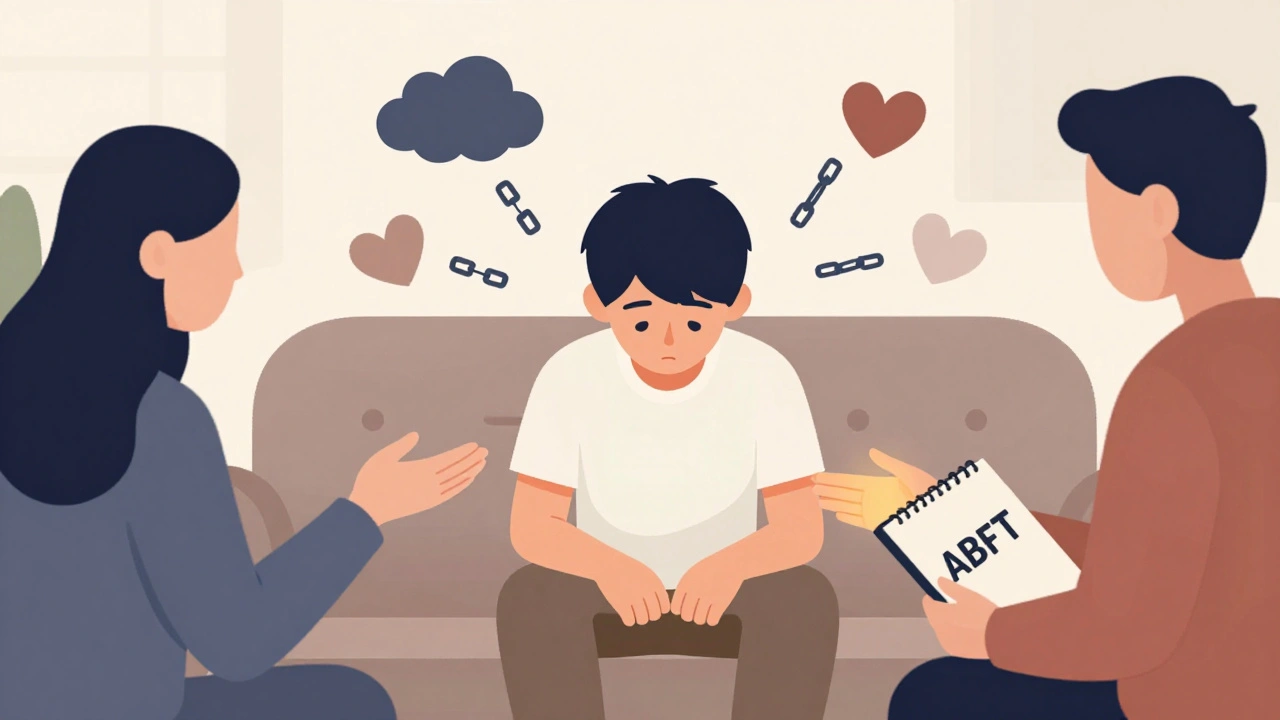
When a teenager stops eating, sleeps all day, or shuts down completely, it’s easy to blame hormones or teenage angst. But if these signs last more than two weeks, it’s not just moodiness-it’s depression. And it’s more common than most parents realize. About 1 in 5 adolescents will experience a major depressive episode before turning 18. The good news? It’s treatable. The better news? Two of the most effective tools-family therapy and medication-can work together in ways that neither can alone.
Why Family Matters More Than You Think
Depression doesn’t live in a vacuum. For kids and teens, the family is the first and most powerful environment they experience. When a child is depressed, the whole family feels it. Parents might feel guilty. Siblings might feel ignored. Communication breaks down. Arguments get louder. Silence gets heavier. Family therapy doesn’t assume the teen is broken. It assumes the system around them needs adjusting. There are several types of family therapy used for adolescent depression, but two stand out: Attachment-Based Family Therapy (ABFT) and Structural Family Therapy. ABFT focuses on repairing the emotional bond between parent and child. Many depressed teens say they feel unseen or misunderstood. ABFT helps parents learn how to listen without fixing, to validate without dismissing. In one 2022 study, teens in ABFT showed significantly lower suicidal thoughts after just 12 weeks compared to those getting standard care. The key? Parents stopped trying to cheer them up and started saying, “I see how hard this is for you.” Structural family therapy looks at power dynamics. Is the teen running the household? Are parents too distant? Is one parent the only one trying to fix things? Therapists help reorganize roles so the family functions as a team, not a battlefield. A 2023 meta-analysis reviewed nine studies with nearly 700 teens. While results varied, families who actively participated saw consistent improvement-especially when communication was poor before therapy. One NIH case study found teens with “healthy” family functioning were twice as likely to recover within a year than those in chaotic homes.Medication Isn’t a Quick Fix-But It Can Be a Lifeline
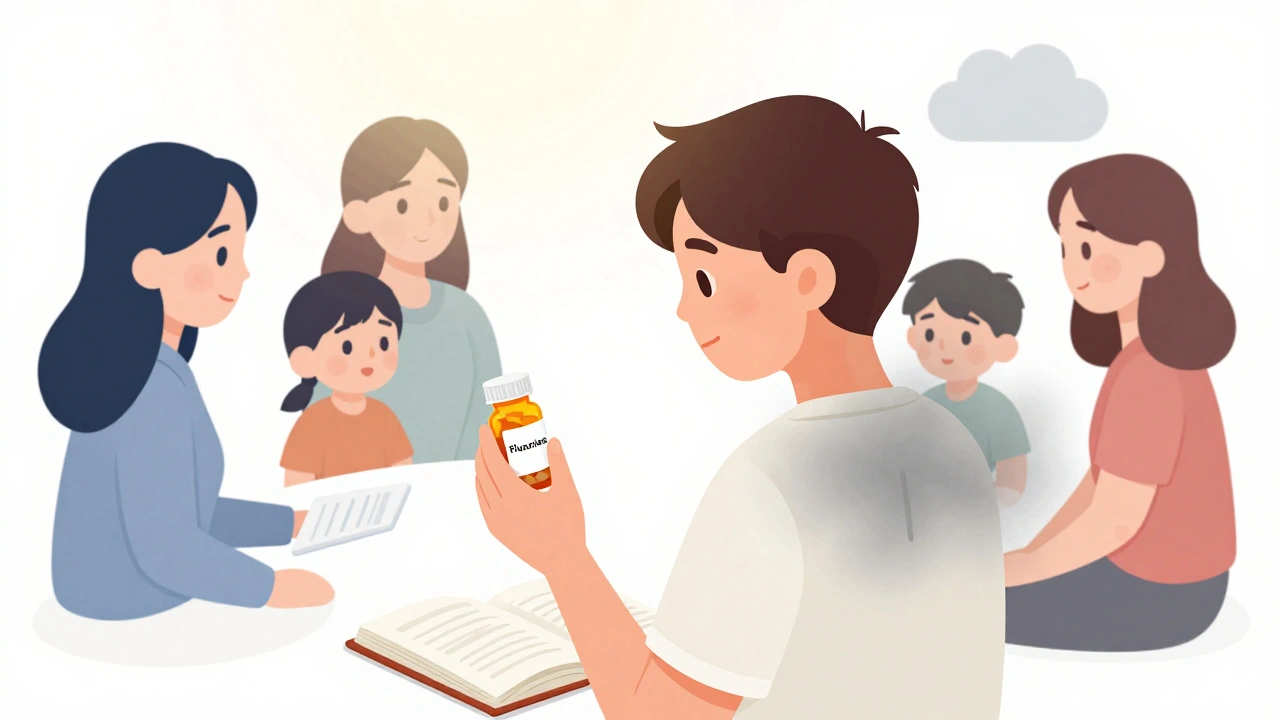
When depression is moderate to severe, therapy alone often isn’t enough. That’s where medication comes in. But not all antidepressants are safe for teens. The FDA has only approved two SSRIs for adolescents: fluoxetine (Prozac) and escitalopram (Lexapro). These are the only ones with enough evidence to show they help more than they hurt. Other SSRIs, like sertraline or citalopram, are sometimes used off-label-but they lack the same level of safety data in teens. It takes 4 to 6 weeks for these medications to work. That’s longer than most families expect. And during those first few weeks, some teens feel worse before they feel better. The FDA requires a black box warning because, in rare cases, SSRIs can increase suicidal thoughts early in treatment. That’s why close monitoring is non-negotiable. Doctors usually schedule weekly check-ins for the first month. Side effects are common but usually mild: nausea, headaches, trouble sleeping. About 1 in 5 teens stop taking SSRIs because of them. But for many, the relief is worth it. In the Treatment for Adolescents with Depression Study, teens on fluoxetine showed twice the improvement in mood compared to those on placebo. The real power comes when medication and therapy are combined. A 2020 review by the Agency for Healthcare Research and Quality found that teens getting both treatments had better outcomes than those getting either one alone. Medication helps lift the fog enough so the teen can actually engage in therapy. Therapy helps them understand why they feel this way-and how to stay well after the pills are gone.Who Benefits Most From Each Approach?
There’s no one-size-fits-all. The best treatment depends on the teen’s situation. Family therapy is the top choice when:- The teen’s depression is tied to family conflict, criticism, or emotional neglect
- There’s a history of trauma, divorce, or parental mental illness
- The teen has suicidal thoughts-ABFT has proven better than other therapies at reducing them
- Parents are willing to participate and change how they interact
- The depression is severe: the teen can’t get out of bed, skip school, or stop crying
- Therapy hasn’t helped after 8 to 12 weeks
- The teen has a strong family support system but still can’t manage symptoms
- There’s a family history of depression that responded well to medication
What Doesn’t Work (And Why)
Not every family therapy session helps. Not every teen responds to SSRIs. Here’s what often goes wrong: Therapy fails when:- One parent refuses to attend or stays silent
- The therapist takes sides instead of guiding the whole family
- Parents use therapy as a way to blame the teen (“We’re here because you’re acting out”)
- It’s started without monitoring
- Parents expect instant results
- The teen is pressured to “just take it” without understanding why
What’s New in 2025
The field is changing fast. In 2023, the FDA approved the first digital therapeutic for teen depression-reSET-O. It’s an app that guides users through CBT exercises and syncs with therapists. Early data shows it improves adherence, especially for teens who struggle to get to in-person sessions. Telehealth family therapy is also growing. A 2023 study in the Journal of Medical Internet Research found that 72% of teens completed online family therapy sessions, compared to only 58% for in-person. That’s huge for families in rural areas or with busy schedules. Researchers are also looking at genetics. The Adolescent Brain Cognitive Development Study found that certain gene markers can predict with 68% accuracy whether a teen will respond to SSRIs. In the next few years, doctors may be able to test a teen’s DNA before prescribing-and avoid trial-and-error.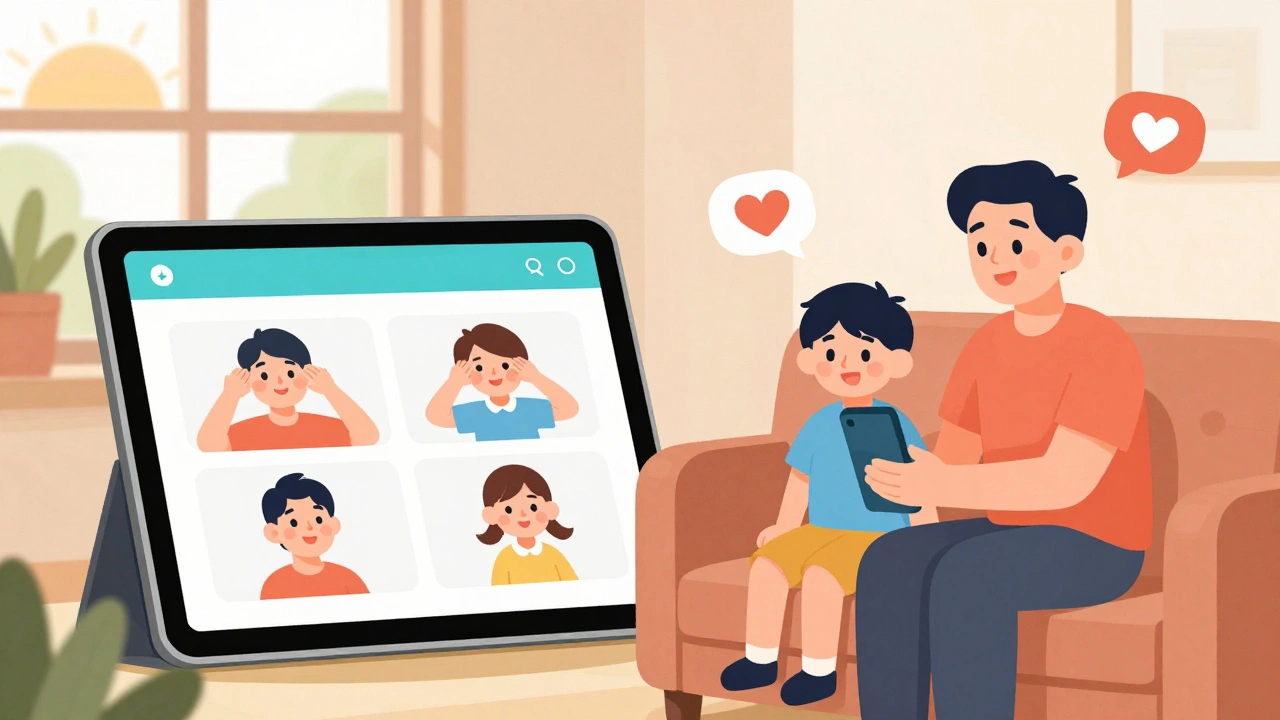
How to Start
If you’re worried about your teen:- Look for signs: withdrawal, irritability, declining grades, self-harm, talk of worthlessness
- Make an appointment with their pediatrician or a child psychiatrist
- Ask: “Do you think family therapy could help?” and “Is medication something we should consider?”
- Don’t wait six months. The longer depression goes untreated, the harder it is to treat
- Find a therapist trained in ABFT or structural family therapy-ask for their credentials
- If medication is suggested, ask about fluoxetine or escitalopram specifically. Avoid off-label options unless there’s a clear reason
Hope Is Real
Depression in teens doesn’t mean they’re broken. It means their world is too heavy right now. Family therapy helps lighten the load by bringing everyone into the room. Medication helps lift the fog so they can breathe again. The goal isn’t to fix the teen. It’s to fix the space around them-so they can grow into who they’re meant to be.Can family therapy replace medication for teen depression?
For mild depression, yes-family therapy alone can be enough. But for moderate to severe cases, research shows combining therapy with medication leads to better outcomes. Medication helps stabilize mood quickly, while therapy teaches long-term coping skills. The American Academy of Pediatrics recommends starting with therapy and monitoring for 6-8 weeks before adding medication, unless symptoms are life-threatening.
Is family therapy effective for younger children, not just teens?
Yes, but the approach changes. For children under 12, therapists often use play-based family therapy, where kids express emotions through toys or drawings. Parents are coached to respond in ways that build security and reduce anxiety. Studies show improvements in mood and behavior within 10-12 sessions. The key is involving caregivers consistently, even if the child can’t talk about feelings directly.
What if one parent refuses to go to family therapy?
Therapy can still help. Many therapists work with the participating parent and teen first, teaching skills to improve communication. Sometimes, just one engaged parent can shift the family dynamic enough to make a difference. In some cases, the therapist may meet with the resistant parent separately to understand their concerns. The goal isn’t to force attendance-it’s to create change where possible.
How long does family therapy usually take?
Most family therapy programs last 12 to 16 weeks, with weekly 50-90 minute sessions. Attachment-Based Family Therapy (ABFT) typically takes longer-16 to 20 sessions-because it works through deep emotional wounds. Structural or strategic therapy may show results faster, sometimes in 8-10 sessions. Progress is measured by improved communication, reduced conflict, and the teen’s ability to engage in daily life.
Are there side effects to family therapy?
Family therapy doesn’t have physical side effects like medication does. But it can be emotionally hard. Talking about blame, guilt, or past hurts can bring up intense feelings. Some teens feel worse before they feel better. That’s normal. A good therapist will help the family navigate those moments safely. The risk isn’t harm-it’s discomfort. And that discomfort often leads to healing.
Can my teen take SSRIs long-term?
SSRIs are safe for long-term use in teens when monitored properly. Most doctors recommend continuing medication for 6 to 12 months after symptoms improve to prevent relapse. Some teens stay on them longer if they have a history of recurrent depression. Stopping abruptly can cause withdrawal symptoms, so tapering off under medical supervision is essential. Long-term studies show no evidence of lasting harm from SSRIs when used as directed.
What if my teen doesn’t want to take medication?
Forcing medication rarely works. Instead, involve your teen in the decision. Explain what SSRIs do (they help balance brain chemicals, not change personality). Show them data: fluoxetine helped 60% of teens in clinical trials. Let them talk to the doctor. Many teens feel more in control when they understand the options. If they still refuse, focus on family therapy and lifestyle changes-exercise, sleep, routine. These help too.




Sam Mathew Cheriyan December 6, 2025
lol so now we gotta test teens' dna before giving them prozac? next they'll be scanning our aura for serotonin levels. i heard the fda just approved a app that tells you if your kid is depressed by how many times they sigh in a day. also, my cousin took lexapro and started talking to his hamster like it was his therapist. we're all just guinea pigs in Big Pharma's lab, lol.
Nancy Carlsen December 8, 2025
This is so important 💛 I wish every parent could read this. Family therapy isn't about blame-it's about rebuilding connection. And meds? They're not a crutch, they're a bridge. My teen started crying again after 3 weeks on fluoxetine… and then one day, they said, 'I think I can breathe.' That’s the miracle. You’re not broken. You’re just heavy. And you don’t have to carry it alone. 🌱
Ted Rosenwasser December 10, 2025
The data is cherry-picked. ABFT has a sample size of 17 in the 2022 study cited. The meta-analysis conflates correlation with causation. SSRIs are statistically insignificant in adolescents when properly controlled for placebo response. The real issue is societal decay-social media, academic pressure, the collapse of intergenerational bonding. You can’t pharmaceutically patch a civilization that’s falling apart.
Ashley Farmer December 11, 2025
I just wanted to say thank you for writing this with so much care. I’m a therapist, and I’ve seen families go from silent dinners to laughing over pancakes again after ABFT. It’s not magic. It’s messy. But it works. And if you’re scared to start-start small. One honest conversation. One ‘I see you.’ That’s enough.
Kyle Flores December 12, 2025
my bro took prozac and he was chill for like 2 weeks then he started yelling at the dog for breathing too loud. i think meds just make you more aware of how messed up everything is. also my mom cried during family therapy and then bought a plant. now the plant is dead but we talk more. weird how that works.
Ryan Sullivan December 14, 2025
The AHRQ meta-analysis you reference is methodologically flawed. The inclusion criteria lacked standardized depression scales across cohorts. Furthermore, the NIH’s 68% recovery rate is misattributed-it applies only to high-adherence, high-socioeconomic cohorts. The real-world efficacy drops to 31% when accounting for non-compliance, therapist drift, and parental dropout. This article reads like an industry white paper disguised as public health guidance.
Wesley Phillips December 14, 2025
so like... the app that's supposed to fix depression is just a fancy journaling app with a therapist avatar? and we're calling it a breakthrough? also i saw a kid on tiktok say 'my mom made me take lexapro so she wouldn't have to listen' and i cried. not because i'm emo. because it's true. we're treating symptoms not wounds.
Olivia Hand December 16, 2025
I’ve been working with teens in rural clinics for 8 years. The biggest barrier isn’t meds or therapy-it’s stigma. One girl told me, ‘If I say I’m depressed, my dad says I’m just being dramatic because I didn’t get a scholarship.’ We need to change the conversation before we change the prescription.
Desmond Khoo December 16, 2025
my sister was suicidal and we started family therapy. dad cried for the first time in 15 years. we didn’t fix everything. but we started talking. and now she’s in college. and she still hates broccoli. but she texts me every sunday. that’s the win. 🌟