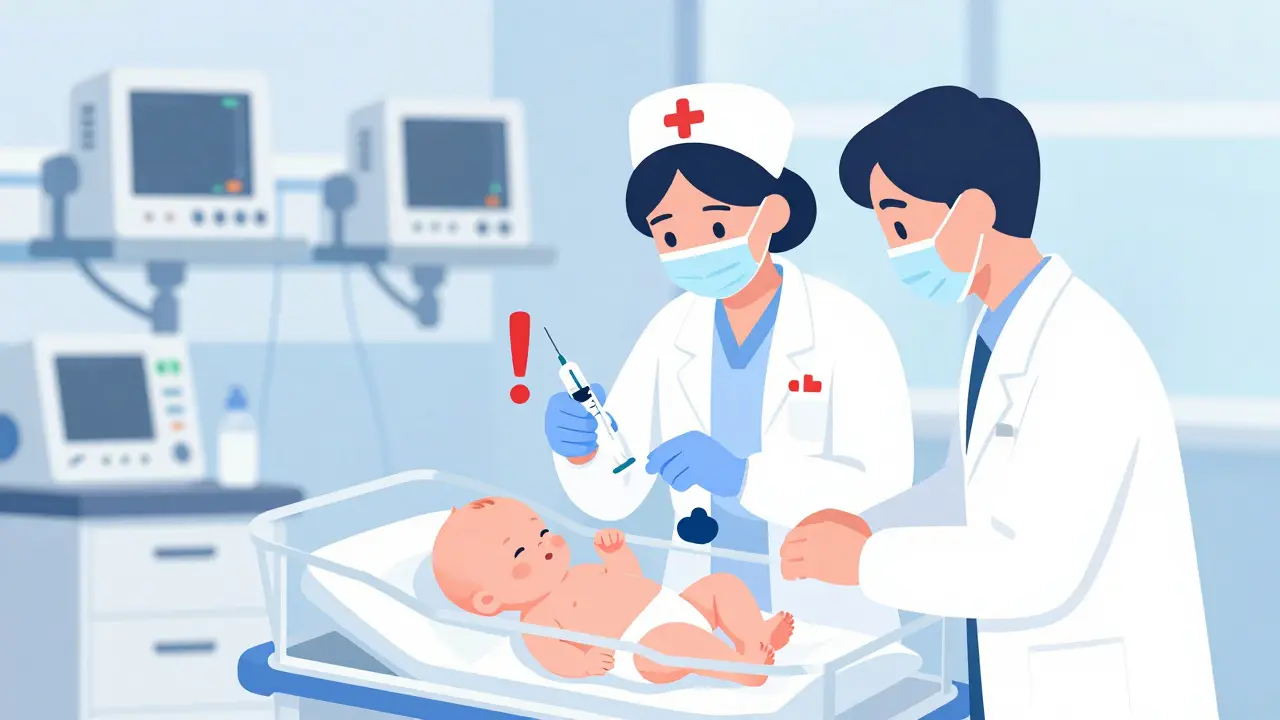
Why Verbal Prescriptions Are Necessary but Risky
Healthcare settings often require verbal prescriptions. Surgeons during operations can't pause to write orders. Emergency departments need immediate action. But these scenarios come with high stakes. The Pennsylvania Patient Safety Authority first tracked verbal order errors in 2004, and by 2006, their advisory showed 25% of errors involved sound-alike drug name confusion. For example, "Celebrex" misheard as "Celexa" or "Zyprexa" confused with "Zyrtec." These mix-ups happen because similar-sounding names are hard to distinguish over the phone or in noisy environments.
Current data shows verbal orders make up 10-15% of hospital medication orders post-CPOE implementation, but ambulatory care settings still see 20-25% due to workflow constraints. While electronic systems reduce these numbers, certain situations demand verbal communication. The key is knowing when and how to use them safely.
The Critical Read-Back Verification Process
Read-back verification is the single most effective safety step for verbal prescriptions. This is when the receiver repeats the entire order back to the prescriber for confirmation. The Joint Commission made this mandatory in 2006 under National Patient Safety Goal 2E. Studies show this step alone reduces errors by up to 50%.
How it works: When a doctor says, "Give 500 mg of amoxicillin orally twice daily," the nurse should respond, "You said 500 milligrams of amoxicillin by mouth two times daily?" This isn't just repeating-it's confirming every detail. For numbers, say them two ways: "fifteen milligrams" and "one-five milligrams." For drug names, spell them phonetically: "A-M-P-I-C-I-L-L-I-N" for ampicillin. This catches mistakes like confusing "500 mg" with "50 mg" or "ampicillin" with "amoxicillin."
A 2023 AllNurses.com thread shared a nurse's experience: "Spelling out drug names phonetically prevented a 10-fold dosing error with hydralazine and hydroxyzine." These small steps make a huge difference.
Clear Communication Techniques
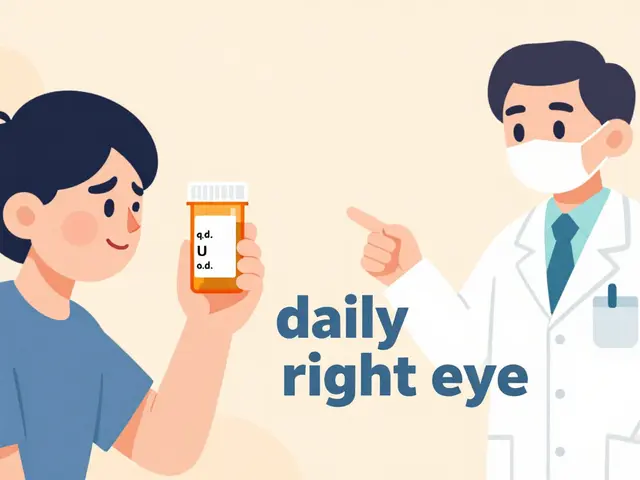
Using precise language during verbal prescriptions is non-negotiable. Avoid abbreviations like "BID" or "PO"-always say "twice daily" and "by mouth." The Institute for Safe Medication Practices (ISMP) emphasizes this. For example, "NSAIDs" could mean multiple drugs, so specify "ibuprofen" or "naproxen."
Numbers need special care. Instead of "15 mg," say "fifteen milligrams" and "one-five milligrams." This prevents mishearing "15" as "50" or "1.5." For decimals, say "zero point five milligrams" instead of "0.5 mg" to avoid missing the decimal point.
When speaking, enunciate clearly. A 2021 Medscape survey found 68% of nurses reported near-miss incidents monthly due to unclear speech, especially from non-native English speakers. If you're unsure, ask the prescriber to repeat or clarify. No question is too basic when it comes to medication safety.

High-Risk Medications to Avoid Verbal Orders
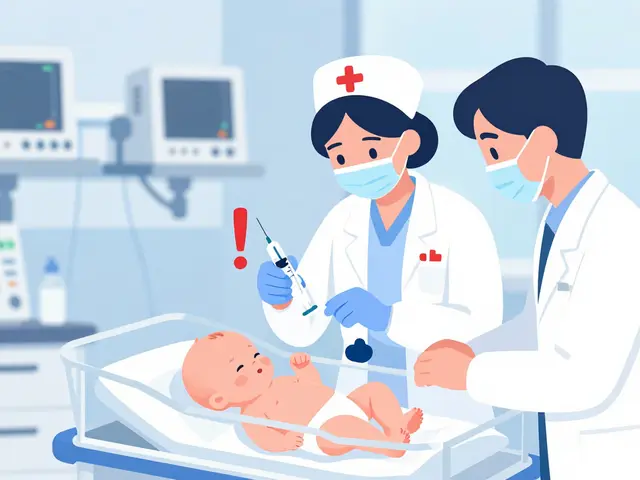
Certain drugs are too dangerous for verbal orders. The Pennsylvania Patient Safety Authority explicitly prohibits verbal orders for chemotherapy except to hold or discontinue treatment. Insulin, heparin, and opioids also fall into this category. For example, in 2006, a premature infant received incorrect antibiotic dosing due to a verbal order confusion during transfer preparation. This case involved ampicillin and gentamicin, but similar errors with high-risk drugs can be fatal.
Dr. Patrice A. Harris, former AMA Board Chair, notes: "Practitioners must act in compliance with state law, including scope of practice laws." Many states have specific rules-Washington State's 2018 guidelines prohibit verbal orders for high-alert medications outside emergencies. Always check your local regulations before proceeding.
Documentation Must-Haves
Immediate documentation is critical. After a verbal order, record every detail: patient name, medication name spelled out, exact dose with units, route, frequency, indication, prescriber ID, and exact time. CMS requires authentication within 48 hours, but leading hospitals like Johns Hopkins mandate same-shift verification.
A 2019 Johns Hopkins safety protocol shows that missing even one detail can lead to errors. For example, failing to specify "500 mg" instead of "500" could cause a tenfold dosing mistake. Documenting the time of the order and authentication ensures accountability. If a nurse forgets to note the time, it's impossible to trace the order back to the correct prescriber during an audit.
Common Pitfalls and Solutions
Distractions are a top cause of errors. A 2020 Joint Commission survey found 63% of nurses report prescribers resist read-back verification due to workflow pressures. To combat this, use standardized scripts: "I need to verify this order. Let me repeat it back to you." Also, avoid taking multiple orders at once. If a doctor says, "Give 500 mg of amoxicillin and 20 mg of furosemide," pause and get one order at a time.
Sound-alike drug names are another major risk. ISMP Canada's 2020 guidelines list high-risk pairs like "hydralazine" and "hydroxyzine." Always spell these out phonetically. A 2023 nurse on Student Doctor Network forums shared: "Spelling 'hydroxyzine' as H-Y-D-R-O-X-Y-Z-I-N-E prevented a dangerous error during a night shift." Simple steps like this save lives.
Current Trends and Future Outlook
Computerized Physician Order Entry (CPOE) systems have reduced verbal orders from 22% to 10% of hospital orders since 2006, cutting errors by 37%. However, KLAS Research predicts verbal orders will remain at 5-8% by 2025 due to unavoidable clinical scenarios. Dr. Robert Wachter's 2023 analysis in NEJM Catalyst notes, "Verbal communication will always be necessary in emergencies, making safety protocols permanently essential."
The FDA's 2024 initiative aims to standardize high-risk drug name pronunciations, building on ISMP Canada's 2020 recommendation to "state numbers using two different approaches." Meanwhile, 42 states have incorporated The Joint Commission standards into licensure requirements by 2023. As technology evolves, the focus remains on human-centered safety practices-because even the best systems can't replace clear communication.
What is read-back verification?
Read-back verification is when the receiver repeats the entire medication order back to the prescriber for confirmation. This mandatory step under The Joint Commission standards reduces medication errors by up to 50%. For example, if a doctor says "Give 500 mg of amoxicillin orally twice daily," the nurse should respond, "You said 500 milligrams of amoxicillin by mouth two times daily?" This catches mistakes like confusing 500 mg with 50 mg.
Which medications should never be ordered verbally?
High-alert medications like insulin, heparin, opioids, and chemotherapy should never be ordered verbally except in true emergencies. The Pennsylvania Patient Safety Authority explicitly prohibits verbal orders for chemotherapy to hold or discontinue treatment. Washington State's 2018 guidelines also prohibit verbal orders for high-risk drugs outside emergencies. Always check local regulations before proceeding.
How soon after a verbal order should it be documented?
Documentation must happen immediately after the verbal order. CMS requires authentication within 48 hours, but leading hospitals like Johns Hopkins mandate same-shift verification. Missing even one detail-like the exact time or dose-can lead to serious errors. For example, failing to specify "500 mg" instead of "500" could cause a tenfold dosing mistake.
What are common errors in verbal prescriptions?
Common errors include sound-alike drug name confusion (e.g., "Celebrex" vs. "Celexa"), misheard numbers (e.g., "15 mg" vs. "50 mg"), and missing units. A 2006 NICU incident saw a premature infant receive incorrect antibiotic dosing due to verbal order confusion during transfer preparation. These errors often occur during shift changes or when multiple orders are given at once.
Are there legal requirements for verbal prescriptions?
Yes. CMS Condition of Participation §482.22(c) requires all orders to be dated, timed, and authenticated. The Joint Commission Standard IM.01.02.01 mandates read-back verification for verbal orders. Additionally, 42 states have incorporated these standards into licensure requirements by 2023. Practitioners must comply with state-specific scope of practice laws, as emphasized by Dr. Patrice A. Harris of the AMA in 2021.






Gouris Patnaik February 6, 2026
Verbal prescriptions are a symptom of systemic failures. India has a much better approach with strict protocols. Why don't other countries learn from us? We need to stop this Western nonsense.
Jesse Lord February 7, 2026
Hey this is important stuff. We need to make sure everyone knows about read-back. It's saved so many lives. Just remember to verify everything carefully.
AMIT JINDAL February 9, 2026
Hey guys let me tell you something. I've been in healthcare for 20 years and I can tell you that verbal prescriptions are a total mess without proper protocols. I mean have you seen how many errors happen because people dont follow the read-back process? Like I had this one time when a nurse didnt spell out 'hydroxyzine' properly and almost gave a patient the wrong drug. 😬 Its crazy how simple it is to just say 'H-Y-D-R-O-X-Y-Z-I-N-E' but people skip it. Also numbers need to be said as 'fifteen milligrams' and 'one-five milligrams' to avoid confusion. Dont even get me started on abbreviations like 'BID' or 'PO' – always spell it out. And dont forget to document everything immediately after the order. CMS says you have 48 hours but hospitals like Johns Hopkins do it same shift. If you dont do this you're putting patients at risk. Its not rocket science people. Just follow the guidelines. And yes I know what I'm talking about because I've been in this for so long. Trust me I've seen it all. Also check out the ISMP Canada guidelines – they're gold. If you're not doing this you're a danger to society. Seriously what's wrong with people? 🤦♂️
Catherine Wybourne February 10, 2026
Ah verbal prescriptions. The 'trust me I'm a doctor' method. 🤦♀️ But seriously read-back is crucial. It's like double-checking your work before sending an email. Simple yet so many forget. Let's all be more thorough.
Ashley Hutchins February 11, 2026
This is so important. If you dont follow the protocols its dangerous. People should be held accountable. Ive seen so many mistakes. Always spell out drug names. No abbreviations. Its simple. Why cant people just do it right?
Lakisha Sarbah February 11, 2026
This is a really important topic. Ive worked in hospitals and seen how easy mistakes can happen. Always double-checking orders is key. Maybe some people need reminders. But we all want to keep patients safe.
Ariel Edmisten February 12, 2026
Read-back verification saves lives.
Niel Amstrong Stein February 13, 2026
Man verbal prescriptions are tricky. 😅 But read-back is a game-changer. Its like a safety net. Also spelling out drug names phonetically is a must. Simple steps big impact. 🌍
Paula Sa February 13, 2026
Its interesting how communication protocols can prevent so many errors. We all want to do our best but sometimes the system gets in the way. Maybe we need more collaboration on this. Just saying.
Joey Gianvincenzi February 15, 2026
The implementation of standardized verbal prescription protocols is imperative. Failure to adhere to these guidelines constitutes negligence and endangers patient safety. Immediate action must be taken to enforce compliance.