Have you ever taken a pill and felt nothing for hours, only to wonder if it was working? Or maybe you crushed a tablet to make it easier to swallow, not realizing you might have just turned a slow-dose medicine into a dangerous overdose? These are common scenarios when dealing with the two main types of prescription pills: immediate-release (IR) medications and extended-release (ER) formulations. Understanding the difference isn't just about knowing how often to take your meds; it’s about staying safe and getting the actual relief you need.
The core difference lies in speed. Immediate-release drugs hit your system fast, usually within 30 to 90 minutes. They deliver 100% of the active ingredient quickly, giving you rapid relief but requiring multiple doses throughout the day. Extended-release versions, on the other hand, are engineered to trickle the medication into your bloodstream over 12 to 24 hours. This smooths out the peaks and valleys of drug levels in your blood, which can mean fewer side effects and fewer pills to remember. But this convenience comes with strict rules that, if broken, can be risky.
How the Release Mechanisms Actually Work
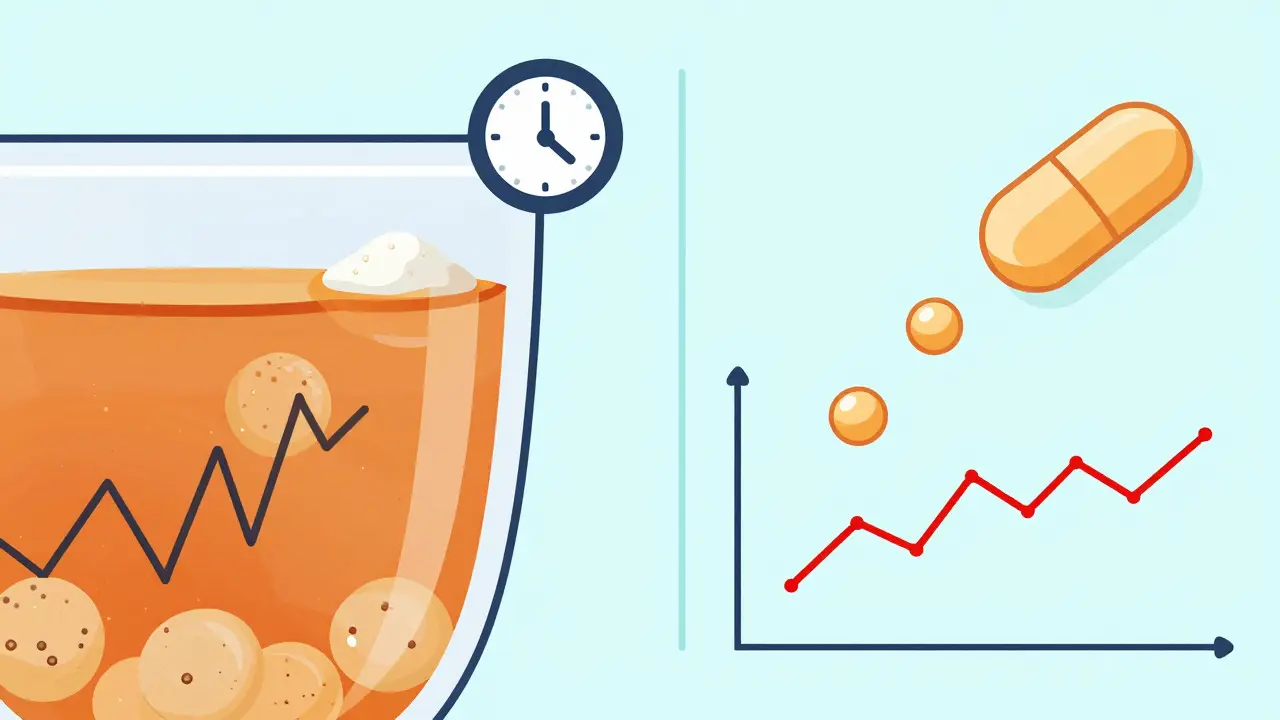
To understand why you can’t treat these pills the same way, you have to look at what’s happening inside them. An immediate-release tablet is a simple pharmaceutical formulation designed to dissolve rapidly in gastric fluids. Think of it like sugar dissolving in hot tea. It happens almost instantly. Your stomach acid breaks down the coating, and the drug absorbs into your gut lining, rushing into your bloodstream. This is great for acute issues-like a sudden headache or a panic attack-where you need action now.
Extended-release technology, however, uses sophisticated delivery systems to control that absorption. There are several ways manufacturers achieve this:
- Hydrophilic Matrices: The drug is embedded in a gel-like substance (often hydroxypropyl methylcellulose). As the tablet sits in your stomach, the outer layer swells and releases a small amount of drug while the rest remains trapped until more surface area is exposed. Metformin ER is a classic example.
- Osmotic Pumps (OROS): This is a high-tech approach used in drugs like Concerta. A tiny laser-drilled hole allows water from your body to enter the tablet, creating pressure that pushes the medication out through a second hole at a precise, steady rate. It’s like an IV drip in pill form.
- Microencapsulation: Thousands of tiny beads containing the drug are coated with different thicknesses of polymer. Some release immediately, others later, creating a staggered effect.
These mechanisms are why an ER pill might still be visible in your stool days later. That’s normal. It’s just the empty shell of the delivery system, not unabsorbed medication.
Timing Differences: What to Expect
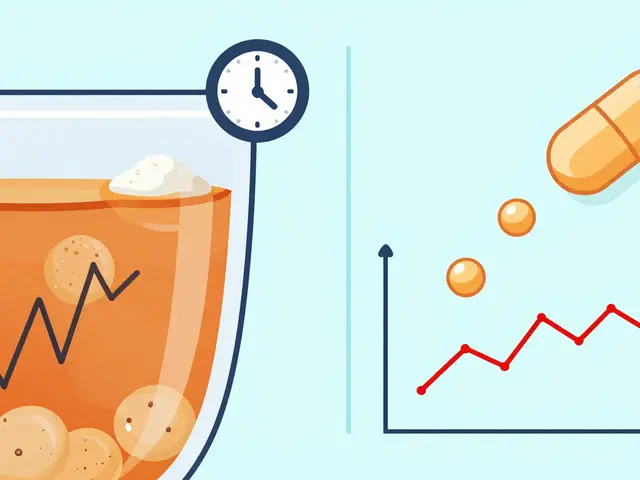
If you switch from an IR to an ER version of the same drug, your experience will change significantly regarding timing. With IR medications, you feel the peak effect relatively quickly, but it also fades quickly. You might need to take a dose every 4 to 6 hours to maintain therapeutic levels. This creates a "sawtooth" pattern in your blood plasma concentration-high peaks followed by low troughs. Those high peaks are often where side effects like dizziness, nausea, or jitteriness come from.
ER medications aim for a flat line. They keep your drug levels between the minimum effective concentration and the maximum safe concentration for much longer. However, this means patience. An ER pill can take 2 to 4 hours just to reach therapeutic levels. If you take it and don’t feel anything after an hour, resist the urge to take another one. A 2022 patient survey found that 28% of people mistakenly took extra doses because they didn’t feel immediate effects, leading to unintentional overdosing.
Consider ADHD medications like Adderall. Adderall XR provides 10-12 hours of symptom control, eliminating the need for a midday dose at school or work. In contrast, Adderall IR lasts only 5 to 8 hours. For many, the XR version offers a smoother ride without the harsh "crash" that happens when the IR wears off. But if you need instant focus for a presentation starting in 20 minutes, the IR version is the better tool for that specific job.
| Feature | Immediate-Release (IR) | Extended-Release (ER/XR/SR) |
|---|---|---|
| Onset of Action | 30-90 minutes | 2-4 hours |
| Duration of Effect | 4-8 hours | 12-24 hours |
| Dosing Frequency | Multiple times daily (3-4x) | Once or twice daily |
| Blood Level Stability | High peaks and troughs | Stable, consistent levels |
| Ideal Use Case | Acute symptoms, titration, breakthrough pain | Chronic conditions, maintenance therapy |
Safety Risks and Common Mistakes
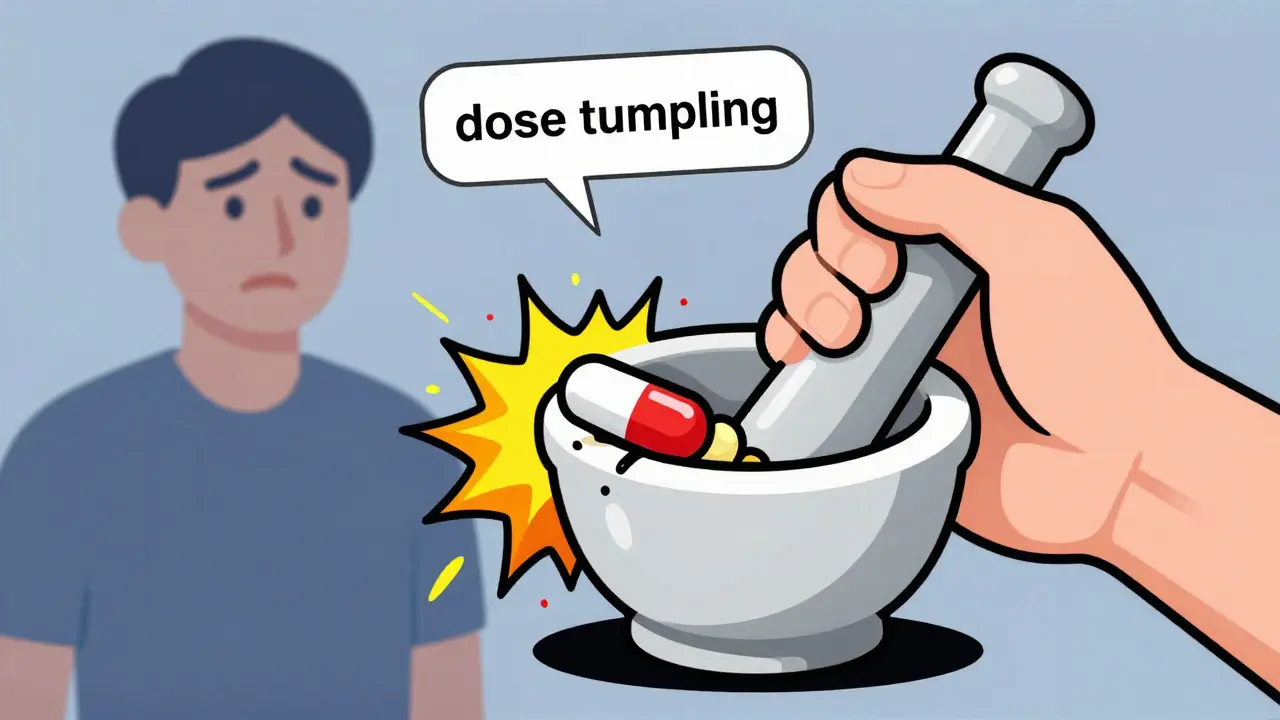
The biggest risk with ER medications is treating them like IR pills. Because they contain the full day’s dose compressed into one tablet, altering them can be dangerous. Crushing or chewing ER tablets destroys the release mechanism, causing the entire dose to dump into your system at once. This is called "dose dumping." For some drugs, like bupropion, this can raise blood concentrations above the seizure threshold. For opioids, it can lead to respiratory depression and overdose. The FDA warns that 92% of ER formulations cannot be safely split, crushed, or chewed.
Even splitting scored tablets requires caution. While some ER drugs are designed to be halved, many are not. Always check the label or ask your pharmacist. Another hidden risk involves gastrointestinal issues. If you have gastroparesis (delayed stomach emptying), an ER pill might sit in your stomach too long, causing higher-than-expected peak concentrations. Conversely, if you have rapid transit time, the drug might pass through before fully releasing. Conditions like Crohn’s disease or recent bowel surgery can drastically alter how ER meds work.
Overdose scenarios also differ. If someone overdoses on an IR drug, the worst is often over within a few hours. With an ER overdose, the danger continues as long as the pill keeps releasing medication. This can extend hospital stays by 24 to 48 hours as doctors monitor for delayed toxicity. This is why emergency rooms take ER overdoses very seriously.
Cost, Adherence, and Real-World Usage
Why do doctors prescribe ER so often if IR is simpler? Adherence. Taking one pill a day is much easier than taking four. A 2022 study in JAMA Internal Medicine tracked 15,000 hypertension patients and found that 78% of those on ER medications maintained good adherence (>80%), compared to only 56% on IR. Better adherence means better health outcomes and fewer hospital visits. For chronic conditions like depression, anxiety, or high blood pressure, consistency is key.
However, there is a cost. ER medications typically carry a 15% to 25% price premium over their IR counterparts. For example, a 30-day supply of Adderall XR might cost $350-$450, while the equivalent IR dosage could be $280-$380. Insurance coverage varies, but generic IR options are often cheaper. If cost is a major barrier, talk to your doctor. Sometimes a combination of lower-cost IR dosing can mimic the stability of ER, though it requires more discipline.
Patient experiences highlight this trade-off. On forums, many users prefer the "smoothness" of ER for daily life but keep a stash of IR for emergencies. One Reddit user noted, "XR’s smooth ride prevents the 2pm crash I got with IR, but I keep 5mg IR tabs for when I need instant focus for presentations." This hybrid approach is common and valid, provided your doctor approves it.

When to Choose Which Formulation
There is no single "better" option. The right choice depends on your condition, lifestyle, and physiology.
- Choose IR if: You need rapid relief for acute symptoms (pain, anxiety attacks, nausea). You are in the titration phase of a new medication, where doctors need to adjust doses frequently based on immediate feedback. You have trouble swallowing large pills and the ER version isn’t available in a liquid or smaller size.
- Choose ER if: You have a chronic condition requiring stable blood levels (depression, ADHD, hypertension). You struggle with remembering multiple doses throughout the day. You experience significant side effects from the peak levels of IR medications (like jitteriness or dizziness).
For instance, in psychiatry, the American Psychiatric Association recommends ER formulations for maintenance therapy in schizophrenia and bipolar disorder because stable blood levels reduce the risk of mood swings and insomnia. Quetiapine XR, for example, is less likely to cause daytime sedation than the IR version because it avoids the massive initial spike.
Troubleshooting and Next Steps
If you’re switching from IR to ER, expect a transition period. It can take 7 to 10 days for ER medications to reach a steady state in your body, compared to 3 to 5 days for IR. Don’t judge the effectiveness of the new med after just one or two days. Keep a symptom diary to track how you feel at different times of the day.
Always take ER medications exactly as directed. Swallow them whole with water. Avoid taking them with grapefruit juice or antacids unless approved by your pharmacist, as these can alter the pH of your stomach and affect release rates. If you miss a dose, don’t double up. Take it as soon as you remember, unless it’s close to the next dose, in which case skip it.
Finally, communicate with your healthcare provider. If you’re experiencing side effects, it might be due to the peak levels of an IR med, suggesting a switch to ER. If you’re feeling ineffective coverage, you might need a different dosing schedule. Medication management is a partnership, and understanding the mechanics of your pills empowers you to participate actively in your health.
Can I crush extended-release pills to put them in food?
Generally, no. Crushing most extended-release (ER) pills destroys the controlled-release mechanism, causing the entire dose to be absorbed at once. This can lead to severe side effects or overdose. Always check the label or consult your pharmacist before altering any ER medication. Some ER capsules may be opened and sprinkled on applesauce if the beads inside remain intact, but this is specific to certain drugs.
Why does my extended-release pill appear in my stool?
This is normal for many ER formulations, especially those using osmotic pump technology or hydrophilic matrices. The hard outer shell or gel matrix passes through your digestive system unchanged after the medication has been released. It does not mean the drug wasn’t absorbed. Unless instructed otherwise, do not worry about seeing the empty shell in your stool.
Is immediate-release medication stronger than extended-release?
Not necessarily. Both forms contain the same active ingredient. However, immediate-release (IR) creates a higher peak concentration in your blood quickly, which might *feel* stronger or more intense initially. Extended-release (ER) provides a lower, steadier level over time. For chronic conditions, ER is often preferred because it minimizes side effects associated with high peaks while maintaining therapeutic efficacy.
Can I switch from IR to ER on my own?
No. Switching between IR and ER formulations should always be done under a doctor’s supervision. The total daily dosage often needs adjustment because the bioavailability (how much drug enters your bloodstream) can differ between forms. Additionally, the timing of doses changes, which affects how the drug interacts with your body throughout the day.
What should I do if I miss an extended-release dose?
If you miss a dose, take it as soon as you remember, unless it is almost time for your next scheduled dose. In that case, skip the missed dose and resume your regular schedule. Never take two doses at once to make up for a missed one, as this increases the risk of toxicity due to the prolonged release profile of ER medications.