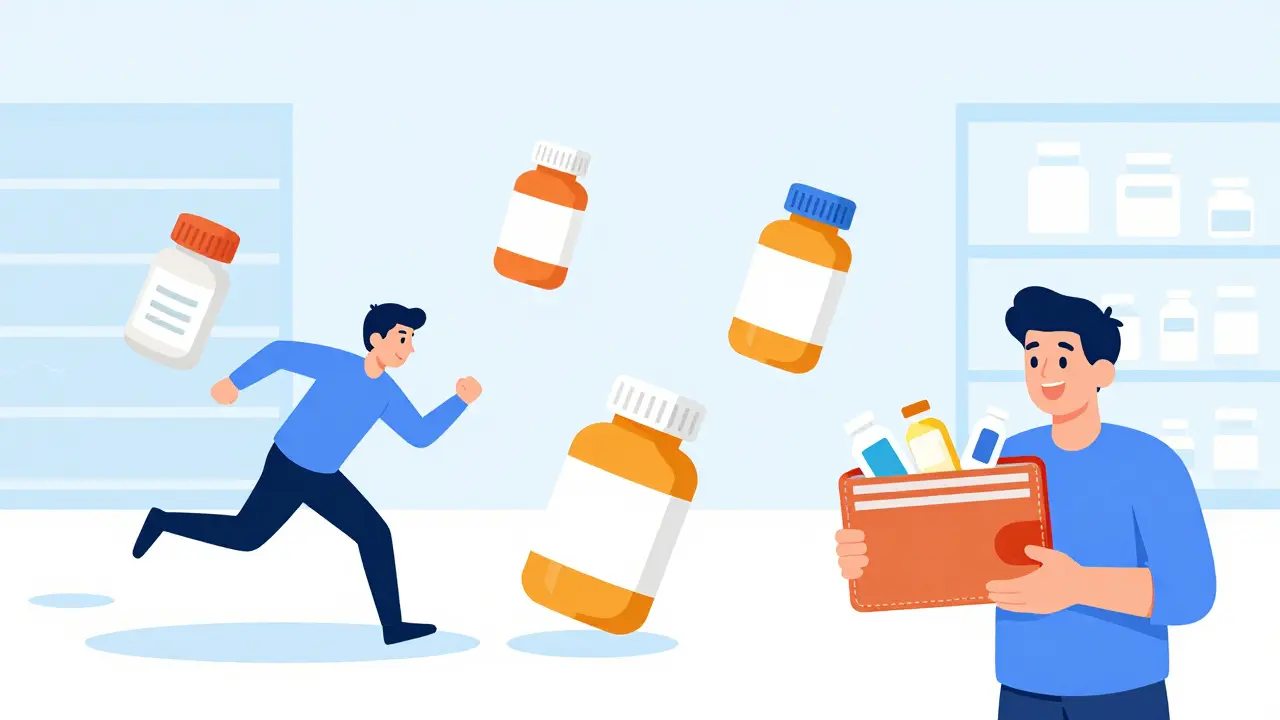
Walk into any pharmacy in North America, and you’ll likely see a sign advertising "$4 generics." It feels like a victory for the little guy. But have you ever wondered why some generic drugs still cost an arm and a leg, while others are practically free? The answer lies in something economists call generic price wars, a chaotic but powerful force that drives down medication costs when it works-and sometimes fails spectacularly when market dynamics get twisted.
You might assume that once a brand-name drug loses its patent, prices drop automatically. That’s only half true. The real story involves multiple manufacturers rushing to fill the void, undercutting each other to capture market share. This competition is supposed to save you money. In theory, it does. In practice, the path from factory floor to your wallet is blocked by middlemen who often keep the savings for themselves. Understanding this dynamic is the key to keeping more cash in your pocket.
The Mechanics of Generic Competition
To understand how these price wars work, we first need to look at the rules of the game. The modern generic drug market was created by the Hatch-Waxman Act of 1984. This law allowed generic manufacturers to skip expensive clinical trials if they could prove their product was bioequivalent to the brand-name original. This lowered the barrier to entry, inviting more players into the market.
When a popular drug goes off-patent, companies race to get approval through the Abbreviated New Drug Application (ANDA) pathway. The more companies that enter, the lower the price tends to go. It’s basic supply and demand, but with high stakes. According to data from the FDA, the number of competitors makes all the difference:
- One competitor: Prices may drop slightly (15-30%), but often remain close to brand-name levels because there’s no pressure to cut deeper.
- Two competitors: Prices typically fall by about 44% to 54% compared to the brand.
- Four competitors: Discounts jump to roughly 73% to 79%.
- Six or more competitors: This is where the magic happens. Prices can plummet by more than 95% compared to the original brand-name drug.
This pattern isn’t just theoretical. The Assistant Secretary for Planning and Evaluation (ASPE) confirmed that in markets with ten or more competitors, prices decline by 70-80% after just three years of competition. When the dust settles, consumers should be paying pennies on the dollar for life-saving medications.
Why You Might Not See the Savings
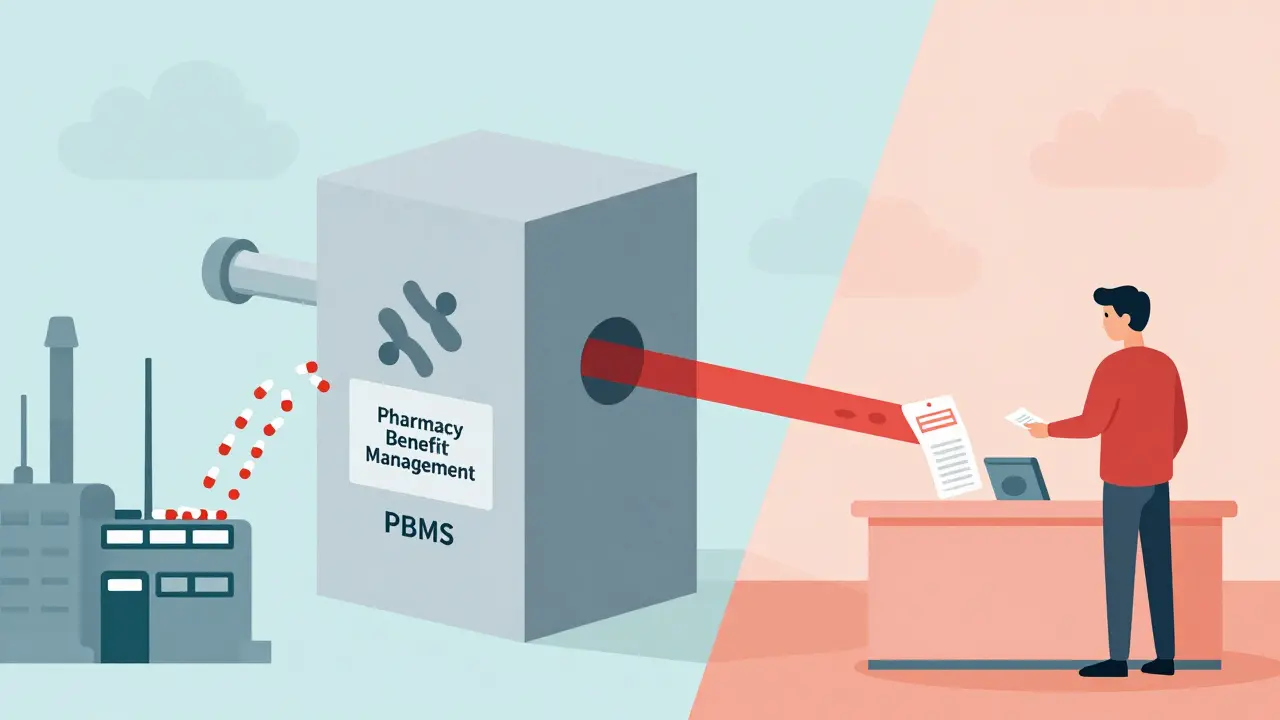
If the math shows 95% savings, why did you pay $300 for a generic EpiPen last month? Or why does your insulin biosimilar only show a 15% discount? The problem isn’t the manufacturing; it’s the distribution. In the U.S., the direct link between manufacturer and patient has been severed by intermediaries, primarily Pharmacy Benefit Managers (PBMs).
PBMs negotiate rebates and fees behind closed doors. While generic price wars drive the wholesale cost of drugs down, PBMs often keep the difference between what they pay the pharmacy and what they charge the insurer or patient. This practice, known as spread pricing, means the theoretical savings from competition never reach your credit card statement.
Dr. Darius Lakdawalla from the USC Schaeffer Center pointed out in a 2022 analysis that PBM practices inflate retail generic prices despite fierce competition upstream. Meanwhile, pharmacies face their own squeeze. The Commonwealth Fund noted that while gross margins on brand-name drugs are slim (around 3.5%), generic margins average 42.7%. Pharmacies rely on this volume to stay open, but when PBMs cap reimbursements too low, even these margins vanish.
| Number of Generic Competitors | Avg. Price Reduction vs. Brand | Market Stability |
|---|---|---|
| 1 | 15-30% | High (Monopoly-like behavior) |
| 2 | 44-54% | Moderate |
| 4 | 73-79% | Good |
| 6+ | >95% | Risk of Shortages (Prices too low) |
The Hidden Cost: Drug Shortages
There’s a dark side to extreme price wars. When prices drop too low, manufacturers can no longer cover their production costs. They exit the market. Suddenly, the drug you’ve been taking for years disappears from shelves.
A 2024 analysis by the American Economic Association (AEA) found that 30% of generic drug shortages occur in markets with four or more manufacturers. Why? Because unsustainable price competition eliminated producers. This creates a vicious cycle: intense competition leads to rock-bottom prices, which leads to exits, which leads to fewer competitors, which leads to price spikes again.
For example, certain antibiotics and heart medications have seen wild price swings due to this churn. If you’re relying on a specific generic, check its availability regularly. The FDA prioritizes applications for off-patent drugs with few competitors to mitigate this, but the risk remains a structural flaw in the system.
How to Capture the Savings Yourself
You don’t have to accept whatever price your insurance plan dictates. With a little effort, you can bypass the opaque PBM layer and access the true market price driven by generic competition. Here’s how:
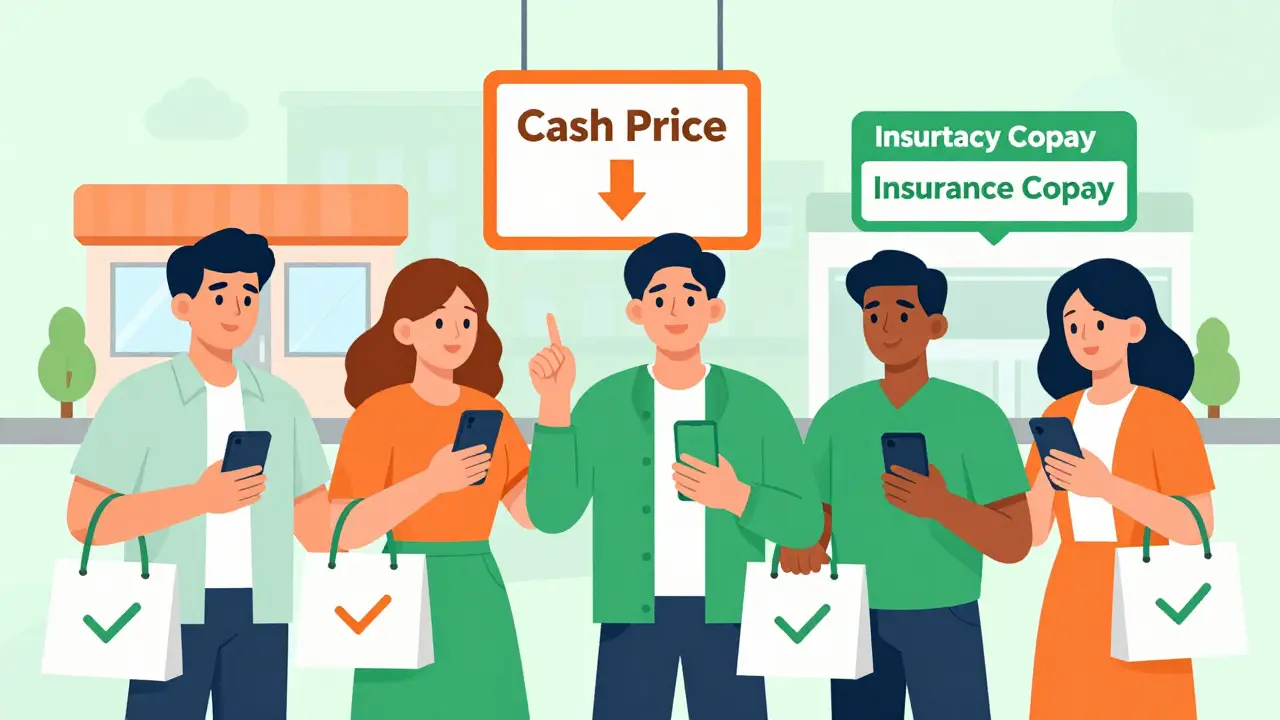
- Ask for the Cash Price: Always ask your pharmacist, "What is the cash price without insurance?" In 28% of cases studied by the USC Schaeffer Center, the cash price was lower than the insurance copay. Insurance plans often have complex formularies that favor branded drugs or specific generic suppliers, ignoring the cheapest option available.
- Use Coupon Aggregators: Tools like GoodRx or SingleCare scan multiple pharmacy networks to find the lowest negotiated rate. These platforms leverage bulk purchasing power similar to PBMs but pass the savings directly to you. User reviews indicate average savings of 89% on generic meds using these tools.
- Check Therapeutic Equivalence: Not all generics are created equal in terms of formulation. Look for an "AB" rating in the FDA’s Orange Book. This ensures the generic is therapeutically equivalent to the brand name, giving you confidence that you’re getting the same efficacy at a fraction of the cost.
- Compare Pharmacy Chains: Prices for the same generic drug can vary by over 300% between major chains. Walmart’s $4 list, Costco’s membership discounts, and Amazon Pharmacy’s transparent pricing models offer different value propositions. For chronic conditions, switching pharmacies can save hundreds of dollars annually.
It takes about 10-15 minutes per prescription to do this research. For one-time medications, it might not be worth it. But for daily medications like metformin or lisinopril, the compounding savings are significant.
Market Consolidation and Future Outlook
The generic drug market is worth approximately $71 billion in the U.S., yet it accounts for only 23% of total pharmaceutical spending. Despite this efficiency, the market is highly consolidated. Five companies-Teva, Viatris, Sandoz, Amneal, and Aurobindo-control over 60% of the U.S. generic market by volume. This oligopolistic structure can stifle true competition, allowing these giants to coordinate pricing or limit output artificially.
However, regulatory winds are shifting. The Federal Trade Commission’s 2023 report on PBMs recommended banning spread pricing and requiring pass-through models. Additionally, the Inflation Reduction Act allows Medicare to negotiate prices for certain high-cost drugs, which may indirectly pressure generic markets to become more transparent. The FDA also approved a record 1,010 generic drugs in 2023, suggesting a future with more competition and potentially lower prices-if the distribution channels align.
As a consumer, your best defense is awareness. The price war is happening right now, but the battlefield is invisible. By understanding the mechanics of generic competition and actively shopping around, you can ensure that the benefits of innovation and scale actually reach your wallet.
Why are some generic drugs still expensive?
If there is only one generic manufacturer competing against the brand-name drug, prices may only drop by 15-30%. Without multiple competitors driving a price war, the generic maker retains significant pricing power. Additionally, PBM contracts and insurance formulary designs can prevent low wholesale prices from translating to low patient copays.
Is the cash price always cheaper than my insurance copay?
Not always, but frequently enough to check. Studies show that in nearly 30% of cases, the cash price paid directly to the pharmacy is lower than the copay charged by insurance. This happens because insurers and PBMs may add administrative fees or fail to negotiate the best rates for specific generic drugs.
Do generic drugs cause shortages?
Yes, indirectly. Intense price wars can drive prices so low that manufacturers cannot profitably produce the drug. When companies exit the market, supply drops, leading to shortages. About 30% of generic shortages occur in markets that previously had four or more competitors.
What is the Hatch-Waxman Act?
Passed in 1984, the Hatch-Waxman Act established the legal framework for generic drugs in the U.S. It allows manufacturers to file Abbreviated New Drug Applications (ANDAs), proving bioequivalence to brand-name drugs without repeating costly clinical trials. This accelerates market entry and fosters competition.
How can I verify if a generic is equivalent to the brand?
Check the FDA’s Orange Book for a therapeutic equivalence code of "AB." This rating confirms that the generic drug delivers the same active ingredient in the same amount and strength, and performs identically in the body as the brand-name version.