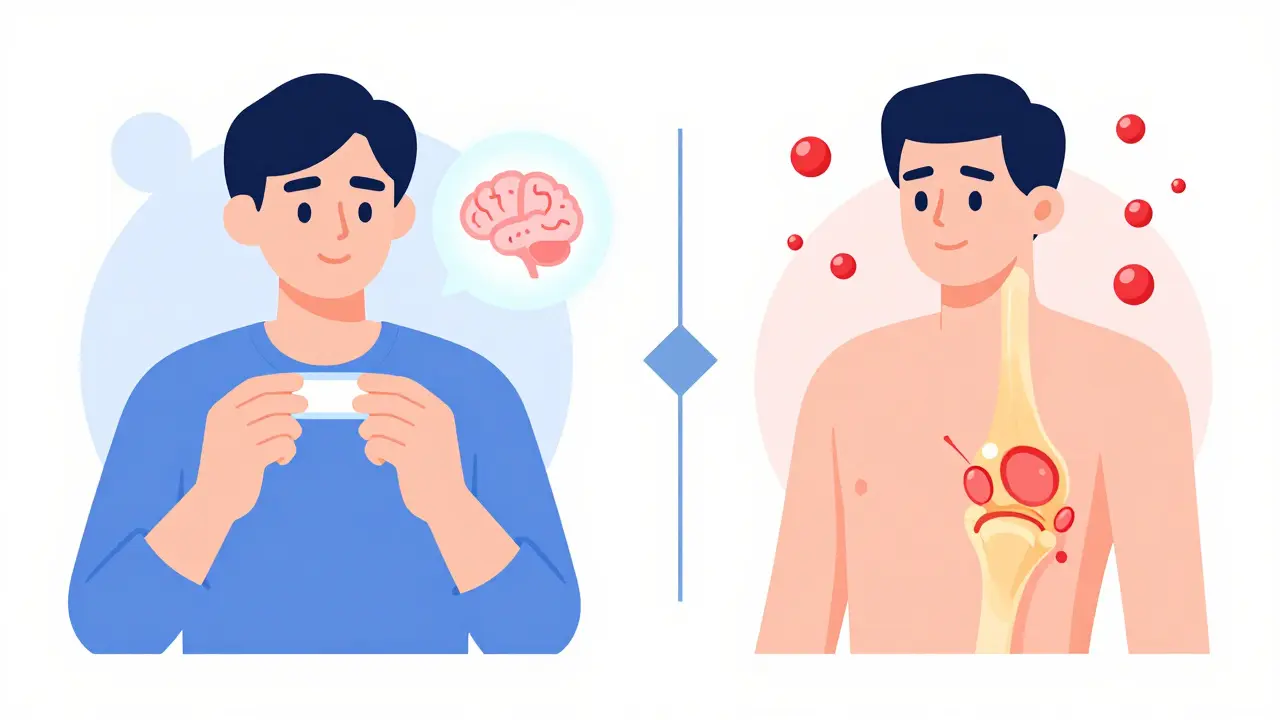
When you have a headache, a sore back, or a fever, reaching for an OTC pain reliever seems simple. But not all pain pills are the same. Two main types dominate the shelf: acetaminophen and NSAIDs. Knowing the difference isn’t just helpful-it can keep you safe and make your pain relief actually work.
What’s the Real Difference?
Acetaminophen (sold as Tylenol, Panadol, and store brands) and NSAIDs (like ibuprofen/Advil, naproxen/Aleve, and aspirin) both reduce pain and fever. But that’s where the similarity ends.
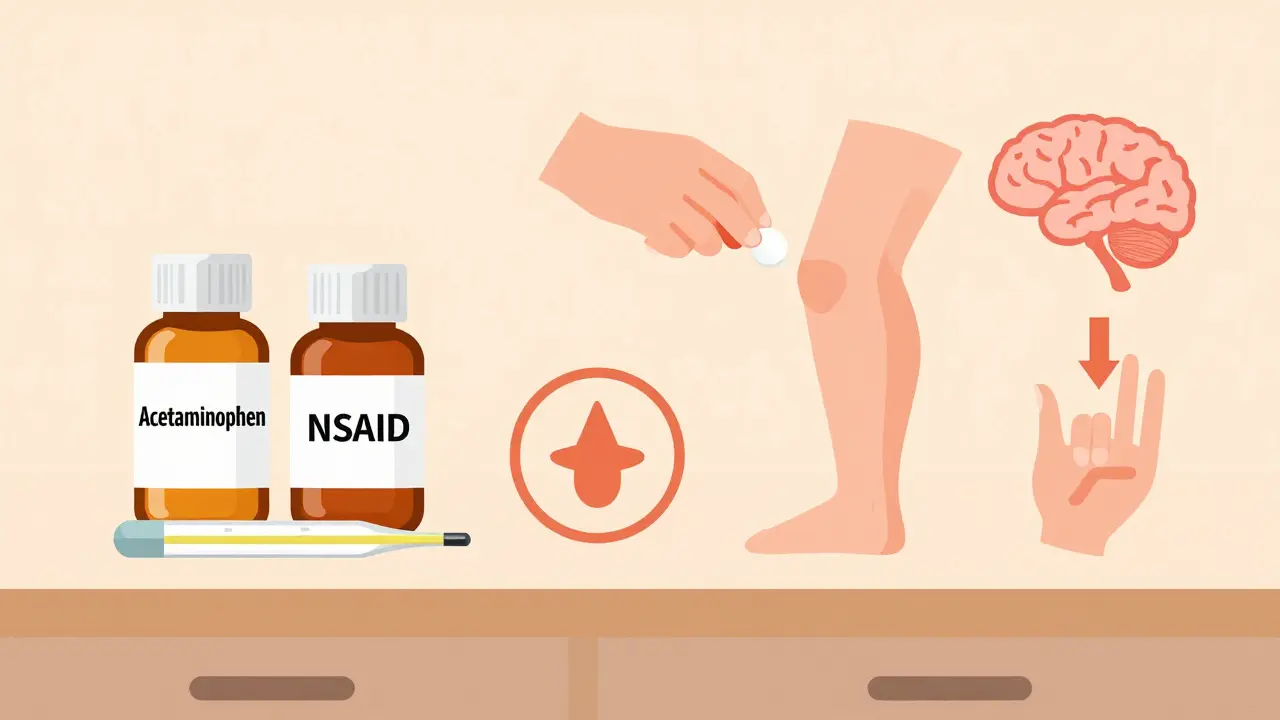
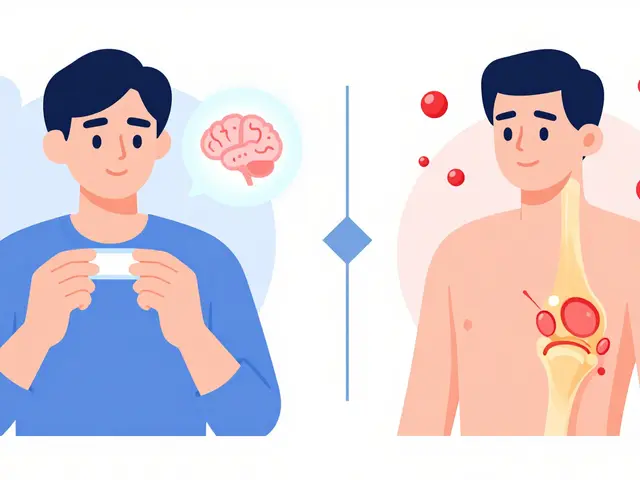
Acetaminophen works mostly in your brain. It doesn’t touch inflammation at all. If your knee is swollen from arthritis, acetaminophen might dull the pain a little, but it won’t reduce the swelling. NSAIDs, on the other hand, work everywhere-in your joints, muscles, and bloodstream. They block enzymes (COX-1 and COX-2) that create prostaglandins, the chemicals that cause pain, fever, and inflammation. That’s why NSAIDs are the go-to for sprains, menstrual cramps, or inflamed joints.
Harvard Health’s 2023 review says it plainly: "Only NSAIDs can reduce inflammation." If swelling is part of your pain, NSAIDs have a clear edge.
Which One Works Better for What?
Let’s get specific. Here’s where each type shines:
- Headaches and mild pain: Acetaminophen works well for most people. Mayo Clinic data shows about 70% of migraine sufferers get relief from it. It’s often the first choice for tension headaches.
- Arthritis pain: NSAIDs win. Clinical trials show they reduce osteoarthritis pain scores by 30-50%, while acetaminophen only manages 10-20%. That’s because inflammation drives the pain in joints.
- Menstrual cramps: NSAIDs like ibuprofen or naproxen are the standard recommendation. They cut down on prostaglandins that cause uterine contractions. Acetaminophen helps, but less consistently.
- Fever: Both work equally well. Neither is superior here.
- Muscle strains or injuries: NSAIDs reduce both pain and swelling. Acetaminophen only takes the edge off the pain.
For kids under 12 and pregnant women, acetaminophen is the only OTC option recommended by University of Utah Health and the FDA. NSAIDs carry risks during pregnancy and can affect children’s kidney function if used improperly.
Safety: What You Need to Watch Out For
Both have risks-but they’re very different.
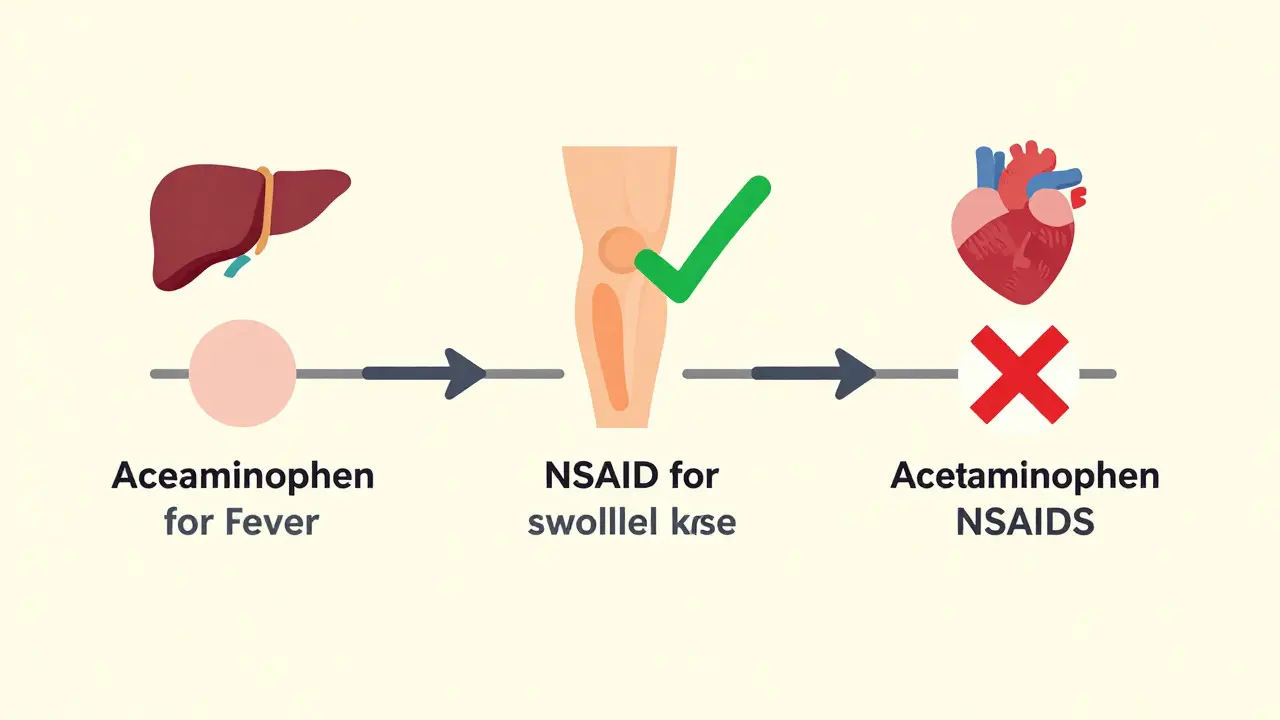
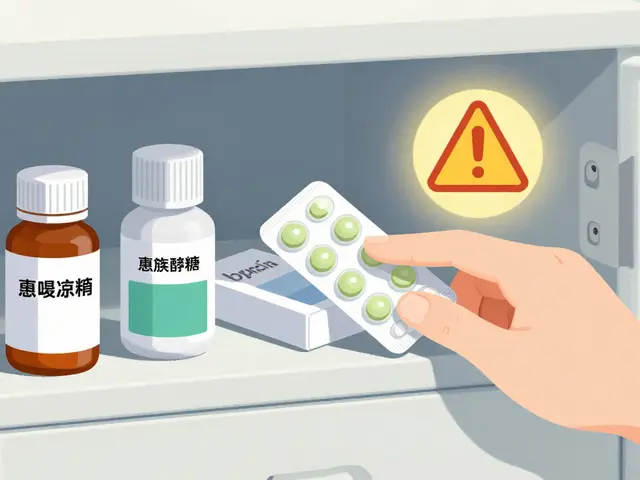
Acetaminophen is easy on the stomach. You can take it with or without food. But it’s tough on the liver. The maximum daily dose is 4,000 mg, but experts like Harvard Health recommend capping it at 3,000 mg to stay safe. Why? Because liver damage can happen even within the "safe" range if you’re drinking alcohol, have liver disease, or take multiple products with acetaminophen. The FDA says 40% of acetaminophen-related liver injuries come from people unknowingly combining cold medicines, sleep aids, or prescription painkillers that all contain it. That’s why every box now has a bold warning: "Do not take more than directed."
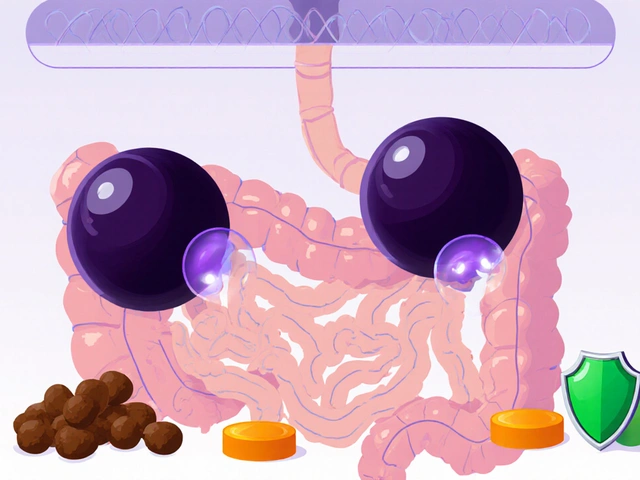
NSAIDs are harder on your gut. About 2-4% of regular users develop stomach ulcers each year. They can also raise blood pressure and increase the risk of heart attack or stroke, especially with long-term or high-dose use. The FDA added black-box warnings to all NSAID labels in 2015. Ibuprofen carries a higher cardiovascular risk than naproxen, according to a 2021 study in the European Heart Journal. Naproxen is often the safer NSAID choice for people with heart concerns.
When to Use One Over the Other
Here’s a simple guide:
- Start with acetaminophen if you’re unsure, have stomach issues, are pregnant, or are treating a child.
- Switch to an NSAID if the pain is tied to swelling, joint stiffness, or inflammation.
- Avoid NSAIDs if you have ulcers, kidney disease, high blood pressure, or heart problems.
- Never mix NSAIDs. Taking ibuprofen and naproxen together increases stomach bleeding risk by 300%.
- Check labels. Many cold and flu meds contain acetaminophen. Double-check before combining.
Many doctors now suggest alternating them. For example: take 650 mg of acetaminophen at 8 a.m., then 200 mg of ibuprofen at 2 p.m., and repeat acetaminophen at 8 p.m. This gives you strong pain control while keeping daily doses of each drug low. Harvard Health says this combo can be as effective as a higher dose of either alone-with fewer side effects.
Cost and Accessibility
Generic versions are cheap. A bottle of 100 acetaminophen 500 mg tablets costs $3-$5, which is about $0.03-$0.05 per tablet. Ibuprofen 200 mg runs $0.04-$0.07 per tablet. That’s why they’re the most common OTC pain relievers in the U.S., with Americans spending $1.5 billion annually on them (IBISWorld 2023). No insurance needed. No prescription. Just read the label.
What’s New in 2026?
Regulators are still tightening guidelines. The FDA strengthened acetaminophen liver warnings in 2022. The American Heart Association updated its 2023 advisory to say NSAIDs should be avoided in people with known heart disease unless absolutely necessary. Meanwhile, research continues: the NIH is funding 17 clinical trials exploring new pain pathways that might replace these drugs in the next decade. But for now, both acetaminophen and NSAIDs remain the backbone of OTC pain relief.
Bottom line: Your pain isn’t one-size-fits-all. Your medicine shouldn’t be either.
Can I take acetaminophen and ibuprofen together?
Yes, and it’s often recommended. Taking acetaminophen and ibuprofen together can give better pain relief than either alone, while letting you use lower doses of each. For example: take 650 mg acetaminophen and 200 mg ibuprofen at the same time, then space them out every 6-8 hours. Just don’t exceed the maximum daily dose for either-3,000 mg for acetaminophen and 1,200 mg for ibuprofen (OTC limit). Always check other medications you’re taking to avoid accidental overdose.
Is Tylenol safer than Advil?
It depends on your health. Tylenol (acetaminophen) is safer for your stomach and kidneys, but harder on your liver. Advil (ibuprofen) is safer for your liver but can irritate your stomach and raise your blood pressure. If you have liver disease, avoid Tylenol. If you have ulcers, high blood pressure, or heart disease, avoid Advil. For most healthy adults without these conditions, both are safe when used as directed.
Why can’t I use NSAIDs if I’m pregnant?
NSAIDs can affect fetal development, especially in the third trimester. They may cause premature closure of a key blood vessel in the baby’s heart and reduce amniotic fluid levels. They can also delay labor. Acetaminophen is the only OTC pain reliever recommended during pregnancy, even in the third trimester, when used at the lowest effective dose for the shortest time.
What’s the safest NSAID for long-term use?
Naproxen (Aleve) is generally considered the safest NSAID for long-term use among OTC options. Studies show it has a lower risk of heart attack compared to ibuprofen. However, no NSAID is risk-free over time. Always use the lowest dose for the shortest time possible. If you need daily pain relief for more than 10 days, talk to a doctor-there may be better options.
Can I take acetaminophen if I drink alcohol?
It’s risky. Even moderate drinking (2-3 drinks per day) can increase the chance of liver damage from acetaminophen. The liver processes both alcohol and acetaminophen, and combining them overwhelms its ability to detoxify. If you drink regularly, limit acetaminophen to no more than 2,000 mg per day and avoid daily use. If you have liver disease or drink heavily, avoid acetaminophen entirely.
Is it okay to give children NSAIDs?
Ibuprofen and naproxen are safe for children over 6 months old, but only if dosed correctly by weight. Acetaminophen is preferred for babies under 6 months. Always use the measuring device that comes with the medicine-never a kitchen spoon. Never give aspirin to children; it can cause Reye’s syndrome, a rare but serious condition.
Do OTC pain relievers cure the cause of pain?
No. They only mask the symptoms. Acetaminophen and NSAIDs reduce pain and fever, but they don’t fix the underlying issue-whether it’s a torn ligament, an infection, or arthritis. If pain lasts more than 10 days, gets worse, or comes with other symptoms like fever, swelling, or numbness, see a doctor. Relying on OTC meds too long can delay diagnosis.




Stephen Rudd March 8, 2026
This whole article reads like a pharmaceutical sales pitch disguised as medical advice. NSAIDs aren't 'the go-to'-they're the default because they're profitable. Acetaminophen is cheaper, safer for most, and just as effective for non-inflammatory pain. The real scandal? Doctors don't tell you that 40% of liver damage cases come from combining OTC meds you didn't even realize contained acetaminophen. You're being manipulated into thinking you need something stronger.
Jazminn Jones March 10, 2026
The assertion that NSAIDs are superior for inflammatory pain is empirically sound, yet the article conspicuously omits the fact that COX-2 selective inhibitors (e.g., celecoxib) exhibit significantly lower gastrointestinal toxicity than non-selective NSAIDs. Moreover, the pharmacokinetic profiles of ibuprofen and naproxen differ markedly in half-life and bioavailability, which directly impacts dosing efficacy. One cannot responsibly discuss OTC analgesics without acknowledging these nuances. The current discourse is dangerously reductive.
Erica Santos March 11, 2026
Oh wow. So we're just supposed to believe everything a 'Harvard Health' review says now? Like, sure, let's ignore the fact that 70% of clinical trials on acetaminophen are funded by McNeil. And let's pretend the FDA's 2022 warning didn't come after 10 years of lobbying to keep the 4,000mg limit. You know what's really dangerous? Trusting corporate-backed 'guidelines' over your own body. I haven't taken Tylenol since 2018. My liver thanks me.
George Vou March 11, 2026
i heard from a guy on youtube that tylenol causes alzheimers. not sure if its true but i stopped taking it after that. now i just use advil and pray. also why do they put it in every cold medicine? its like they want us to kill ourselves slowly. also my cousin died from a 'medication error' and i think it was tylenol. rip.
Scott Easterling March 12, 2026
I'm not saying this is a conspiracy, but... why do all the 'safe' recommendations come from people who work for big pharma? And why is acetaminophen in EVERYTHING? COLD MEDS, SLEEP AIDS, PRESCRIPTION PAINKILLERS... it's like they're trying to get us addicted. And don't even get me started on how they hide it in the ingredient list under 'APAP'. That's not transparency. That's a trap. I only take ibuprofen now. And I check every label. 17 times.
Mantooth Lehto March 12, 2026
I just want to say thank you for this post. I’ve been suffering from chronic back pain for years and I had no idea NSAIDs were better for inflammation. I was taking Tylenol every day and wondering why nothing changed. I switched to naproxen last month and I can actually walk without wincing now. I cried the first day. Thank you. 🙏
Melba Miller March 14, 2026
This country is falling apart because people think they know more than doctors. You think you’re being 'smart' by avoiding NSAIDs because of some Reddit post? You’re not. You’re just delaying real treatment. If you have arthritis, your body is literally eating its own joints. NSAIDs don’t just 'mask' pain-they slow the damage. Stop being afraid of science. Take the damn pill. Your future self will thank you.
Katy Shamitz March 14, 2026
I just wanted to say how much I appreciate this breakdown. I’m 62 and have been on ibuprofen for 15 years, and I had no idea naproxen was safer for my heart. I just switched last week and my blood pressure dropped 10 points. I feel like a new person. Also, I always thought alternating Tylenol and Advil was dangerous-so glad to know it’s actually recommended. Thank you for saving me from my own ignorance. 💕
Nicholas Gama March 15, 2026
The FDA’s 2022 acetaminophen warning was a PR stunt. Real hepatotoxicity occurs at 10g+ daily. The 3,000mg 'safe' limit is arbitrary. Meanwhile, NSAIDs cause 16,000 deaths/year from GI bleeds. This article is fearmongering disguised as education. Use the drug that fits your physiology-not your anxiety.
Mary Beth Brook March 16, 2026
The data is unequivocal: NSAIDs inhibit COX-1/COX-2, reducing prostaglandin synthesis. Acetaminophen modulates central CB1 and TRPV1 pathways. The clinical implications are non-negotiable: inflammatory pathologies require NSAIDs. Acetaminophen is a palliative-not a therapeutic. Stop conflating symptom suppression with disease modification.
Dan Mayer March 17, 2026
I read this whole thing and now I’m more confused. I thought tylenol was bad for the liver but also good for the brain? And ibuprofen is bad for the heart but good for the knees? So what do I take? I just took two advil and a tylenol and now I’m not sure if I’m gonna die. help.
Neeti Rustagi March 17, 2026
This is an excellent, evidence-based overview. I particularly appreciate the emphasis on naproxen’s relative cardiovascular safety profile, which is often overlooked in consumer literature. The pharmacokinetic distinction between short- and long-acting NSAIDs is critical for chronic pain management. Moreover, the caution regarding polypharmacy with acetaminophen is not merely prudent-it is a public health imperative. Well-researched and clinically grounded.
Tom Sanders March 18, 2026
I’ve been taking both for years. No issues. You’re overthinking it. Just don’t drink and don’t take more than the bottle says. Done.