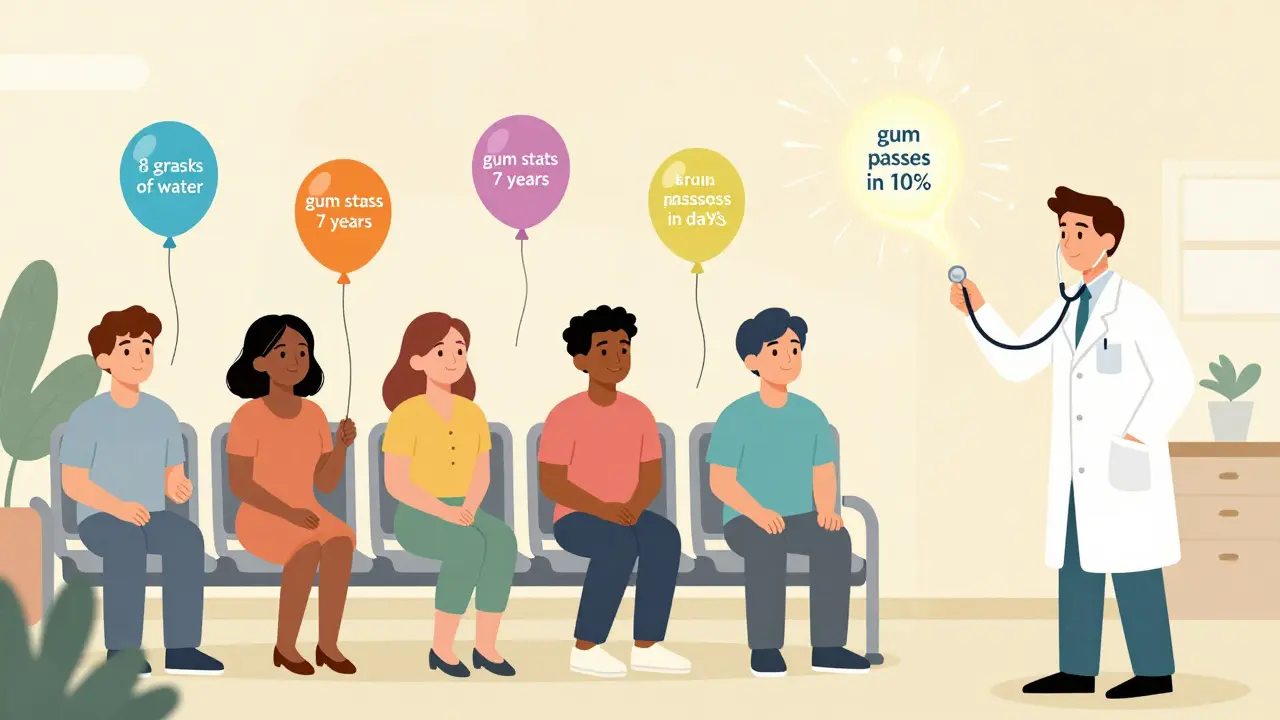
How many times have you heard that you need to drink eight glasses of water a day? Or that chewing gum stays in your stomach for seven years? These aren’t just harmless jokes-they’re myths that shape how people care for their health. And when those myths stick, they can lead to bad decisions, wasted money, or even real harm. In patient education, separating fact from fiction isn’t optional. It’s essential.
Why Myths Stick-Even When They’re Wrong
Myths don’t survive because they’re true. They survive because they’re simple, repeatable, and often comforting. The idea that we only use 10% of our brain? It sounds like there’s untapped potential inside us. The belief that sugar makes kids hyper? It explains why your child is bouncing off the walls after a birthday party. These stories fit neatly into our everyday experiences. But science doesn’t care how nice a story is. A 2022 study in the Journal of Cognitive Neuroscience confirmed that every part of the brain is active during daily tasks-even when you’re just sitting still. And a 2021 meta-analysis in JAMA Pediatrics reviewed 23 double-blind studies and found no link between sugar and hyperactivity in children. Yet the myth persists. Why? Because it’s easier to blame candy than to deal with the messy truth: kids are energetic, and parenting is hard.The Body Heat Myth: Your Head Isn’t Special
One of the most persistent myths in patient education is that you lose 70-80% of your body heat through your head. That’s why people wear hats in winter-they think it’s the main source of heat loss. But here’s the reality: your head makes up about 7-10% of your total body surface area. So, if you’re cold and bareheaded, you’ll lose roughly that much heat. No more, no less. Dr. Ian Tullberg, a family medicine specialist at UCHealth, put it plainly in a 2022 interview: “The head is maybe about 10-15% of the total surface area, and that’s the percentage of body heat lost through the head.” If you’re wearing a coat but no pants, you’ll lose more heat through your legs. If you’re naked except for a hat, then yes, your head will be the main source of heat loss-but that’s because everything else is covered. It’s not magic. It’s physics.Eight Glasses of Water? The Myth That Won’t Die
You’ve heard it since childhood: drink eight glasses of water a day. It’s on every wellness poster, every fitness app, every influencer’s morning routine. But where did this number come from? Nowhere good. In 2002, Dr. Heinz Valtin from Dartmouth Medical School reviewed decades of peer-reviewed literature and found zero scientific evidence supporting the “eight glasses” rule. The recommendation likely came from a 1945 Food and Nutrition Board report that said adults need about 2.5 liters of water daily-including water from food and other drinks. Most people get nearly half of that from fruits, vegetables, coffee, tea, and even soups. So if you’re not thirsty, and your urine is pale yellow, you’re probably fine. Telling someone to force down eight glasses of water every day can actually be harmful. For older adults or people with kidney conditions, overhydration can lead to hyponatremia-a dangerous drop in blood sodium levels. The real advice? Listen to your body. Thirst is your body’s natural hydration alarm.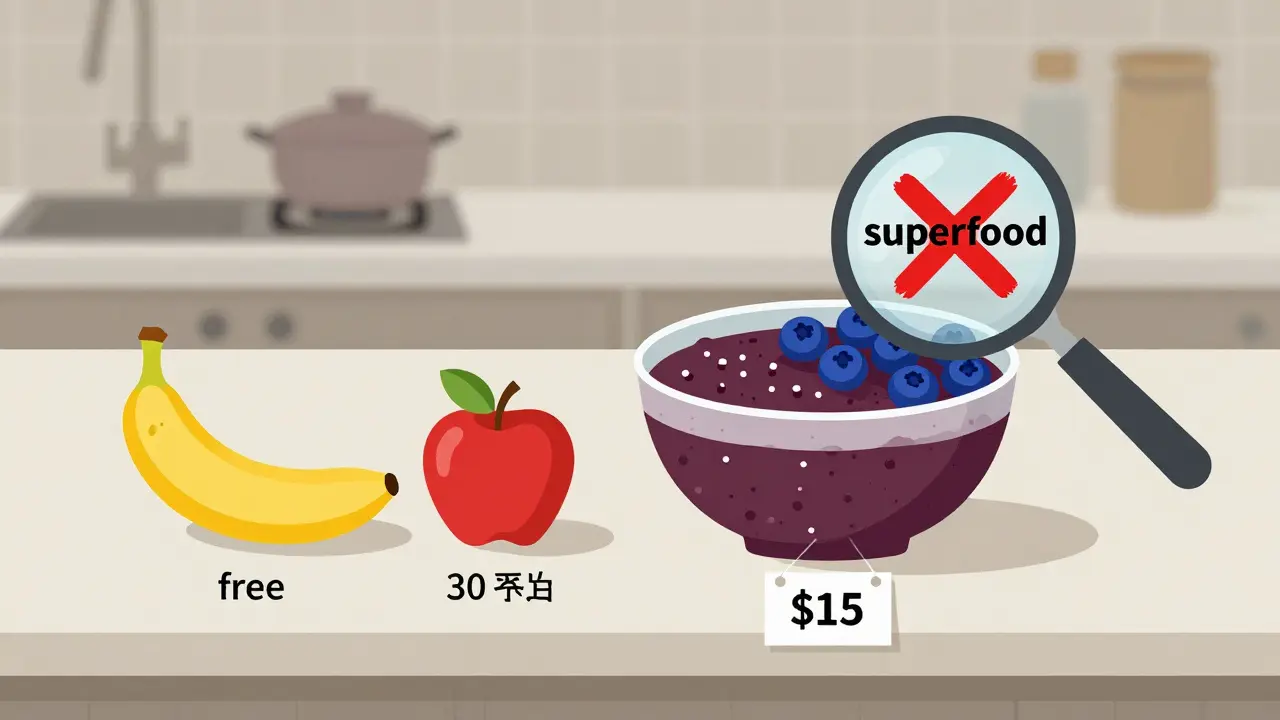
Superfoods: Marketing, Not Medicine
Goji berries. Acai bowls. Chia seeds. Kale smoothies. These are marketed as miracle foods that will detox your body, boost your immune system, and reverse aging. But the term “superfood” has no official scientific or regulatory definition. The European Food Information Council confirmed in 2023 that there’s no evidence any single food delivers extraordinary health benefits beyond what a balanced diet already provides. A blueberry is packed with antioxidants. So is a red apple. A banana has potassium. So does a baked potato. The difference isn’t in the food-it’s in the price tag. Acai bowls at trendy cafes can cost $15. A banana costs 30 cents. One doesn’t make you healthier than the other. Focusing on single “superfoods” distracts from the real goal: variety. Eating a wide range of fruits, vegetables, whole grains, lean proteins, and healthy fats does more for your health than any one “miracle” ingredient ever could.Chewing Gum: Not a Sticky Lifesentence
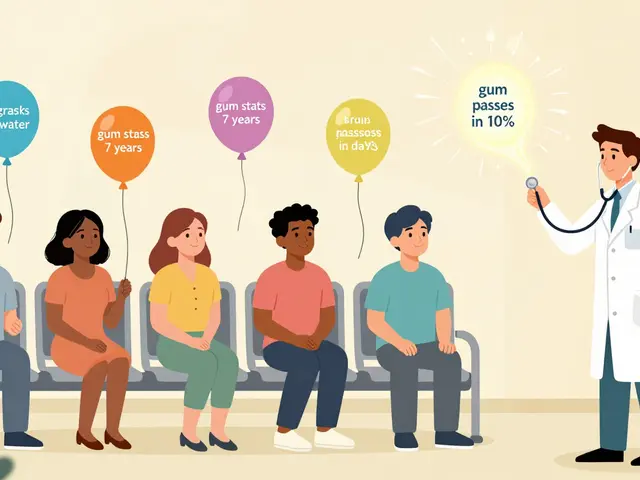
Parents have been warning kids for generations: “If you swallow gum, it’ll stay in your stomach for seven years.” It’s a classic scare tactic. But it’s also completely false. Your digestive system doesn’t break down gum the way it breaks down food. The base is indigestible, yes-but that doesn’t mean it stays. As Dr. Tullberg explained, “Most chewing gum travels through your system in a matter of two to four days.” It passes through your intestines and exits like any other indigestible material-think corn kernels or sesame seeds. The only real risk? Swallowing large amounts of gum repeatedly, especially in young children, could potentially cause a blockage. But one piece? No problem. This myth persists because it’s easy to say-and it gives adults a quick way to stop kids from chewing in public. But the truth? It’s harmless.Why Debunking Doesn’t Always Work
You’d think that once people hear the facts, the myths would disappear. But that’s not how the brain works. In 2022, Dr. John Cook from the University of Queensland found that simply repeating a myth-even to correct it-can make people remember the myth better. This is called the “familiarity backfire effect.” If you say, “No, sugar doesn’t cause hyperactivity,” your brain might still latch onto the word “sugar” and “hyperactivity,” reinforcing the link. The best way to correct a myth? Use the “truth sandwich.” Start with the fact: “Your body gets all the water it needs from food and drinks-no need to force eight glasses.” Then briefly mention the myth: “Some people believe you must drink eight glasses daily.” Then end with the truth again: “Thirst is your body’s best guide.” The American Association for the Advancement of Science found this method improves retention by 47% compared to just saying “that’s wrong.”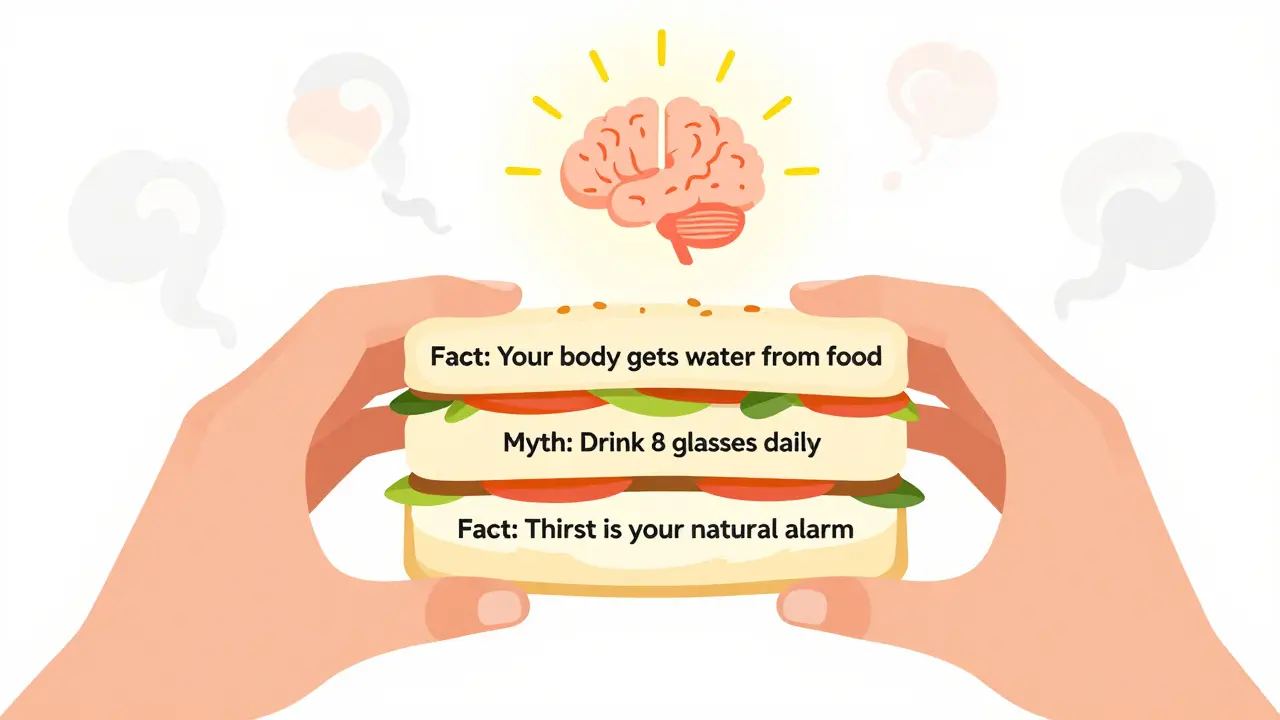
What Works in Real Life
The CDC’s Myth vs. Fact template is used by 78% of U.S. health departments. But training matters. Staff need 12-16 hours to learn how to deliver corrections without sounding condescending. A University of Michigan study introduced the “FIRE” method: Facts, Interpretation, Resolution, Emotion. For example:- Facts: “Chewing gum doesn’t stay in your stomach.”
- Interpretation: “Your body moves it through like other indigestible things.”
- Resolution: “One piece is completely safe.”
- Emotion: “I know this myth scared you-many parents worry about this. You’re not alone.”
What’s Changing Now
In 2023, 68 hospitals in the U.S. added myth-debunking sections to their patient education materials-up from just 12 in 2020. The World Health Organization’s Myth Busters initiative has corrected over 2,300 myths across 187 countries. Google’s “About This Result” feature now gives context for 87% of search results, helping people spot misinformation before they click. And it’s working. A 2023 WHO report showed vaccine hesitancy dropped by 22% in regions using these tools. When people understand the science behind their health, they make better choices.What You Can Do Today
You don’t need to be a doctor to help. Here’s how:- When someone says, “I heard sugar makes kids hyper,” respond with: “Actually, 23 studies have found no link. It’s more likely they’re excited because it’s a party.”
- If a friend swears by acai for weight loss, say: “It’s a nice fruit, but so are blueberries-and cheaper. What matters is eating lots of different plants.”
- When you see a viral post about “detox teas,” share a link to a trusted source like the WHO or CDC-not just your opinion.
Is it true that we only use 10% of our brain?
No. This myth comes from a misinterpretation of early 20th-century psychology. Modern brain imaging shows every part of the brain has a function-even during rest. There’s no unused 90%. Your brain is always active, managing breathing, heartbeat, memory, emotions, and movement-all at once.
Do I really need to drink eight glasses of water a day?
No. There’s no scientific basis for this rule. Your total water needs come from all fluids and foods you consume. If you’re not thirsty and your urine is light yellow, you’re well hydrated. Forcing extra water can be harmful, especially for older adults or people with kidney conditions.
Can chewing gum stay in your stomach for years?
No. While your body can’t digest the gum base, it moves through your digestive tract just like other indigestible items-like corn kernels. It typically passes out in two to four days. Swallowing one piece occasionally is harmless.
Are superfoods like acai and goji berries really better than regular fruits?
No. “Superfood” is a marketing term, not a scientific one. Acai berries have antioxidants, but so do blueberries, blackberries, and even apples. The key to good health is eating a wide variety of whole foods-not paying extra for one trendy ingredient.
Why do health myths persist even after being debunked?
Myths stick because they’re simple, fit our beliefs, and are repeated often. Even correcting them can backfire if done poorly. The best approach is the “truth sandwich”: state the fact, briefly mention the myth with clear labeling, then repeat the fact. Emotional connection and repetition over time also help.




Darren McGuff January 9, 2026
Interesting breakdown. I’ve seen this myth about the head losing 70% of body heat in military manuals from the 1950s-turns out it was based on a flawed Arctic survival study where subjects were bareheaded but otherwise fully clad. Physics doesn’t lie. Heat loss is proportional to exposed surface area. Simple as that.
Also, the eight-glass rule? I used to push that on my patients until I read Valtin’s paper. Now I just ask, ‘When was the last time you felt thirsty?’ Works better than any pamphlet.
RAJAT KD January 11, 2026
Finally, someone says it plainly. The ‘eight glasses’ myth is dangerous pseudoscience. In India, we drink chai, buttermilk, coconut water-all hydrating. Your body knows what it needs. Stop overcomplicating hydration.
Meghan Hammack January 11, 2026
OMG YES. I’ve been telling my kids for years that gum doesn’t stay in their stomachs-only to have their grandparents scream ‘BUT IT’S BEEN SEVEN YEARS!’ 😭
Thank you for validating what I’ve been saying. I’m printing this out and taping it to the fridge.
Jacob Paterson January 11, 2026
Of course the ‘superfood’ thing is marketing. I work in nutrition. People pay $20 for acai bowls while their kids eat processed cereal with sugar sprinkles. You can’t out-supplement a garbage diet.
And yes, the brain myth? That’s the same logic people use to justify buying ‘neuro-enhancing’ supplements. Wake up. Your brain isn’t a dormant engine-it’s a 24/7 power plant.
Pooja Kumari January 12, 2026
I just cried reading this. I’ve spent years feeling guilty because I don’t drink eight glasses of water. I thought I was failing at life. And now I find out it’s all a lie? I feel like I’ve been gaslit by every wellness influencer ever.
My therapist said I need to hydrate more. But what if she was wrong? What if I’ve been punishing myself for nothing? 😭
I’m going to drink tea now and not feel bad. Thank you. I needed this.
Chris Kauwe January 12, 2026
Let’s not pretend this is some groundbreaking revelation. This is just liberal pablum dressed up as science. The real problem? People don’t want facts-they want comforting narratives. You think telling someone ‘your head doesn’t lose 70% of heat’ changes anything? No. They’ll still wear hats because they’re afraid of the cold. And they’ll still believe sugar makes kids hyper because it absolves them of parenting responsibility.
Science doesn’t fix human denial. It just gives us better excuses to feel superior.
Angela Stanton January 14, 2026
Okay but let’s be real-this whole ‘truth sandwich’ thing is just cognitive behavioral therapy repackaged as public health. 🤡
And the FIRE method? That’s just empathy + bullet points. We’ve known this since 1998. Why are hospitals only now adopting it? Because bureaucracy moves slower than glacier melt. Also, ‘superfood’ is just capitalism with a kale smoothie. 💸
Also, I’m not drinking 8 glasses. I’m drinking kombucha. It’s fine. 🙃
Johanna Baxter January 15, 2026
I’ve been saying this for years and everyone just rolled their eyes. Like of course gum doesn’t stay for 7 years. Who even believes that? But then I saw my nephew’s teacher use it as a punishment-‘If you chew gum again, I’ll make you swallow it and you’ll have it in your stomach forever.’
People are so desperate to control kids they’ll invent ghost stories. It’s tragic. And also hilarious.
Matthew Maxwell January 16, 2026
It is deeply concerning that such well-documented misinformation persists in public discourse. The fact that this article must be written at all reflects a systemic failure in science literacy. The public’s willingness to accept anecdotal narratives over empirical evidence is not merely ignorant-it is a societal risk. One wonders whether the erosion of rational discourse is irreversible.
Jerian Lewis January 17, 2026
My mom still tells me to drink eight glasses. I don’t argue anymore. I just nod and sip my coffee. She’s 76. I don’t want to break her heart. Some myths are more comforting than facts.
Drew Pearlman January 18, 2026
Look, I used to be one of those people who drank a gallon of water every day because I thought it was ‘cleaning my system.’ Then I started getting dizzy. Turns out I was flushing out my electrolytes. My doctor laughed and said, ‘You’re not a plant. You don’t need to be watered.’
Now I drink when I’m thirsty, eat watermelon in summer, and honestly? I feel better than I did at my ‘hydration peak.’
Also, I used to buy chia seeds. Now I just eat oats. Same fiber. 1/10th the price. And I don’t have to explain why my smoothie looks like mud.
Catherine Scutt January 18, 2026
Ugh. Another article about myths. Like we didn’t already know. But at least it’s not another ‘10 ways to detox your liver’ post. So… progress? I guess.
Heather Wilson January 18, 2026
Let’s be honest-this is all just a fancy way of saying ‘stop listening to influencers.’ But the real issue? People don’t trust doctors anymore. They trust TikTok. So unless we fix that, no amount of studies or truth sandwiches will matter. The damage is done.
Maggie Noe January 18, 2026
It’s funny how we cling to myths. They’re not wrong because they’re false-they’re wrong because they absolve us of responsibility.
‘Sugar makes kids hyper’? Easier than admitting your child is bored, overstimulated, or needs boundaries.
‘Drink eight glasses’? Easier than listening to your body.
‘Your head loses 70% of heat’? Easier than buying a full set of winter gear.
Myths are comfort blankets for a world that feels too complex. We don’t need more facts. We need more courage to face the messy truth.