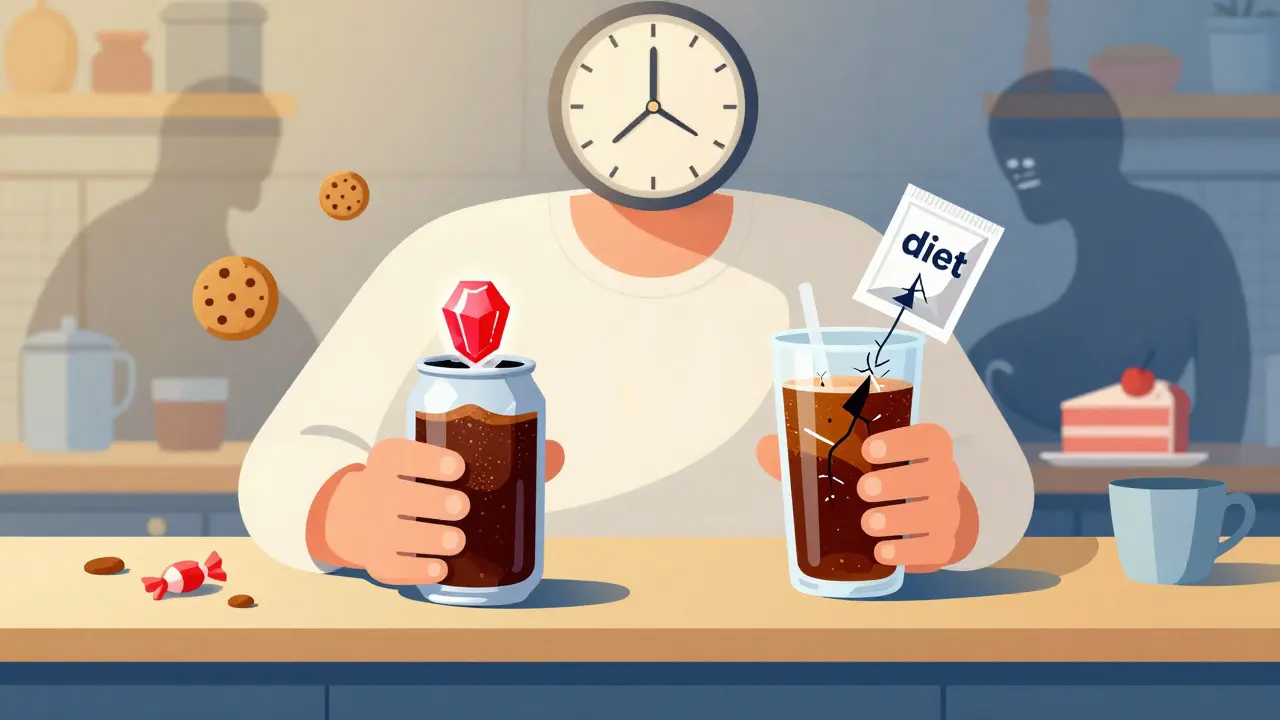
When you reach for a diet soda or sugar-free gum, you’re probably trying to cut calories. But what if that choice is secretly making you hungrier? The idea that artificial sweeteners help you lose weight by replacing sugar has been sold to us for decades. Yet more and more people report the opposite: after switching to diet products, they feel hungrier, crave sweets more, and can’t seem to stop eating. Why does this happen? And is sugar really the enemy-or is the problem somewhere else?
How Sugar Affects Hunger
Sugar doesn’t just taste sweet. It triggers a chain reaction in your body. When you eat it, your blood sugar rises quickly. That tells your pancreas to release insulin, which shuttles glucose into your cells for energy. But insulin doesn’t just manage sugar-it also signals your brain to stop eating. After a sugary snack, you usually feel satisfied for a little while. That’s because sugar activates the brain’s reward system, releasing dopamine. It feels good. But that feeling doesn’t last. Within an hour or two, your blood sugar drops, and with it, your energy. That’s when the cravings hit. You start looking for another quick fix: more sugar, more carbs, more snacks.
It’s a cycle. The more sugar you eat, the more your body expects it. Over time, your brain starts to need bigger hits to feel the same satisfaction. That’s why someone who drinks sugary soda every day might find plain water boring, while someone who rarely eats sugar finds a piece of fruit deeply satisfying.
How Artificial Sweeteners Trick Your Body
Artificial sweeteners like sucralose, aspartame, and acesulfame potassium are designed to taste like sugar without the calories. They’re 200 to 600 times sweeter than table sugar. But here’s the catch: they don’t trigger the same biological response.
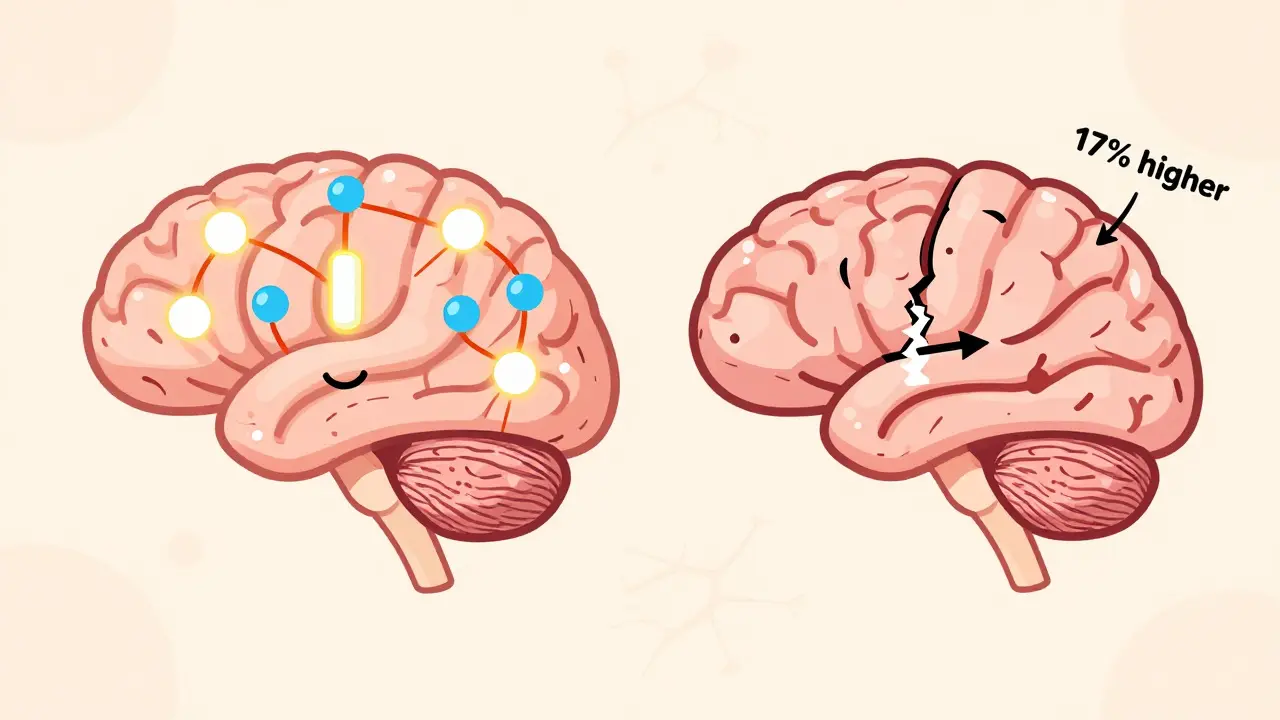
When you drink a diet soda, your tongue registers sweetness. Your brain expects calories to follow. But when none come, the system gets confused. A 2023 study from the University of Southern California found that sucralose didn’t stimulate the release of GLP-1, a key hormone that tells your brain you’re full. Without that signal, people reported 17% higher hunger levels-especially those with obesity.
Brain scans from the same study showed something even more telling: in women, sucralose changed how the hypothalamus (the brain’s hunger center) talked to the part that controls cravings. The communication dropped by 23%. In men, it dropped by 12%. That suggests women might be more sensitive to this disruption.
It’s not just about hormones. It’s about expectation. Your brain has learned that sweetness = energy. When that link breaks, your brain tries to make up for the missing calories. That’s why a 2016 study with fruit flies showed they ate 30% more food after being exposed to sucralose for five days. They weren’t hungry before-they were recalibrating.
Why Some People Feel Fine-And Others Don’t
Not everyone reacts the same way. A 2022 study from the University of Leeds found that artificial sweeteners actually lowered appetite compared to sugar. People who drank sweetened water had 18% lower insulin levels and 15% lower blood sugar than those who drank sugary water. That sounds like a win. But here’s the twist: this study lasted only two hours. What happens over weeks or months?
Long-term data tells a different story. A 2024 study by the German Center for Diabetes Research found that after 3+ months of daily sweetener use, the brain’s reward system started to change. People began craving sweeter foods. Their tolerance for natural sweetness dropped. One dietitian in Toronto told me, “I’ve had clients who switched to diet soda for years, then suddenly couldn’t eat yogurt unless it had 20 grams of sugar in it. Their palate had rewired.”
Gender, weight, and metabolic health all matter. Women showed stronger brain changes in the USC study. People with insulin resistance or obesity were more likely to experience increased hunger. And if you’ve been using sweeteners since childhood? You might have never learned what real sweetness tastes like.
What the Data Really Says
Let’s cut through the noise. A 2021 meta-analysis of 15 clinical trials found that replacing sugar with artificial sweeteners reduced daily calorie intake by 112 calories on average. That’s like skipping a small cookie. Sounds good, right? But here’s the catch: that was over short periods. When you look at studies longer than 3 months, the effect fades-or reverses.
Consumer surveys back this up. In a 2023 survey of 4,500 people with type 2 diabetes, 74% said sweeteners helped control blood sugar. But 41% said they felt hungrier. On Reddit’s r/loseit, 68% of 1,247 users said sweeteners helped reduce cravings. But 32% said they felt worse-especially after using sucralose-heavy products like Diet Coke or Splenda.
And it’s not just soda. Many “sugar-free” yogurts, protein bars, and baked goods use sweetener blends-sucralose + acesulfame K. That’s because one sweetener alone doesn’t taste quite right. But combining them? That’s when things get messy. These blends may be more likely to trigger hunger signals than single sweeteners.
What Works Better Than Sweeteners
If artificial sweeteners aren’t the magic bullet, what is? The answer isn’t more sugar. It’s less sweetness-period.
Registered dietitians are starting to recommend a different approach: start with low-intensity sweeteners like monk fruit or stevia. Monk fruit is about 150 times sweeter than sugar-much less intense than sucralose (600x). That means your brain doesn’t get as big a shock. Pair it with protein. A 2021 study found that when people ate a sweetened Greek yogurt (with monk fruit) instead of plain sweetener, hunger dropped by 22%. Protein slows digestion. It stabilizes blood sugar. It tells your brain you’re full.
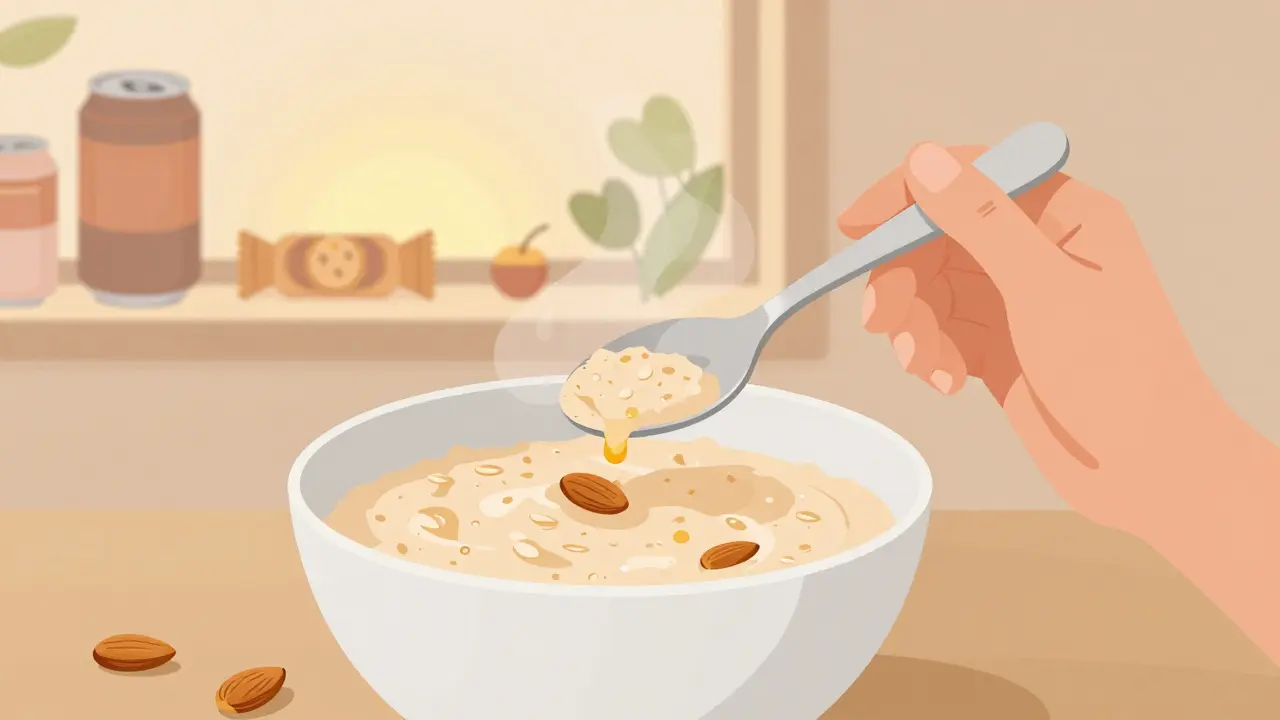
Try this: swap your morning sugary cereal for oatmeal with a sprinkle of stevia and a handful of nuts. Or replace your afternoon soda with sparkling water and a slice of lime. You won’t get that instant hit. But in a few weeks, your cravings will soften. Your taste buds will reset.
One dietitian I spoke to in Toronto said, “I tell clients: don’t go from sugar to diet soda. Go from sugar to water. Then to unsweetened tea. Then to tea with a drop of stevia. Let your body relearn what real hunger feels like.”
The Long Game: Resetting Your Taste
It takes time. Studies show that if you cut out all added sweeteners-natural and artificial-for 4 to 6 weeks, your sensitivity to sweetness increases. Foods you once thought were bland-like apples, berries, or even plain yogurt-start tasting sweet again. That’s not magic. It’s biology.
And it’s not about willpower. It’s about rewiring. The more you rely on artificial sweetness, the more your brain demands it. The less you use it, the less you need it.
There’s no one-size-fits-all answer. Some people can drink diet soda every day and feel fine. Others feel hungrier after one sip. The key is to pay attention. Keep a simple log: what you ate, when you felt hungry, and whether you craved sweets afterward. You might be surprised.
What About Natural Sweeteners?
Stevia and monk fruit are plant-based. They’re not processed like aspartame or sucralose. That’s why they’re gaining popularity. In the EU, 43% of consumers now prefer them over artificial options. And they seem to cause fewer appetite issues. In Amazon reviews, stevia-based products like Truvia have 4.2 stars-with only 15% of negative reviews mentioning hunger. Compare that to Splenda (sucralose), where 28% of negative reviews say it triggered cravings.
That doesn’t mean they’re perfect. Even stevia can overstimulate your sweet receptors if used too often. But because they’re less intense, they’re easier to taper off. And they don’t carry the same long-term brain changes linked to sucralose.
Final Take: It’s Not About Sugar or Sweeteners-It’s About Patterns
There’s no villain here. Sugar isn’t evil. Artificial sweeteners aren’t poison. But both can disrupt your body’s natural signals if used habitually.
The real issue? Constant sweetness. Whether it’s from candy, soda, or sugar-free gum, if you’re always tasting something sweet, your brain stops recognizing real hunger. You start eating not because you’re hungry-but because you’re bored, stressed, or conditioned to expect a reward.
Try this: for the next two weeks, avoid all added sweeteners. No sugar. No diet soda. No flavored yogurt. No sweetened coffee. Just water, tea, and whole foods. You might feel weird at first. Cravings will spike. But by day 10, you’ll notice something: your appetite becomes clearer. You eat when you’re hungry. You stop when you’re full. And you start to enjoy the natural sweetness of fruit again.
That’s not a diet. That’s your body remembering how to work.
Do artificial sweeteners make you gain weight?
They don’t directly cause weight gain, but they can lead to it indirectly. If you use them daily and start craving sweeter foods, you might end up eating more calories overall. Studies show that after 3+ months of regular use, some people experience increased hunger and reduced satisfaction from natural foods, which can lead to overeating. It’s not the sweetener itself-it’s how your brain adapts.
Is stevia better than aspartame or sucralose?
For most people, yes. Stevia and monk fruit are less intense than sucralose or aspartame, meaning they’re less likely to overstimulate your brain’s reward system. They also don’t show the same strong links to hunger spikes in research. A 2023 consumer survey found only 15% of stevia users reported increased cravings, compared to 28% for sucralose users. That said, even stevia should be used in moderation.
Why do I crave sweets after drinking diet soda?
Your brain expects calories when it tastes sweetness. Diet soda gives you the taste without the energy. That mismatch confuses your hunger signals. Over time, your brain starts to demand more sweetness to feel satisfied. That’s why you might find yourself reaching for cookies or candy after a diet drink. It’s not a lack of willpower-it’s a biological response.
Can artificial sweeteners affect blood sugar?
Yes-but not in the way you might think. Artificial sweeteners don’t raise blood sugar directly. In fact, studies show they cause significantly lower glucose spikes than sugar. A 2021 study found sucralose had an AUC of 12.7 mmol/L*min vs. 89.4 for sugar. But if they increase your appetite and lead to more eating later, your blood sugar can still rise-just from other foods. So while they’re helpful for immediate glucose control, long-term effects depend on what else you’re eating.
How long does it take to reset your taste buds after stopping sweeteners?
Most people notice changes in 2 to 4 weeks. After 4 to 6 weeks without added sweeteners, your sensitivity to natural sweetness increases. Foods like fruit, yogurt, and even plain oatmeal start tasting sweeter. This is backed by 78% of dietitians surveyed in 2023. It’s not about quitting forever-it’s about giving your brain a break so it can recalibrate.





Greg Scott February 20, 2026
Been there. Switched from Diet Coke to water for 30 days. Didn’t even realize how much I was craving sweets until they just… stopped. Now I eat an apple and it tastes like dessert. Wild how your taste buds reset if you just give them a break.
Scott Dunne February 22, 2026
While the article presents a compelling case, it lacks rigorous longitudinal data. The cited studies are largely observational or short-term, and none control for confounding variables such as caloric intake from other sources or physical activity levels. One cannot infer causality from correlation alone.
Chris Beeley February 24, 2026
Let me break this down for you, because clearly you’ve been fed a sugar-coated lie by Big Diet Soda. Artificial sweeteners don’t just confuse your brain-they weaponize it. Your hypothalamus, the very engine of your survival instincts, is being gaslit by sucralose molecules that scream ‘calories incoming’ while delivering nothing but chemical betrayal. This isn’t a dietary choice-it’s a neurological hijacking. And women? They’re the canaries in the coal mine. Their hormonal architecture is more finely tuned to energy signals, so when sweetness without fuel hits, their bodies go into panic mode: ‘We’re being starved!’ Cue the binge. This isn’t science-it’s betrayal wrapped in a zero-calorie wrapper. You think you’re being smart? You’re being manipulated.
Arshdeep Singh February 25, 2026
It’s not about sugar or sweeteners-it’s about the illusion of control. We think we’re being disciplined by choosing diet soda, but we’re just outsourcing our hunger to chemicals. True freedom isn’t swapping one addiction for another. It’s learning to sit with boredom, with thirst, with real hunger. The body doesn’t need artificial sweetness. It needs presence. And presence? That’s the hardest thing to give up.
madison winter February 27, 2026
I tried going sugar-free for two weeks. Day 3 I cried over a banana. Day 7 I ate an entire jar of peanut butter with my fingers. I didn’t feel ‘in control.’ I felt like my brain had been rewired by a glitchy robot. Maybe the real problem isn’t the sweeteners… it’s how we’ve turned food into a moral test.
Jeremy Williams February 27, 2026
As someone who has studied metabolic physiology for over a decade, I must emphasize that the human response to non-nutritive sweeteners is profoundly individualized. Genetic polymorphisms in TAS1R2 and TAS1R3 receptors, gut microbiome composition, and baseline insulin sensitivity all modulate downstream effects. Reductionist narratives-while emotionally satisfying-fail to capture the complexity of human biochemistry. A one-size-fits-all recommendation is not only scientifically unsound, it’s ethically questionable.
Ellen Spiers February 28, 2026
The article conflates correlation with causation, and misrepresents effect sizes. A 17% increase in hunger is statistically significant but clinically negligible when contextualized against total daily energy expenditure. Furthermore, the study cited from USC (2023) employed a crossover design with n=42 participants-underpowered for subgroup analyses, particularly gender-based distinctions. The conclusion that women are ‘more sensitive’ is speculative at best.
Benjamin Fox March 1, 2026
Y’all are overthinking this. Just stop drinking diet soda. Done. 🤷♂️
aine power March 3, 2026
Real sweetness is bitter. And boring. And that’s why we invented sugar.
Tommy Chapman March 3, 2026
So let me get this straight-now we’re supposed to feel guilty for wanting something sweet? Like, what happened to just enjoying a cookie without turning it into a five-thousand-word neuroscience essay? You want to fix hunger? Eat real food. Stop obsessing over molecules.
Freddy King March 5, 2026
Here’s the thing nobody’s saying: artificial sweeteners aren’t the villain. Our culture is. We’ve turned food into a reward system, a dopamine hack, a coping mechanism. Whether it’s sugar or sucralose, we’re using sweetness to numb. The real solution isn’t swapping sweeteners-it’s addressing the emotional void we’re trying to fill. Therapy > stevia.
Laura B March 5, 2026
I started with water for a week, then unsweetened tea, then tea with one drop of stevia. Took me 3 weeks to notice I didn’t need sugar in my coffee anymore. It wasn’t hard. It was just… quiet. And weirdly peaceful. You don’t need to quit forever. Just try it for two weeks. You might be surprised.
Robin bremer March 7, 2026
bro i tried the no sweeteners thing and i just ate a whole tub of ice cream at 2am 😭 i miss my brain
Jayanta Boruah March 7, 2026
While the Western paradigm of metabolic regulation is informative, it fails to account for the epigenetic adaptations of populations with historically low-sugar diets. In South Asian communities, for instance, the consumption of jaggery or palm sugar has co-evolved with insulin sensitivity patterns that render artificial sweeteners less disruptive. This is not a universal biological phenomenon-it is culturally contingent. To universalize the US-centric model is ethnocentric and scientifically myopic.
Nina Catherine March 8, 2026
Just wanted to say-this post helped me. I’ve been drinking diet soda for 10 years and didn’t realize I was always hungry because of it. I switched to sparkling water with lemon last week. I still crave sweets sometimes… but now I notice it. And that’s the first step, right? Thank you.