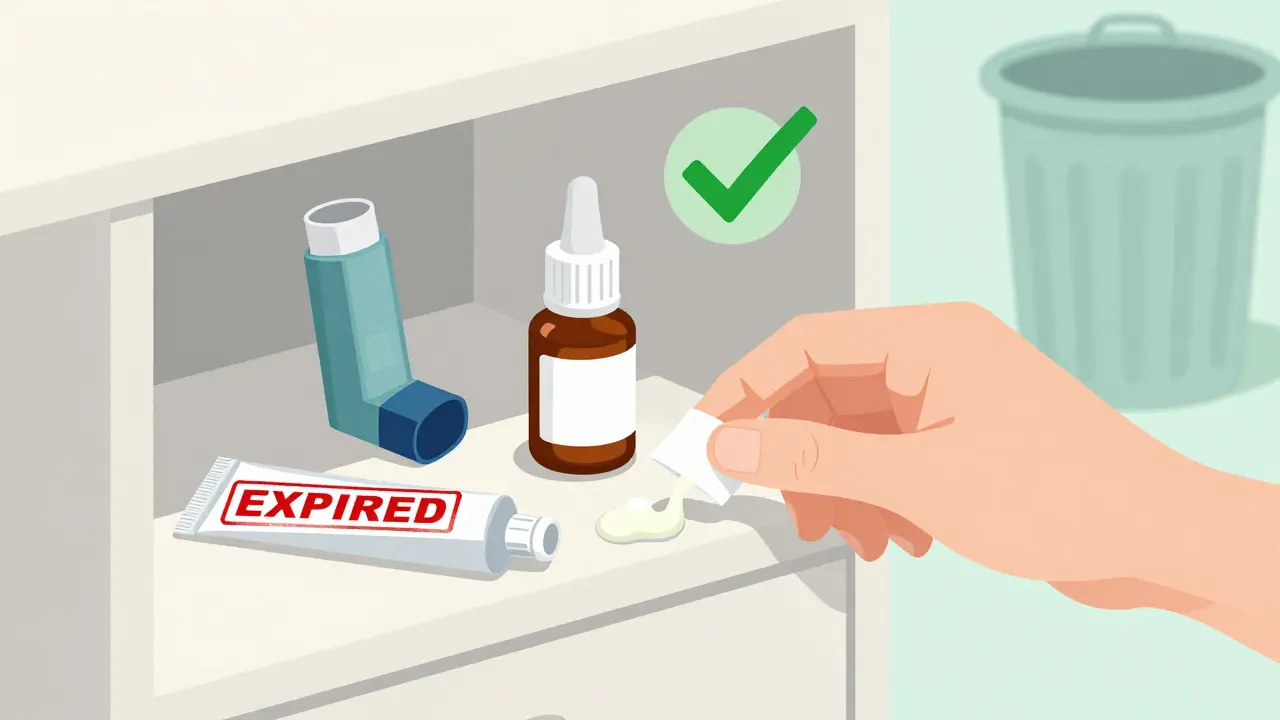
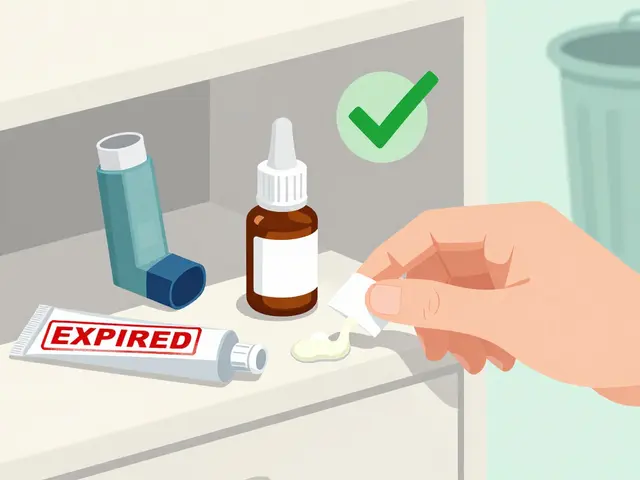
Most people don’t think twice about keeping an old inhaler, eye drop bottle, or cream in their medicine cabinet - especially if it’s been sitting there for months or even years. But using expired medications isn’t just a bad habit; it can be dangerous. An expired inhaler might not work when you need it most. Expired eye drops could cause an infection. And while a past-date cream might seem harmless, it could be losing its power or even turning toxic. The truth? Expired inhalers, eye drops, and topical medications need to be handled differently - and knowing how matters.
Why Expiration Dates Matter More Than You Think
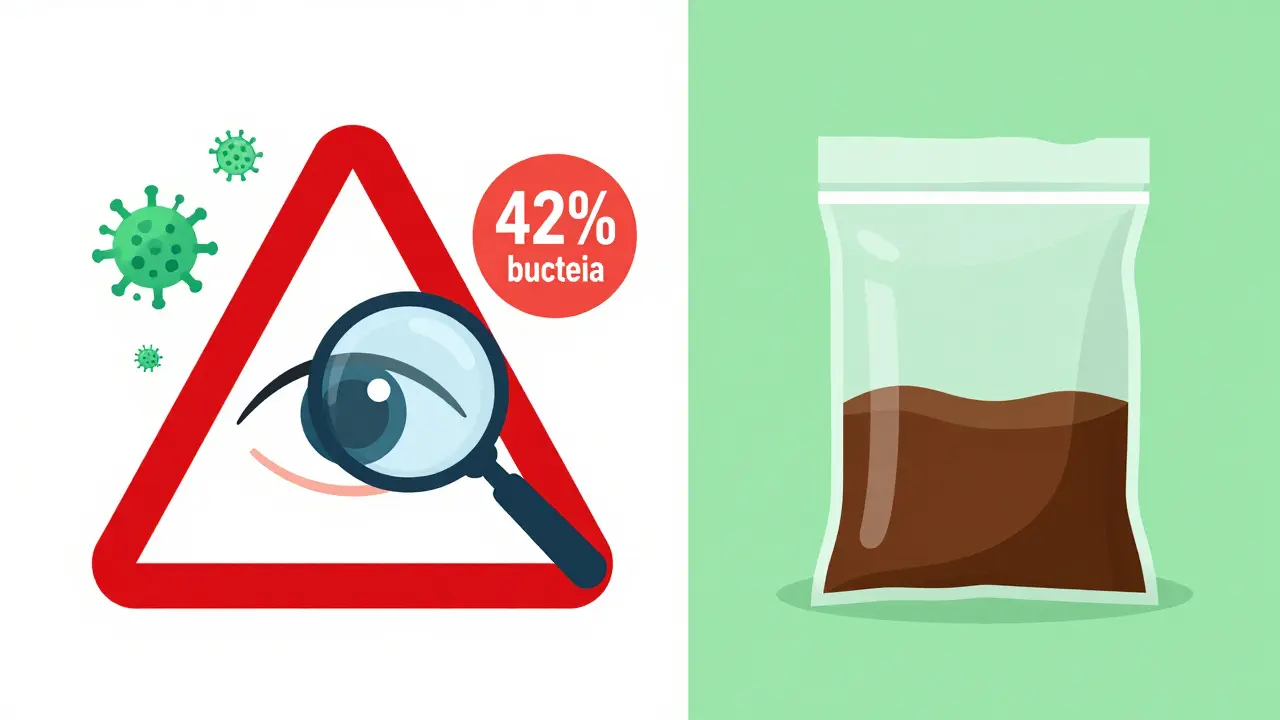
Expiration dates aren’t just marketing fluff. They’re based on real science. Manufacturers test every medication under controlled conditions to find out how long it stays safe and effective. For most pills and liquids, that’s 12 to 24 months after production. But not all medications age the same way. Take inhalers. A Ventolin HFA inhaler, for example, is designed to deliver a precise dose of albuterol. Once it passes its expiration date, the propellant starts to weaken. By 12 months past expiration, studies show the device can deliver only 60-70% of the intended dose. That’s not a small drop - it’s the difference between stopping an asthma attack and ending up in the ER. Eye drops are even riskier. Once opened, they’re exposed to air, dust, and bacteria. After expiration, microbial growth skyrockets. One 2022 study found that 42% of expired eye drops tested positive for harmful bacteria like Staphylococcus and Pseudomonas. Using those drops could mean a corneal infection - and that’s not something you want to risk. Topical creams like hydrocortisone don’t become poisonous right away, but they do lose strength. At room temperature, hydrocortisone drops to 65% potency just six months after expiration. If you’re using it for eczema or a rash, you might think it’s working - but it’s not doing enough. And if it’s stored in a hot bathroom or a sunlit drawer, degradation happens even faster.The Real Risks of Using Expired Medications
People often say, “It’s just a little past the date - it can’t hurt.” But the data says otherwise. For asthma patients, using an expired inhaler is one of the top reasons for avoidable emergency visits. The American College of Allergy, Asthma, and Immunology reports that 12% of asthma-related ER trips each year are linked to ineffective, expired inhalers. One case in the Journal of Emergency Medicine described a 24-year-old who nearly died because his expired albuterol inhaler didn’t open his airways during a severe attack. Eye drops are a silent threat. You might not feel anything wrong after using an expired bottle - until your eye turns red, swells, or starts hurting. That’s when it’s too late. The American Academy of Ophthalmology warns that contamination rates jump from 8% in fresh drops to 42% after expiration. That’s more than five times the risk of infection. Topical medications like steroid creams or antifungal ointments may seem low-risk, but they’re not harmless. If they’ve degraded, they won’t treat your condition - and if they’ve been contaminated, they could spread bacteria or fungi to your skin. Worse, some creams separate or change texture, making it impossible to know how much active ingredient you’re applying. And here’s the kicker: even if the medicine still looks fine, it’s not guaranteed to work. The FDA says expiration dates are about potency, not safety - but for life-saving drugs like inhalers and epinephrine, potency equals survival.How to Dispose of Expired Inhalers Safely
Inhalers are the most dangerous to throw in the trash. Why? Because they’re pressurized. Even when empty, they contain toxic propellants like HFA, which can explode in landfills or incinerators. The EPA classifies them as hazardous waste. Here’s what to do:- Check if your pharmacy offers a take-back program. CVS, Walgreens, and other major chains have collection bins for expired inhalers. In 2023, CVS collected over 100,000 inhalers nationwide.
- Use a mail-back kit. Washington State and several others offer free prepaid mailers. Amazon Pharmacy launched one in late 2023 - they’ve already processed over 12,000 units.
- If no take-back option is available, remove the canister from the plastic mouthpiece. Do NOT puncture or burn it. Place the metal canister in a sealed plastic bag, then mix it with coffee grounds or cat litter. Throw it in the trash. This reduces risk of explosion and deters accidental use.
- Never flush inhalers down the toilet. That pollutes waterways - and the EPA found pharmaceuticals in 80% of U.S. water samples.
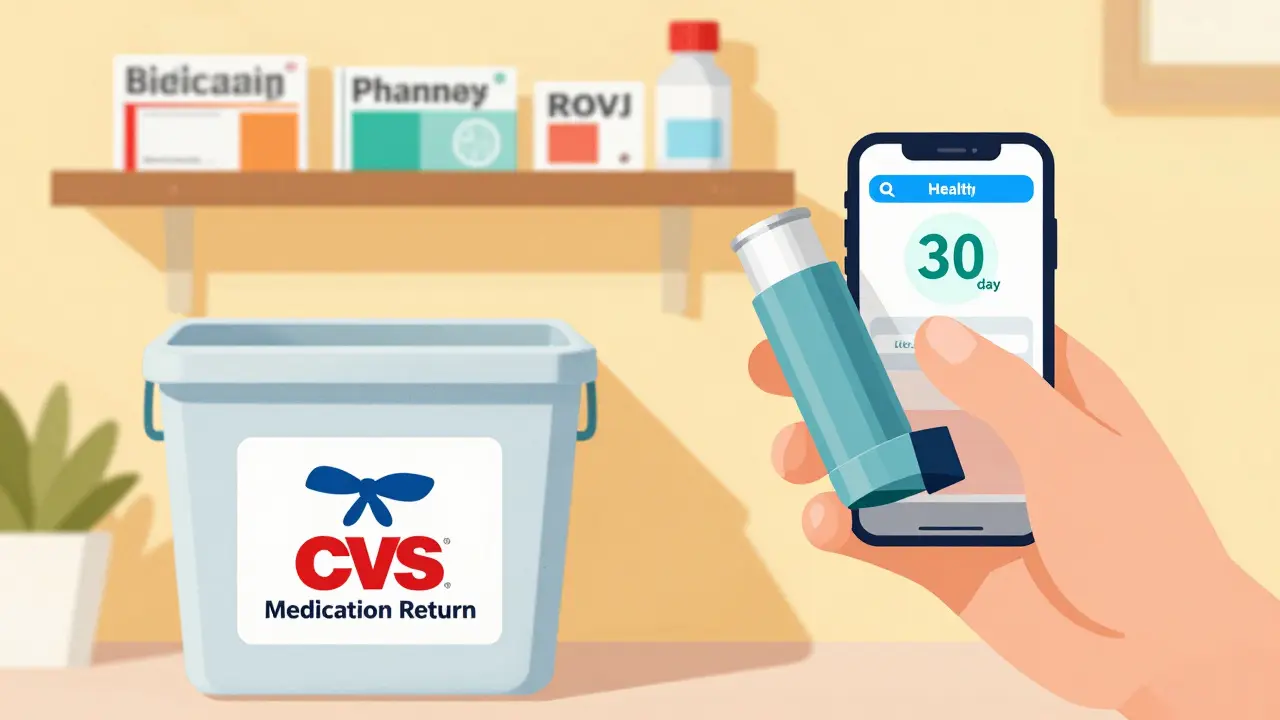
How to Dispose of Expired Eye Drops and Topical Medications
Eye drops and creams don’t have pressurized contents, but they still need careful disposal. For eye drops:- Don’t pour them down the sink or toilet. Even small amounts can contaminate groundwater.
- Remove the cap. Mix the liquid with an unappetizing substance - kitty litter, used coffee grounds, or even dirt.
- Seal it in a plastic bag or container. Throw it in the trash.
- Recycle the bottle if your local program accepts plastic medication containers.
- Squeeze out any remaining cream or ointment into a sealed bag with coffee grounds or dirt.
- Wipe the tube or jar clean with a paper towel - then throw the towel away.
- Recycle the empty container if it’s marked with a recycling symbol and your local facility accepts it.
- Never reuse old tubes. Even if you scrape out the last bit, bacteria can linger.
What to Do If You Can’t Afford New Medication
A lot of people hold onto expired meds because they can’t afford replacements. That’s real. In 2022, 41% of low-income asthma patients admitted to using expired inhalers, especially after ProAir HFA was discontinued and prices jumped. Here’s what you can do:- Ask your pharmacist about generic alternatives. Many inhalers have cheaper generic versions now.
- Check patient assistance programs. Companies like GlaxoSmithKline and Teva offer free or low-cost inhalers to qualifying patients.
- Visit a community health center. Many offer free or sliding-scale asthma care, including inhalers.
- Call the Medicine Safe Disposal Hotline (1-800-222-1222). They can connect you with local resources for free medications and disposal.
How to Prevent This From Happening Again
The best way to avoid expired meds is to stay ahead of them.- Set a reminder on your phone every 3 months to check your medicine cabinet. Mark the expiration dates on the bottles with a permanent marker.
- Keep inhalers in a cool, dry place - not the bathroom. Humidity kills their effectiveness.
- Buy only what you need. Don’t stockpile. Most inhalers last 12 months after opening - so if you use one every few weeks, you’ll go through it before it expires.
- Consider smart devices. Propeller Health’s inhaler cap (released in 2023) tracks usage and alerts you 30 days before expiration. It even tells you where to drop it off.
What to Do If You Accidentally Use an Expired Medication
If you used an expired inhaler during an attack and it didn’t help - call 911. Don’t wait. If you used expired eye drops and your eye is red, painful, or blurry - see an eye doctor immediately. For topical meds, if your skin reaction worsens or spreads, stop using it and call your doctor. There’s no magic cure for using expired meds - only prevention. But if you’ve already done it, don’t panic. Just be honest with your provider. They’ve seen it before.Can I still use an expired inhaler in an emergency?
No. An expired inhaler may not deliver the full dose you need during an asthma attack. Studies show potency drops to 60-70% after expiration, which can be life-threatening. Always use a fresh, in-date inhaler for emergencies. If you don’t have one, call 911 or go to the nearest ER.
Are expired eye drops dangerous even if they look fine?
Yes. Eye drops can look perfectly clear and smell normal, but still contain harmful bacteria. A 2022 study found 42% of expired eye drops tested positive for infection-causing microbes. Even if you’ve only had them a few days past the date, the risk of eye infection is too high to ignore.
Can I recycle expired medication containers?
It depends. Plastic bottles and tubes can often be recycled if they’re completely empty and rinsed. But remove any personal info first. Check with your local recycling program - some accept them, others don’t. If in doubt, throw them in the trash after removing the medication.
Why can’t I just flush expired medications down the toilet?
Flushing medications pollutes water systems. The U.S. Geological Survey found pharmaceutical residues in 80% of tested U.S. waterways. These chemicals harm fish, wildlife, and can eventually enter drinking water. Always use take-back programs or mix with coffee grounds before throwing in the trash.
Where can I find a medication take-back location near me?
Visit the DEA’s National Prescription Drug Take Back Day website or call 1-800-222-1222. CVS and Walgreens have collection bins at over 18,000 locations nationwide. In Toronto, many pharmacies and public health clinics offer drop-off services - ask your pharmacist.




Leonard Shit January 6, 2026
man i just threw out my grandma's old albuterol inhaler last week after she nearly passed out using it. she swore it was 'still good' because it still hissed. dumbass. glad this post exists.
Ashley S January 8, 2026
why do people still keep expired meds? it's like hoarding moldy bread and calling it 'emergency food'. you're not being frugal, you're being a walking biohazard.
Jeane Hendrix January 9, 2026
i didn't realize eye drops could get so contaminated so fast. i’ve been using my last bottle for 8 months past expiry because it 'looks fine'... now i’m kinda freaked out. thanks for the data, this is actually helpful.
Rachel Wermager January 11, 2026
the degradation kinetics of hydrocortisone are well-documented in J Pharm Sci 2021 - thermal degradation follows first-order kinetics with activation energy ~52 kJ/mol. ambient temps accelerate decomposition exponentially. your bathroom is a chemical reactor, not a medicine cabinet.
Indra Triawan January 12, 2026
in india, we just use whatever’s left. if it helps, it’s not expired. if it doesn’t, we blame the gods. i’ve seen people use 5-year-old eye drops for conjunctivitis. they say it’s 'tradition'. tradition kills.
Katelyn Slack January 13, 2026
thank you for mentioning the mail-back kits. i had no idea amazon pharmacy does that now. i’ve been holding onto 3 inhalers for months because i didn’t know how to dispose of them safely. this is the first time i’ve felt like there’s a real solution.
Harshit Kansal January 14, 2026
bro i just checked my cabinet and found a 3 year old hydrocortisone tube. it’s kinda separated and smells weird. i’m tossing it now. also i’m setting a reminder for my asthma inhaler. thanks for the nudge.
Mukesh Pareek January 15, 2026
the FDA’s expiration framework is fundamentally flawed. potency decay curves are non-linear, and environmental variables like humidity and UV exposure are rarely modeled in real-world storage conditions. manufacturers are gaming the system with arbitrary 24-month windows. what’s needed is real-time stability monitoring via embedded sensors - which, shockingly, no one is implementing. this is regulatory negligence dressed as consumer safety.
Brian Anaz January 17, 2026
you people are overcomplicating this. if you can’t afford meds, get a job. stop being lazy and blaming corporations. i’ve used expired stuff my whole life and i’m still standing. america is weak.