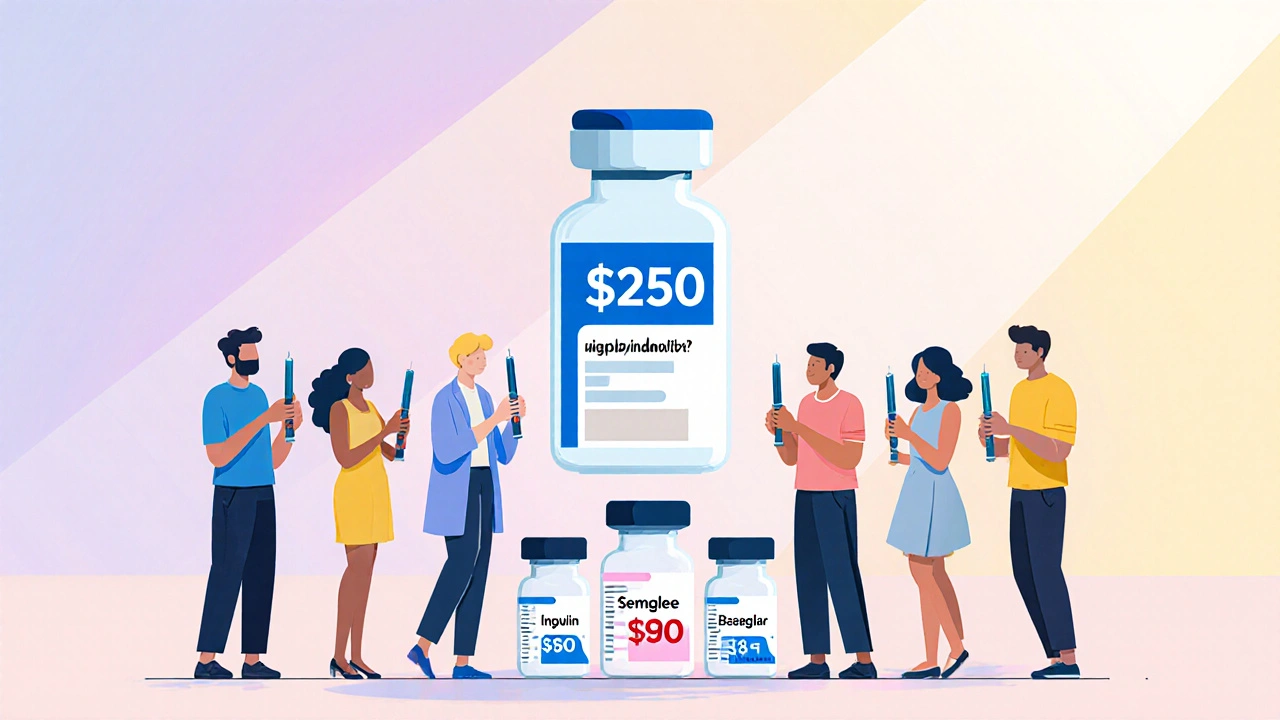
Insulin isn’t just a drug-it’s a lifeline for over 500 million people worldwide with diabetes. But for years, the cost of insulin has been a crushing burden. A vial of branded insulin can cost more than $250 in the U.S., and many patients skip doses or ration because they can’t afford it. Enter insulin biosimilars: highly similar, scientifically validated alternatives that offer the same blood sugar control at a fraction of the price. Unlike generic pills, these aren’t simple copies. They’re complex biological products made from living cells, and getting them right takes years of testing. But they’re here-and they’re changing how diabetes is treated around the world.
What Makes Insulin Biosimilars Different From Generics?
When you think of a generic drug, you picture a tiny white pill that’s chemically identical to the brand-name version. That’s not how insulin biosimilars work. Insulin is a protein, made by living cells in a lab. Even small changes in how it’s made-temperature, fermentation time, purification methods-can affect how it behaves in the body. So unlike generics, biosimilars aren’t exact copies. They’re highly similar.
The U.S. Food and Drug Administration (FDA) and the European Medicines Agency (EMA) require biosimilars to go through rigorous testing: analytical studies to prove molecular structure, non-clinical tests in animals, and clinical trials in humans. These studies must show no meaningful difference in safety, purity, or effectiveness compared to the original insulin. The result? Patients get the same glycemic control, with the same risk of low blood sugar, but often pay 30% less.
For example, Semglee (insulin glargine-yfgn) is a biosimilar to Lantus. In clinical trials, patients switching from Lantus to Semglee showed nearly identical HbA1c levels and hypoglycemia rates. The same holds true for Basaglar, Admelog, and others. The science is solid. The hesitation? Perception.
Why Are Insulin Biosimilars Still Not Widely Used?
Despite strong data, insulin biosimilars have struggled to gain traction. In oncology or rheumatology, biosimilars often capture 80% of the market within five years. For insulin? Only 26%. Why?
One big reason is fear of switching. Patients and doctors worry that changing from a branded insulin they’ve used for years might cause unpredictable blood sugar swings. There are real stories: one patient on Reddit reported more frequent lows after switching to a biosimilar and had to go back. Another, on the American Diabetes Association forum, saw their A1C drop from 7.8 to 7.2 and their monthly cost fall from $450 to $90.
That’s the problem-experience varies. But here’s what the data says: a 2025 survey found 68% of patients saw no difference in effectiveness or side effects after switching. Another 22% needed minor dose tweaks, usually within the first six weeks. Only 10% had to switch back due to issues.
Another barrier is policy. In the U.S., only 17 states let pharmacists automatically substitute a biosimilar insulin without the doctor’s approval. In most places, the prescriber must specifically write “dispense as written” or the brand name. That slows adoption. In contrast, the EMA treats all approved biosimilars as interchangeable by default, which helps drive faster uptake in Europe.
Market Examples: Who’s Making Insulin Biosimilars and Where?
The insulin biosimilar market is crowded-and growing fast. Here are the key players and their products:
- Semglee (Biocon/Viatris): Biosimilar to Lantus (insulin glargine). Approved in the U.S. in 2021, it’s now the most prescribed insulin biosimilar in the country.
- Basaglar (Eli Lilly): Also a biosimilar to Lantus. Launched in 2019, it helped open the door for others.
- Admelog (Sanofi): Biosimilar to Humalog (insulin lispro). It’s priced lower than the original but still carries Sanofi’s brand weight.
- Rezvoglar (Eli Lilly): Approved in late 2024, this is the first biosimilar to Toujeo (a concentrated form of insulin glargine).
- Insulin glargine biosimilars from BGP Pharma and Mylan: Widely used in Europe and Asia, with growing presence in Latin America.
Sanofi still leads the market-not because of its biosimilars, but because it sells both branded Lantus and an unbranded version at a lower price. This dual strategy keeps them in control even as biosimilars rise.
Regionally, adoption varies:
- United States: Holds nearly 30% of the global market share. Growth is steady but slow, held back by pharmacy substitution rules and payer restrictions.
- India: Biosimilars make up 45% of insulin use in some clinics. Cost reductions of 60-70% have made insulin accessible to millions who couldn’t afford it before.
- China: With 141 million diabetics, the market is expanding fast. The government is pushing local biosimilar production to cut import costs.
- Germany and EU: Higher adoption rates due to interchangeable status and public health incentives.
Cost and Reimbursement: How Much Do Patients Actually Pay?
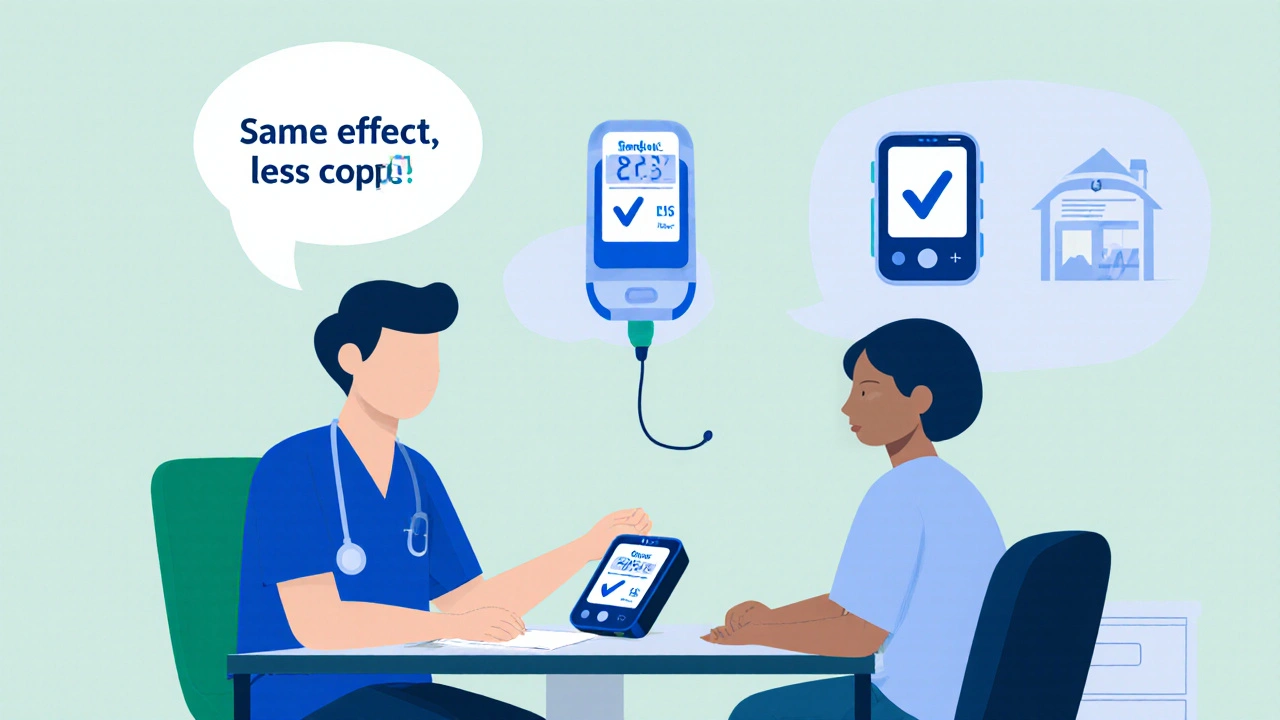
Insulin biosimilars aren’t cheap-but they’re dramatically cheaper than the originals. In Q1 2025, the average selling price (ASP) of biosimilar insulins was $1,840 per vial, compared to $2,600-$3,100 for branded versions. That’s a 25-30% discount on average.
In the U.S., Medicare and Medicaid now reimburse biosimilars at ASP plus 8% of the originator’s price. That means pharmacies get paid fairly for stocking them, which encourages supply. Private insurers are following suit. Some patients report paying as little as $30-$90 per month for a biosimilar insulin, compared to $400-$600 for the brand.
But pricing isn’t always straightforward. Some insurers still require prior authorization. Others have formularies that favor branded insulin unless the patient has tried and failed the biosimilar first. That’s changing, but slowly.
Outside the U.S., the savings are even starker. In Brazil, a vial of biosimilar insulin costs under $10. In South Africa, it’s $15. For patients on fixed incomes or without insurance, that’s the difference between managing diabetes and not.
How to Switch Safely: A Practical Guide
If you’re considering switching from a branded insulin to a biosimilar, here’s what you need to know:
- Talk to your doctor first. Don’t let a pharmacist switch you without your provider’s input, especially if you’ve had unstable blood sugar in the past.
- Expect a transition period. The American Association of Clinical Endocrinologists recommends monitoring glucose levels closely for 3-6 months after switching. Dose adjustments are common but usually minor.
- Keep a log. Track your fasting glucose, post-meal numbers, and any episodes of hypoglycemia. Bring this to your next appointment.
- Know your rights. In the U.S., if your insurance denies coverage of a biosimilar, you can appeal. Many insurers now cover biosimilars as preferred options.
- Use trusted resources. The Biologics Prescribers Collaborative’s 2025 Clinical Guide details switching protocols for 12 major insulin biosimilars. Ask your endocrinologist for a copy.
Most patients who switch do so without issues. The key is communication and monitoring-not fear.
The Future: What’s Coming Next?
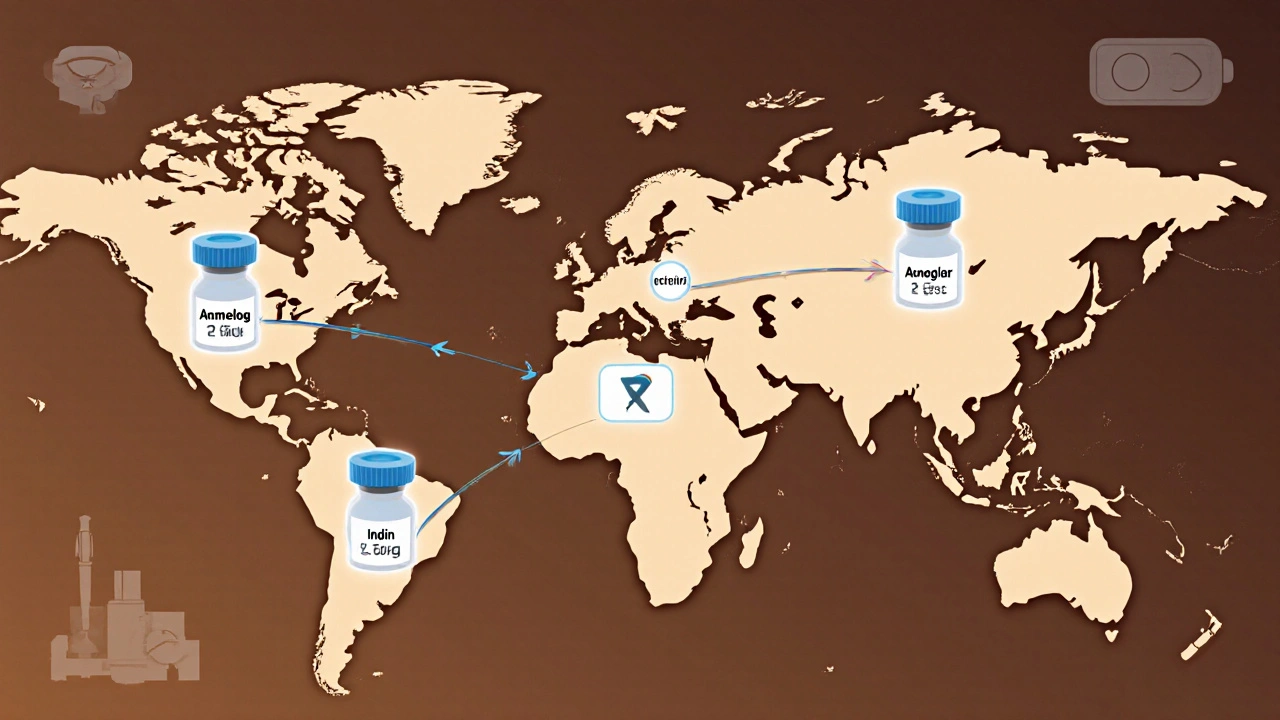
The insulin biosimilar market is accelerating. By 2035, it’s projected to hit $5.8 billion globally, growing at 6.2% per year. But the insulin segment alone is expected to grow at 18%-nearly triple the pace of other biosimilars.
Why? Because more insulin patents are expiring. Toujeo and Tresiba, two long-acting insulins with no biosimilar competition yet, are set to face their first biosimilars in 2026. That will open up a huge new market.
Manufacturers are also investing in better delivery systems. Nearly 80% of companies are developing biosimilar insulins that work with smart pens, continuous glucose monitors, and automated insulin delivery systems. The goal? Make the treatment as seamless as the original.
Regulatory alignment is another big win. The FDA and EMA are working together to harmonize approval standards. That could cut development time by over a year and bring more biosimilars to market faster.
By 2030, experts predict insulin biosimilars will make up 35-40% of the market in wealthy countries and 60-65% in developing ones. That’s not just a business shift-it’s a public health revolution.
Final Thoughts: Science, Access, and Equity
Insulin biosimilars aren’t perfect. They’re not magic. But they’re the closest thing we have to a solution for the global insulin affordability crisis. The science says they’re safe. The data says they work. The cost savings are undeniable.
The real challenge isn’t the product-it’s the system. Outdated policies, fear-based prescribing, and profit-driven pricing models are slowing progress. But change is happening. More patients are speaking up. More doctors are learning. More countries are making biosimilars a priority.
If you’re living with diabetes, you deserve access to safe, effective insulin at a price you can afford. Insulin biosimilars aren’t the only answer-but they’re one of the most powerful tools we have right now.



Michael Salmon November 19, 2025
Let me guess-this is another ‘biosimilars are magic’ propaganda piece from Big Pharma’s PR team. The data? Sure, it looks good on paper. But ask any diabetic who’s been switched against their will by a pharmacist who doesn’t even know what HbA1c stands for. I’ve seen people go into DKA because some ‘highly similar’ insulin didn’t match their body’s rhythm. This isn’t science-it’s cost-cutting dressed up as compassion.
Joe Durham November 21, 2025
I get where Michael’s coming from, but I’ve personally switched two patients to Semglee and Basaglar-both had zero issues. One was on Lantus for 12 years, scared to change. We monitored closely, adjusted the dose by 0.5 units max, and now they’re saving $300/month. The fear is real, but so is the relief when people stop choosing between insulin and groceries.
Derron Vanderpoel November 22, 2025
OMG I JUST SWITCHED TO SEMGLEE LAST WEEK AND I THOUGHT I WAS GONNA DIE 😭 like literally my hands were shaking and i thought i was gonna pass out but then like 3 days in it was fine?? i still check my bg like 8x a day but like… i’m paying 45 bucks a month now instead of 500?? i’m not gonna complain but also i’m still terrified 😅 anyone else feel like this??
Timothy Reed November 24, 2025
The data supporting insulin biosimilars is robust and consistent across multiple international regulatory bodies. The key to successful adoption lies in structured transition protocols, clinician education, and transparent patient communication. The FDA and EMA have established clear pathways for demonstrating comparability, and real-world evidence continues to reinforce safety profiles equivalent to originator products. Delaying access due to perceived risk-rather than documented outcomes-is a disservice to patients.
Christopher K November 26, 2025
Oh wow, so now we’re importing cheap foreign insulin to save money? Great. Next thing you know, we’ll be letting China make our insulin while American scientists sit idle. This isn’t progress-it’s surrender. If you can’t afford insulin, maybe you shouldn’t have had kids. Or maybe you should’ve worked harder. We don’t need cheap copies-we need American-made insulin, made by Americans, for Americans.
harenee hanapi November 27, 2025
I switched to a biosimilar in Mumbai and it was the worst decision of my life. My sugar went crazy for 3 weeks. My mom cried. My aunt said I was being ungrateful. My cousin’s friend’s brother died because he switched too. I’m not the only one. People like you just don’t get it. You think it’s just a pill? It’s my LIFE. And now I’m stuck with this ‘cheap’ poison and no one listens. I’m so tired.
Christopher Robinson November 27, 2025
Just wanted to say: if you’re considering switching, talk to your doc. Seriously. 😊 I was terrified too, but my endo gave me a 2-week monitoring plan + free CGM loaner. My A1C dropped from 8.1 to 7.3, and I saved $400/month. Biosimilars aren’t perfect, but they’re not the enemy. The enemy is the system that lets insulin cost $300. 💪
James Ó Nuanáin November 28, 2025
While the United States lags behind in biosimilar adoption due to its fragmented regulatory and reimbursement landscape, the European model-particularly in Germany and the Netherlands-demonstrates that interchangeability, coupled with public health incentives and physician education, results in rapid market penetration. The British NHS, for instance, has mandated biosimilar substitution for all new insulin prescriptions since 2022. The result? A 40% reduction in insulin expenditure without a measurable increase in adverse events. The American reluctance is not scientific-it is institutional cowardice.
Nick Lesieur November 29, 2025
lol so now we're supposed to trust some 'biosimilar' that's like... 99% the same? cool. so when i get hypoglycemia at 3am and my pump says 'glucose low' but the vial says 'made in india'... who do i blame? the pharmacist? the doctor? the guy who wrote this article? honestly just let me keep my brand name. i paid for it with my sweat and my fear. now you want me to gamble with my life for $50 off? no thanks.
Angela Gutschwager November 30, 2025
I switched. No issues. Saved $350/month. Done.
Ellen Calnan December 1, 2025
It’s funny how we treat insulin like it’s a luxury. It’s not. It’s basic human biology. We don’t debate whether people should get clean water or antibiotics. We just make them available. But insulin? We make people beg. We make them ration. We make them choose between their health and their rent. Biosimilars aren’t the endgame-they’re the first step toward recognizing that life isn’t a commodity. And if we can’t get this right, what does that say about the rest of our healthcare system?
Chuck Coffer December 1, 2025
Yeah, sure, biosimilars work for ‘most people.’ But what about the 10% who get wrecked? You think they’re gonna get a refund? Nope. They’re stuck with the fallout. And guess who pays? The ER. The insurance company. The taxpayer. This isn’t innovation-it’s shifting the burden. You want to save money? Fix the pricing of the original. Don’t gamble with people’s lives.
Marjorie Antoniou December 1, 2025
My sister switched to Basaglar after 15 years on Lantus. She was terrified. We sat down with her endocrinologist, mapped out her glucose trends for 6 weeks, and adjusted her basal rate by 0.2 units. She’s been stable for 8 months. The fear is real. But so is the relief. This isn’t about trust in science-it’s about trust in your care team. And if your team won’t help you transition? Find a new one.
Andrew Baggley December 2, 2025
Look-I’ve been on insulin for 22 years. I’ve seen prices go from $120 to $400. I’ve skipped doses. I’ve cried in pharmacy parking lots. When I switched to Semglee, I thought I was being reckless. Turns out, I was being brave. My A1C dropped. My anxiety dropped. My bank account? Still recovering. But I’m alive. And I’m not going back. To anyone scared to switch: you’re not weak for being afraid. But you’re stronger than you think for considering it.
Frank Dahlmeyer December 3, 2025
Let’s not pretend this is just about cost. The real issue is the complete collapse of pharmaceutical accountability in the United States. The fact that a single molecule-insulin-has been held hostage by a handful of corporations for over two decades is a moral catastrophe. Biosimilars are not a silver bullet, but they are the first crack in the dam. And if we allow market forces, regulatory inertia, and fearmongering to stall their adoption any further, then we are not just failing diabetics-we are failing the very principle that healthcare should be a right, not a privilege. The EMA got it right. The FDA is playing catch-up. And the rest of the world? They’re already moving forward. We are the outlier. And we are ashamed.