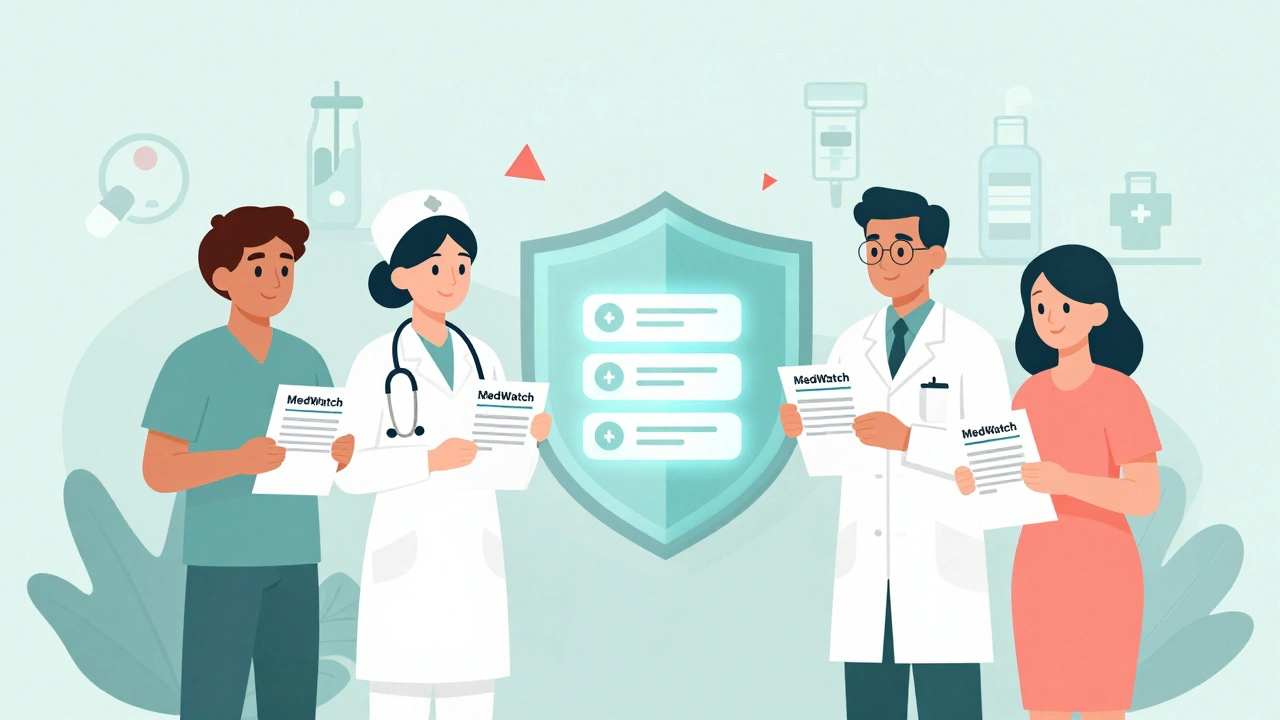
Every year, millions of people take prescription drugs, use medical devices, or apply cosmetics-and most of them never have a problem. But when something goes wrong, how does the FDA find out? That’s where MedWatch comes in. It’s not a flashy system. No apps, no alerts you can turn on. But it’s one of the most important safety nets in U.S. healthcare. If you’ve ever wondered how the FDA learns that a drug might cause dangerous bleeding, or a heart monitor could fail, the answer starts with MedWatch.
What Exactly Is MedWatch?
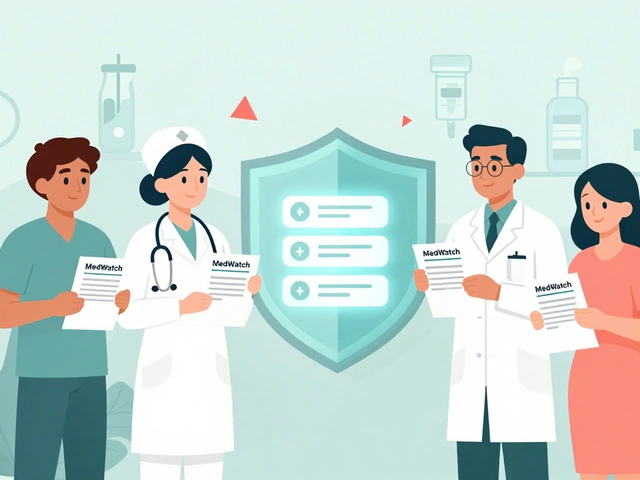
MedWatch is the U.S. Food and Drug Administration’s official system for collecting reports about bad reactions, malfunctions, or problems with medical products. It’s not just for drugs. It covers everything from insulin pumps and artificial joints to over-the-counter painkillers, vaccines, and even skincare products. The program started in 1993, and since then, it’s collected over 15 million reports.
The goal is simple: catch safety problems after a product hits the market. Clinical trials can’t catch everything. Too few people, too short a time. Real-world use reveals what labs never saw. MedWatch lets doctors, nurses, pharmacists, patients, and even manufacturers report anything unusual. These reports go into the FDA Adverse Event Reporting System (FAERS), a giant database with more than 28 million entries as of late 2023.
Who Reports to MedWatch?
There are two kinds of reports: voluntary and mandatory.
Voluntary reports come from anyone. If you’re a patient who had a strange reaction to your blood pressure pill, you can file a report. If you’re a nurse who saw a patient go into shock after a new IV antibiotic, you can file one. Even family members can report if they believe a product caused harm. The FDA encourages this. In 2022, 42% of reports came directly from consumers-not healthcare workers.
Mandatory reports come from companies. Drug makers, medical device manufacturers, and importers are legally required to report serious problems. If a device causes a death, they have five business days to notify the FDA. If it causes a serious injury, they have 30 days. They can’t wait. They can’t ignore it. Failure to report can mean fines or product recalls.
Healthcare facilities like hospitals also have to report device failures under a rule called MAUDE (Manufacturer and User Facility Device Experience). But MedWatch is the public-facing side of this whole system. It’s the bridge between what happens in a clinic and what the FDA sees on its screens.
How Do You File a Report?
Filing a MedWatch report isn’t complicated-but it does take details. You don’t need to be a doctor. But you do need to answer a few key questions:
- What product was involved? (Name, brand, lot number, NDC code for drugs)
- What happened? (Be specific: "dizziness after taking pill," not "felt bad")
- When did it start? (Time, date, how many doses taken)
- What happened after? (Did the person go to the hospital? Did symptoms go away?)
- Any other meds or conditions? (Diabetes? Allergies? Other drugs?)
The FDA says a good report includes the patient’s age, sex, medical history, and what actions were taken. The more detail, the better. Vague reports like "drug made me sick" are useless. They can’t be analyzed. About 17% of reports get tossed because they’re too incomplete.
You can file online at www.fda.gov/medwatch. There’s a simple form-Form FDA 3500. You can also fax it to 1-800-FDA-0178, mail it to the FDA in Rockville, Maryland, or call 1-800-FDA-1088. Phone reports are handled by live agents, and the average wait time is under a minute.
What Happens After You Report?
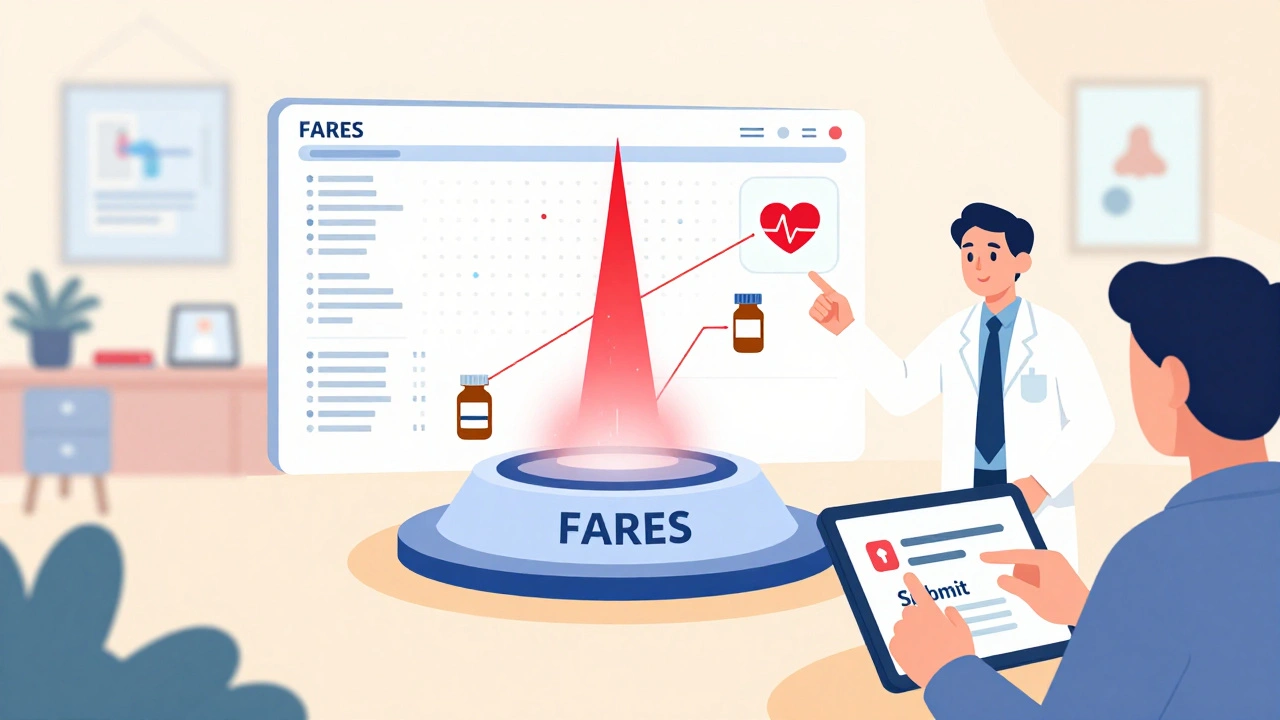
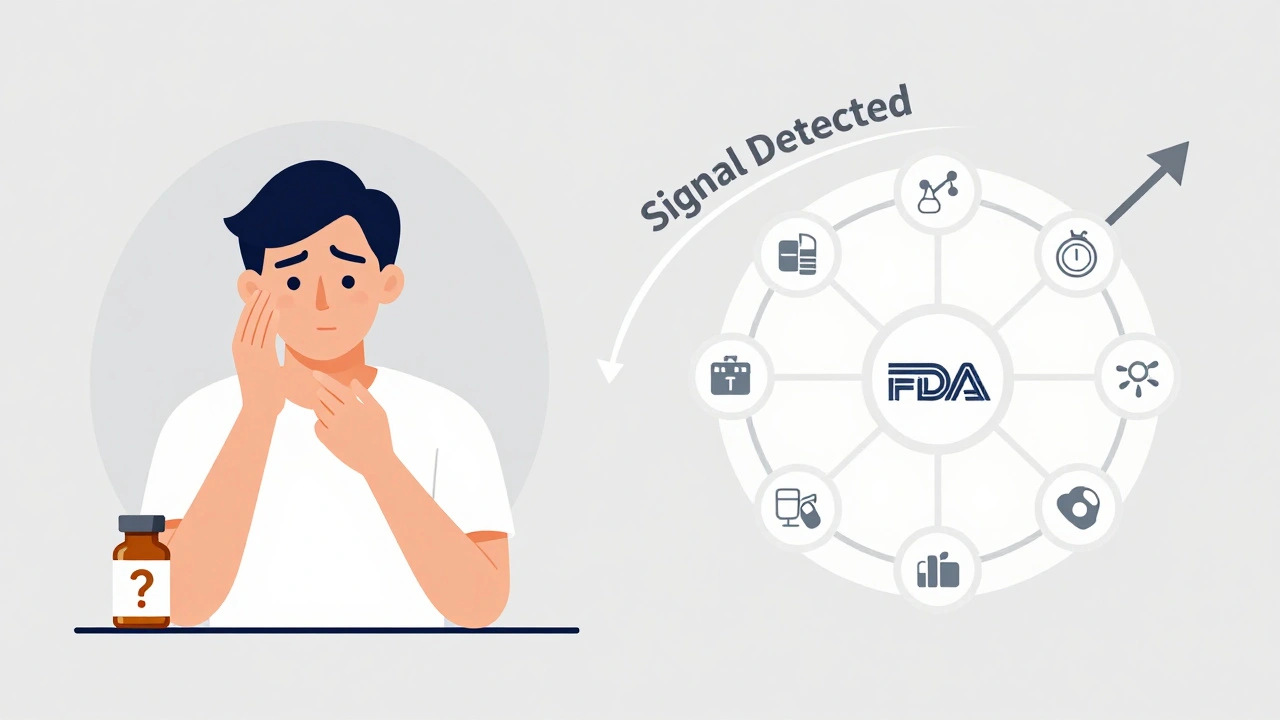
Once a report lands in FAERS, it doesn’t sit there. The FDA uses advanced tools to find patterns. Algorithms like Proportional Reporting Ratio (PRR) and Bayesian Confidence Propagation Neural Network (BCPNN) scan millions of entries looking for unusual spikes. For example, if 100 people report the same rare heart rhythm issue after taking a new cholesterol drug, and only 2 people reported it for older drugs, the system flags it.
Each year, analysts review about 5,000 potential safety signals. If something looks real, the FDA investigates further. That might mean reviewing medical records, running new studies, or talking to doctors. If the evidence holds, they can issue a safety alert, update the drug label, require a black box warning, or even pull the product off the market.
Here’s one real example: In 2021, MedWatch reports started showing a pattern of unexpected immune reactions in cancer patients taking Keytruda. An oncologist at MD Anderson filed a detailed report. Within 90 days, the FDA issued a safety communication. That report helped doctors recognize the signs earlier and save lives.
Another case: textured breast implants from Allergan. Reports of a rare cancer called BIA-ALCL started piling up. MedWatch data was critical. The FDA acted within 45 days of spotting the signal-and ordered a recall.
Why Isn’t Everyone Reporting?
Here’s the big problem: most people don’t report. Experts estimate that only 1% to 10% of actual adverse events ever make it to MedWatch. That’s a massive blind spot.
Why? Time. A 2021 study found that healthcare providers spend 15 to 20 minutes per report. That’s a lot when you’re already swamped. Even with EHR integrations, it still takes 8 to 12 minutes for most doctors. Many just don’t have the bandwidth.
Patients face different barriers. A 2022 survey found 68% of consumers struggled with medical jargon. Terms like "arrhythmia," "anaphylaxis," or "transaminitis" are confusing. Half of those who tried to report gave up.
And then there’s the mindset. Many people think, "It’s probably just a coincidence." Or, "The doctor already knows." But the FDA doesn’t know unless someone tells them. One report might seem small. But 100 similar reports? That’s a signal.
What’s New in MedWatch?
The FDA isn’t sitting still. In September 2023, they launched MedWatch Direct, a new system that connects directly to electronic health records. Hospitals using Epic or Cerner can now auto-send reports when a patient has a serious reaction. No manual form needed. That’s a game-changer.
By mid-2024, they plan to use AI to scan clinical notes for phrases like "patient developed rash after taking X" and pull out relevant info automatically. That could boost reporting rates by 25%.
They’re also testing blockchain to verify reports and prevent fake submissions. And they’re upgrading their signal detection tools to go from weeks of analysis to hours.
But here’s the catch: they’re still short-staffed. Only 120 people are analyzing over a million reports a year. Funding increased to $47.8 million in 2024, but experts say it’s still not enough.
Can MedWatch Be Trusted?
Yes-but with limits. MedWatch has directly led to 37% of all FDA safety communications between 2015 and 2020. That’s huge. It’s helped change labels, add warnings, and remove dangerous products.
But it’s not perfect. It’s reactive, not predictive. It depends on people speaking up. And too often, they don’t. As Dr. Joel Lexchin from York University says, "The system is only as good as the reporting rate."
Still, it’s the best tool we have. Without MedWatch, we wouldn’t know about the risks of certain painkillers, the link between some antibiotics and tendon ruptures, or why some implants fail years later. It’s the quiet backbone of drug safety in America.
What You Can Do
You don’t need to be a doctor to help. If you or someone you know had a bad reaction to a medicine, device, or cosmetic-report it. Even if you’re not sure it was the product. Better to report and be wrong than to stay silent and miss a pattern.
Use the FDA’s online decision tree tool. It helps you figure out if your situation is reportable. It cuts down mistakes by 38%.
And if you’re a healthcare provider? Make it part of your routine. Add a quick note in your chart: "Patient advised to file MedWatch report." Five minutes now could prevent harm later.
MedWatch isn’t glamorous. It doesn’t have a mobile app or viral TikTok videos. But every time someone files a report, they’re helping protect the next person. That’s real impact.
Is MedWatch only for drugs?
No. MedWatch covers all FDA-regulated products: prescription and over-the-counter drugs, vaccines, medical devices like pacemakers and insulin pumps, biologics, cosmetics, and even hemp-derived cannabinoid products. Any product under FDA oversight can be reported if it causes harm or malfunctions.
Can I report a problem if I’m not a doctor?
Yes. Patients, family members, caregivers, and the general public are strongly encouraged to report adverse events. In fact, nearly half of all reports in 2022 came from consumers, not healthcare professionals. You don’t need medical training-just details about what happened.
How long does it take for the FDA to act on a report?
There’s no set timeline. Some reports trigger immediate action-like the 2021 breast implant recall, where the FDA moved within 45 days. Others take months or years if the signal is weak or mixed with other data. The FDA analyzes patterns across thousands of reports, not individual cases. One report rarely leads to action, but 50 similar ones can.
Are MedWatch reports confidential?
Yes. Personal information like your name, address, and contact details are kept private and are not made public. The FDA removes identifying details before sharing data with researchers or manufacturers. Your report is protected under federal privacy laws.
What if I’m not sure the product caused the problem?
Report it anyway. The FDA doesn’t need proof of causation-only a reasonable suspicion. If you believe a product might have played a role, even if it’s unclear, your report helps build the bigger picture. Uncertainty is exactly why the system exists.
Do I need to report every side effect?
No. Only report serious events: hospitalization, life-threatening reactions, disability, birth defects, or death. Minor side effects like mild nausea or headaches are common and usually don’t need reporting unless they’re unusual for that product. The FDA focuses on signals that could affect large groups.
How can I check if my report was received?
The FDA doesn’t send confirmations for individual reports. But if you file online, you’ll get a confirmation number. Keep it for your records. While you won’t hear back about the outcome, your report becomes part of the larger database used for safety analysis. Every submission counts.



Fern Marder December 2, 2025
I reported my mom’s weird rash after her new patch last year 😅 Turns out it was linked to 12 other cases! FDA never contacted me, but I felt like I did something real. 🙌
Carolyn Woodard December 3, 2025
The epistemological fragility of pharmacovigilance systems like MedWatch is profound. One must consider the ontological distinction between correlation and causation in post-marketing surveillance, especially when confounding variables-polypharmacy, comorbidities, genetic polymorphisms-are rarely controlled in spontaneous reporting. The signal-to-noise ratio remains a persistent methodological quandary.
John Webber December 5, 2025
people need to stop blaming the FDA. if you get sick from a pill, its probly your fault for not readin the label. why are we even doing this? its not like they can fix everything anyway.
Elizabeth Farrell December 7, 2025
I want to say thank you to every single person who’s taken the time to file a report-even if it felt pointless. I’m a nurse, and I’ve seen too many patients dismissed because their symptoms didn’t fit the textbook. Your report might be the one that finally gets someone’s voice heard. You’re not just reporting-you’re protecting. Keep going.
Saravanan Sathyanandha December 8, 2025
In India, we have no such system. When my cousin had a severe reaction to a generic antihypertensive, the doctor shrugged and said, 'It happens.' I spent three weeks trying to find a way to report it-no website, no helpline, no form. MedWatch is a quiet miracle. We need this everywhere, not just in the US.
alaa ismail December 8, 2025
Honestly, I just scroll past these posts. But this one made me pause. I used to think reporting was for ‘serious’ stuff. Then my sister had a panic attack after a new OTC sleep aid. We didn’t report it-thought it was just anxiety. Turns out, 3 others had the same thing. Now I tell everyone: if it feels off, report it. No shame.
ruiqing Jane December 10, 2025
The fact that 17% of reports are discarded due to incompleteness is a systemic failure-not a user failure. The FDA should provide a guided, interactive reporting interface with auto-suggestions, dropdowns for adverse events, and context-sensitive help. Not a blank form. This isn’t 2005 anymore. We can do better.
Shubham Pandey December 12, 2025
MedWatch is useless. Too slow. Too manual. If you're waiting for a signal to emerge from 15 million reports, you're already too late. We need AI-driven real-time monitoring, not forms.
Sheryl Lynn December 13, 2025
Ah yes, the noble MedWatch-where the FDA, armed with a spreadsheet and a single espresso, tries to decode the chaos of human biology. How quaint. Meanwhile, the pharmaceutical lobby quietly funds ‘post-marketing surveillance consultants’ who, surprise, never flag the same drugs they helped approve. The real safety net? A well-funded whistleblower culture. But who’s got the courage?
Paul Santos December 14, 2025
The PRR and BCPNN models are statistically elegant, yes-but they’re still just pattern-recognition algorithms. They don’t understand context. A 68-year-old with renal failure taking a drug that causes elevated creatinine? That’s not a signal-it’s expected. Yet the system flags it anyway. We’re drowning in noise. The real challenge isn’t collecting reports-it’s filtering them with clinical wisdom.
Eddy Kimani December 15, 2025
I’m a data scientist at a hospital, and we’ve been testing auto-reporting via EHR integrations. The AI picks up phrases like 'patient developed angioedema post-administration' and auto-fills Form 3500. Accuracy is 89%. We’ve already flagged two potential signals that manual reporting missed. This is the future-human + machine. Let’s not romanticize the clipboard.
Chelsea Moore December 16, 2025
I can’t believe people still think this system works! My uncle died from a faulty insulin pump-AND THE COMPANY KNEW FOR 11 MONTHS BEFORE THEY REPORTED IT! THEY GOT A FINE OF $20,000!!! That’s less than their daily profit! This isn’t safety-it’s a corporate loophole with a fancy name!!!