Opioid-Induced Androgen Deficiency Risk Checker
Are You at Risk for OPIAD?
Check your symptoms and history to see if you should consult a doctor about Opioid-Induced Androgen Deficiency.
If you are taking opioids for chronic pain or as part of medication-assisted treatment, you might be dealing with more than just physical discomfort. You may also be fighting a silent hormonal imbalance that saps your energy, kills your libido, and weakens your bones. This condition is known as Opioid-Induced Androgen Deficiency (OPIAD), a clinically significant endocrine disorder where prolonged opioid use suppresses testosterone production. It affects up to 90% of long-term users, yet it remains one of the most under-diagnosed side effects in modern medicine.
The connection between pain management and hormonal health is not new, but it has only recently become a mainstream clinical concern. A massive meta-analysis published in the Journal of the Endocrine Society in 2021 compared 800 patients on opioids to nearly 2,000 controls. The results were stark: opioid users had approximately half the testosterone levels of those who were not using these medications. If you have been on opioids for more than three months, your body’s natural hormone factory may have effectively shut down. Understanding why this happens, what it feels like, and how to fix it is crucial for reclaiming your quality of life.
How Opioids Shut Down Your Hormones
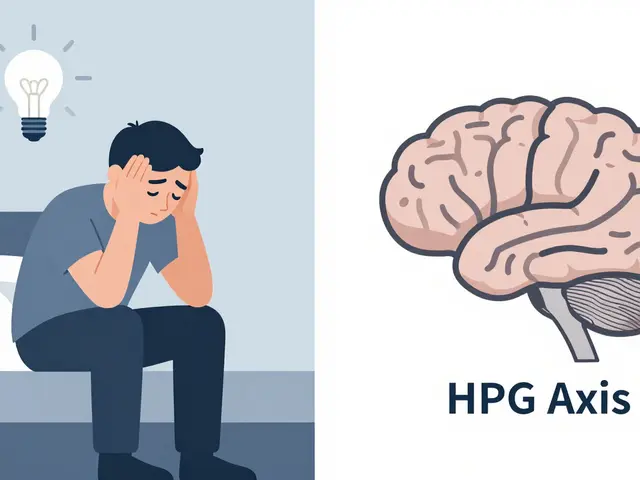
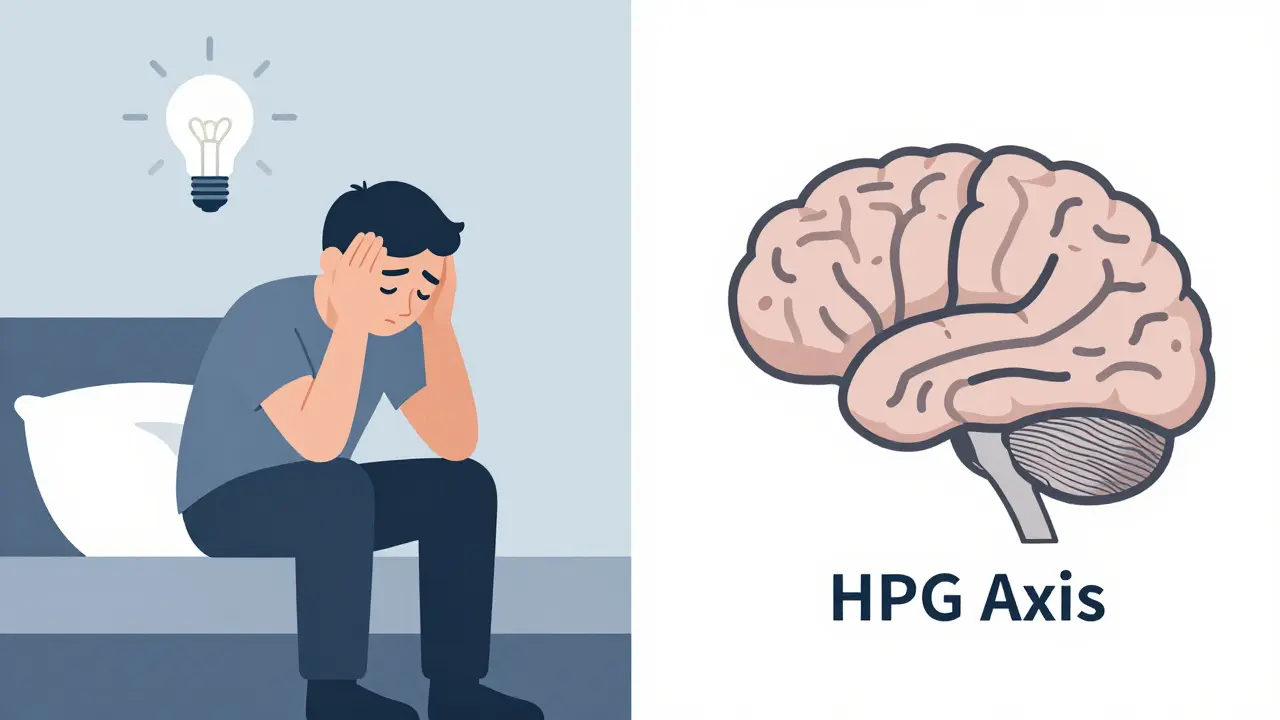
To understand OPIAD, you need to look at the command center of your reproductive system: the hypothalamic-pituitary-gonadal (HPG) axis. Think of this axis as a relay race. The hypothalamus releases gonadotropin-releasing hormone (GnRH), which signals the pituitary gland to release luteinizing hormone (LH). LH then travels to the testes (or ovaries) to stimulate testosterone production.
Opioids disrupt this relay by binding to mu-opioid receptors in the hypothalamus. This action reduces the pulsatility of GnRH secretion. In simple terms, the signal gets muffled. Without that clear, rhythmic signal from the brain, the pituitary gland stops producing enough LH, and consequently, the testes stop making testosterone. Research shows that long-acting opioids like methadone and buprenorphine cause more profound suppression than shorter-acting ones because they maintain a constant level of suppression over time. Studies indicate that after 90 days of continuous use, testosterone levels can drop by 35-50%, and after a year, they can fall by 50-75% below baseline.
Recognizing the Symptoms of Low Testosterone
The symptoms of OPIAD often develop insidiously, creeping in over 3 to 6 months. Because many people attribute fatigue or mood changes to their underlying pain condition or the opioids themselves, the hormonal link is frequently missed. Here is what to look out for:
- Sexual Dysfunction: This is the most common red flag. Between 68% and 85% of affected males report low libido, while 60-75% experience erectile dysfunction. For women, this may manifest as irregular periods or vaginal dryness.
- Chronic Fatigue: Unlike normal tiredness, this exhaustion does not improve with rest. Studies using the Fatigue Severity Scale show scores 2.5 times higher than normal in untreated OPIAD patients.
- Mood Changes: Irritability, depressed mood, and poor concentration are prevalent. One study found depression symptoms were 40% higher in men with opioid-induced low testosterone.
- Physical Changes: You may notice decreased muscle mass despite exercise, increased body fat (especially around the abdomen), and even anemia, with hemoglobin levels dropping significantly below the normal range.
- Bone Health: Long-term deficiency leads to osteoporosis. Bone mineral density in the lumbar spine can reduce by 15-20%, increasing fracture risk.
If you recognize several of these issues, especially alongside long-term opioid use, it is time to ask your doctor for blood work. Do not assume these are just "part of the process" of managing chronic pain.
Diagnosis and Screening Protocols
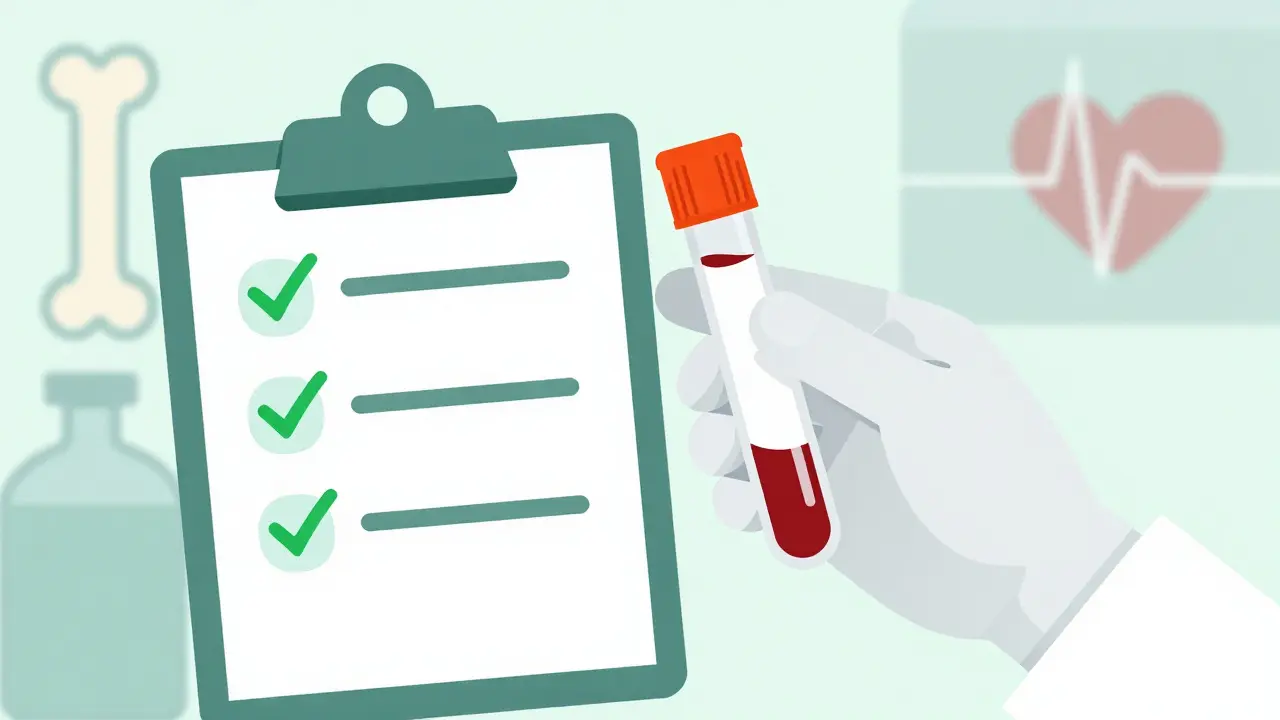
Diagnosing OPIAD requires precision. Testosterone levels fluctuate throughout the day, so timing matters. The Endocrine Society recommends measuring total and free testosterone in the morning, specifically between 7:00 AM and 10:00 AM. A single low reading is not enough for a diagnosis; you need two separate low measurements to confirm hypogonadism.
Clinicians often use the Androgen Deficiency in Aging Males (ADAM) questionnaire to assess symptoms. If you answer "yes" to three or more questions regarding low sex drive, lack of vigor, or reduced muscle strength, laboratory testing is warranted. However, screening practices remain inconsistent. Expert consensus from the Pain Physician review strongly advocates that screening for hypogonadism should be considered whenever long-term opioid prescribing is undertaken. Currently, millions of people globally use opioids, meaning millions may be suffering from undiagnosed OPIAD.
Treatment Options: TRT and Beyond
Once diagnosed, the primary medical intervention is Testosterone Replacement Therapy (TRT). TRT is not a one-size-fits-all solution, and the delivery method depends on your lifestyle and preference. Common options include:
- Intramuscular Injections: Typically 100-200 mg of testosterone cypionate or enanthate every 1-2 weeks. This is cost-effective but can cause fluctuations in hormone levels.
- Transdermal Gels: Applied daily (50-100 mg), providing steady absorption. Care must be taken to avoid transferring the gel to others through skin contact.
- Patches: Deliver 5-7.5 mg daily, offering consistent levels but potentially causing skin irritation.
- Buccal Tablets: Placed against the gum twice daily, absorbing directly into the bloodstream.
The benefits of TRT in opioid users are well-documented. Randomized controlled trials have shown that TRT significantly improves sexual function, with International Index of Erectile Function scores rising substantially. More importantly, it reduces pain sensitivity-some studies show a 30% reduction in hyperalgesia-and improves body composition, adding lean muscle mass while reducing fat. Perhaps most critically, a major study in JAMA Network Open found that testosterone recipients among long-term opioid users had significantly lower all-cause mortality (hazard ratio 0.51) and lower rates of major adverse cardiac events and fractures.
Risks and Safety Considerations
While TRT offers life-changing benefits, it is not without risks. The FDA requires black box warnings about potential cardiovascular risks, including heart attack and stroke. Before starting therapy, your doctor must rule out prostate cancer in men and breast cancer in women, as TRT is contraindicated in these cases.
Monitoring is essential. You will need regular blood tests to check:
- Hematocrit: Polycythemia (thickened blood) occurs in 15-20% of TRT users. If your hematocrit gets too high, the risk of clots increases.
- Lipid Profile: TRT can decrease HDL (good) cholesterol by 10-15 mg/dL.
- PSA Levels: Men over 50 or those with risk factors need prostate-specific antigen testing every 6 months.
- Testosterone Levels: Measured 3-6 months after starting therapy and annually thereafter, aiming for levels between 350-750 ng/dL.
Some healthcare providers caution against rushing into TRT, noting that external testosterone inhibits the body’s natural production. However, in the context of OPIAD, the natural production is already suppressed by the opioids. The decision requires a careful balance between improving quality of life and managing long-term safety.
Natural Approaches to Support Hormonal Health
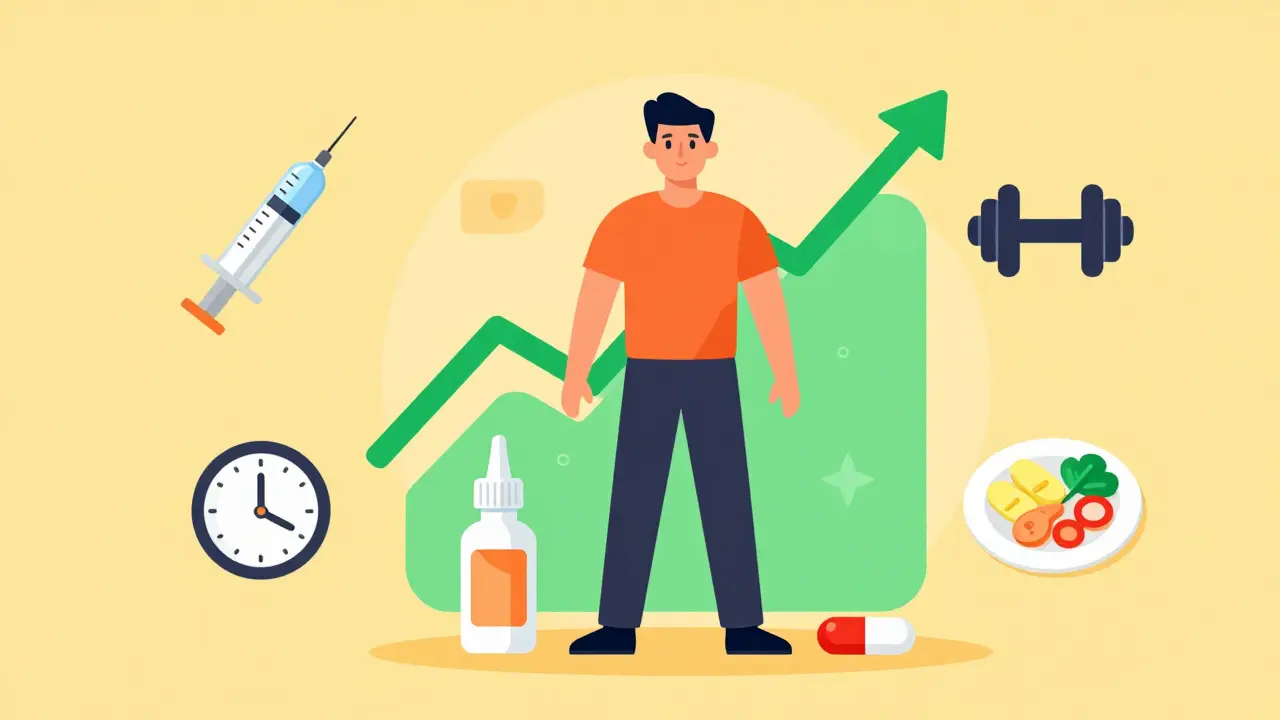
Medication is not the only lever you can pull. Lifestyle modifications can support your body’s resilience, even while on opioids. The VA Whole Health Library emphasizes evidence-based non-pharmacological approaches:
- Maintain a Healthy Weight: Obesity is linked to lower testosterone. Keeping your BMI under 25 is associated with 20-30% higher testosterone levels.
- Resistance Exercise: Strength training 3 times a week can boost testosterone by 15-25%. Focus on compound movements like squats and deadlifts.
- Sleep Optimization: Aim for 7-9 hours of quality sleep per night. Poor sleep correlates with a 20% drop in testosterone levels.
- Avoid Tobacco and Limit Alcohol: Smokers have 15-20% lower testosterone. Drinking more than 14 drinks a week can lower levels by another 25%.
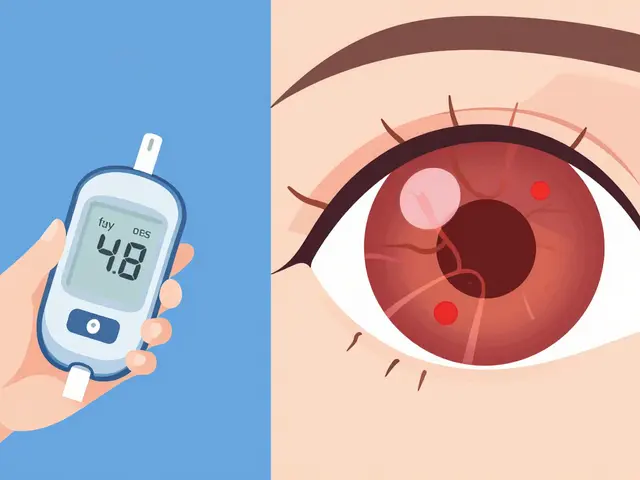
- Manage Blood Sugar: Diabetes is strongly linked to low testosterone. Preventing or managing diabetes is a key step in hormonal health.
For female patients, some experts suggest considering dehydroepiandrosterone (DHEA) supplementation, though evidence is less robust than for male TRT. Always consult your endocrinologist before adding supplements to your regimen.
| Opioid Type | Example Medications | Suppression Severity | Recovery Time After Cessation |
|---|---|---|---|
| Long-Acting Agonists | Methadone, Buprenorphine | High (Profound suppression) | Months to Years |
| Short-Acting Agonists | Oxycodone, Hydrocodone | Moderate to High | Weeks to Months |
| Intrathecal Opioids | Morphine (spinal pump) | Very High (Rapid onset) | Variable |
Next Steps for Patients
If you suspect you have OPIAD, do not stop your opioid medication abruptly. Instead, schedule an appointment with your primary care provider or an endocrinologist. Request a morning testosterone panel and discuss your symptoms openly. Bring a list of all medications and supplements you take. If TRT is prescribed, commit to the monitoring schedule. It is a partnership between you and your doctor to restore your vitality while safely managing your pain or addiction treatment.
How long does it take for opioids to lower testosterone?
Symptoms of opioid-induced androgen deficiency typically develop insidiously over 3 to 6 months of continuous therapy. However, measurable suppression can occur sooner, especially with intrathecal administration or high doses of long-acting opioids like methadone.
Does testosterone replacement therapy interfere with pain management?
No, TRT does not interfere with pain management. In fact, studies show that TRT can reduce pain sensitivity (hyperalgesia) by up to 30%, potentially allowing for better pain control with existing opioid regimens.
Is OPIAD reversible if I stop taking opioids?
Yes, testosterone levels often recover after stopping opioids, but the timeline varies. It can take weeks to months for the HPG axis to restart normal function. Long-term users may require a longer recovery period, and some may need temporary TRT during the transition.
What are the biggest risks of TRT for opioid users?
The primary risks include polycythemia (thickened blood), decreased HDL cholesterol, and potential cardiovascular events. There is also a theoretical risk of worsening sleep apnea. Regular monitoring of hematocrit, lipids, and PSA levels is critical to mitigate these risks.
Can women get OPIAD?
Yes, women are also affected by opioid-induced hormonal suppression. While testosterone plays a different role in female physiology, low levels can lead to fatigue, low libido, and mood disturbances. DHEA supplementation is sometimes considered for women, though evidence is less extensive than for men.