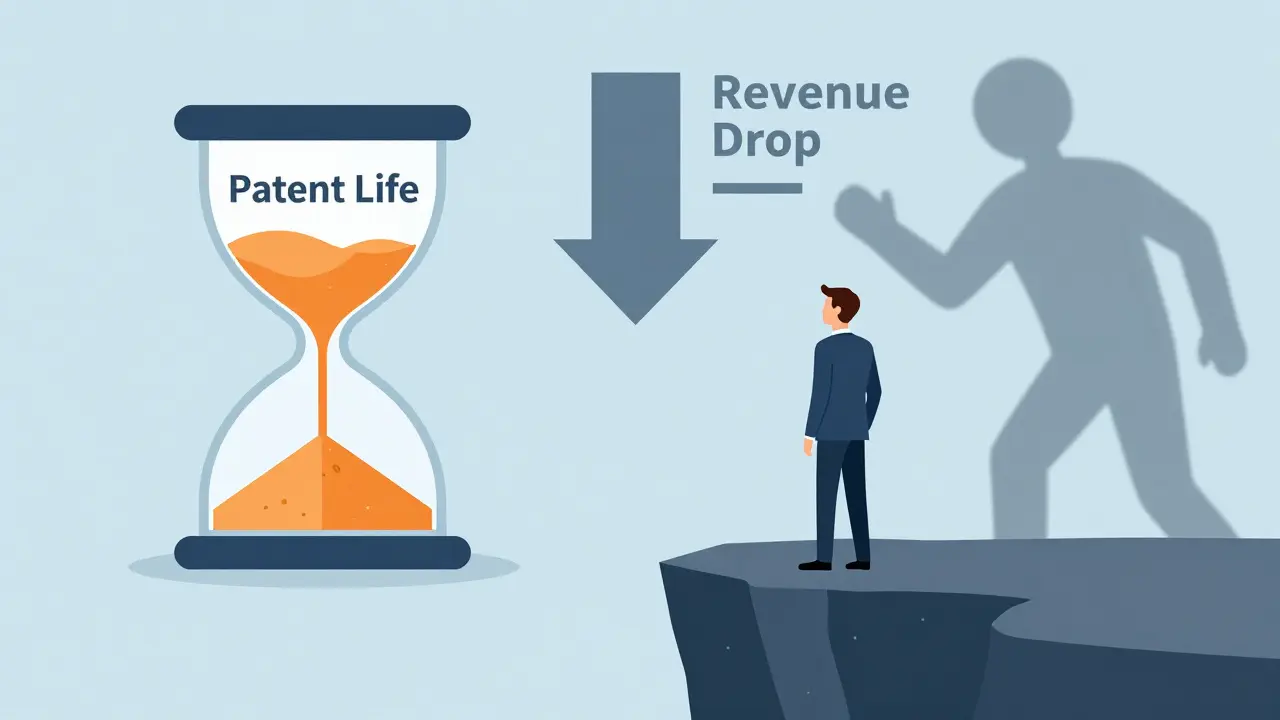
Imagine spending billions developing a life-saving medication, only to watch your revenue plummet by 80% within three years of losing patent protection. This isn't a hypothetical nightmare; it's the standard reality for pharmaceutical companies facing generic competition. The clock starts ticking not when you launch the drug, but the moment regulatory exclusivity expires. For brand manufacturers, predicting exactly when that door opens is the difference between strategic planning and financial disaster. For generic makers, it’s the key to identifying which markets offer the highest return on investment.
Forecasting generic entry has evolved from simple calendar tracking into a sophisticated discipline blending legal analysis, economic modeling, and regulatory intelligence. With over $394 billion in cumulative patent expirations expected through 2027, the stakes have never been higher. Understanding how these forecasts work helps both sides of the industry navigate the complex transition from monopoly to competition.
The Regulatory Foundation: Hatch-Waxman and ANDAs
To understand why generics enter when they do, you first need to look at the rules of the game. The Hatch-Waxman Act, formally known as the Drug Price Competition and Patent Term Restoration Act of 1984, created the pathway for generic drugs to reach the market without repeating costly clinical trials. It introduced the Abbreviated New Drug Application (ANDA), allowing manufacturers to prove their product is bioequivalent to the brand-name drug rather than reinventing the wheel.
This act established a delicate balance. It gave innovators extended patent terms to recoup R&D costs while ensuring consumers would eventually access cheaper alternatives. The mechanism relies heavily on the FDA Orange Book, an official publication listing all approved drug products with therapeutic equivalence evaluations and patent information. As of late 2023, this database contained over 21,000 approved ANDAs. Every forecast begins here, analyzing which patents are listed, their expiration dates, and whether any litigation is pending.
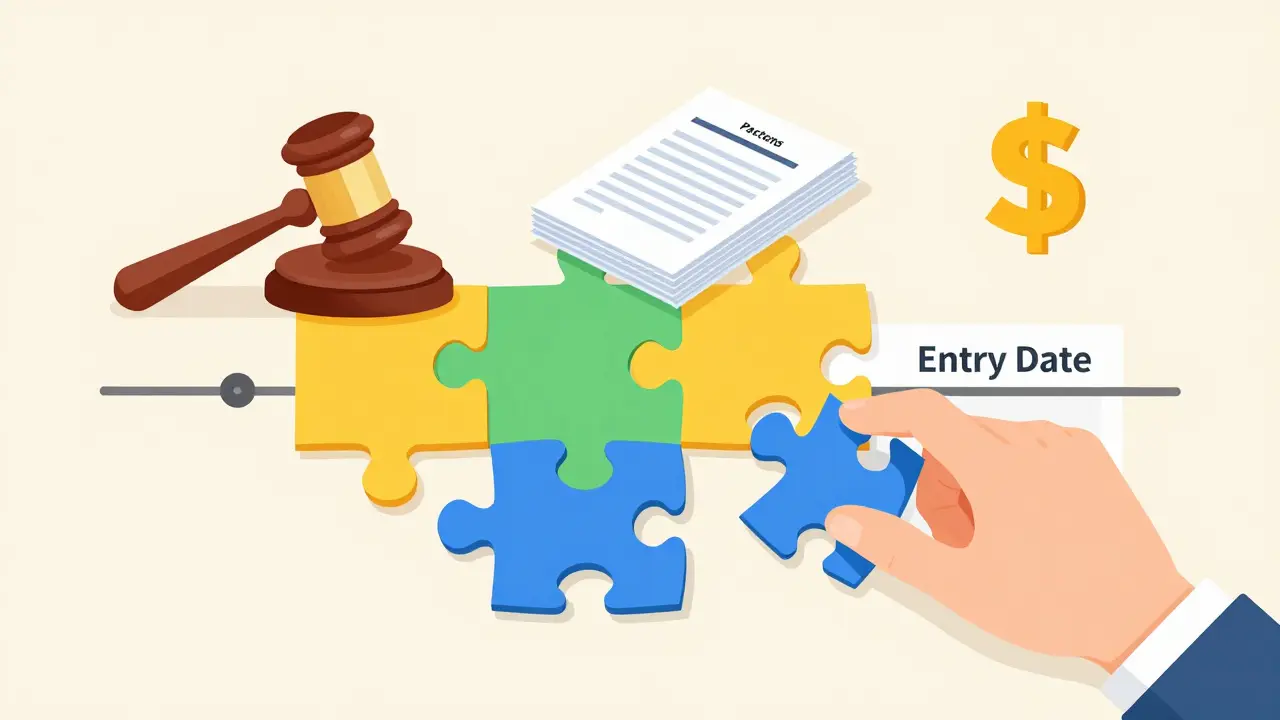
However, the date on the patent certificate is rarely the actual entry date. The real timeline depends on legal challenges, specifically Paragraph IV certifications. These allow generic applicants to challenge the validity of a brand’s patents. If successful, the generic maker gets 180 days of marketing exclusivity. This incentive creates a race among generic companies to be the first to file, adding a layer of strategic behavior that pure date-tracking models miss entirely.
Why Simple Date Tracking Fails
You might think checking a patent expiration calendar is enough. In practice, it’s dangerously inaccurate. Internal models at major pharmaceutical firms using only basic expiration dates have consistently overestimated generic entry by more than 11 months on average. One senior manager reported this error cost their company $220 million in unanticipated revenue loss for a single oncology drug.
Why does this happen? Because generic entry is endogenous-it depends on the decisions of other players. A naive logistic regression model underpredicts competitive effects by 37% because it ignores strategy. Generic manufacturers don’t just wait for a date; they calculate risk versus reward. They consider:
- Market Size: Drugs generating over $1 billion annually attract generic entry 11.3 months faster than smaller niche drugs.
- Patent Thickets: Each additional patent in a cluster delays entry by approximately 4.2 months. Companies like AbbVie used portfolios of 130+ patents to delay Humira’s biosimilar competition despite core patent expiry in 2016.
- Litigation Outcomes: Patent lawsuits delay entry by an average of 18.7 months in 42% of cases.
Advanced models achieve R² values of 0.78-0.85 in predicting time-to-first-generic, compared to just 0.42-0.51 for simple date-based models. The gap widens significantly across therapeutic classes. Oncology drugs, for instance, show 32% longer delays due to complex formulation and stricter regulatory scrutiny.
Methodologies That Actually Work
Sophisticated forecasting requires moving beyond spreadsheets. The Federal Trade Commission’s instrumental variables approach, detailed in Working Paper 317, uses FDA classifications of new chemical entities and pre-entry market size to model entry timing. This method achieved 89% prediction accuracy for first generic entry within six-month windows for small-molecule drugs.
Game theory adds another critical dimension. Researchers at Yale University analyzed ANDA approval data from 2004-2014 across 285 drug markets. Their discrete game theory models accounted for strategic entry decisions, revealing that the first three generic competitors have 29% larger price effects than previously estimated. Each additional competitor reduces prices by 16.7% during the exclusivity period, a dynamic that static models fail to capture.
Commercial platforms like Evaluate Pharma’s J+D Forecasting integrate dozens of variables. They track 47 distinct factors, including therapeutic substitution rates and patent cluster density. These tools cost between $250,000 and $1.2 million annually to implement, reflecting their value. The learning curve is steep-typically 6 to 9 months-but teams that master them preserve 5-8 percentage points in revenue during the critical post-patent period.
| Methodology | Accuracy Metric | Key Strength | Primary Limitation |
|---|---|---|---|
| Simple Patent Expiration Tracking | R² 0.42-0.51 | Low cost, easy implementation | Ignores litigation and strategy |
| FTC Instrumental Variables | 89% within 6-month window | Handles endogenous entry well | Complex statistical requirements |
| Game Theory Models | 37% better than logistic regression | Predicts competitor behavior | Data intensive, high compute cost |
| AI-Driven Platforms (e.g., Evaluate) | R² 0.78-0.85 | Integrates 40+ variables | High subscription cost ($250k-$1.2M) |
The Biosimilar Challenge: A Different Beast
If small-molecule generics follow a predictable cascade, biologics tell a different story. The Biologics Price Competition and Innovation Act (BPCIA) of 2010 established a 12-year data exclusivity period for biologics, creating a much higher barrier to entry. Consequently, biosimilar forecasting is significantly less accurate, hovering around 57% accuracy compared to 83% for small molecules.
The development pathway for biosimilars takes 12-18 months longer than traditional generics. More importantly, the price erosion trajectory is shallower. While the first generic entrant typically slashes prices by 39%, biosimilars see only a 25-35% reduction even after three competitors enter. This is due to restricted substitution policies and physician reluctance to switch patients from originator biologics.
Strategic "product hopping" exacerbates this complexity. Innovators often switch patients to new formulations or indications before patent expiration. In 63% of top 100 drug cases, this tactic extends effective market exclusivity by 18-24 months. No current model fully accounts for these aggressive lifecycle management strategies, leading to significant forecast errors in the biologic sector.

Implementation Pitfalls and Team Structure
Building a robust forecasting function isn’t just about buying software. It’s about assembling the right team. High-performing forecasting teams typically include:
- Patent Attorneys (75% of teams): To interpret litigation outcomes and Paragraph IV certifications.
- Regulatory Specialists (68% of teams): To monitor FDA approval timelines and REMS program impacts.
- Game Theory Economists (52% of teams): To model competitor entry strategies.
A common failure point is underestimating the impact of Risk Evaluation and Mitigation Strategies (REMS). These safety programs can delay generic entry by 14.3 months on average if the brand holds exclusive REMS protocols. Similarly, pediatric exclusivity extensions add 6 months in 28% of cases, a detail often overlooked in automated feeds.
User feedback highlights specific pain points. Sixty-eight percent of users complain about inadequate modeling of state substitution laws. California’s 2022 Substitution Act, for example, created 8.2% slower price declines than national models predicted. Additionally, authorized generics-where the brand company launches its own generic version-occur in 41% of cases but are predicted by only 22% of models. This blind spot can severely distort revenue projections.
The Future: AI and Emerging Trends
By 2026, artificial intelligence is reshaping the landscape. Natural language processing algorithms now analyze patent litigation documents and FDA correspondence, reducing prediction errors by an estimated 40%. These AI-driven models process 15+ years of ANDA approval data to identify subtle patterns humans miss.
New regulatory pathways also demand model updates. The FDA’s Competitive Generic Therapy (CGT) pathway, finalized in 2023, grants 180-day exclusivity for drugs with insufficient competition. Early adopters incorporate this variable with 82% accuracy in pilot studies. Meanwhile, complex generics like inhalers and topical products present new hurdles, with approval times averaging 52 months versus 38 for standard tablets, increasing prediction error margins by 35%.
Long-term viability faces questions from the Inflation Reduction Act. Medicare drug price negotiations starting in 2025 may reduce generic price erosion by 15-20% for negotiated drugs. Analysts predict this could alter entry incentives, potentially slowing the rush to file ANDAs for certain high-cost therapies. Forecasts must now account for federal policy shifts alongside corporate strategy.
How long does it take for a generic drug to enter the market after patent expiration?
There is no fixed timeframe. On average, patent litigation delays entry by 18.7 months in 42% of cases. Without litigation, FDA approval timelines median at 38 months from ANDA submission. However, strategic factors like market size and patent thickness can accelerate or delay this further. Small-molecule drugs typically see entry within 6-12 months of final patent clearance, while biologics face a 12-year exclusivity period plus 12-18 months for development.
What is the most accurate way to forecast generic entry?
The most accurate methods combine game theory with instrumental variables analysis, achieving R² values of 0.78-0.85. These models integrate over 40 variables, including patent cluster density, litigation status, and historical competitor behavior. Simple patent date tracking is highly inaccurate, often off by more than 11 months. Commercial platforms like Evaluate Pharma’s J+D Forecasting represent the current gold standard, though they require significant investment and expertise.
Why are biosimilar forecasts less accurate than generic drug forecasts?
Biosimilar forecasting has only 57% accuracy compared to 83% for small molecules due to the BPCIA’s 12-year data exclusivity, longer development pathways (12-18 months extra), and complex substitution policies. Additionally, brand manufacturers use "product hopping" strategies in 63% of top drug cases, extending exclusivity unpredictably. Physician resistance to switching patients also slows market penetration, making price erosion trajectories shallower and harder to model.
How much does generic entry reduce drug prices?
For small-molecule drugs, the first generic entrant typically reduces prices by 39%. By the time three competitors enter, prices drop 62% below brand levels. With six or more competitors, prices fall 85% below original pricing. Biosimilars show a much slower decline, with only 25-35% price reduction after three competitors due to higher barriers to entry and limited automatic substitution.
What role does the FDA Orange Book play in forecasting?
The FDA Orange Book is the foundational data source for all generic entry forecasts. It lists all approved drug products, their therapeutic equivalence codes, and associated patents. Forecasters analyze weekly updates to track patent expirations, Paragraph IV certifications, and litigation holds. Over 87% of industry professionals rate Orange Book litigation data as "critical" for accurate predictions, as it signals imminent generic challenges and potential delays.



Sarah Boomgaard July 4, 2026
you people are so obsessed with money it makes me sick
the whole system is built on greed and suffering
why do we let these companies dictate who lives and dies?
it is not about patents or science
it is about power and control over the weak
we need to abolish this corrupt structure entirely
fred morgan July 4, 2026
The article provides a precise overview of the regulatory mechanisms involved in generic drug forecasting. It is important to note that the Hatch-Waxman Act serves as the foundational legal framework for this industry segment.
Gilbert Bankual July 5, 2026
This is a great breakdown of how complex the market really is.
It shows why innovation needs protection but also why competition matters.
We should focus on better models to help everyone win.
Vinay Bairagi July 5, 2026
Western pharmaceutical giants exploit developing nations through these patent thickets.
They delay access to life-saving medicines while hoarding profits.
Our country must develop independent manufacturing capabilities to break free from this dependency.
Self-reliance is the only path forward for true sovereignty.
Ellen Zeman July 7, 2026
i think its super interesting how game theory plays into this
like the companies are literally playing chess with patient health
but maybe if we all just communicated better we could solve the pricing issues without all the litigation drama
its a big puzzle but we can figure it out together
Kimberly Simbulan July 8, 2026
Oh sure, because nothing says 'fair market' like spending $1.2 million on software to predict when you can raise prices again.
But hey, at least the models are accurate now, right?
kavitha kumar July 9, 2026
omg this is so stressful to read
how do they even sleep at night knowing they are manipulating the system like this
i feel so overwhelmed by all the legal jargon and strategies
its just too much information to process honestly
Ashley Loera July 10, 2026
You clearly dont understand the basic economics here
These companies invest billions in R&D and deserve their returns
If you want cheap drugs then stop supporting regulations that protect innovation
Its simple supply and demand and your ignorance is showing