Statin Intolerance Strategy Tool
Current Status
Are you currently taking a statin?
Symptom Check
Do you have muscle pain/weakness?
Resolution Test
Did pain stop when you quit?
CK Levels
Creatine Kinase results?
Your Recommended Protocol
Based on NLA GuidelinesDisclaimer: This tool is for educational purposes only and does not constitute medical advice. Statin intolerance requires professional diagnosis via rechallenge protocols. Always consult your healthcare provider before changing medication.
You take your pill every morning. You trust it to keep your heart safe. Then, the pain starts. It’s not just a twinge; it’s a deep ache in your thighs or shoulders that makes walking up stairs feel like climbing a mountain. You tell your doctor, they stop the medication, and you feel relieved. But months later, you’re worried about your cholesterol again. This is the trap of statin intolerance, defined by the National Lipid Association as the inability to tolerate at least two different statins due to adverse effects. For millions of patients, this leads to permanent discontinuation of therapy, leaving them vulnerable to cardiovascular disease, which remains the leading cause of death globally.
The good news? You don’t have to choose between muscle pain and heart health. Specialized statin intolerance clinics within major medical centers are changing the game. These aren’t just regular cardiology visits. They use structured, evidence-based protocols to re-evaluate, re-challenge, and manage side effects. In fact, while 45% of patients with reported intolerance permanently quit statins in general practice, only 18% do so when managed through standardized clinical pathways. Here is how these specialized protocols work and why they might be your best option for getting back on track.
What Exactly Is Statin Intolerance?
Before diving into solutions, we need to define the problem accurately. Many people believe they are intolerant to statins simply because they felt sore after starting one. However, true statin-associated muscle symptoms (SAMS) are specific. The 2022 National Lipid Association (NLA) guidelines refined the definition to describe a spectrum of adverse symptoms associated with statin therapy. True intolerance requires confirmation that symptoms resolve when the drug is stopped and return when it is restarted-a process called rechallenge.
Prevalence data shows that while 7-29% of statin users report muscle symptoms, only 5-15% experience confirmed SAMS. Why the gap? Nocebo effects-where expecting side effects causes them-are rampant. Dr. John Abramson noted in a 2022 JAMA Internal Medicine commentary that up to 80% of patients reporting intolerance could actually tolerate statins if evaluated properly through blinded rechallenge. Specialized clinics exist to separate true physiological reactions from psychological expectations, ensuring you aren’t giving up life-saving medication unnecessarily.
The Core Protocol: Discontinuation and Rechallenge
The backbone of any reputable statin intolerance protocol is the structured discontinuation-rechallenge process. This isn't a quick fix; it's a methodical investigation. According to the Cleveland Clinic’s 2021 Consult QD publication, the first step is strict discontinuation. You stop the statin completely and monitor symptoms for two weeks. If the pain disappears, it suggests a link to the medication. If it persists, the cause might be unrelated, such as arthritis or fibromyalgia.
Once symptoms resolve, the rechallenge begins. Kaiser Permanente Washington’s clinical pathway mandates a three-step confirmation:
- Discontinue the statin for two weeks while monitoring symptom resolution.
- Rule out contributing factors such as thyroid disorders, vitamin D deficiency, alcohol use, or interacting nutraceuticals.
- Rechallenge with an alternative statin at the lowest possible dose.
This structured approach reduces false-positive diagnoses by 38%, according to internal audit data from the VA management pathway implemented across 170 medical centers since 2020. By systematically ruling out other causes, clinics ensure that the statin is truly the culprit before moving to complex alternatives.
Pharmacological Strategies: Switching and Dosing
If rechallenge confirms intolerance, specialists don’t just give up. They pivot to pharmacological strategies based on how different statins behave in your body. Not all statins are created equal. They fall into two categories: lipophilic and hydrophilic.
| Type | Examples | Mechanism | Tolerability Profile |
|---|---|---|---|
| Lipophilic | Simvastatin, Atorvastatin | Diffuse nonselectively into extrahepatic tissues like muscle | Higher risk of muscle symptoms |
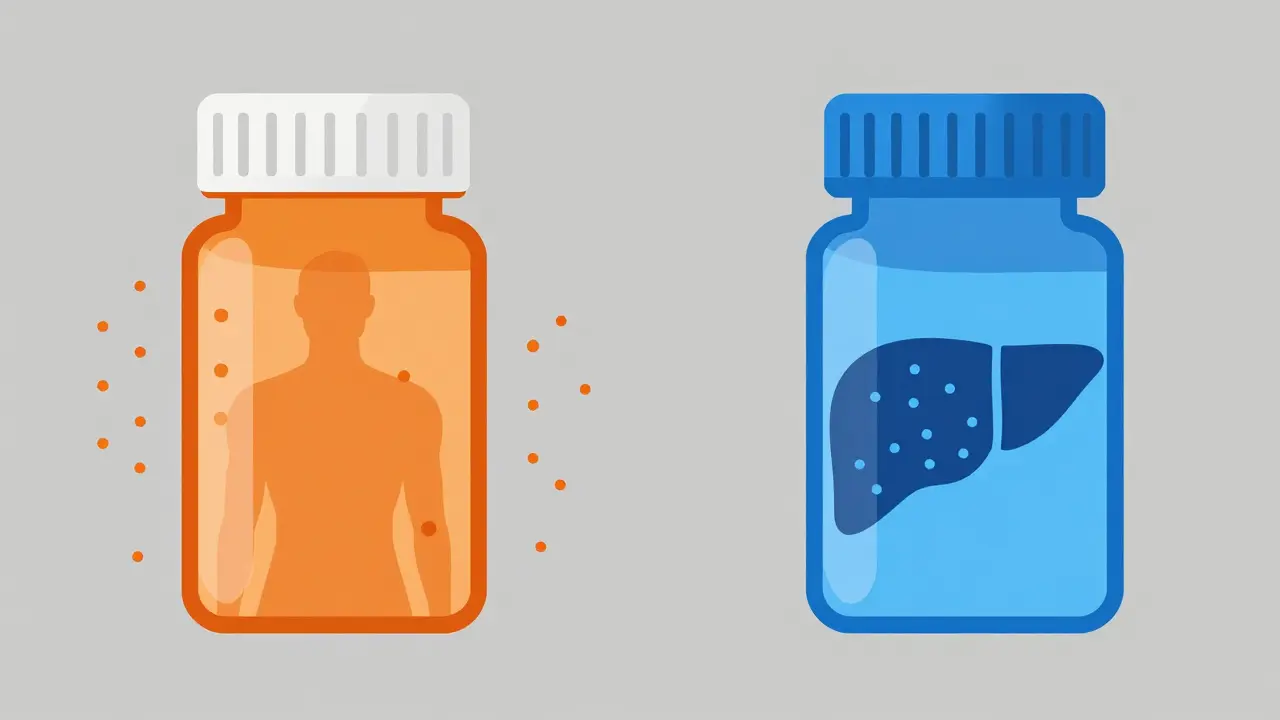
| Hydrophilic | Pravastatin, Rosuvastatin | Actively transported into hepatocytes (liver cells) | Lower risk of muscle symptoms; often better tolerated |
Switching from a lipophilic statin to a hydrophilic one, such as rosuvastatin, is a common first-line strategy. Cleveland Clinic’s 2022 outcomes data showed a 72% success rate with hydrophilic statin switching. Another powerful tool is intermittent dosing. Because some statins like rosuvastatin have long half-lives, taking them twice a week can achieve LDL-C reductions of 20-40% while maintaining tolerability in 76% of previously intolerant patients, as demonstrated in a 2021 study of 1,247 patients.
When Statins Fail: Non-Statin Alternatives
For the small percentage of patients who cannot tolerate any statin regimen, non-statin therapies are essential. The ACC/AHA 2018 guidelines recommend adding nonstatin cholesterol-lowering therapy for completely intolerant patients. Ezetimibe is typically the first choice. It costs around $35 monthly and has been proven to reduce major cardiovascular events by 6% in the IMPROVE-IT trial. It works by blocking cholesterol absorption in the gut, offering a complementary mechanism to statins.
If ezetimibe isn’t enough, newer agents come into play. Bempedoic acid (Nexletol), approved by the FDA in 2020, targets the same metabolic pathway as statins but only in the liver, avoiding muscle tissue entirely. In the CLEAR Outcomes trial involving 14,032 patients, it demonstrated an 18% LDL-C reduction without increased muscle-related adverse events. While effective, cost is a barrier, with prices around $491 per month. For high-risk patients, PCSK9 inhibitors like evolocumab offer potent LDL lowering but carry significant annual costs ($5,850), often requiring insurance appeals.
Diagnostic Tools and Monitoring
Accurate diagnosis relies on more than just patient reports. Clinics use biochemical markers to guide decisions. The Lipid and Lipoprotein Advisory Committee (LLAC) uses creatine kinase (CK) levels to categorize severity. CK elevations greater than 7 times the upper limit of normal (ULN) or ≥1000 IU/L trigger immediate therapy modification. The 2018 Statin Intolerance Clinical Guide established a four-category system:
- Category A: CK <4x ULN without SAMS (Continue therapy)
- Category B: CK 4-10x ULN without SAMS OR CK <4x ULN with SAMS (Monitor closely)
- Category C: CK ≥10x ULN without SAMS OR CK 4-10x ULN with SAMS (Modify therapy)
- Category D: CK ≥10x ULN with SAMS (Stop statin immediately)
Patient-reported outcomes are equally critical. Documentation requirements include detailed symptom diaries tracking location, severity on a 0-10 scale, and temporal relationship to statin use. The ACC’s Statin Intolerance Tool, launched in March 2023, integrates these patient-reported outcomes with risk calculators to help clinicians weigh ASCVD risk-reduction benefits against potential adverse effects.
Real-World Success and Patient Experience
Does this structured approach actually work for patients? Yes. User experiences from specialized clinics highlight significant improvements in adherence. On Reddit’s r/Cardiology forum, user 'HeartPatient87' shared: "After being labeled statin intolerant for 5 years, the lipid clinic at Johns Hopkins had me on rosuvastatin 5mg twice weekly with CoQ10 - LDL dropped from 142 to 89 without muscle pain." This anecdote reflects broader data: Kaiser Permanente’s internal survey showed 82% of patients in their statin intolerance program successfully resumed lipid-lowering therapy, compared to just 45% in non-specialized care.
However, challenges remain. Wait times for specialty appointments average 6-8 weeks, and insurance barriers for non-statin therapies affect 44% of high-risk patients. Despite these hurdles, the multidisciplinary team approach-often including lipid specialists, pharmacists, and dietitians-yields better results. The Cleveland Clinic model showed 22% better outcomes when pharmacists led the rechallenge process, emphasizing the value of expert medication management.
Finding a Specialist Near You
Not every cardiologist runs a formal statin intolerance protocol. As of Q2 2024, 63 of the 100 largest U.S. health systems have implemented formal protocols, but adoption varies widely. Academic medical centers lead with 87% having formal protocols, versus only 42% of community hospitals. When seeking care, look for keywords like "lipid specialist," "advanced lipid clinic," or "cardiometabolic health" rather than just general cardiology. Ask specifically if they follow NLA or ACC guidelines for statin intolerance, including rechallenge protocols and access to non-statin therapies.
How do I know if I have true statin intolerance?
True statin intolerance is confirmed when muscle symptoms resolve after stopping the statin and return upon restarting it (rechallenge). Symptoms typically involve symmetric, proximal muscle pain beginning 2-4 weeks after initiation. Only 5-15% of patients reporting side effects have confirmed intolerance; many others experience nocebo effects or unrelated conditions.
Can I take statins less frequently to avoid side effects?
Yes, intermittent dosing is a validated strategy for long-half-life statins like rosuvastatin. Taking them twice weekly can lower LDL cholesterol by 20-40% while maintaining tolerability in 76% of patients who previously couldn't handle daily doses. This should only be done under medical supervision.
What are the best non-statin alternatives?
Ezetimibe is the first-line non-statin therapy due to its low cost and proven cardiovascular benefit. Bempedoic acid (Nexletol) is another option that lowers LDL without muscle side effects. For very high-risk patients, PCSK9 inhibitors are highly effective but expensive and may require insurance pre-authorization.
Do statin intolerance clinics cover insurance?
CMS reimbursement rules now cover 80% of lipid specialist visits for statin intolerance management under 2023 Medicare Part B updates. However, coverage for non-statin medications like bempedoic acid or PCSK9 inhibitors varies significantly by insurer and often requires prior authorization.
Is CoQ10 supplementation helpful for statin side effects?
While some patients report relief with CoQ10 supplementation, clinical evidence is mixed. It is often used as an adjunctive therapy in specialized clinics, particularly alongside intermittent dosing regimens, but it is not a standalone cure for statin-associated muscle symptoms.