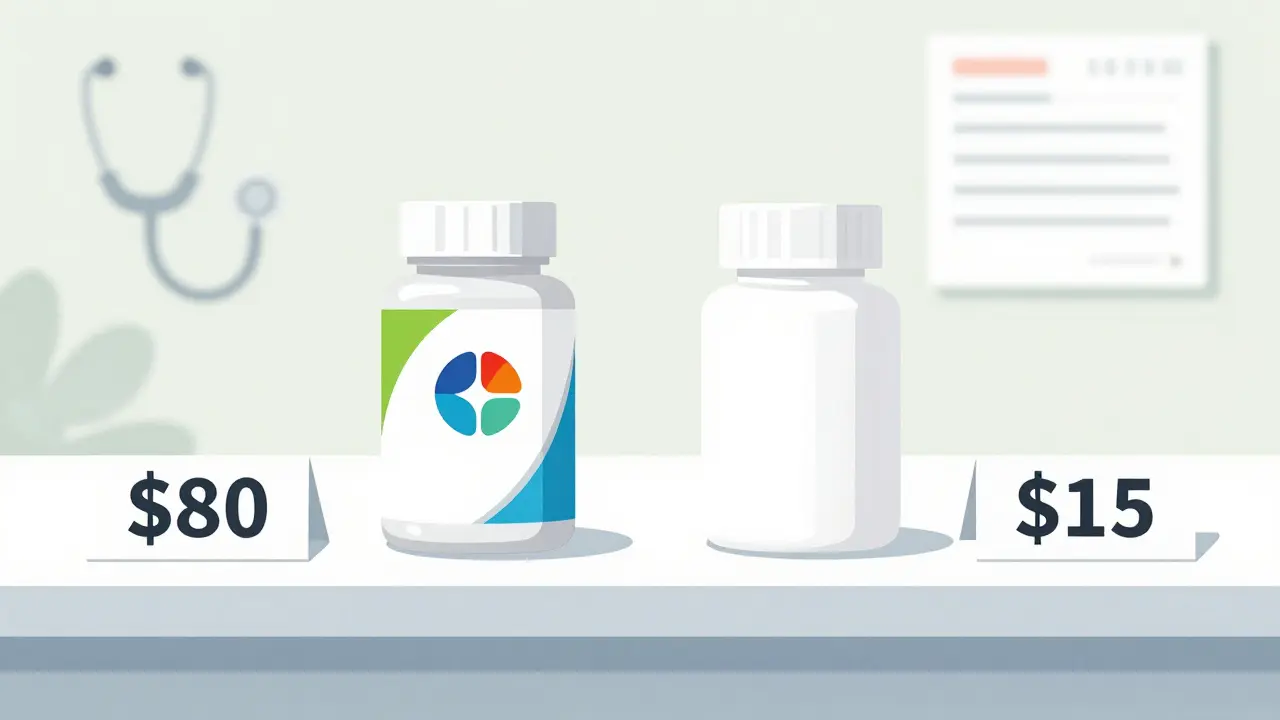
When you pick up a prescription, you might see two pills that look completely different-one with a fancy logo, another plain and white. One costs $80. The other, $15. You might wonder: Is the cheaper one just as good? If you’re choosing between a brand-name drug and an authorized generic, the answer is simpler than you think.
What exactly is an authorized generic?
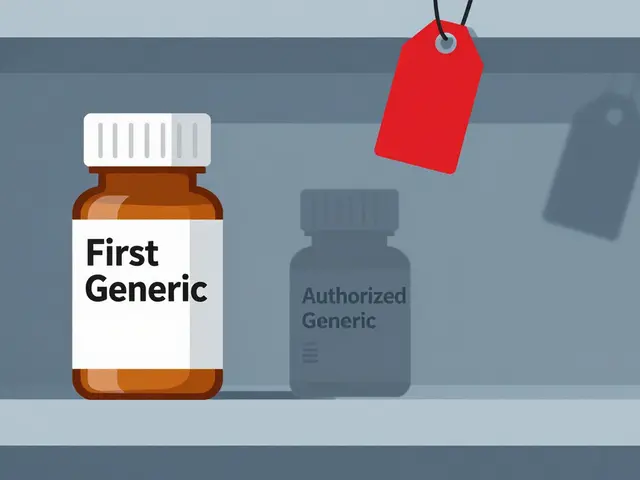
An authorized generic isn’t a copy. It’s the exact same pill, made in the same factory, with the same ingredients, by the same company that made the brand-name version. The only difference? No brand name on the label. The U.S. Food and Drug Administration (FDA) defines it clearly: an authorized generic is a brand-name drug sold without the brand name. That’s it. No reformulation. No shortcuts. No hidden changes. It’s the same batch of medicine, just packaged differently. This isn’t some loophole. It’s a legal, regulated practice that started after the Hatch-Waxman Act of 1984. Brand companies began offering authorized generics to stay competitive after their patents expired. Instead of losing all market share to cheaper generics, they’d sell their own product under a plain label-at a lower price. Unlike traditional generics, which go through a separate approval process (ANDA), authorized generics use the original brand’s approval (NDA). That means they skip the bioequivalence studies because they don’t need to prove they’re similar-they are the same.How do they compare to traditional generics?
Traditional generics must prove they work the same way as the brand. That means showing their drug gets absorbed into the bloodstream at nearly the same rate and amount. The FDA requires the absorption levels to fall within 80-125% of the brand’s. That’s a wide range. It’s legal. But it leaves room for small differences. Authorized generics don’t have that uncertainty. They’re not just similar-they’re identical. Same active ingredient. Same inactive ingredients (fillers, dyes, coatings). Same manufacturing process. Same factory. Same quality control. That matters for people who are sensitive to inactive ingredients. Some traditional generics change their fillers to cut costs. That can cause stomach upset, allergic reactions, or weird side effects in rare cases. Authorized generics don’t change anything. If you tolerated the brand, you’ll tolerate the authorized generic. And here’s the kicker: authorized generics aren’t even listed in the FDA’s Orange Book-the official list of approved generics. Why? Because they’re not generics by definition. They’re the brand product with a different label.Are they really as effective?
Yes. And the data backs it up. A major study published in PMC in 2018 tracked over 5,000 patients who switched from brand-name drugs to generics. Researchers used authorized generics as the gold standard for comparison because they’re the closest thing to the original drug. The results? No meaningful difference in hospital visits, emergency room trips, or how often people stopped taking their meds. Even the tiny difference they found-slightly higher ER visits for authorized generics-was likely due to random noise, not drug performance. The study concluded: “Generics were clinically no worse than their brand comparator.” Real-world patient feedback supports this. A survey by the Asthma and Allergy Foundation of America found 87% of people using the authorized generic version of Singulair reported exactly the same results as the brand. Only 8% noticed minor differences-and those were tied to the pill’s shape or how the inhaler felt, not how the drug worked. GoodRx users gave authorized generics an average 4.6 out of 5 rating. Ninety-two percent said they’d recommend them to a friend. Kaiser Permanente tracked 8,342 patients. Their adherence rate-how consistently people took their meds-was 94% for authorized generics versus 92% for the brand. No statistical difference. No drop in effectiveness.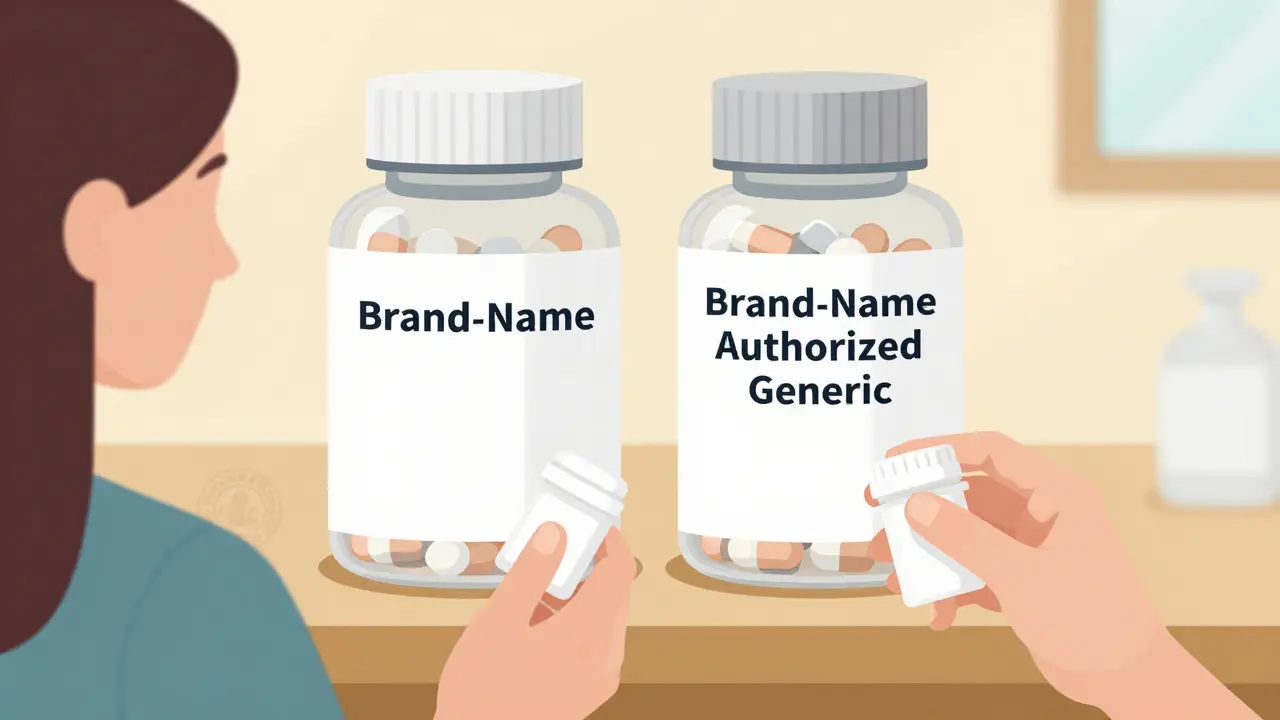
Why do some people think they’re different?
Because of the label. If you’ve been on the same brand for years, switching to a pill that looks nothing like it can feel risky. You’ve trusted that logo. That color. That shape. When it changes, your brain says, “This isn’t the same.” Pharmacists sometimes add to the confusion. A 2022 survey of Reddit users in r/pharmacy found 15% had been told by their pharmacist that an authorized generic was “different” or “not the same.” That’s wrong. It’s the same drug. The pharmacist just didn’t know. Insurance companies also play a role. Many plans push traditional generics because they’re cheaper. But authorized generics often cost only $10-$30 more than those-and sometimes even less than the brand. If your plan puts authorized generics in the same tier as traditional generics, your copay might be identical.Are they cheaper?
Yes, but not always the cheapest. Authorized generics typically cost 15-30% less than the brand-name version. That’s a big saving. But traditional generics can be even cheaper-often 10-20% less than authorized generics. So why choose the authorized one? Because you’re trading a small price difference for total certainty. No guesswork. No risk of different fillers. No wondering if your body will react differently. If you’ve had bad reactions to other generics in the past, or if you’re on a critical medication like blood thinners, seizure drugs, or thyroid medicine, the extra peace of mind is worth it.
What’s the catch?
There isn’t one. But availability is limited. Only about 20-25% of brand-name drugs have an authorized generic version. That’s because the brand company has to choose to make one. Not every company does. Some prefer to let traditional generics take over the market. As of 2022, there were 387 authorized generics on the U.S. market. That number is growing. Sixty-eight percent of top-selling brand drugs launched an authorized generic within six months of patent expiry. The market is worth $18.7 billion and growing at nearly 10% a year. That’s not a fluke. It’s because patients and doctors are starting to realize: this isn’t a compromise. It’s the real thing.What should you do?
Ask your pharmacist: “Is there an authorized generic for this?” If there is, ask for it. You don’t need a new prescription. Just say: “I’d like the authorized generic version, if available.” Check your insurance formulary. Many plans treat authorized generics the same as traditional generics, so your copay won’t be higher. Don’t assume the cheapest option is the best. If you’ve had trouble with other generics, or if you’re on a medication where consistency matters, go for the authorized version. It’s the brand, without the brand price tag.Final thought: It’s not about saving money. It’s about knowing you’re getting the same medicine.
You wouldn’t buy a fake Rolex and call it the same as the real one. But when it comes to medicine, we’ve been taught to accept “close enough.” Authorized generics prove that’s not true. The best generic isn’t the cheapest. It’s the one that’s identical. If you’re switching from a brand to a generic, and you want zero risk, zero surprises, zero doubt-ask for the authorized version. It’s not a substitute. It’s the original.Are authorized generics the same as brand-name drugs?
Yes. Authorized generics are made by the same company, in the same factory, with the exact same ingredients and manufacturing process as the brand-name drug. The only difference is the label-no brand name, no logo. They are legally and scientifically identical.
Why are authorized generics cheaper than brand-name drugs?
They’re cheaper because they don’t carry the marketing, advertising, and research costs of the brand. The manufacturer already recouped those expenses during the patent period. Selling the same drug under a plain label lets them offer it at a lower price while still making a profit.
Do authorized generics have the same side effects as the brand?
Yes. Since they contain the exact same active and inactive ingredients, their side effect profile is identical. If you had no issues with the brand, you shouldn’t have any with the authorized generic. Some people report minor differences due to pill shape or coating, but not because of the drug’s effect.
Can I trust authorized generics for serious conditions like heart disease or epilepsy?
Absolutely. Authorized generics are used in critical conditions worldwide. Studies show no difference in hospitalizations, emergency visits, or medication adherence compared to brand-name drugs. For medications where precision matters-like blood thinners or seizure drugs-authorized generics are often the preferred choice because they eliminate any uncertainty about formulation.
Why aren’t all drugs available as authorized generics?
It’s a business decision. Only the original manufacturer can produce an authorized generic. Some companies choose not to, preferring to let traditional generics dominate the market. Others wait to see if demand is high enough. As of 2022, only about 20-25% of brand drugs had an authorized version available.
How do I know if my prescription has an authorized generic?
Ask your pharmacist. You can also check websites like GoodRx or the FDA’s database (though it doesn’t list authorized generics directly). If your brand-name drug has an authorized version, the pharmacy’s system will show it as an option under the same generic name but labeled as “authorized generic.”
Do insurance plans cover authorized generics?
Yes. Most insurance plans treat authorized generics the same as traditional generics, placing them in the lowest cost tier. Your copay will usually be the same as for a regular generic-and far less than the brand-name version.



Lauren Wall January 20, 2026
So let me get this straight-you’re telling me I’ve been overpaying for years because I trusted the logo? I feel like a sucker. But hey, at least now I know. Thanks for the wake-up call.
Kenji Gaerlan January 22, 2026
idk why ppl make this so complicated. its just a pill. if it works, it works. stop overthinkin. also why does the label matter? 🤷♂️
Akriti Jain January 23, 2026
😂 ohhhh so the pharma giants are just selling their OWN drug under a different label?? what a scam. next they’ll say the ‘generic’ aspirin is actually just Bayer with the logo scratched off. 🤨 where’s my tinfoil hat? this is how they control us. also, did you know the FDA is owned by Big Pharma? 🤫💊
Mike P January 24, 2026
Listen, I’ve been prescribing meds for 22 years and I’ve seen everything. You wanna talk about bioequivalence? Let me tell you about that one time a patient switched to a generic and started hallucinating because the filler was lactose and they were undiagnosed. But authorized generics? That’s the gold standard. No fluff, no guesswork. If you’re on warfarin or levothyroxine and you’re not asking for the authorized version, you’re playing Russian roulette with your thyroid. And don’t even get me started on how lazy pharmacists are-they don’t even know the difference. Sad. But true.
Jasmine Bryant January 24, 2026
Wait, so if the authorized generic is the exact same thing, why isn’t it listed in the Orange Book? That’s kinda weird… I looked it up and it seems like the FDA doesn’t classify it as a generic at all, which makes sense technically but is confusing for patients. Also, I just checked my last prescription-my pharmacy offered the authorized version but didn’t explain it. Should I ask for it every time now? 🤔
Liberty C January 26, 2026
How quaint. You treat medicine like a luxury handbag-‘Oh, this one has the logo, so it’s *authentic*.’ How utterly pedestrian. The only thing more absurd than paying $80 for a pill is believing the brand name gives it moral superiority. The real tragedy? You’re not saving money-you’re funding the very corporate machinery that turns human health into a profit margin. Your peace of mind? Bought. With interest. And a side of delusion.
shivani acharya January 26, 2026
Okay, so let me get this straight-big pharma makes the same pill, puts a plain label on it, and calls it a ‘generic’? And we’re supposed to be grateful? 🤡 They’re not being generous-they’re *manipulating* the market. They know people are scared of ‘generic’ so they make their own version look less scary. Meanwhile, they’re still making billions off the brand name. And the FDA? They’re in on it. Did you know the guy who approved this stuff used to work for Pfizer? Coincidence? I think not. And don’t even get me started on how they quietly replace fillers in the ‘cheap’ generics-my cousin’s dog got sick after switching. I’m not saying it’s the same pill, I’m saying the system is rigged. 💔
Mike P January 28, 2026
@7040 You’re not wrong about the system being rigged-but the authorized generic is still the *least* rigged option. If you’re gonna be paranoid, at least be paranoid smart. The brand’s own factory? Same batch? That’s the closest thing to a guarantee you’ll ever get. The ‘cheap’ generics? Those are the ones with the mystery fillers. I’ve seen patients switch from a generic to an authorized one and their cholesterol levels stabilize. No magic. Just chemistry. Stop the drama. Ask for the authorized version. It’s not a conspiracy-it’s science.