Cyclosporine vs. Tacrolimus Side Effect Comparator
Compare the most common side effects between these two powerful immunosuppressive medications. Select both drugs to see a detailed breakdown.
Tacrolimus
Prograf, Envarsus, Astagraf XL
Used in 85% of kidney transplantsBest for: Better graft survival rates (92% at 1 year)
Watch for: Diabetes, tremors, GI issues
Cyclosporine
Neoral, Gengraf
Discovered in 1970Best for: Lower diabetes risk, less neurotoxicity
Watch for: Gum overgrowth, excess hair growth
Side Effect Comparison Chart
Based on clinical data from OPTN/UNOS reports and peer-reviewed studies
| Side Effect | Tacrolimus | Cyclosporine | Clinical Note |
|---|
📋 Key Takeaway
Tacrolimus is generally preferred due to superior organ survival rates, despite higher risks of diabetes and neurological symptoms.
Cyclosporine may be chosen when cosmetic concerns or pre-existing diabetes risk factors are present.
Always discuss your specific health profile with your transplant team before making any medication decisions.
Important Disclaimer
This tool provides general educational information only. Individual side effect risks vary based on medical history, dosage, and other factors. Never change or stop taking your immunosuppressive medication without consulting your transplant physician.
You’ve got the new kidney, heart, or liver. You’re home. But now you have to take those pills every single day. Calcineurin inhibitors are powerful immunosuppressive drugs like Cyclosporine and Tacrolimus that prevent organ rejection by blocking T-cell activation. They are the backbone of modern transplantation. Without them, your body would attack its new organ within days. But these drugs come with a heavy price tag in side effects.
If you are taking CNIs, you are likely worried about what they are doing to your body. Are the tremors normal? Why is my blood sugar spiking? Is this hair growth permanent? Understanding the difference between Cyclosporine and Tacrolimus isn't just academic-it’s essential for managing your quality of life. One might cause diabetes while the other makes you grow excess hair. Knowing which drug causes which problem helps you advocate for yourself when talking to your transplant team.
How Calcineurin Inhibitors Work (And Why They Hurt)
To understand the side effects, you first need to know what these drugs actually do. Think of your immune system as an army. When it sees a foreign object-like a transplanted kidney-it sends out soldiers called T-lymphocytes. These soldiers release chemical signals, specifically interleukin-2, to rally more troops to destroy the "invader."
Tacrolimus is a macrolide compound derived from Streptomyces tsukubaensis bacteria, approved by the FDA in 1994 for organ transplantation. It was discovered in 1984 by Fujisawa Pharmaceutical. Cyclosporine, discovered earlier in 1970 by Jean-Frédéric Borel at Sandoz, works similarly. Both drugs block a protein called calcineurin. By stopping calcineurin, they stop the signal to make interleukin-2. No signal means no army. The organ stays safe.
The problem is that calcineurin does other things too. It helps regulate blood flow in your kidneys, controls insulin release from your pancreas, and affects nerve function in your brain. When you block it broadly to save your organ, you disrupt all these other systems. That is where the side effects come from. It’s not a bug; it’s a feature of how broad-spectrum these drugs are.
The Kidney Risk: Nephrotoxicity
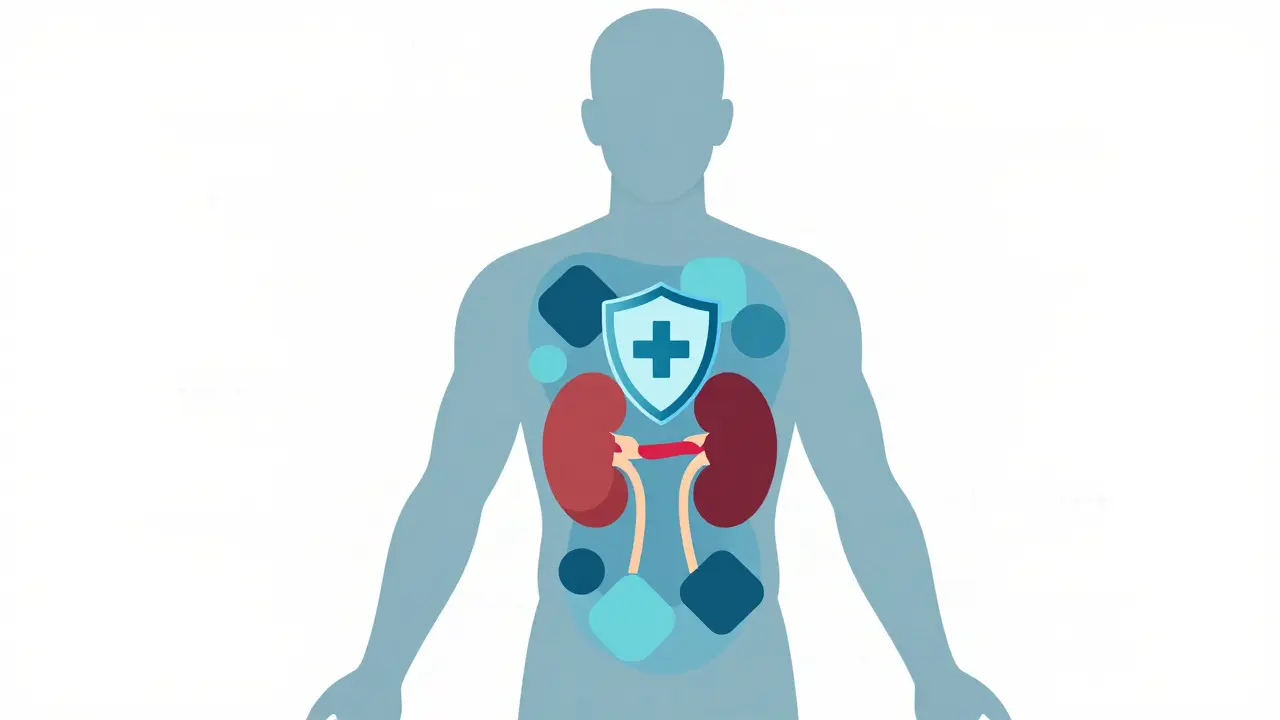
The most serious concern with both Cyclosporine and Tacrolimus is damage to the kidneys. This is ironic because we often use them to save a failing kidney through transplant. According to a 2021 systematic review in the American Journal of Transplantation, nephrotoxicity occurs in 25% to 75% of patients.
There are two types of kidney damage:
- Acute Nephrotoxicity: This happens quickly after starting the drug or increasing the dose. It causes reversible narrowing of the small arteries feeding the kidney (afferent arterioles). Your creatinine levels jump up-usually 20% to 50% above baseline. If your doctor lowers the dose, the kidney function usually recovers.
- Chronic Nephrotoxicity: This develops over years. It leads to scarring (interstitial fibrosis) and tubular atrophy. This damage is irreversible. A landmark study by Naesens et al. found that chronic exposure to these drugs accounted for 38% of late graft losses in kidney recipients.
This is why your medical team monitors your blood work so closely. They are trying to find the "minimum effective dose"-the lowest amount of drug that keeps your immune system quiet without killing your kidney.
Tacrolimus vs. Cyclosporine: The Side Effect Showdown
While both drugs belong to the same class, their side effect profiles are quite different. Choosing one over the other often depends on your personal risk factors. For example, if you already have prediabetes, Tacrolimus might be a harder sell. If you hate seeing changes in your appearance, Cyclosporine might bother you more.
| Side Effect | Tacrolimus Incidence | Cyclosporine Incidence | Key Difference |
|---|---|---|---|
| New-Onset Diabetes | 15-30% | 5-15% | Tacrolimus is significantly more diabetogenic due to direct toxicity to pancreatic beta cells. |
| Neurological Tremor | 30-70% | 10-25% | Tacrolimus crosses the blood-brain barrier more easily, causing worse shakes. |
| Hirsutism (Excess Hair) | Rare | 20-30% | A classic Cyclosporine issue; can be cosmetically distressing but harmless. |
| Gingival Hyperplasia | Rare | 15-25% | Gum overgrowth specific to Cyclosporine; requires strict dental hygiene. |
| Nausea/Diarrhea | 30-45% / 25-40% | 15-25% / 10-20% | Tacrolimus users report significantly more gastrointestinal upset. |
| Hypertension | 50-70% | 50-70% | Both drugs raise blood pressure equally via vasoconstriction. |
Data from the 2023 OPTN/UNOS report shows that despite these side effects, Tacrolimus is used in 85% of kidney transplants compared to only 10% for Cyclosporine. Why? Because Tacrolimus offers better graft survival rates (92% vs 85% at one year). Doctors accept the higher risk of diabetes and tremors because the organ lasts longer.
Managing Neurotoxicity: Tremors and Beyond
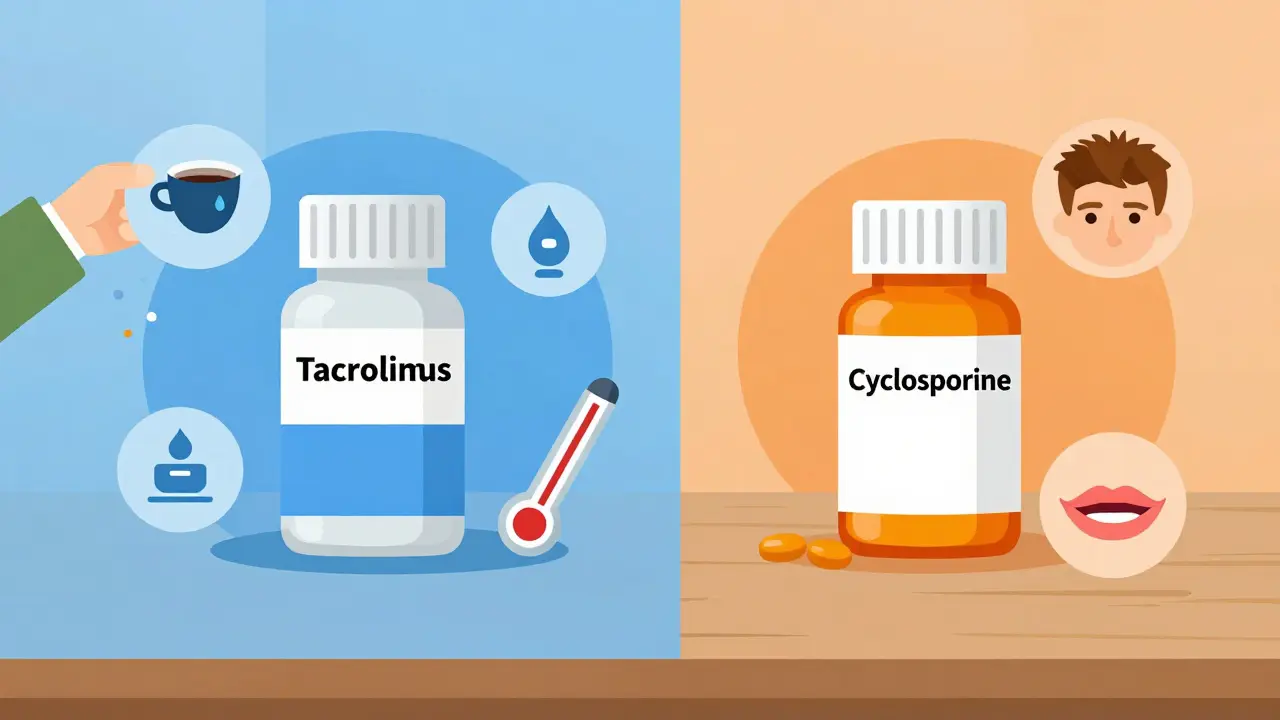
If you are shaking, you are not alone. Neurotoxicity affects 15% to 40% of patients. Tacrolimus is the main culprit here. A 2020 meta-analysis showed postural tremors occur in up to 70% of Tacrolimus users. It’s that shaky hand when you try to hold a cup of coffee.
It’s not just tremors. Some patients experience headaches, insomnia, or even severe cognitive issues. In extreme cases, like the case reported by van der Lee et al. in Practical Neurology, patients developed parkinsonism-a condition resembling Parkinson’s disease with stiffness and slow movement. Fortunately, this often improves when the drug is switched or the dose is lowered.
Pro Tip: If tremors are affecting your daily life, ask your doctor about lowering your trough levels. Reducing Tacrolimus levels from the standard 8-10 ng/mL down to 3-5 ng/mL resolved tremors in 78% of patients in a recent study. Never adjust your dose yourself, but bring this data to your appointment.
The Diabetes Connection
This is the big one for many patients. Post-transplant new-onset diabetes mellitus (PTDM) is a major complication. As noted earlier, Tacrolimus impairs the ability of your pancreas to secrete insulin. It directly damages the beta cells. Cyclosporine causes insulin resistance instead, which is generally less damaging to the cells themselves.
If you have a family history of diabetes, high BMI, or are of certain ethnic backgrounds (such as Hispanic, African American, or Asian), you are at higher risk. Dr. Jayme Locke from UCLA emphasizes weighing the 8-12% reduction in rejection risk against the 10-15% increase in diabetes risk when choosing Tacrolimus.
Management involves early detection. The International Consensus Guidelines recommend starting SGLT2 inhibitors (a class of diabetes drugs that also protect the heart and kidneys) at the first sign of impaired glucose tolerance. In trials, this reduced progression to full-blown diabetes by 38%.
Cosmetic and Gastrointestinal Issues
Let’s talk about the stuff that doesn’t kill you but ruins your day. If you are on Cyclosporine, watch your gums and your hair. Gingival hyperplasia (gum overgrowth) happens in 15-25% of users. It looks scary but is manageable with excellent dental hygiene and professional cleanings. Hirsutism (excessive hair growth) affects up to 30% of users. It’s harmless, but shaving or laser removal becomes part of your routine.
If you are on Tacrolimus, prepare for stomach trouble. Nausea and diarrhea are far more common than with Cyclosporine. Taking your medication with food (if your formulation allows) or splitting the dose can sometimes help. Proton pump inhibitors might be prescribed to manage acidity, but check with your pharmacist first as some interact with CNIs.
Electrolyte Imbalances: Magnesium and Potassium
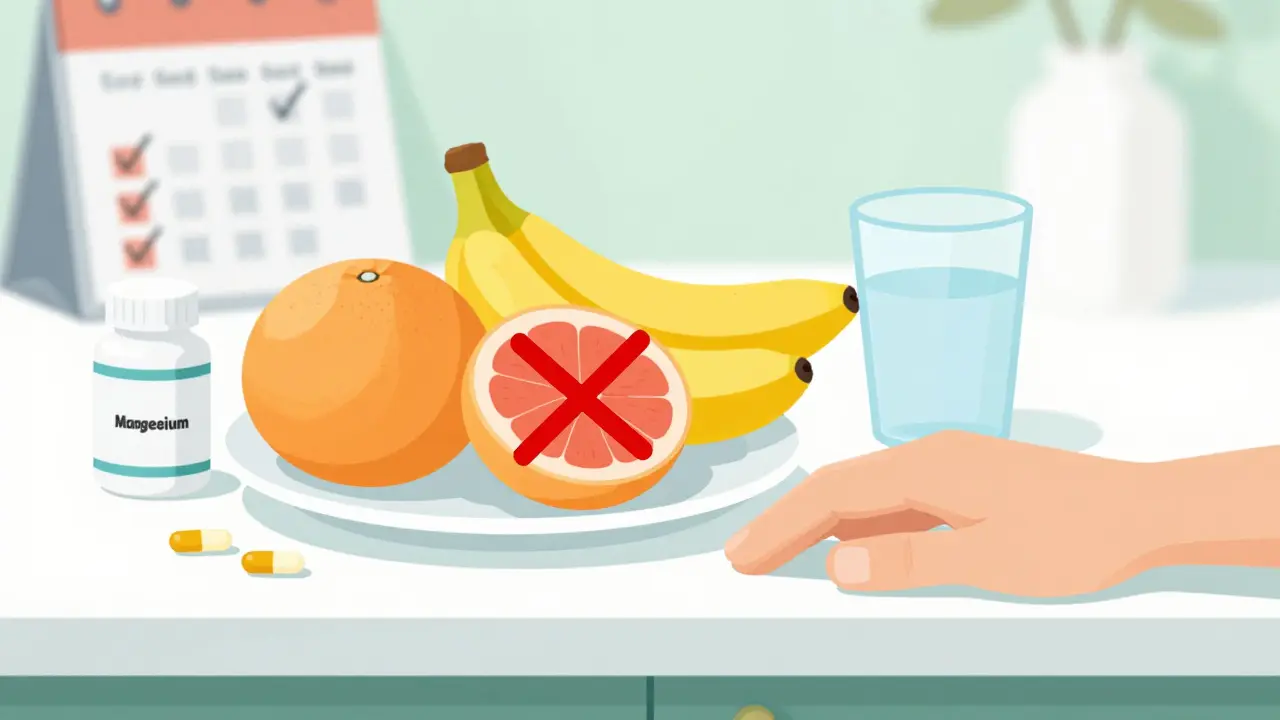
Both drugs mess with your electrolytes. You will likely develop hypomagnesemia (low magnesium) and hyperkalemia (high potassium). Low magnesium affects 40-60% of patients. Symptoms include muscle cramps, weakness, and irregular heartbeat. The KDIGO guidelines recommend supplementing magnesium to keep levels above 1.8 mg/dL. High potassium is dangerous for the heart, so you may need to limit high-potassium foods like bananas and oranges, or take binders like patiromer.
Monitoring and Future Options
You cannot manage these drugs without monitoring. The American Society of Transplantation mandates twice-weekly serum creatinine checks when starting, moving to monthly once stable. Blood levels of the drug itself (trough levels) must be checked weekly during adjustments.
Are there alternatives? Yes. Belatacept is a CNI-free option that showed equivalent graft survival in the CONVERT trial but with better kidney function. Voclosporin, a newer CNI approved for lupus nephritis, has a lower rate of hypertension. Clinical trials like CIRT-T2 are testing early withdrawal of CNIs in low-risk patients. The goal is shifting from "maximum tolerated dose" to "personalized minimization."
Your transplant team wants your organ to last, but they also want you to feel good. If side effects are unmanageable, ask about switching agents or adding steroid-sparing protocols. Communication is your best tool.
Can I switch from Tacrolimus to Cyclosporine if I get diabetes?
Yes, conversion is possible and often recommended. Since Tacrolimus is more diabetogenic, switching to Cyclosporine can help stabilize blood sugar levels. However, Cyclosporine has its own risks, including higher rates of gum overgrowth and hirsutism. Your doctor will carefully monitor your rejection markers during the switch.
Will the tremors go away if I stop taking the medication?
In most cases, yes. Tremors caused by Tacrolimus are usually dose-dependent. Lowering the dose or switching to Cyclosporine often resolves the shaking within weeks. However, never stop taking your immunosuppressant abruptly, as this can lead to acute organ rejection.
What foods should I avoid while on Calcineurin Inhibitors?
You must strictly avoid grapefruit and Seville oranges, as they inhibit the enzyme CYP3A4 that breaks down these drugs, leading to toxic levels in your blood. Additionally, due to the risk of hyperkalemia, you may need to limit high-potassium foods like bananas, potatoes, and avocados depending on your blood test results.
Is gingival hyperplasia reversible?
Mild gum overgrowth can sometimes be reversed with improved oral hygiene and professional cleaning. However, significant overgrowth often requires surgical removal (gingivectomy). Switching from Cyclosporine to Tacrolimus can also help prevent further growth, though existing tissue may not fully shrink back.
How long do I have to take these medications?
For most solid organ transplant recipients, Calcineurin Inhibitors are taken for life to prevent chronic rejection. However, emerging protocols for low-risk patients are exploring early withdrawal or minimization strategies. Always follow your specific transplant center's long-term maintenance plan.