Medication Risk Assessment Calculator
Enter medications you or a loved one is currently taking. This tool will assess your risk for medication-related frailty and side effects.
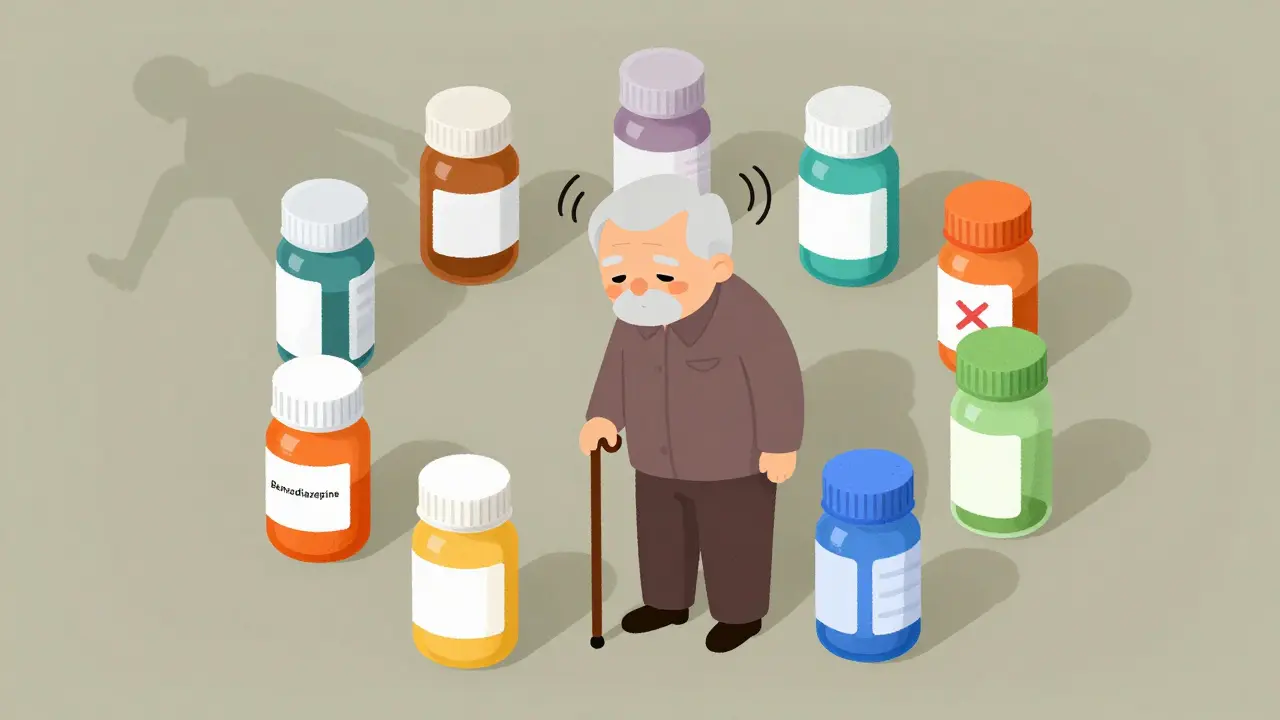
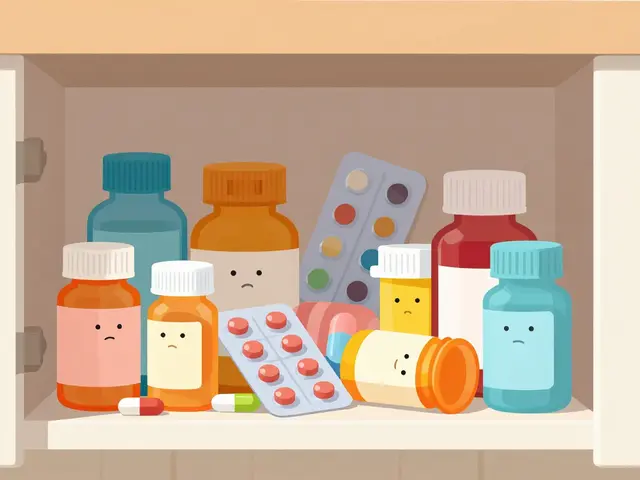
Imagine taking eight different pills every day-some for blood pressure, others for arthritis, cholesterol, diabetes, and sleep. Now imagine feeling dizzy, weak, and constantly constipated. You’re not sure if these symptoms are from aging… or from the pills themselves. This isn’t rare. It’s the daily reality for hundreds of thousands of older adults in North America. Frailty and polypharmacy don’t just coexist-they feed each other, creating a dangerous cycle that increases falls, hospital stays, and early death.
What Frailty Really Means (And Why It’s More Than Just Getting Older)
Frailty isn’t just being slow or tired. It’s a measurable medical condition. The most widely used definition-the Fried frailty phenotype-looks at five specific signs: unintentional weight loss, feeling exhausted most days, weak grip strength, walking slower than usual, and low physical activity. If you have three or more of these, you’re frail. One or two? You’re prefrail. None? You’re robust.
Here’s what most people don’t realize: frailty isn’t just a result of aging. It’s often triggered by too many medications. A 2023 study found that for every extra pill an older adult takes, their chance of becoming frail goes up by 12%. That’s not a small risk. It’s a direct, dose-dependent effect. And it’s not just about the number of pills-it’s about which ones. Drugs like benzodiazepines for sleep, anticholinergics for overactive bladder, and certain painkillers can directly weaken muscles, slow balance, and drain energy.
Polypharmacy: When More Pills Don’t Mean Better Health
Polypharmacy means taking five or more medications daily. Hyper-polypharmacy? Ten or more. These numbers aren’t just statistics-they’re red flags. Between 1999 and 2018, the percentage of older U.S. adults on five or more drugs jumped from 23.5% to 44.1%. Among those with heart disease, it’s over 60%. Women are more likely than men to be on multiple meds. People with less education and non-Hispanic White individuals also show higher rates.
But here’s the problem: most of these drugs weren’t prescribed with the whole person in mind. One doctor treats your blood pressure. Another handles your arthritis. A third manages your depression. No one steps back to ask: Is this whole list safe together? The result? Drug interactions, duplicate prescriptions, and side effects that get blamed on "old age."
Studies show that 75% of people on five or more medications are already frail or prefrail. And it works the other way too-frail people are more likely to be prescribed more drugs because they have more symptoms, more doctor visits, more hospitalizations. It’s a spiral.
The Hidden Cost: Side Effects You Can’t Ignore
Side effects from multiple medications aren’t just annoying-they’re deadly. In nursing homes, 78% of residents on eight or more drugs report at least one adverse event every month. The top three? Dizziness (62%), falls (45%), and constipation (73%).
Constipation might seem minor, but in frail older adults, it can lead to bowel obstruction, urinary retention, and even delirium. Dizziness? That’s a fall waiting to happen. And falls are the leading cause of injury-related death in people over 65. One fall can mean a hip fracture, months in rehab, loss of independence, and often, death within a year.
And it’s not just physical. A 2023 survey found that 68% of older adults on five or more medications struggle to keep track of them. Over 40% skip doses because the regimen is too confusing. Some stop taking blood pressure pills because they feel fine. Others skip pain meds because they’re afraid of addiction. Without clear guidance, people make dangerous choices out of confusion-not disobedience.
Deprescribing: The Quiet Revolution in Geriatric Care
The solution isn’t more pills. It’s fewer. And smarter ones. That’s where deprescribing comes in.
Deprescribing isn’t about stopping all meds. It’s about removing the ones that do more harm than good. It’s a structured process: review, discuss, monitor. And it works.
The EMPOWER trial in Canada showed that 76% of older adults who tried deprescribing successfully stopped at least one unnecessary medication. No serious side effects. And 32% reported better quality of life. They slept better. Felt less foggy. Walked more.
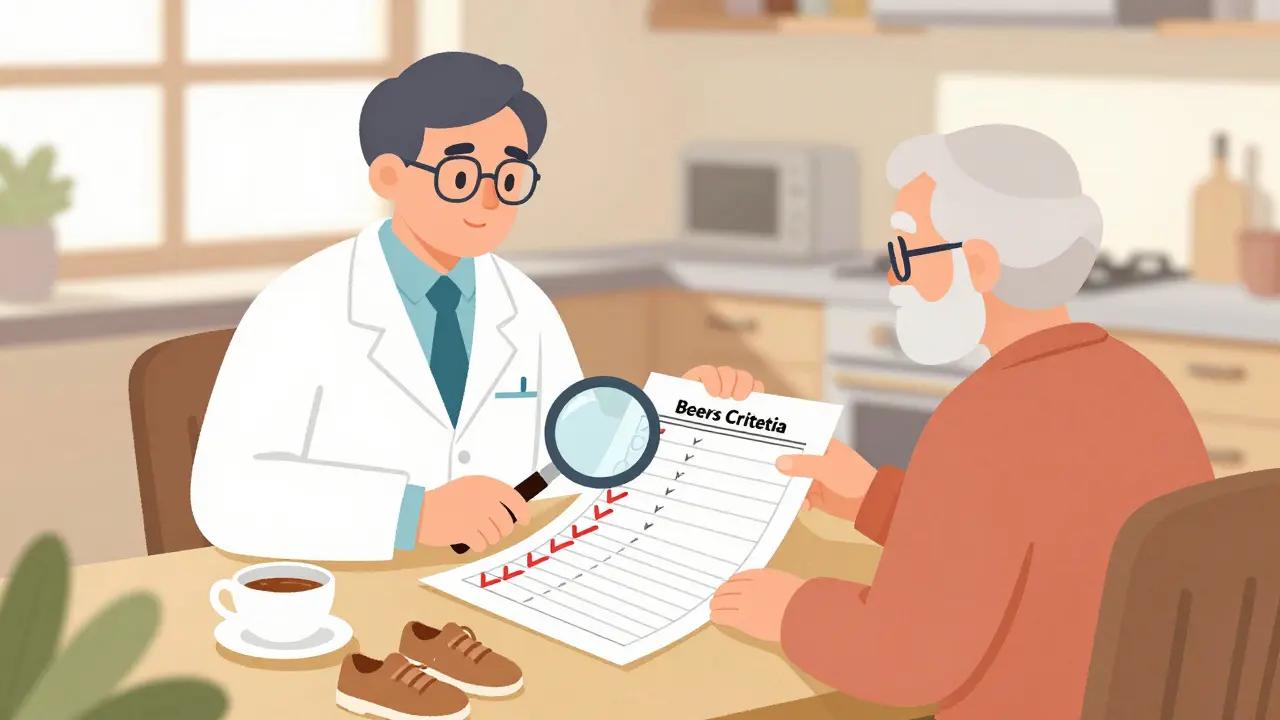
There are tools to help. The Beers Criteria (updated in 2019) lists drugs that are risky for older adults-like long-acting benzodiazepines and certain antihistamines. The START/STOPP guidelines do the same, but also flag important drugs that are missing. For example, a frail older adult on six pills might not be getting a vitamin D supplement or a flu shot-both proven to reduce falls and infections.
One proven method is Dr. Cynthia Boyd’s 3-Step Deprescribing Method:
- Review the full list-every prescription, OTC, supplement-with a pharmacist or geriatrician (10-15 minutes).
- Discuss with the patient: What’s working? What’s bothering you? What do you want to keep? (20-30 minutes).
- Monitor closely for 4-6 weeks after stopping a drug-watch for rebound symptoms or improvement (5-10 minutes, then follow-up).
This approach reduced inappropriate medications by 28% in six months-with 92% of patients sticking with the plan.
Why Doctors Don’t Always Deprescribe (And What You Can Do)
Most doctors want to help. But they’re stuck. A 2023 survey found that 61% of primary care physicians rarely review medication lists for deprescribing because they don’t have time. A patient comes in with five complaints, and each one gets a new prescription. There’s no system to pause and reassess.
Fragmented care makes it worse. If you see five specialists, you might get five different medication lists. No one talks to each other. Electronic health records rarely flag dangerous combinations. Only 38% of U.S. hospitals have STOPP/START criteria built into their systems.
Patients also fear stopping meds. Many think, “If my doctor prescribed it, it must be necessary.” They worry about withdrawal, rebound symptoms, or being seen as difficult.
Here’s what you can do:
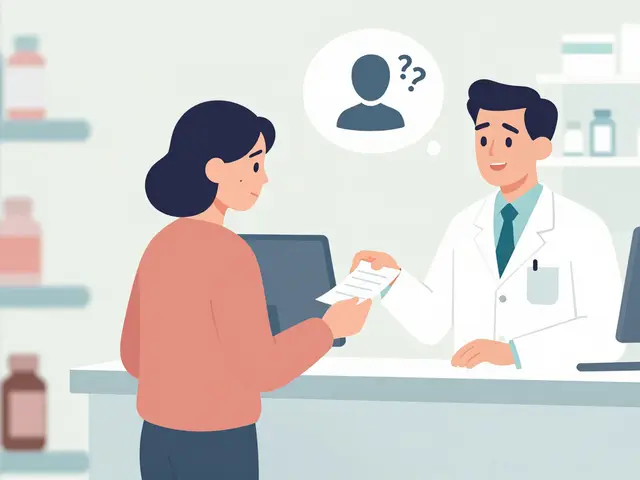
- Bring a complete list of everything you take-including vitamins, supplements, and OTC painkillers-to every appointment.
- Ask: “Is this still necessary? Could any of these be causing my dizziness or fatigue?”
- Request a pharmacist consult. Pharmacist-led medication reviews reduce adverse events by 34%.
- Ask about the 4Ms Framework: What Matters, Medication, Mentation, Mobility. It’s now used in over 2,800 U.S. hospitals.
New Tools, New Hope
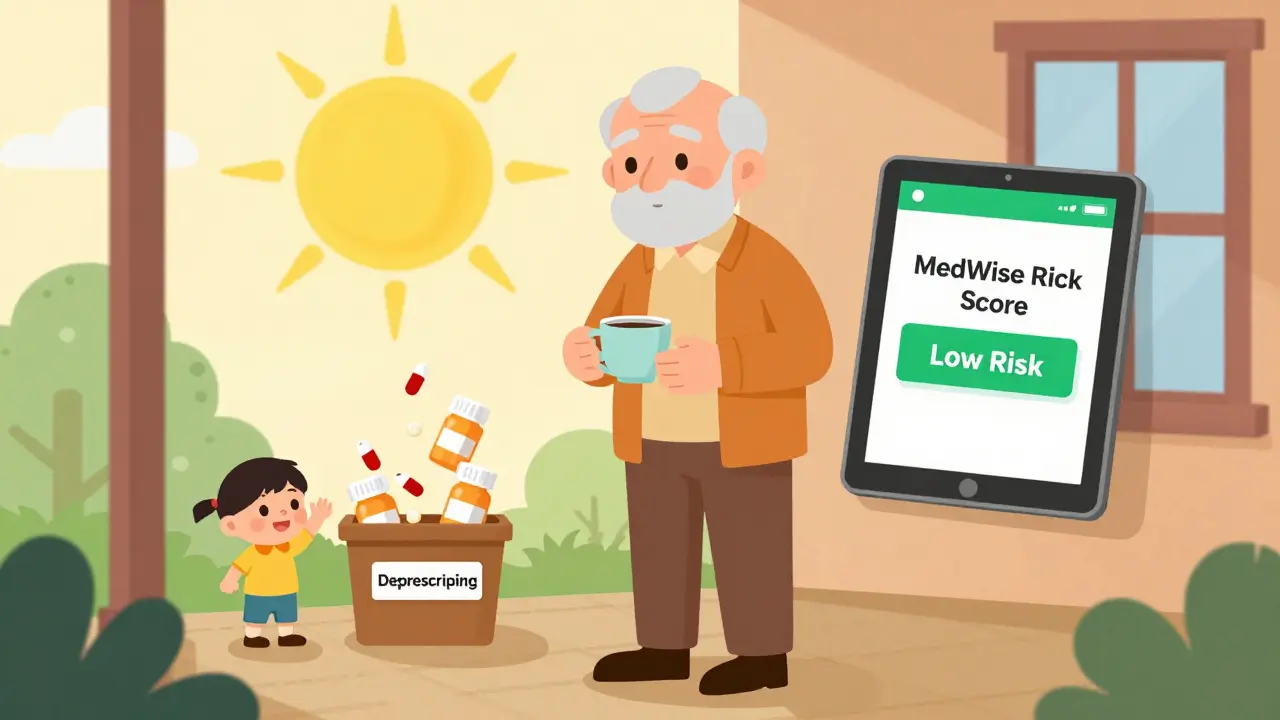
Technology is catching up. In January 2024, the FDA approved the first AI-powered deprescribing tool: MedWise Risk Score. It analyzes all your meds and predicts your risk of side effects with 37% fewer adverse events in clinical trials.
Apps like Medisafe and Round Health help older adults track doses, set reminders, and share reports with their doctors. Over 3.5 million people use them.
And change is coming at the system level. Medicare Advantage plans now require annual medication reviews. The WHO is pushing for a 50% reduction in severe medication harm by 2030. The NIH is funding a $15 million study (FRAIL-PHARM) to test a pharmacist-led intervention in frail older adults.
Here’s the bottom line: reducing medication burden in frail older adults isn’t just about safety-it’s about dignity. It’s about being able to walk to the mailbox, sit on the porch with a cup of tea, or play with your grandkids without feeling drugged up or dizzy.
Every pill you stop that doesn’t help is one less burden. One less fall. One more day of living well.
What to Do Next
If you or someone you care for is on five or more medications and feels tired, weak, or unsteady:
- Make a full list of every medication, including doses and why it was prescribed.
- Schedule a medication review with a geriatrician or clinical pharmacist. Ask your primary care doctor for a referral.
- Bring this list to the appointment-and ask: “Which of these can we safely stop?”
- Don’t stop anything on your own. But do ask for a plan to taper safely.
- Track how you feel over the next 4-6 weeks. Improved energy? Better balance? Less constipation? That’s progress.
Frailty and polypharmacy aren’t inevitable. They’re treatable. And the first step isn’t adding more drugs-it’s asking, Which ones can we take away?
What is the difference between polypharmacy and hyper-polypharmacy?
Polypharmacy means taking five or more medications daily. Hyper-polypharmacy is when someone takes ten or more. The risk of side effects, falls, and hospitalization rises sharply at the 10-pill mark. Studies show that people on 10+ drugs are over twice as likely to be frail compared to those on fewer than five.
Can deprescribing make me sicker?
In most cases, no. Deprescribing is done slowly and carefully under medical supervision. The goal is to remove drugs that are no longer helping-or are causing harm. The EMPOWER trial found that 76% of older adults safely stopped at least one medication without negative effects. Some even felt better-more energy, clearer thinking, fewer falls. The real risk is staying on unnecessary drugs.
Why do older adults end up on so many medications?
Multiple doctors, each treating one condition, often don’t communicate. A cardiologist prescribes a blood thinner. A rheumatologist adds a painkiller. A psychiatrist prescribes a sleep aid. No one looks at the full picture. Also, guidelines often push for treating each disease separately, not the whole person. And when symptoms appear, the default is often to add another drug instead of stepping back.
Are over-the-counter (OTC) drugs part of the problem?
Absolutely. Many older adults take OTC meds daily-antacids, sleep aids like diphenhydramine, pain relievers like ibuprofen. These are often not tracked in medical records. But they can interact with prescriptions and cause serious side effects. Diphenhydramine, for example, is an anticholinergic linked to confusion, constipation, and increased frailty risk. Always include OTCs and supplements in your medication list.
How can I find a geriatric pharmacist?
Ask your primary care doctor for a referral. Many hospitals and community pharmacies now offer medication therapy management (MTM) services, especially for Medicare patients. You can also search for geriatric pharmacists through the American Society of Consultant Pharmacists (ASCP) or contact your local Area Agency on Aging. These services are often covered by Medicare Part D.





Sharon Biggins January 24, 2026
i’ve been watching my mom go through this and it’s heartbreaking. she’s on 11 meds and barely walks to the kitchen without getting dizzy. no one ever asked if any of them could be taken away. just kept adding more. i’m finally pushing for a pharmacist review next week.
John McGuirk January 24, 2026
this is all a big pharma scam. they don’t want you healthy they want you dependent. the government lets them push pills because they get kickbacks. your doctor’s just a pawn. read the dark money reports. they’ve been hiding this for decades.
Michael Camilleri January 26, 2026
people don’t understand that medicine isn’t about fixing things anymore it’s about managing profits. every pill you take is a vote for a broken system. you think you’re being cared for but you’re being monetized. stop asking for solutions and start asking who benefits. the real disease is capitalism wrapped in a white coat
lorraine england January 27, 2026
my aunt did the deprescribing thing last year and it changed everything. she stopped her benzos and that weird bladder med and suddenly she was laughing again. not drugged up. not sleepy. just her. i wish more families knew this was an option. it’s not giving up it’s getting back.
Himanshu Singh January 28, 2026
life is not a checklist of diseases. we treat organs like separate machines but the body is one song. when you add too many drugs you drown out the harmony. deprescribing is tuning the instrument again. 🌿
Luke Davidson January 29, 2026
oh my god this is so real. my dad was on 14 meds and he couldn’t remember his own birthday. we cut it down to 6 and now he’s gardening again. he said he felt like himself for the first time in 10 years. i didn’t know you could get your life back just by stopping stuff. why isn’t this common knowledge??
Shanta Blank January 30, 2026
they don’t tell you this but half the time the side effects are worse than the original problem. my grandma got prescribed a sleep pill and ended up in the ER from a fall. they blamed her age. no. they blamed the wrong pill. and now she’s in a nursing home because they never stopped the cascade. this is medical negligence dressed as care.
Jenna Allison January 31, 2026
OTC meds are the silent killers. diphenhydramine is an anticholinergic with a half-life of 8-12 hours in elderly patients. it accumulates. causes delirium. increases dementia risk. yet it’s in every sleep aid and allergy med. pharmacists see this daily. patients don’t even realize they’re taking it. always check the ingredient list.
Vatsal Patel January 31, 2026
so we’re supposed to trust doctors who prescribe 10 pills then tell us to stop one? lol. they didn’t think this through in the first place. now they want a medal for undoing their own mess. deprescribing isn’t a solution it’s damage control. and it’s too little too late for most.
Marlon Mentolaroc February 1, 2026
my mom’s pharmacist flagged 4 meds as high risk. two were for blood pressure and one was a muscle relaxant she’d been on since 2010. they all interacted. she felt better in 3 days after stopping one. turns out her dizziness wasn’t aging. it was a drug cocktail. why do we wait until someone’s falling apart to fix this?
Gina Beard February 2, 2026
the real tragedy is that no one ever asks what matters to the patient. they just keep adding pills. but if you can’t sit on the porch with your tea… what’s the point of living longer?
Don Foster February 3, 2026
anyone who takes more than 5 meds is just lazy. if they ate better exercised and slept right they wouldn’t need half of it. this isn’t medicine it’s a crutch. people today want to be fixed without changing a single habit. the system enables it and now we’re paying the price
Phil Maxwell February 5, 2026
i read this and just sat there. my uncle just passed last month. he was on 12 meds. they never talked about reducing any. i wonder if he ever felt like himself again. maybe we just assume old people are supposed to be tired. we’re wrong.
Shelby Marcel February 6, 2026
my grandma took that med for her bladder and she got so confused she forgot my name for 3 days. we thought it was dementia. turns out it was the oxybutynin. we stopped it and she remembered my name the next day. why do doctors not tell you this stuff??
Sharon Biggins February 7, 2026
you’re right about the pharmacist consult. we did it and they found two duplicates and a drug that was supposed to be stopped in 2020. they’re cutting one this week. it’s scary but also… hopeful? i didn’t think it could get better.