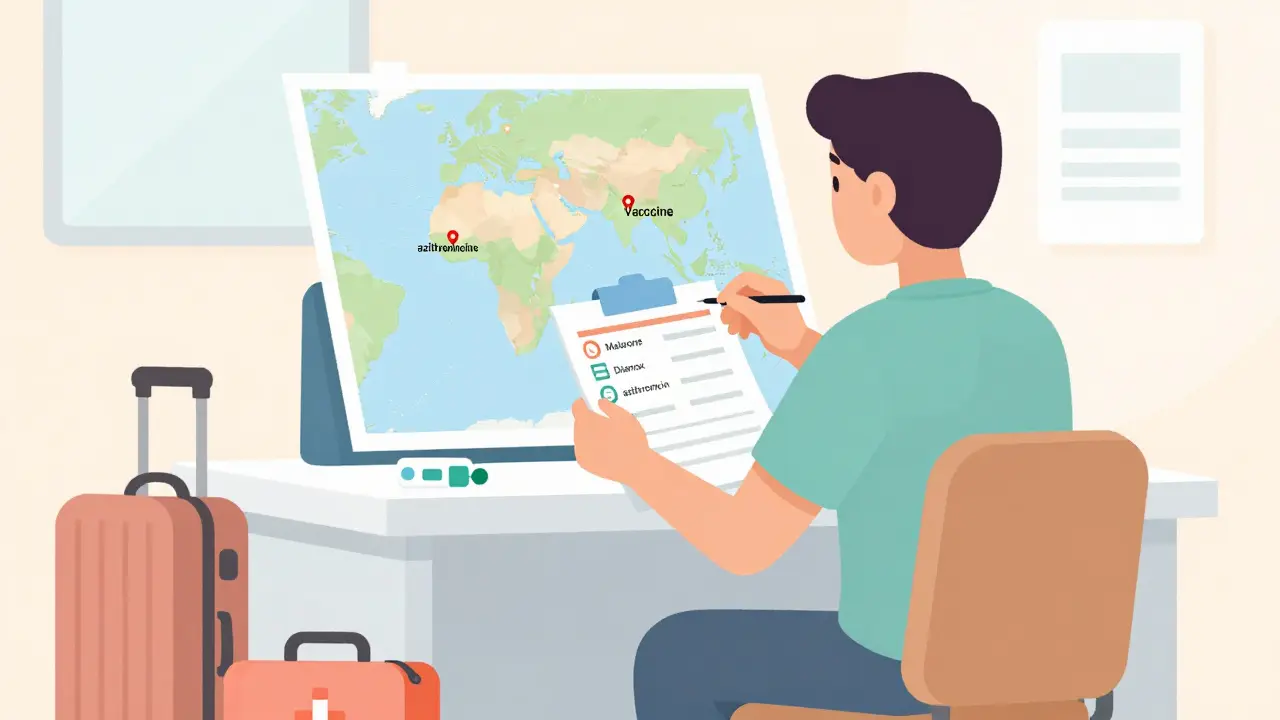
Planning a trip abroad? Don’t just pack your suitcase - pack your meds right. Many travelers skip this step and end up sick, stranded, or worse. A travel health clinic isn’t just another doctor’s visit. It’s your best shot at staying healthy overseas. These clinics specialize in one thing: making sure your body is ready for the risks of your destination. Whether you’re hiking in Nepal, visiting family in Nigeria, or lounging in Bali, the right medications can mean the difference between a smooth trip and a medical emergency.
Why Travel Health Clinics Are Different
General doctors often don’t know what’s going on in remote villages in Indonesia or the malaria zones of Ghana. Travel health clinics do. They track outbreaks, resistance patterns, and local health rules in real time. According to the CDC, travelers who visit these clinics are 63% less likely to get sick on the road. Why? Because they don’t give generic advice. They build a plan based on your exact route, length of stay, and even your medical history. For example, if you’re going to Uganda, you might need antimalarial drugs like atovaquone-proguanil (Malarone) or doxycycline. But not everyone gets the same prescription. If you have kidney issues, a history of seizures, or are pregnant, your medication changes. A travel clinic will catch that. A regular pharmacy won’t.What Happens During a Consultation
A typical visit lasts 30 to 45 minutes. You’ll walk in with your itinerary - not just the country, but the cities, the activities, and how long you’ll stay. They’ll ask: Are you camping? Will you be near livestock? Are you visiting hospitals or clinics? These details matter. The provider will check your vaccination record. You might need shots for yellow fever, typhoid, or hepatitis A. Some vaccines, like yellow fever, require administration at least 10 days before travel. And only certified clinics can give the official International Certificate of Vaccination - a document you may need to enter certain countries. As of 2024, there are 256 CDC-authorized yellow fever clinics in the U.S. If you get it anywhere else, it won’t count. They’ll also write prescriptions for medications you might need on the road:- Antibiotics for traveler’s diarrhea - Azithromycin (500 mg daily for 3 days) is commonly prescribed. It’s better than older options like ciprofloxacin because it works against more strains and has fewer side effects.
- Altitude sickness pills - If you’re heading to the Andes or Himalayas, acetazolamide (Diamox) at 125 mg twice daily, starting 1-2 days before ascent, can prevent headaches, nausea, and shortness of breath.
- Anti-malarials - Timing is everything. Mefloquine must be started 2-3 weeks before travel. Atovaquone-proguanil only needs to start 1-2 days before. Miss the window, and you’re unprotected.
When to Go - And When It’s Too Late
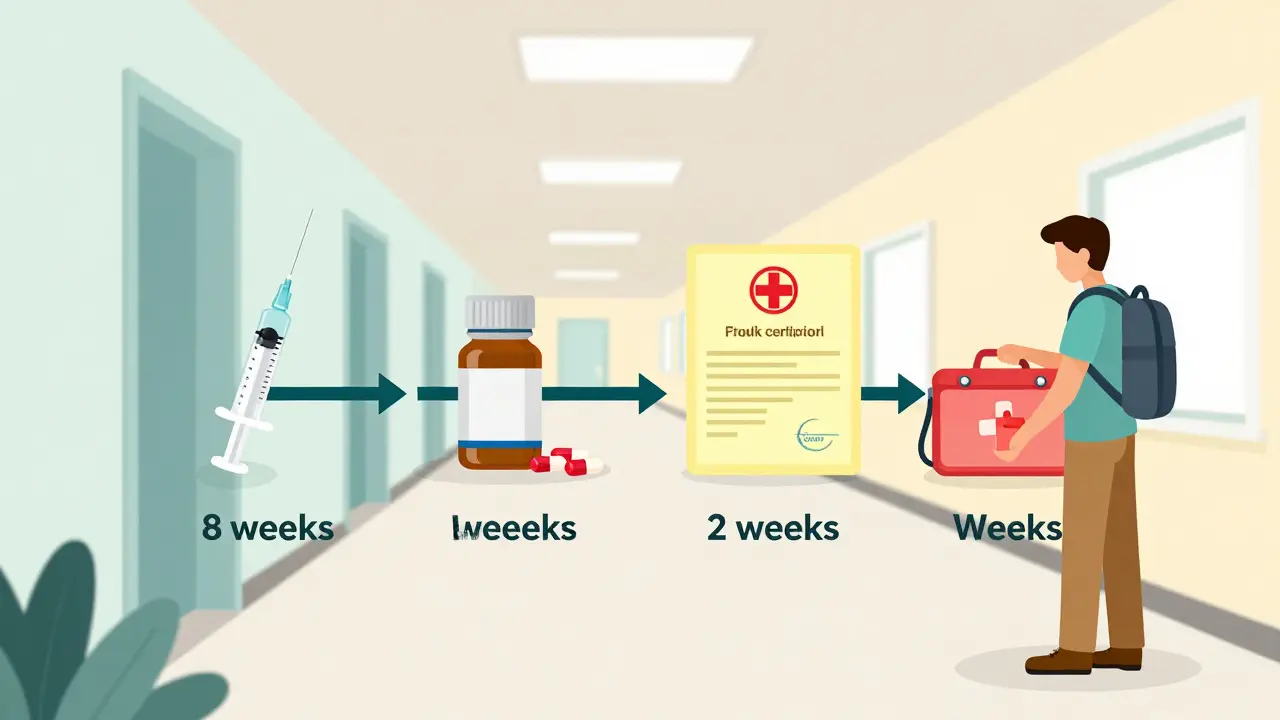
The CDC says: 4 to 8 weeks before departure. That’s not a suggestion. It’s science. Vaccines need time to work. Antimalarials need time to build up in your system. If you wait until two weeks out, you might miss out on full protection. Here’s a quick timeline:- 8 weeks out: Book your appointment. Get vaccines that need multiple doses (like rabies or Japanese encephalitis).
- 6 weeks out: Start antimalarials if required. Get your yellow fever shot if needed.
- 4 weeks out: Pick up prescriptions. Practice taking your pills on schedule.
- 2 weeks out: Final check-in. Make sure you have your vaccine certificate.
Clinic Types: What’s Best for You
Not all clinics are the same. Here’s how they break down:| Type | Cost (USD) | Insurance Coverage | Specialization Level | Best For |
|---|---|---|---|---|
| University-affiliated (e.g., UCLA, UC Davis) | $150-$250 | Usually not covered | High - complex cases, chronic illness | Long-term travelers, seniors, those with health conditions |
| Specialized private clinics | $120-$200 | Sometimes | High - full risk assessment | Adventure travelers, families, multi-country trips |
| Retail clinics (CVS, Walgreens) | $129 | Often covered | Medium - basic vaccines and meds | Short trips, healthy adults, simple destinations |
| Hospital systems (e.g., Mayo Clinic) | $180-$300 | Varies | Very high - virtual options, chronic disease support | Diabetics, immunocompromised, complex itineraries |
What to Bring to Your Appointment
Don’t walk in empty-handed. Bring:- Your full travel itinerary (dates, cities, activities)
- A list of all current medications (including supplements)
- Your vaccination record (if you have one)
- Any known allergies or past reactions to vaccines or drugs
- Details about chronic conditions (diabetes, asthma, pregnancy, etc.)
Pitfalls to Avoid
Even smart travelers make mistakes. Here are the big ones:- Skipping malaria meds - The CDC says 28% of preventable malaria cases happen because people didn’t start their pills early enough. Or they stopped too soon. You need to keep taking them for up to 4 weeks after you get home.
- Assuming your pharmacy knows - Pharmacists don’t track destination-specific risks. They’ll fill the script, but they won’t warn you if doxycycline is ineffective in your destination due to resistance.
- Not checking vaccine validity - The yellow fever certificate is valid for life now, but some countries still demand proof of recent shots. Always confirm entry rules.
- Overprescribing antibiotics - Some clinics hand out azithromycin like candy. But misuse contributes to antibiotic resistance. Only take it if you have moderate to severe diarrhea. Don’t use it as a preventative.

What’s Next? Digital Tools and AI
Travel clinics are getting smarter. Mayo Clinic now offers virtual visits with 92% completion rates for medication plans. The CDC’s 2024 Yellow Book uses real-time outbreak data to update recommendations. Stanford is even testing genetic tests to see how your body processes antimalarials - a pilot that could mean fewer side effects and better protection. By 2026, the CDC predicts 80% of clinics will use AI to match your health profile with destination risks. Imagine typing in your age, meds, and travel route - and getting a personalized plan in minutes. It’s coming.Frequently Asked Questions
Do I need a travel health clinic if I’m only going to Europe?
Yes, if you’re going to rural areas or spending time outdoors. Europe has tick-borne encephalitis in parts of Austria, Germany, and the Czech Republic. You’ll need a vaccine if you’re hiking, camping, or visiting forests. Even urban travelers benefit from advice on food and water safety, especially in Eastern Europe where typhoid and hepatitis A still occur.
Can I get all my vaccines at a regular doctor’s office?
You can get some, like hepatitis A or typhoid. But yellow fever vaccines can only be given at CDC-registered clinics. Also, general doctors often don’t stock travel-specific vaccines. You might wait weeks or be sent to a specialty pharmacy. Travel clinics have them on hand.
What if I forget my meds while traveling?
A good travel clinic will give you a backup plan. They’ll tell you how to find local pharmacies, what the medication is called in other countries, and even provide a letter explaining your prescription. Some clinics also offer digital access to your medication list via apps. Always pack extra pills - at least 20% more than you think you’ll need.
Are travel health clinics covered by insurance?
Sometimes. Vaccines may be covered under your preventive care benefits, but the consultation fee often isn’t. Retail clinics like CVS are more likely to accept insurance. University clinics usually don’t. Check with your insurer before booking. Some HSA or FSA accounts can be used to pay.
How do I find a travel health clinic near me?
Use the CDC’s Travelers’ Health website - they list all certified yellow fever clinics. You can also search by zip code on the International Society of Travel Medicine’s site. In Canada, look for clinics affiliated with major hospitals or public health units. Toronto has several, including ones at Sunnybrook and Mount Sinai hospitals.



Ernie Simsek February 11, 2026
Bro. I just got back from Bali and I didn’t even think about meds. Got hit with a 3-day stomach nightmare. 🤢 Turns out I should’ve taken azithromycin. Now I’m that guy who tells everyone to go to a travel clinic. Don’t be like me. Book it. 8 weeks out. No excuses. 🚀
Joanne Tan February 12, 2026
OMG YES!! I went to a CVS clinic last minute for my trip to Kenya and they gave me the yellow fever shot and some probiotics. I was skeptical but I didn’t get sick once! 🙌 Travel clinics are kinda magic if you let them be. Also, bring snacks. They always run out of gummies.
Stacie Willhite February 13, 2026
I’m a nurse and I’ve seen too many people come back from trips with preventable illnesses. The thing nobody talks about? The mental peace you get from knowing you’re covered. I always tell my patients: it’s not about being paranoid. It’s about being prepared. You deserve to enjoy your trip, not spend it in a clinic. 💛
Rob Turner February 14, 2026
Interesting how we treat travel like it’s a vacation, not an expedition. In the UK, we’ve got this weird thing where we think ‘Europe = safe’. But tick-borne encephalitis? It’s real. I got vaccinated after a friend got paralyzed from hiking in the Czech woods. No joke. Your body doesn’t care if you’re ‘just going to Germany’. It cares about ticks. And mosquitos. And questionable street food. 🤔
Gabriella Adams February 16, 2026
I work in global health logistics. I’ve coordinated vaccine shipments to remote clinics. Let me say this plainly: the difference between a travel clinic and a regular doctor is the difference between a Swiss watch and a flip phone. They have access to real-time outbreak data, stock specialized meds, and know the exact brand names used in 187 countries. Don’t wing it. This isn’t a suggestion. It’s a survival protocol.
Steve DESTIVELLE February 18, 2026
You know what is really happening here it is not about malaria or vaccines it is about control the system wants you to believe you need permission to travel you need a clinic to tell you what to do and then you pay for it and then you get a piece of paper that says you are allowed to go but what if you dont want to go to a clinic what if you just want to go and see the world and trust your body and your instincts what if the real danger is not the disease but the fear they sell you what if the truth is you dont need any of this and you are being manipulated into becoming a consumer of safety
Stephon Devereux February 19, 2026
I got my whole family to go to a travel clinic last year before our trip to Nepal. My 70-year-old dad had diabetes and we were hiking. The clinic gave him a custom plan, extra insulin storage tips, and even a letter in Nepali for local pharmacies. We didn’t have one single health scare. Honestly? It felt like having a personal travel guardian. Worth every penny. Now I’m pushing my coworkers to go too. You don’t just travel-you prepare.
steve sunio February 19, 2026
Lmao why are we paying 200 bucks to be told what we already know? Malaria meds? Get them online. Yellow fever? Just show up and lie. I’ve been to 12 countries and never used a clinic. Still alive. You’re not a lab rat. Stop overthinking. The world’s been around longer than CDC guidelines. Just pack ibuprofen and pray.