You might have heard of allergies or asthma, but have you ever heard of IgA deficiency? It sounds technical, but it’s actually the most common primary immune disorder out there. For many people, it’s a silent condition that never causes a problem. But for others, it can lead to serious infections, autoimmune issues, and potentially life-threatening reactions during blood transfusions.
If you’ve recently been diagnosed with Selective Immunoglobulin A (IgA) deficiency, or if you suspect you might have it, understanding what this means for your body-and specifically how it affects medical procedures-is crucial. This isn’t just about knowing a label; it’s about keeping yourself safe in emergency situations where split-second decisions matter.
What Exactly Is IgA Deficiency?
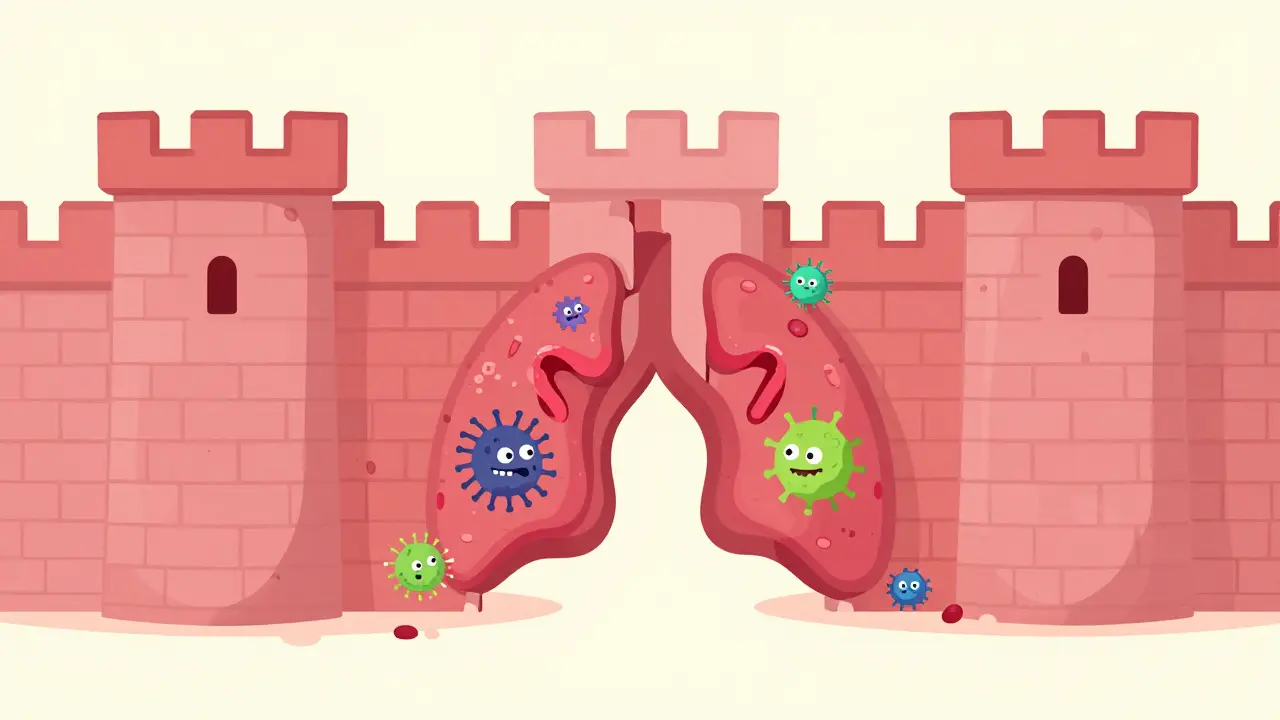
To understand the disorder, we first need to look at the player missing from the team: Immunoglobulin A, or IgA. Think of IgA as the security guard stationed at the entry points of your body. Unlike other antibodies that patrol your bloodstream, IgA is primarily found in your mucous membranes-the lining of your respiratory tract, gastrointestinal system, and urogenital tract.
Selective IgA Deficiency is defined by undetectable or extremely low serum levels of IgA (less than 7 mg/dL) while maintaining normal levels of other immunoglobulins like IgG and IgM. According to data from StatPearls (2023), this condition affects approximately 1 in 300 to 1 in 700 individuals in Caucasian populations, making it the most prevalent primary immunodeficiency.
In a healthy person, IgA makes up about 15% of total serum immunoglobulins. In someone with selective IgA deficiency, the immune system simply fails to produce enough of it. The diagnostic criteria are strict: your serum IgA must be below 7 mg/dL, while your IgG and IgM levels remain normal, and you must still show an adequate antibody response to vaccines. This distinction separates it from secondary deficiencies caused by medications like phenytoin or sulfasalazine.
Most cases are genetic. If you have a family history of this condition, your risk increases by approximately 50 times, according to the Cleveland Clinic. However, having the gene doesn't mean you'll definitely get sick. In fact, the clinical spectrum is incredibly wide.
The Silent Majority vs. The Symptomatic Few
Here is the surprising part: roughly 90-95% of people with IgA deficiency never develop symptoms. They live their entire lives without ever knowing they have the condition, often discovering it only when routine blood work is done before a surgery or pregnancy. For these individuals, no treatment is necessary.
But for the remaining 5-10%, life looks very different. These patients face significant health challenges because their mucosal defenses are compromised. Without IgA to block pathogens at the entry points, bacteria and viruses can invade more easily.
Symptomatic patients typically present with recurrent infections. Clinical data from AmeriPharma Specialty Care (2023) highlights specific patterns:
- Recurrent Sinopulmonary Infections: About half of symptomatic patients suffer here. Otitis media (ear infections) occurs in 32% of cases, sinusitis in 28%, bronchitis in 24%, and pneumonia in 18%.
- Gastrointestinal Issues: Roughly 15-20% of symptomatic patients deal with chronic diarrhea (12%), giardiasis (8%), or celiac disease (7%).
- Allergic Conditions: Approximately 25% of symptomatic patients experience allergic conjunctivitis, eczema, rhinitis, or asthma.
Autoimmune disorders are another major concern. Between 20-30% of IgA-deficient patients develop conditions like celiac disease (the most prevalent at 10-15% incidence), inflammatory bowel disease, or rheumatoid arthritis. The lack of IgA seems to confuse the immune system, causing it to attack the body's own tissues instead of external threats.
The Critical Danger: Transfusion Reactions
This is the section that requires your full attention. While daily life might be manageable for many, medical emergencies pose a severe risk. The danger lies in blood transfusions.
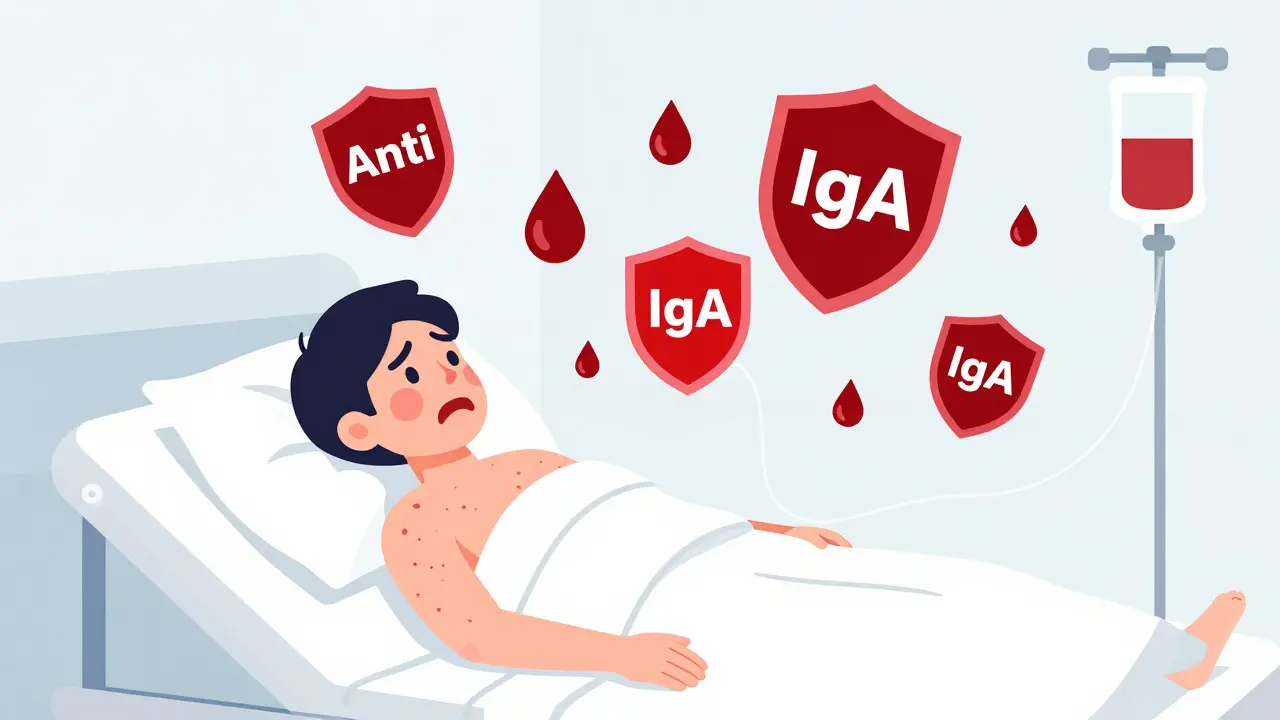
When your body lacks IgA, it may view IgA as a foreign invader. As a result, approximately 20-40% of patients with IgA deficiency develop anti-IgA antibodies. These antibodies are usually of the IgE or IgG class. Under normal circumstances, this wouldn't be a problem. However, if you receive a standard blood transfusion containing even small amounts of donor IgA, your immune system can launch a violent attack.
Anti-IgA Antibodies are immune proteins produced by some IgA-deficient patients that target and destroy foreign IgA, potentially triggering severe anaphylactic reactions during blood transfusions. MedlinePlus (2023) notes that these antibodies are present in a significant minority of patients, creating a hidden but lethal risk.
The reaction is not mild. It is anaphylaxis. Dr. James Fernandez from Cleveland Clinic Lerner College of Medicine states that "transfusion reactions in IgA-deficient patients can be fatal in up to 10% of cases when standard blood products are administered without precautions." These reactions manifest within minutes-85% of severe reactions occur during the first 15 minutes of the transfusion.
Symptoms include:
- Mild urticaria (hives) in 25% of reactions
- Life-threatening anaphylaxis in 15% of reactions
- Hypotension (systolic BP <90 mmHg) in 60% of severe cases
- Bronchospasm and cardiovascular collapse
Why does this happen? Standard blood products contain plasma, which contains IgA. When that IgA enters the bloodstream of a patient with anti-IgA antibodies, it triggers mast cells to release histamine and other inflammatory mediators rapidly, leading to shock.
How to Stay Safe: Transfusion Protocols
If you have IgA deficiency, you are not powerless. There are established protocols to keep you safe, but they require proactive management on your part. You cannot rely on every doctor knowing your history, especially in an emergency.
1. Wear Medical Alert Identification The Immune Deficiency Foundation’s 2023 clinical guidelines specify that all diagnosed patients should wear medical alert jewelry. This is non-negotiable. In 78% of severe transfusion reactions reported by UR Medicine, the incident occurred in emergency settings where the patient’s history was unavailable. A bracelet stating "Selective IgA Deficiency - Requires IgA-Depleted Blood Products" can save your life.
2. Pre-Transfusion Testing Before any elective surgery or procedure requiring blood, you must undergo testing for anti-IgA antibodies. This is typically done using an enzyme-linked immunosorbent assay (ELISA). While this test has 95% sensitivity, false negatives do occur in 5-10% of cases. Therefore, even if the test is negative, many experts recommend caution.
3. Specialized Blood Products If you are known to have anti-IgA antibodies, or if you have had a prior reaction, standard blood cannot be used. You require one of two specialized options:
- IgA-Depleted Blood Products: These contain less than 0.02 mg/mL of IgA. They are specially ordered and may take 48-72 hours to arrive.
- Washed Red Blood Cells: Regular red blood cells are washed extensively to remove 98% of the plasma (and thus the IgA). This process takes an additional 30-45 minutes in the lab.
Note that these specialized products increase transfusion costs by approximately 300%. However, cost is irrelevant compared to the risk of death.

Diagnosis and Monitoring
Getting diagnosed is straightforward but requires specific tests. Quantitative immunoglobulin testing via nephelometry or turbidimetric immunoassay is the gold standard, offering 98.5% accuracy according to UR Medicine (2023). Your doctor will look for that critical threshold: IgA < 7 mg/dL with normal IgG and IgM.
Once diagnosed, the focus shifts to monitoring for associated conditions. The 2023 International Consensus Document on Primary Immunodeficiencies recommends:
- Annual Celiac Screening: Via tissue transglutaminase antibodies, given the high comorbidity rate.
- Biannual Pulmonary Function Tests: To detect early signs of bronchiectasis, a condition where airways become permanently widened and scarred due to chronic infection.
- Quarterly Autoimmune Assessments: To catch rheumatoid arthritis or thyroid issues early.
For those who require frequent transfusions, prophylaxis protocols exist. Cleveland Clinic data shows that pre-transfusion administration of methylprednisolone (40mg IV) and diphenhydramine (50mg IV) can reduce reaction rates by 75%. This is a safety net, not a cure, and should only be used under strict specialist supervision.
Living with IgA Deficiency: Practical Tips
Living with this condition doesn't mean you’re confined to bed. Most people lead normal lives. However, anxiety is real. A 2023 survey by the Immune Deficiency Foundation found that 65% of patients experience anxiety about emergency care, and 42% have encountered providers unfamiliar with their needs.
Here is how to take control:
- Carry Documentation: Keep a wallet card detailing your diagnosis, your anti-IgA antibody status (if known), and the specific blood products you require.
- Educate Your Circle: Ensure your family, close friends, and regular healthcare providers know about your condition. Don’t assume they remember.
- Prevent Infections: Since your mucosal immunity is weak, practice rigorous hygiene. Hand washing, staying up to date on flu and pneumonia vaccines (which stimulate IgG/IgM responses), and avoiding sick contacts are vital.
- Watch for GI Symptoms: Unexplained chronic diarrhea or bloating could signal giardiasis or celiac disease. Report these to your doctor immediately rather than treating them as minor stomach bugs.
Research is moving forward. Emerging studies published in Blood Advances (2023) are exploring recombinant human IgA replacement therapy. While still experimental-with only 12 patients treated worldwide as of late 2023-it offers hope for future treatments that could restore mucosal immunity directly.
For now, knowledge is your best defense. Understanding the mechanics of your immune system and the specific risks of transfusion allows you to navigate the medical system safely. With proper precautions, 95% of IgA-deficient patients have a normal life expectancy. The key is ensuring that the 5% with complications are identified and managed correctly before a crisis occurs.
Is IgA deficiency contagious?
No, IgA deficiency is not contagious. It is a primary immunodeficiency disorder, meaning it is either genetic or acquired through internal immune system dysfunction. You cannot catch it from someone else, nor can you pass it to others through contact.
Do I need to avoid all blood transfusions?
Not necessarily. If you do not have anti-IgA antibodies, you may tolerate standard blood products. However, because testing for these antibodies can have false negatives, many specialists recommend using washed red blood cells or IgA-depleted products as a precaution for any IgA-deficient patient requiring transfusion. Always consult your immunologist before any procedure.
Can IgA deficiency be cured?
Currently, there is no cure for selective IgA deficiency. Treatment focuses on managing symptoms, preventing infections, and mitigating risks during medical procedures. Experimental therapies like recombinant IgA replacement are in clinical trials but are not yet widely available.
Why do some people with IgA deficiency have no symptoms?
The immune system is complex and redundant. Other immunoglobulins, such as IgG and IgM, can partially compensate for the lack of IgA in many individuals. Additionally, not all patients develop anti-IgA antibodies, which reduces the risk of severe transfusion reactions. This redundancy allows 90-95% of patients to remain asymptomatic.
What should I tell my doctor before surgery?
You must explicitly state that you have Selective IgA Deficiency. Provide documentation if possible. Ask if anti-IgA antibody screening has been performed. Request that the anesthesia and surgical teams be aware of the potential need for washed red blood cells or IgA-depleted plasma products in case of significant blood loss.
Does IgA deficiency affect fertility or pregnancy?
IgA deficiency itself does not directly cause infertility. However, associated autoimmune conditions like celiac disease or thyroid disorders can impact reproductive health. During pregnancy, IgA deficiency is generally well-tolerated, but careful monitoring is recommended due to slightly higher risks of certain complications. Consult a maternal-fetal medicine specialist.