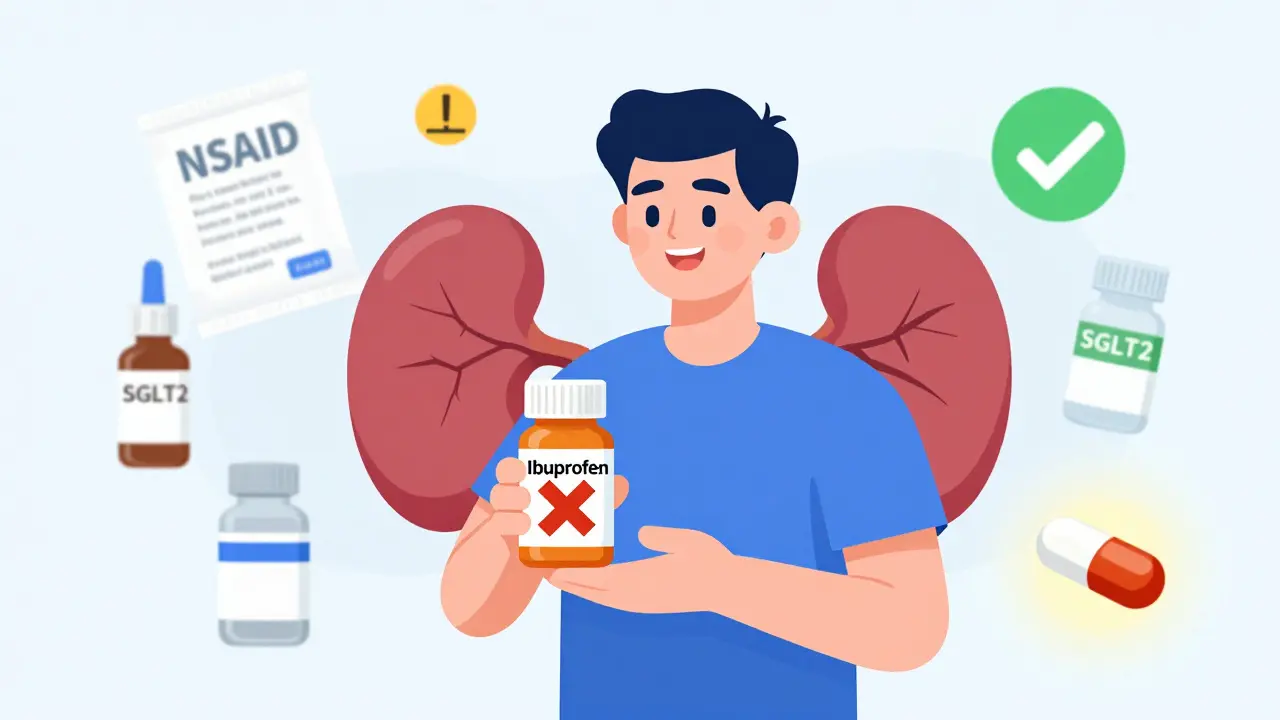
When your kidneys aren’t working well, the meds you take can turn dangerous-even if they’re safe for everyone else. It’s not just about taking less. It’s about knowing which drugs to avoid, when to change the dose, and how to spot trouble before it hits. For someone with chronic kidney disease (CKD), a simple headache pill like ibuprofen can spike creatinine overnight. A diabetes drug that’s fine at eGFR 60 can cause lactic acidosis at eGFR 28. And many doctors still miss this-especially when eGFR drops fast during illness.
Why Kidney Disease Changes Everything About Medications
Your kidneys filter about 120-150 quarts of blood every day. When they’re damaged, that filter gets clogged. Drugs that used to clear out in hours now stick around for days. That’s why a normal dose of vancomycin or gentamicin can build up to toxic levels in someone with stage 3 CKD. But it’s not just about clearance. Some drugs are outright toxic to kidney cells-called nephrotoxins. NSAIDs, contrast dyes, certain antibiotics, and even some herbal supplements can cause acute kidney injury in people with already weakened kidneys.The biggest myth? That lowering a blood pressure pill’s dose because creatinine went up is safer. It’s not. The 2024 KDIGO guidelines say clearly: if you’re on an ACE inhibitor or ARB, use the highest tolerated dose-even if creatinine rises 30%. That rise isn’t damage. It’s a sign the drug is working to protect your kidneys long-term. Skipping the full dose because you’re scared of creatinine? That’s suboptimal care.
Drugs That Need Dose Changes (and When)
Not all meds need adjustment. But many do. Here’s what to watch for:- eGFR below 60 mL/min/1.73 m²: Start reviewing all meds. This is where most adjustments begin.
- eGFR 30-59: Many antibiotics (like ciprofloxacin, amoxicillin), diuretics, and antivirals need lower doses or longer gaps between doses.
- eGFR below 30: Metformin is off-limits. Sulfonylureas (like glipizide) raise hypoglycemia risk. Vancomycin needs trough monitoring (target 10-15 mcg/mL, not 15-20).
- eGFR below 15: No standard rules. Dosing becomes guesswork without therapeutic drug monitoring. Always consult a nephrologist or pharmacist.
For example, a common antibiotic like ciprofloxacin is usually 500 mg every 12 hours. In stage 4 CKD (eGFR 15-29), it drops to 250 mg every 24 hours. Miss that change? You’re risking seizures or tendon rupture.
Nephrotoxins to Avoid at All Costs
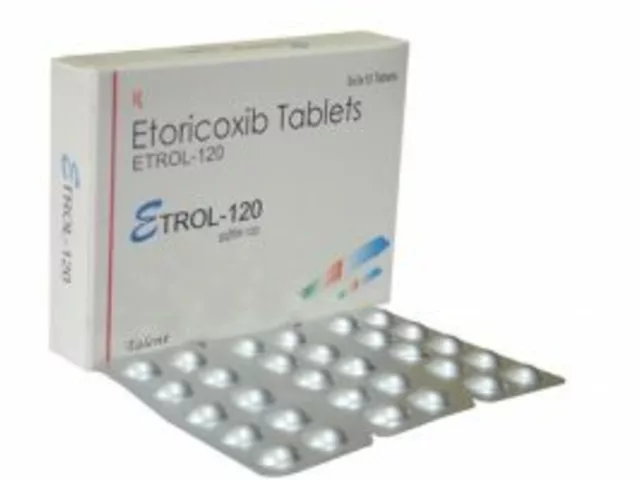
Some drugs have no safe dose in CKD. Avoid them unless there’s no alternative-and even then, monitor closely.- NSAIDs (ibuprofen, naproxen, diclofenac): These cut blood flow to the kidneys. One study found 42% of CKD patients who took NSAIDs had a sudden drop in kidney function. One Reddit user with stage 4 CKD took two Advil for a headache and saw creatinine jump from 3.2 to 5.7 in 48 hours.
- Sodium phosphate bowel prep: Used before colonoscopies. Can cause acute kidney injury. Switch to PEG-based prep (like MiraLAX).
- Contrast dye (for CT scans): Can cause contrast-induced nephropathy. Use low-osmolar agents, hydrate well, and consider N-acetylcysteine if high risk.
- Herbal supplements: St. John’s wort, licorice root, and aristolochic acid (found in some traditional remedies) are linked to kidney damage. No regulation means no safety data.
- Allopurinol: Used for gout. Can cause severe skin reactions in CKD. Start low (50 mg), go slow.
Over-the-counter meds are the biggest trap. A 2023 NIDDK survey found 68% of CKD patients didn’t know NSAIDs were risky. If you’re on dialysis, your pharmacist is your best friend. Use one pharmacy. They’ll catch interactions before you do.
The Game-Changers: SGLT2 Inhibitors and Finerenone
Here’s the good news: some new drugs don’t just survive kidney disease-they protect you from it.SGLT2 inhibitors like dapagliflozin and empagliflozin are the first major class of diabetes drugs that need no dose adjustment, even at eGFR 10. The CREDENCE trial showed a 39% drop in kidney failure, dialysis, or death from kidney disease. Even people without diabetes benefit. The 2024 KDIGO guidelines now recommend them for all CKD patients with albuminuria, regardless of diabetes status.
Finerenone is newer. If you’re already on an ACE/ARB but still have high urine albumin (UACR >30 mg/g), finerenone can cut your risk of kidney decline by another 18%. It’s not for everyone-watch potassium levels. If your potassium is above 4.8 mmol/L, skip it.
These aren’t just alternatives. They’re now first-line for protecting kidneys in diabetes and beyond.
How to Stay Safe: A Simple Checklist
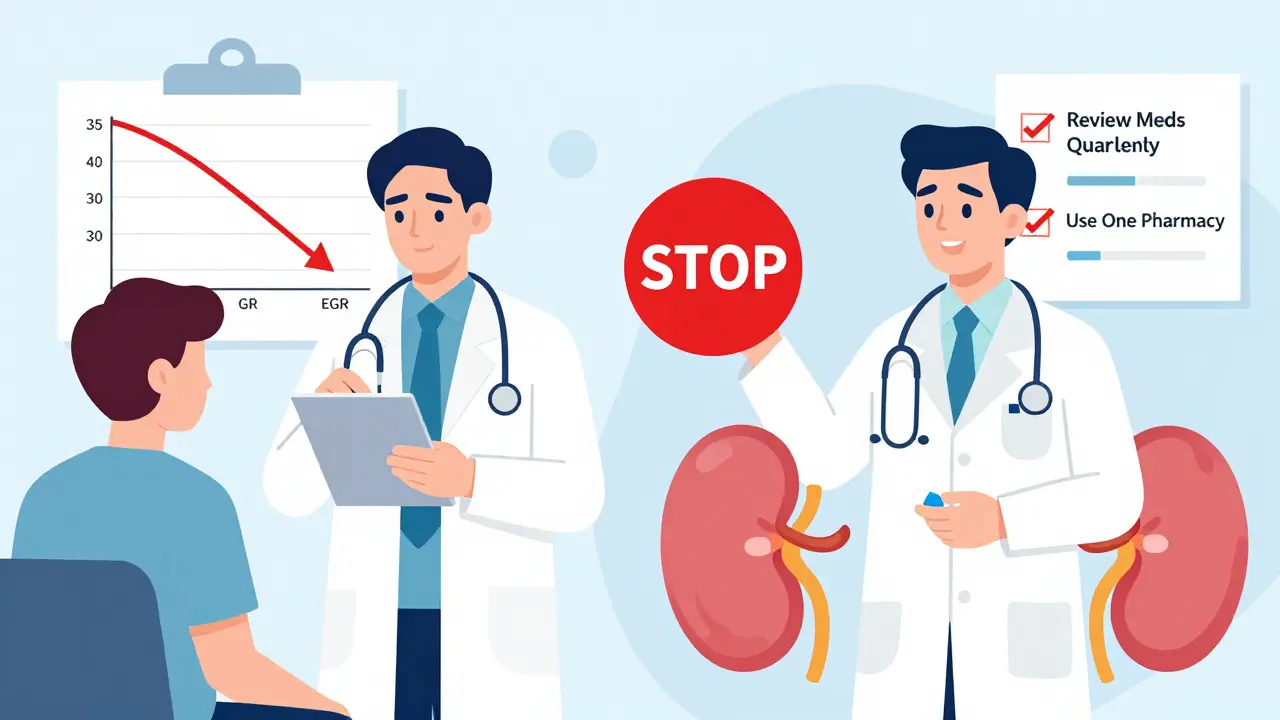
You don’t need to memorize every drug. But you do need a system.- Know your eGFR. Get it checked every 3-6 months. If it drops fast (more than 25% in a month), call your doctor. That’s an emergency.
- Review meds quarterly. Bring every pill, supplement, and OTC med to every appointment. Nephrologists do this. Primary care docs often don’t.
- Use one pharmacy. They track interactions and flag risky combos. NIDDK found this cuts medication-related AKI by 42%.
- Ask: “Is this drug cleared by the kidneys?” If yes, ask: “Do I need less?”
- Never start a new OTC med without asking. Even “harmless” antacids like Maalox contain magnesium-dangerous in CKD.
One patient on DaVita’s forum said her nephrologist used a KDIGO checklist to catch metformin still being prescribed when her eGFR dropped to 38. She avoided lactic acidosis. That’s the difference.
What Hospitals Get Wrong
Most CKD hospitalizations happen because of meds-not the disease itself. In 41% of acute care units, there’s no protocol for adjusting doses when eGFR crashes during infection or dehydration. A patient on metformin gets pneumonia, their eGFR drops from 45 to 30, and they’re still getting 1000 mg twice a day. That’s how lactic acidosis starts.The Veterans Health Administration fixed this in 2019 by building eGFR alerts into their electronic records. Inappropriate dosing dropped 37%. Other systems are slow to follow.
If you’re admitted, ask: “Will my kidney meds be reviewed?” If they say “we’ll check,” push back. Your life depends on it.
The Future: Smart Tools and Better Alerts
Apps like Epocrates Renal Dosing are used by 63% of U.S. nephrologists. But most primary care clinics don’t use them. That’s changing. The FDA is pushing for better labeling on all new drugs by 2026. And KDIGO is rolling out a free medication safety checklist for patients in mid-2026.Long-term, pharmacogenomics could tell you if your body breaks down certain drugs slower because of your genes-especially useful in CKD. Over 17 trials are already looking into this.
For now, the best tool you have is knowledge. And a good pharmacist.
Can I still take ibuprofen if I have kidney disease?
No. Ibuprofen and other NSAIDs reduce blood flow to the kidneys and can cause sudden kidney injury-even in stage 2 or 3 CKD. Use acetaminophen (Tylenol) instead for pain. If you need something stronger, ask your doctor about alternatives like low-dose tramadol or gabapentin, which are safer for kidneys.
What’s the safest diabetes medicine for kidney disease?
SGLT2 inhibitors like dapagliflozin and empagliflozin are now first-choice for most people with CKD, even without diabetes. They protect the kidneys, reduce heart failure risk, and require no dose changes. GLP-1 agonists like semaglutide are also safe and effective. Avoid sulfonylureas like glipizide-they cause dangerous low blood sugar in kidney disease.
Why does my doctor keep increasing my blood pressure pill dose even though my creatinine went up?
Because a rise in creatinine from an ACE inhibitor or ARB isn’t kidney damage-it’s a sign the drug is working. These drugs reduce pressure inside the kidney’s filtering units, which slows scarring. Clinical trials that proved their benefit used full, maximum doses. Lowering them because of creatinine is outdated and risky. Your doctor is doing the right thing.
Do I need to stop all my meds before a CT scan with contrast?
Not all, but some. Metformin should be paused 48 hours before and after the scan if your eGFR is below 45. NSAIDs should be stopped 24-48 hours before. Hydration is key-drink water before and after. Ask your nephrologist or radiologist for a written plan. Always use low-osmolar contrast, never high-osmolar.
How often should my meds be reviewed if I have CKD?
At least every 3 months if you’re in stage 3-5 CKD. More often if you’re sick, hospitalized, or your eGFR drops quickly. Every time you see a new doctor, bring a full list of everything you take-including vitamins and supplements. A 2022 study found nearly 24% of CKD patients were on at least one inappropriate med because no one reviewed their list.
Can I take herbal supplements for kidney health?
No. There’s no proven herbal remedy that helps CKD. Many-like licorice root, St. John’s wort, and certain Chinese herbs-contain compounds that damage kidneys or interfere with meds. A 2023 study found 1 in 5 CKD patients took herbal products, and 30% of those had worsening kidney function within 6 months. Stick to evidence-based treatments.



Nilesh Khedekar January 14, 2026
I can't believe people still take ibuprofen like it's candy. My uncle in Mumbai had his creatinine jump from 2.1 to 6.8 after one weekend of 'just two pills for the back pain.' Now he's on dialysis. NSAIDs aren't just risky-they're a death sentence waiting to happen. Seriously, stop it.
Gloria Montero Puertas January 15, 2026
I'm genuinely shocked that anyone would trust a 'Reddit post' to manage their renal pharmacology. This reads like a poorly cited blog post disguised as medical advice. The KDIGO guidelines? They're not gospel. And you're telling people to avoid all herbal supplements? What about Ayurveda? Or Traditional Chinese Medicine? The West has no monopoly on wisdom.
Dan Mack January 17, 2026
They’re hiding something. The FDA and Big Pharma don’t want you to know that SGLT2 inhibitors are just a repackaged diuretic with a $500 monthly price tag. They pushed this because Medicare pays for it. And watch-next month, they’ll ban metformin entirely and make you pay $1200 for 'renal-safe' alternatives. It’s all about profit. Your doctor? He’s on their payroll.
Sarah Mailloux January 18, 2026
I’ve got stage 3 CKD and this post saved my life. I was taking ibuprofen every day for my arthritis-never thought twice. After reading this, I switched to Tylenol and asked my pharmacist to do a full med review. Turned out I was still on metformin even though my eGFR was 34. They stopped it right away. Don’t wait-do this today.
Jami Reynolds January 18, 2026
The assertion that creatinine elevation on ACE inhibitors indicates therapeutic efficacy is not universally supported in the literature. Several meta-analyses suggest that a rise >30% may indeed signal hemodynamic compromise, particularly in elderly patients with bilateral renal artery stenosis. This oversimplification is dangerous.
Amy Ehinger January 19, 2026
I’ve been on dialysis for five years and I can tell you this: the one person who kept me alive wasn’t my nephrologist-it was the pharmacist at CVS who noticed my neighbor was taking the same meds as me but with a different dose. She called my doctor and said, 'Wait, this doesn’t add up.' That’s the kind of human care you don’t get in a 12-minute appointment. Find a good pharmacist. They’re your real superhero.
RUTH DE OLIVEIRA ALVES January 19, 2026
The clinical recommendations outlined herein are consistent with the 2024 KDIGO guidelines and represent a paradigm shift in nephroprotective pharmacotherapy. The integration of SGLT2 inhibitors into first-line management for albuminuric CKD, irrespective of diabetic status, is supported by robust evidence from the CREDENCE and DAPA-CKD trials. It is imperative that primary care providers adopt these protocols without delay.
Crystel Ann January 20, 2026
I’m so glad someone finally said this out loud. My mom almost died from contrast nephropathy after a CT scan. They didn’t even ask if she had kidney disease. She’s 72, on lisinopril, and they gave her high-osmolar dye. She was in the ER for a week. Please, if you’re getting scanned, ask for the low-osmolar kind. It’s not that hard.
Diane Hendriks January 21, 2026
America’s healthcare system is broken. We’re told to avoid NSAIDs, but then insurance won’t cover gabapentin unless we try three generics first. We’re told to use one pharmacy, but Medicare Part D changes formularies every quarter. And now we’re supposed to trust a checklist from a nonprofit? This isn’t medicine-it’s a survival game.
ellen adamina January 21, 2026
What about patients who can’t afford SGLT2 inhibitors? They cost over $600 a month. Is the solution to just stop taking them? Or are we supposed to choose between kidney protection and bankruptcy? This feels like a luxury guideline.
Tom Doan January 22, 2026
Funny how the same people who scream about 'Big Pharma' are now cheerleading SGLT2 inhibitors like they’re a miracle drug. But you don’t hear them asking why these drugs weren’t available 15 years ago. Or why the FDA approved them without long-term renal outcomes data. Hypocrisy is a trend.
Annie Choi January 23, 2026
As a renal dietitian, I see this daily. The real game-changer? Pharmacist-led med reconciliation. We’ve cut AKI rates by 50% in our clinic just by doing quarterly med reviews with patients. No fancy tech-just asking, 'What else are you taking?' and checking for hidden NSAIDs in cold meds. Simple. Free. Life-saving.
Mike Berrange January 24, 2026
I read this whole thing and all I got was a headache. Why are you telling me to avoid everything? What am I supposed to take? Pain? Diabetes? Blood pressure? Just give me a list. Or better yet, tell me which doctor I can trust. Because I’m tired of being told what to avoid and never told what to do.