Generic Drug Distribution: How Affordable Medicines Reach Patients
When you pick up a prescription at the pharmacy and see a lower price than expected, you’re likely holding a generic drug, a medication that contains the same active ingredient as a brand-name drug but is sold under its chemical name after the patent expires. Also known as non-brand medication, it’s the backbone of affordable healthcare in the U.S. These drugs aren’t cheaper because they’re weaker—they’re cheaper because manufacturers don’t have to repeat expensive clinical trials. The FDA requires them to match the brand-name version in strength, dosage, safety, and how well they work in your body. This is called therapeutic equivalence, the official standard that proves a generic drug performs the same way as its brand-name counterpart. Without this rule, generic drug distribution wouldn’t be trusted by doctors, pharmacists, or patients.
Behind every generic pill is a complex system called generic drug distribution, the network of manufacturers, wholesalers, insurers, and pharmacies that gets low-cost medications from labs to your medicine cabinet. It starts with the FDA Orange Book, the official government list that identifies which generic drugs are approved and considered interchangeable with brand-name drugs. This book tells pharmacists which substitutions are legally allowed. Once approved, these drugs move through distributors who supply pharmacies, mail-order services, and hospital systems. Insurance companies push for generics because they save billions each year—often cutting costs by 80% compared to brand names. That’s why your copay for metformin or lisinopril is so low, while the brand versions sit on the shelf untouched.
But distribution isn’t just about shipping pills. It’s about trust. Patients worry: Is this generic as good as the one I used before? What if the color or shape changed? The answer lies in strict FDA oversight. Every generic manufacturer must prove their product dissolves the same way, delivers the same amount of medicine into your bloodstream, and works in the same timeframe. The FDA inspects factories overseas and in the U.S. regularly. If a batch fails, it’s pulled. No exceptions. That’s why you can trust a generic from a small U.S. company or a large Indian plant—they’re held to the same standard.
What you’ll find in the articles below are real-world insights into how this system works—from the legal rules that allow substitutions, to the hidden risks of switching too often, to how biosimilars like insulin are changing the game. You’ll learn how to read FDA labels to spot approved generics, why some doctors hesitate to prescribe them, and what the Orange Book really means for your next refill. This isn’t theory. It’s the system that puts life-saving drugs within reach of millions. Let’s break it down.
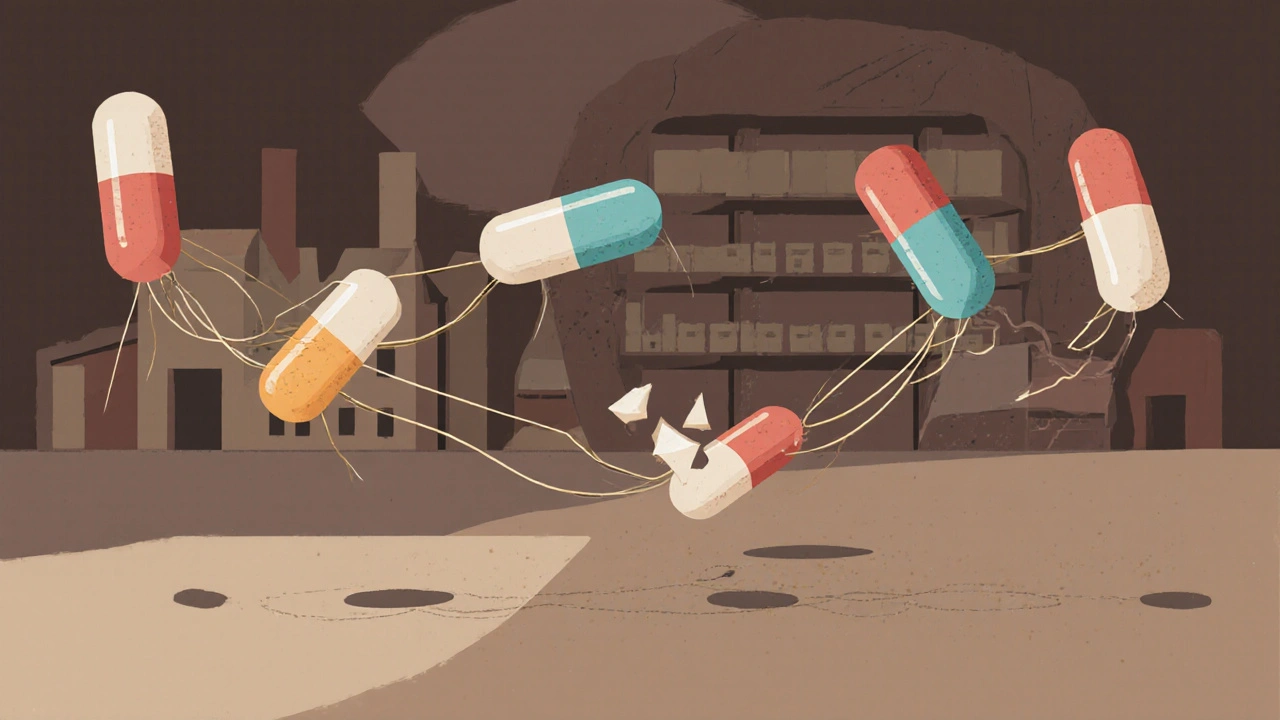
Supply Chain Economics: How Efficiency Drives Generic Drug Distribution
Generic drug distribution survives on razor-thin margins, but efficiency isn't just about cost-cutting-it's about preventing life-threatening shortages. Learn how data, technology, and smarter inventory are reshaping the system.