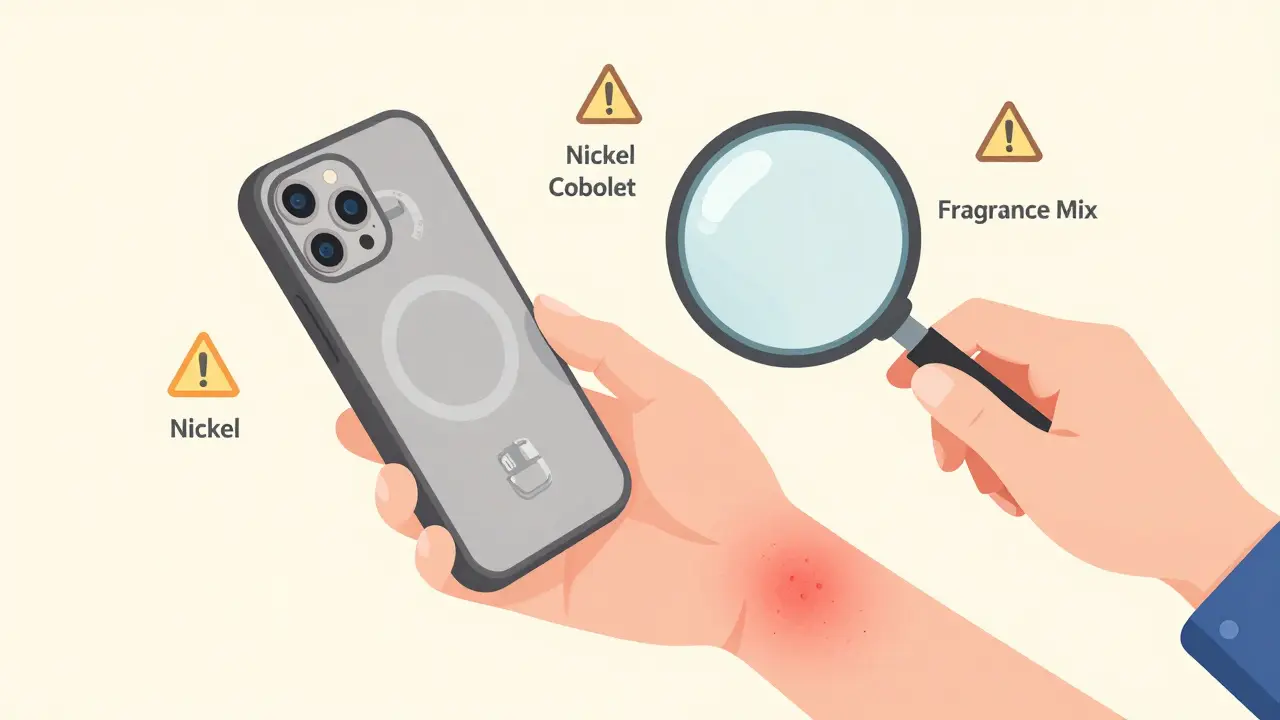
For millions of people, a red, itchy rash isn’t just annoying-it’s a recurring nightmare. You wash your hands, change your soap, switch laundry detergents, and still, the rash comes back. That’s because you’re not dealing with dry skin or stress. You’re dealing with contact dermatitis, and more likely than not, it’s allergic contact dermatitis (ACD). This isn’t a simple irritation. It’s your immune system reacting to something you touch, often without realizing it. And the good news? You can find out exactly what’s causing it-and stop the cycle for good.
What Exactly Is Allergic Contact Dermatitis?
Allergic contact dermatitis happens when your skin comes into contact with a substance your body has learned to see as a threat. It’s not an immediate reaction like a peanut allergy. Instead, it takes days. You touch something-maybe your watch, your shampoo, or your work gloves-and 24 to 72 hours later, your skin breaks out in redness, blisters, or flaking. This delay is why most people don’t connect the dots. They think, “I’ve used this soap for years,” but your immune system didn’t start reacting until your last exposure triggered a memory.
It’s a delayed-type hypersensitivity, meaning your body’s T-cells remember the allergen and attack it the next time they see it. This isn’t a one-time fluke. About 13.7 million U.S. workers develop this condition every year. That’s not just a few people with sensitive skin-it’s a widespread health issue. And nickel? It’s the #1 culprit. Nearly 1 in 7 people tested for allergies have a nickel allergy. That means your earrings, belt buckles, phone cases, and even zippers could be the problem.
How Do You Know What’s Causing Your Rash?
Guessing won’t work. You can’t just stop using everything that sounds suspicious. That’s where patch testing comes in. This isn’t a skin prick test like for pollen or bees. Patch testing is the only reliable way to find out what’s triggering allergic contact dermatitis.
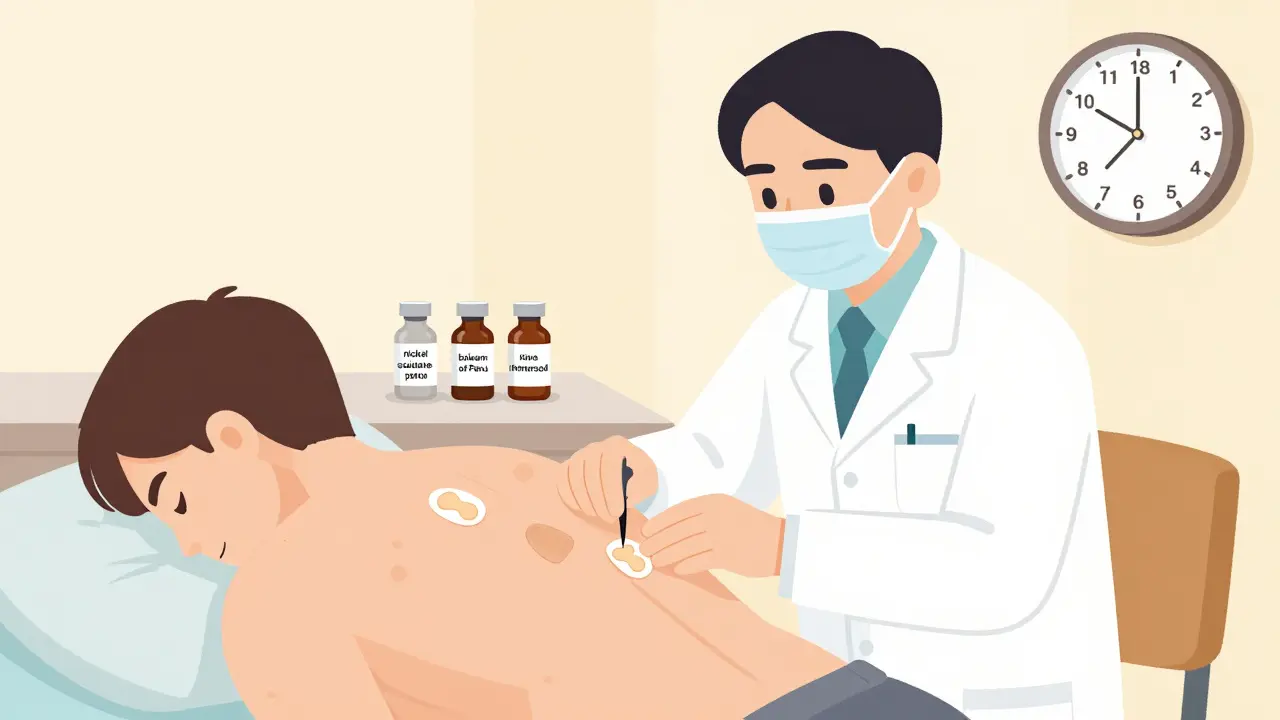
The standard test, called the TRUE Test, uses three small panels taped to your back. Each panel has tiny wells filled with 29 common allergens-nickel sulfate, cobalt, fragrance mix, thimerosal, balsam of Peru. You wear them for 48 hours. Then you come back. The patches are removed, and the skin is checked. You return again at 96 hours (four days total) for a final reading. Why wait? Because the reaction builds slowly. A positive result looks like a raised, red bump under the patch. It’s not always dramatic, but trained dermatologists know what to look for.
Here’s the catch: the TRUE Test only tests for 29 allergens. But there are thousands of chemicals in shampoos, lotions, cleaners, and tools. That’s why some people test negative but still have rashes. If your dermatologist suspects something’s being missed-like formaldehyde in makeup or cocamidopropyl betaine in body wash-they’ll use an expanded panel with 70 to 100 allergens. One patient on Reddit spent five years with unexplained hand rashes until expanded testing found her allergy to cocamidopropyl betaine. Once she avoided it? Her skin cleared up completely.
What Are the Most Common Allergens?
Not all allergens are created equal. Some are everywhere. Others are hidden. Here are the top five allergens found in patch tests, based on data from the American Academy of Family Physicians and the European Academy of Dermatology:
- Nickel sulfate (14.7% of positive cases) - Found in jewelry, coins, phones, laptops, belt buckles, and even some kitchen utensils.
- Cobalt chloride (4.8%) - Often in blue pigments, paints, and metal alloys. Also used in some cosmetics and dental materials.
- Fragrance mix (3.4%) - Not just perfumes. It’s in lotions, soaps, shampoos, and even baby wipes. Many “unscented” products still contain masking fragrances.
- Thimerosal (5.0%) - A mercury-based preservative once common in vaccines and eye drops. Still found in some topical antiseptics.
- Balsam of Peru (3.0%) - Used in flavorings, cosmetics, and even some medications. Found in cinnamon, citrus, vanilla, and tomato-based products.
And here’s the sneaky part: fragrance allergy affects 1 to 4% of the general population. But the standard fragrance mix doesn’t catch all of them. You might be reacting to linalool, limonene, or geraniol-chemicals that aren’t even on the standard panel. That’s why expanded testing matters.
Why Patch Testing Isn’t Perfect (And What to Do About It)
Even the best test can miss things. Studies show patch testing has about 70-80% accuracy. That means 1 in 5 people get a false negative. Why? Maybe the allergen wasn’t included. Maybe the patch wasn’t applied correctly. Or maybe the reaction was too mild to spot.
One patient, who goes by “RashQueen2023” on Reddit, says her initial patch test missed her formaldehyde allergy. It took a second round of expanded testing-and $350 out of pocket-to finally get answers. That’s not rare. A 2023 survey of 1,247 patients found that 33% needed additional testing beyond the standard panel.
There are other tools. Some labs use gas chromatography and mass spectrometry to analyze the chemical makeup of your shampoo, lotion, or even your work gloves. Others use thin-layer chromatography to separate ingredients in a product and test each one individually. These aren’t routine, but they’re available for stubborn cases.
And here’s something new: blood tests are starting to show promise. Researchers at the National Allergy Research Center found that IL-18 levels in the blood correlate strongly with the severity of contact dermatitis. It’s not ready for prime time yet, but it could one day help monitor how well avoidance is working.
Once You Know the Allergen, What Do You Do?
Knowing the cause is only half the battle. Avoiding it is the other half. And that’s harder than it sounds.
Here’s what works:
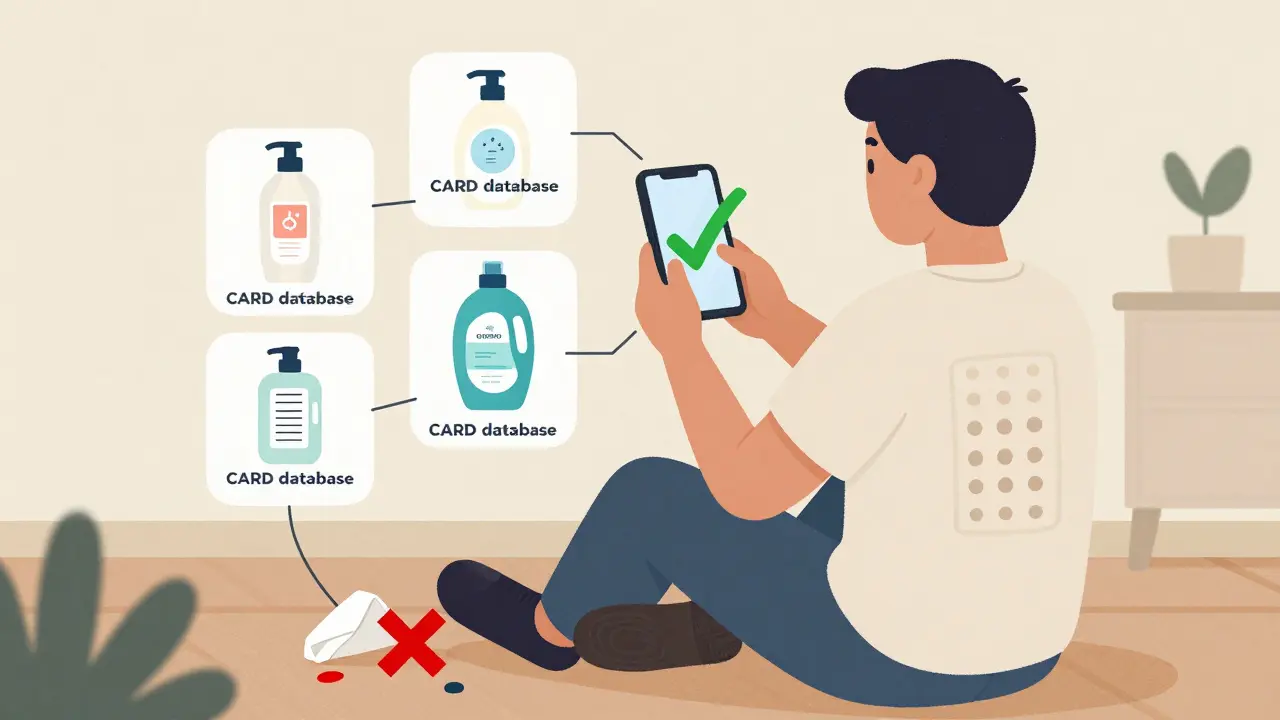
- Read labels. Seriously. Look for the exact chemical name-not just “fragrance” or “parfum.” Use the Contact Allergen Replacement Database (CARD) from the American Contact Dermatitis Society. It lists over 18,000 products that are free of 27 common allergens. You can search by ingredient, product type, or brand.
- Switch products slowly. Don’t change everything at once. Swap one item at a time: shampoo, then lotion, then detergent. Wait two to four weeks between changes. That’s how long it takes for your skin to respond.
- Check your workplace. If you’re a hairdresser, nurse, or construction worker, you’re at high risk. Hairdressers have a 42% chance of developing ACD. Your employer may need to make changes under OSHA guidelines. Ask for gloves, protective barriers, or non-allergenic tools.
- Use the Contact Dermatitis Navigator. This program from the American Academy of Dermatology gives you step-by-step guidance on how to avoid triggers. Patients who used it cut down on repeat doctor visits by 42%.
And don’t forget: “hypoallergenic” doesn’t mean “allergen-free.” It’s a marketing term, not a regulated one. Always check ingredients.
Who’s Most at Risk?
Anyone can develop contact dermatitis. But some groups are more vulnerable:
- Women - 17.4% of women in North America have nickel allergy vs. 3% of men. Why? Jewelry, makeup, and skincare products.
- Healthcare workers - Constant handwashing, gloves, and disinfectants lead to reactions in 25.7% of this group.
- Hairdressers - Dyes, permanents, and shampoos expose them to multiple allergens. Nearly half develop skin issues.
- People with eczema - Damaged skin lets allergens penetrate more easily.
And it’s getting worse. The global market for contact dermatitis testing is projected to hit $3.8 billion by 2028. Why? Because more products are being made with new chemicals-and regulations aren’t keeping up. The EU banned 26 fragrance allergens in cosmetics in 2003. The U.S. still hasn’t passed similar rules. The Safe Cosmetics Act, introduced in 2021, is still stuck in Congress.
What’s Next for Diagnosis and Treatment?
The field is evolving. By Q3 2025, the American Contact Dermatitis Society will roll out an expanded patch test panel with 80 allergens. It will include new offenders like chemicals from smartphones, wireless earbuds, and plant-based cosmetics.
Animal testing is fading out. The EU will ban guinea pig tests by 2027. In their place, labs are using human skin models and computer algorithms to predict allergens.
But here’s the bottom line: patch testing is still the gold standard. No blood test, no app, no home kit can replace it. As one expert put it: “Molecular methods are exciting, but they’re supplements-not replacements-for now.”
What You Can Do Right Now
If you’ve had a rash that won’t go away:
- Stop guessing. See a dermatologist who specializes in contact dermatitis.
- Ask for patch testing. Don’t accept “it’s just eczema” as an answer.
- Bring a list of everything you use on your skin-shampoos, lotions, cleaners, even your phone case.
- Ask if expanded testing is right for you.
- Once you know your allergen, use the CARD database to find safe products.
Eighty-two percent of patients who avoid their triggers report major improvement. That’s not a miracle. That’s science. You don’t have to live with a rash that keeps coming back. You just need to know what’s causing it-and then take control.
Can contact dermatitis go away on its own?
Yes, if you stop contact with the allergen. But if you keep using the product-like your favorite lotion or your work gloves-the rash will keep coming back. Avoidance is the only cure. Without it, the condition can become chronic and harder to treat.
Is patch testing painful?
No. The patches are taped to your back and don’t involve needles. You might feel slight itching or burning if you’re allergic to one of the substances, but that’s usually mild and temporary. Most people tolerate the test well. The discomfort is far less than living with a constant rash.
Can I do patch testing at home?
No. Home allergy tests for contact dermatitis don’t exist-and they’re not reliable. Patch testing requires precise application, controlled exposure, and expert interpretation. Only a trained dermatologist can read the results correctly. DIY kits can give false negatives or even trigger new reactions.
Why do some people test negative but still react?
Standard patch tests only cover 29 allergens. Thousands of chemicals exist in everyday products. If your reaction is caused by something not on the panel-like a specific fragrance chemical or a new ingredient in your phone case-you’ll test negative. Expanded testing, chemical analysis, or elimination trials are needed in those cases.
Are natural or organic products safer?
Not necessarily. Natural doesn’t mean non-allergenic. Tea tree oil, lavender, and citrus extracts are common allergens. Many “organic” products use plant-based fragrances and preservatives that can trigger reactions. Always check the ingredient list, even on natural brands.
How long does it take to see improvement after avoiding an allergen?
Most people see improvement within 2 to 4 weeks. But it can take longer if the allergen was deeply embedded in your routine or if your skin was severely damaged. Be patient. Stick with avoidance, even if the rash fades slowly. Full healing can take up to 8 weeks.
Can contact dermatitis be cured permanently?
There’s no permanent cure for the allergy itself-your immune system will always remember the trigger. But you can cure the rash. Once you avoid the allergen, your skin can heal completely. You’ll live symptom-free for life-as long as you keep avoiding it. That’s the goal: not a cure for the allergy, but freedom from the symptoms.







Daniel Dover February 16, 2026
Been dealing with this for years. Switched to unscented everything, still got rashes. Patch test found nickel in my phone case. Changed to a silicone case and boom - cleared up in 3 weeks. Simple fix, but no one tells you this stuff.
Kaye Alcaraz February 17, 2026
You're not alone. This is one of those hidden health issues that gets ignored because it's not life-threatening. But chronic skin irritation destroys quality of life. Patch testing is the single most underused diagnostic tool in dermatology. If you're reading this and you have a rash that won't quit - go see a specialist. Don't wait. Your skin deserves better.
Josiah Demara February 17, 2026
Everyone keeps talking about nickel like it's the enemy. Newsflash: 14.7% of people test positive. That means 85% don't. Most rashes are just poor hygiene or overwashing. Stop blaming products and start taking responsibility for your skin. And please stop calling it 'allergic contact dermatitis' like it's some exotic disease. It's eczema with a fancy name.
Joe Grushkin February 19, 2026
Oh great, another post pretending patch testing is some magical cure. Let me guess - you're one of those people who thinks 'hypoallergenic' means 'safe' and 'natural' means 'non-reactive'? Wake up. The entire beauty industry is built on lies. Your 'organic' shampoo has 47 fragrance chemicals you can't pronounce. The patch test doesn't cover 90% of them. You're being played. And now you're spending $350 on a second test because you believed the hype. Congratulations.
Betty Kirby February 19, 2026
Let me tell you about my friend who did the patch test. Negative. Then she switched her laundry detergent. Still broke out. Then she stopped using her stainless steel kettle. Boom - gone. Turns out, the nickel leached from the kettle. No one tests for that. No one talks about it. The system is broken. And people like you who just say 'go get tested' are part of the problem.
Esha Pathak February 21, 2026
Life is a mirror of our inner chaos. The skin is the outermost layer of the soul. When we ignore the whispers of discomfort, the body screams through rashes. Nickel is not the enemy - it's the messenger. The real allergen? The disconnection from our environment. We touch plastic, metal, chemicals - and forget we are part of nature. Find peace. Breathe. Let your skin heal - not just with avoidance, but with awareness. 🌿
Mike Hammer February 22, 2026
bro i had this weird rash on my neck for 8 months. thought it was sweat or something. turned out my hoodie zipper had nickel. switched to a cotton hoodie and poof. gone. no big deal. but yeah, i never even thought to check the dang zipper. dumb. also, i use the card database now. it's kinda like a cheat code for not getting itchy. 👍
Virginia Kimball February 23, 2026
This is so validating. I spent 2 years trying everything - expensive creams, naturopaths, dietary changes - and nothing worked. Then I got patch tested. Turned out I was allergic to cocamidopropyl betaine in my shampoo. I didn't even know that was a thing. Changed one product. Skin cleared in 3 weeks. I'm not saying this is easy - but it's worth it. You deserve to feel normal again. Don't give up.