
Duloxetine Liver Health Monitor
Risk Assessment Tool
Based on clinical guidelines for hepatotoxicityStep 1: Your Profile
Step 2: Symptom Check
Check any symptoms you are currently experiencing. This tool does not replace a doctor.
You have selected symptoms consistent with potential liver stress. Do not wait for your next scheduled appointment.
Contact your healthcare provider immediately.
Calculated Risk Profile
You are taking medication to feel better, to handle pain or anxiety, but you might be worrying about the hidden cost to your body. Specifically, when doctors prescribe Duloxetine is a serotonin-norepinephrine reuptake inhibitor widely used for depression and chronic pain conditions., they often mention liver health as a concern. It sounds scary, but understanding the numbers helps you stay safe without losing sleep over every ache.
The reality is that serious liver problems are rare, but they happen. Most people take this drug without issue, yet ignoring the warning signs puts you at risk. If you have a history of alcohol use or existing liver issues, this medication behaves differently in your system compared to someone with perfect health.
What Exactly Is Duloxetine?
Duloxetine, commonly known by the brand name Cymbalta, is an antidepressant approved by the FDA in 2002. It belongs to a class called SNRIs. Unlike standard SSRIs that only target serotonin, this drug also boosts norepinephrine levels. This dual action makes it particularly effective for nerve pain, fibromyalgia, and major depressive disorder.
Developed by Eli Lilly and Company, it became one of the top psychiatric medications prescribed globally. In 2023 alone, over 22 million prescriptions were dispensed in the United States. However, its popularity comes with metabolic responsibilities. Your liver is the primary factory processing this drug, meaning it bears the brunt of the chemical workload.
The Link Between Duloxetine and Liver Injury
Hepatotoxicity refers to damage caused to the liver. While the drug is generally well-tolerated, there is a documented risk profile. According to data tracked by the National Institutes of Health, serum aminotransferase elevations occur in approximately 1 to 2 percent of patients taking therapeutic doses.
The mechanism isn't entirely straightforward, but it involves how your body breaks down chemicals. Cytochrome P450 enzymes, specifically CYP1A2 and CYP2D6, do the heavy lifting here. When these enzymes process duloxetine, they sometimes create reactive metabolites. These byproducts can irritate liver cells, leading to inflammation. In severe cases, this escalates to drug-induced liver injury (DILI).
Risk increases significantly if you escalate from the starting 30 mg dose to the standard 60 mg daily dose too quickly. A case report from 2012 noted that moving to higher doses was a common trigger for enzyme spikes. Therefore, slow titration matters more than speed of relief.
Understanding Your Lab Work Numbers
When your doctor orders blood work, they aren't just checking general health. They are looking for specific markers of stress on your liver tissue. The two main enzymes tracked are ALT and AST.
- ALT (Alanine Aminotransferase): Found mainly in the liver, spikes here indicate direct liver cell damage.
- AST (Aspartate Aminotransferase): Found in the liver, heart, and muscles, but elevated alongside ALT suggests liver stress.
- Bilirubin: High levels cause jaundice and signal that the liver cannot filter waste properly.
In clinical trials submitted by Eli Lilly in 2004, ALT elevations exceeding three times the upper limit of normal occurred in roughly 0.6 percent of patients. While that number seems small, in absolute terms, it affects thousands of users annually. If your doctor sees these numbers jump, they act fast to prevent permanent damage.

Timeline for Monitoring and Testing
You cannot guess when trouble starts; you need a schedule. The median time to detect elevated liver enzymes is roughly 50 to 60 days after you begin treatment. This creates a critical window where vigilance is key.
| Timing | Action Required | Risk Level |
|---|---|---|
| Before Starting | Baseline LFTs (ALT, AST, Bilirubin) | All Patients |
| Weeks 8-12 | Repeat LFTs | High Risk Only |
| Day 50-60 | Monitor for Symptoms | Critical Window |
| Annually | Routine Check | Maintenance Phase |
Who qualifies as "high risk"? Obesity plays a role, as does diabetes. Men consuming 14 drinks a week or women drinking 7 drinks a week increase the strain significantly because alcohol competes for the same enzymatic pathways. Additionally, other medications like certain antibiotics or anticonvulsants can mix poorly.
Symptoms You Should Never Ignore
Laboratory tests aren't always available immediately. Relying on how you feel is equally vital. The American Association for the Study of Liver Diseases highlights specific physical cues that warrant immediate attention.
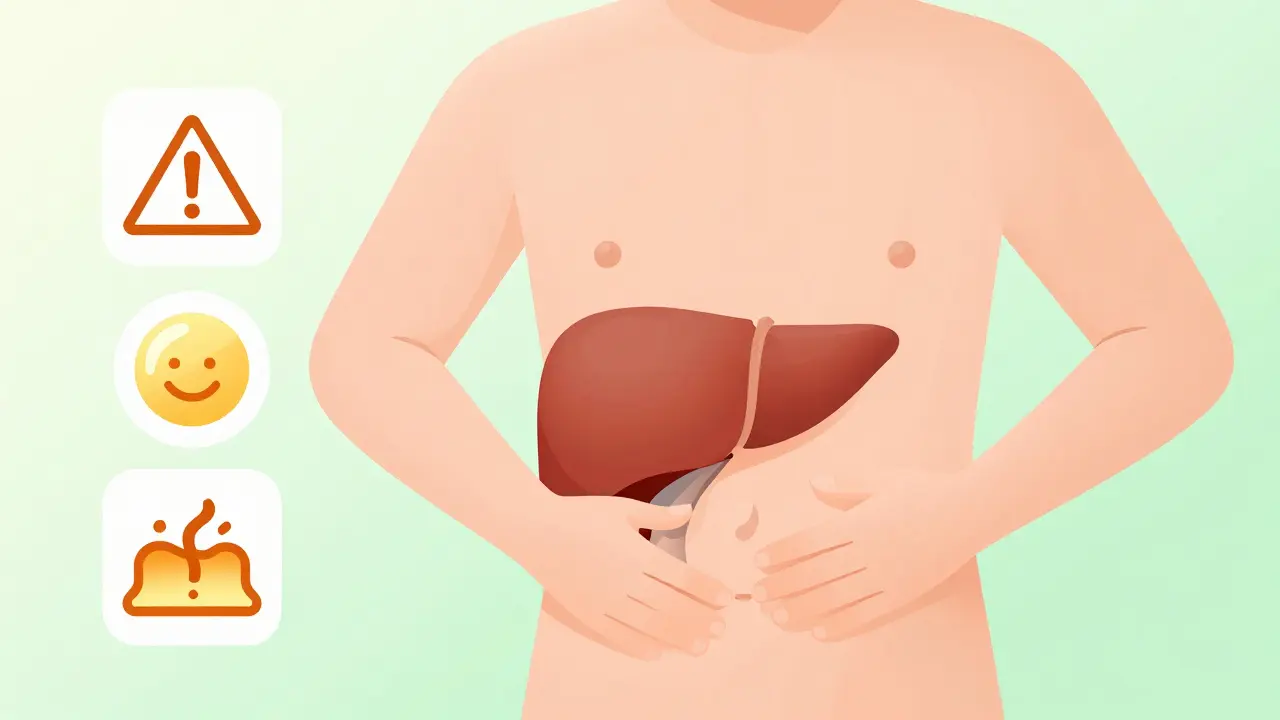
- Dark Urine: Urine turning the color of cola suggests bile is leaking into your bloodstream.
- Fatigue: Extreme tiredness that sleep doesn't fix.
- Itching: Unexplained itching without a rash is a classic sign of cholestasis.
- Pain: Discomfort in the upper right abdomen where the liver sits.
- Jaundice: Yellowing of the skin or whites of the eyes.
If you experience nausea or vomiting along with these signs, seek help right away. In 2022, Dr. Victor Pruteanu at Johns Hopkins Hospital commented that while severe hepatotoxicity is low risk, approximately 1 in 10,000 patients develop significant liver injury requiring hospitalization.
Comparing Risks with Other Antidepressants
Patient forums often ask if other drugs are safer. The short answer depends on your biology. Selective Serotonin Reuptake Inhibitors (SSRIs) generally carry a lower liver risk profile. A 2019 meta-analysis found duloxetine had a 1.8-fold higher risk of significant ALT elevation compared to SSRIs.
However, compared to tricyclic antidepressants, duloxetine actually spares you from cardiac monitoring risks. Venlafaxine, another SNRI, shares a similar risk profile regarding liver health (OR 1.7). Ultimately, choosing between these options involves weighing mental health efficacy against organ safety. For many patients managing chronic pain, duloxetine remains superior despite the liver watch required.
Safely Stopping if Problems Arise
If labs show enzymes rising above five times the normal limit, or if symptoms appear, the protocol is strict discontinuation. However, you cannot simply stop cold turkey. Abrupt cessation causes antidepressant discontinuation syndrome, characterized by dizziness and brain zaps.
The Mayo Clinic guidelines from 2021 recommend tapering over 2 to 4 weeks even in urgent liver scenarios. Doctors prefer a gradual reduction to protect both your mind and your body. During this transition, frequent monitoring ensures the liver heals without triggering a withdrawal crisis.
Questions About Duloxetine Safety
Can I drink alcohol while taking duloxetine?
Alcohol is strictly discouraged. Both alcohol and duloxetine stress the liver using the same metabolic pathways. Mixing them significantly raises the chance of liver injury beyond the already existing risk.
How often should I get blood tests?
Most experts recommend baseline testing before starting. For high-risk individuals, repeat testing happens at 8 to 12 weeks. The FDA labeling cautions use but does not mandate routine testing for everyone.
Does duloxetine damage the liver permanently?
Usually no. If caught early and the drug is stopped, liver enzymes typically return to normal. Permanent damage occurs mostly in cases of chronic undetected use or pre-existing cirrhosis.
Are genetic factors involved in liver risk?
Yes. A 2023 study in Pharmacogenomics Journal identified CYP2D6 poor metabolizer status as potentially increasing risk. Genetic testing may become more common to predict susceptibility.
What if I am obese and prescribed duloxetine?
Obesity (BMI ≥30) places you in a higher risk category for hepatotoxicity. Clinicians usually order stricter monitoring schedules for these patients compared to those with normal BMI.






Tommy Nguyen March 28, 2026
Just remember taking care of yourself matters most right now.
walker texaxsranger March 29, 2026
Most people ignore the pharmacokinetic reality involved here. Big Pharma pushes SNRIs without full disclosure on hepatic stress. They want your money more than they want your safety. Your cytochrome system gets overloaded during metabolism. ALT spikes happen faster than anyone expects you to notice. Standard monitoring intervals are too wide to catch early failure signs. You cannot rely on routine blood work alone for protection. Genetic predisposition changes the risk profile significantly. Poor metabolizers face higher toxicity rates daily. Alcohol consumption multiplies the injury potential drastically. Reactive metabolites accumulate when enzyme capacity is maxed. Jaundice appears only after severe cellular damage occurs. Fatigue might be the only early warning signal you get. Itching indicates cholestasis which requires immediate cessation protocols. Withdrawal risks complicate the decision to stop abruptly. Doctors prioritize mental health stability over organ preservation often. Read every label section regarding hepatotoxicity warnings personally. You deserve to know the metabolic burden upfront. Never trust marketing materials regarding drug safety profiles. Stay vigilant about your own biological data points always.
tyler lamarre March 29, 2026
Your conspiracy theories are amusingly misplaced. Medical guidelines exist for actual patient safety standards. Average folks lack your specialized knowledge base apparently. Trust the data presented by established institutions. Ignoring clinical protocols creates unnecessary panic.
Devon Riley March 30, 2026
It is really important to listen to your body signals closely :) Monitoring helps prevent serious complications later on. Many patients feel overwhelmed by medical terminology though. Support systems make the process much easier for everyone involved.
Debra Brigman March 31, 2026
The tapestry of human biology is woven with intricate threads indeed. Each enzyme acts like a dancer in a grand molecular ballet performance. We must respect the delicate balance maintained within our organs. Health is not merely absence of disease but dynamic equilibrium. Listen to the whispers of your physiology before they scream.
Rachael Hammond April 1, 2026
i feel like u r saying the same thing basically lol its hard to understnad all teh science sometimes but we try. my friend had high alt numbers once scarry stuff but fixed it. dont let the doctors scare u too much okie dokie.
Shawn Sauve April 2, 2026
We all share this journey together with dignity and respect. Setting boundaries for our health is crucial moving forward :) Please take the advice seriously without losing sleep over minor fluctuations.
Tony Yorke April 3, 2026
Exactly what i was thinking buddy stay strong keep pushing through this info overload. You are capable of managing your own health outcomes effectively.