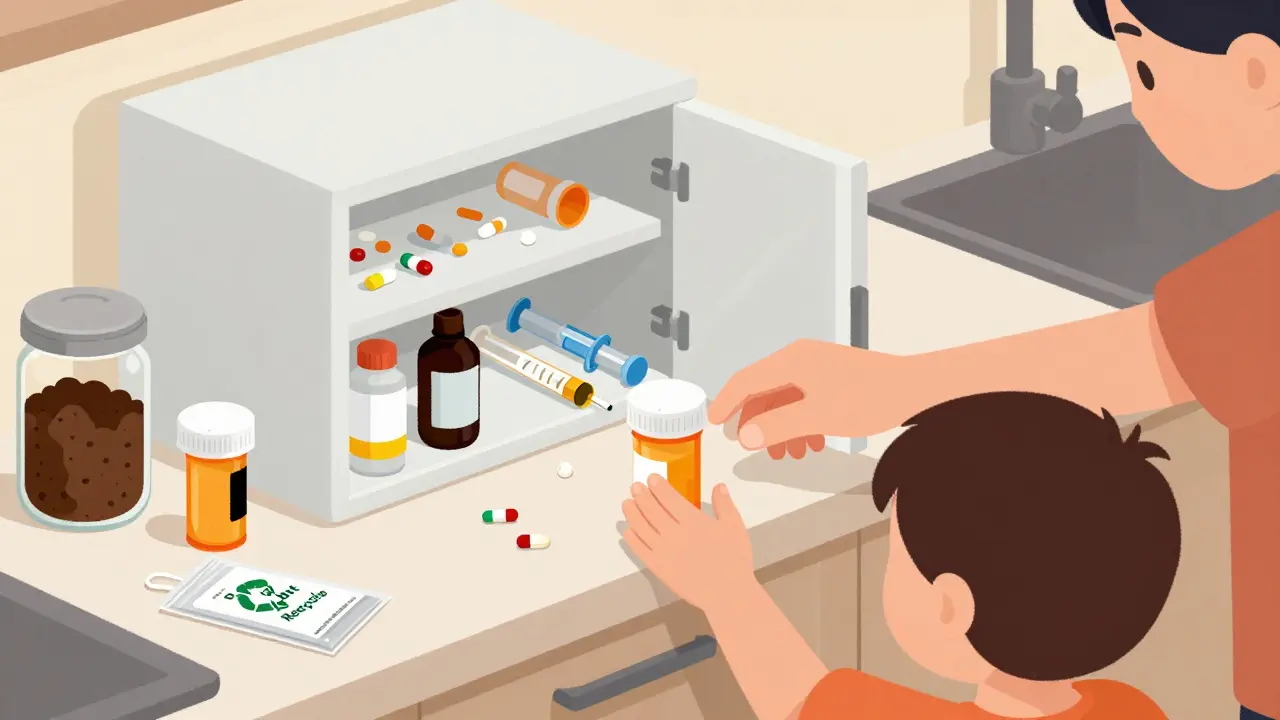
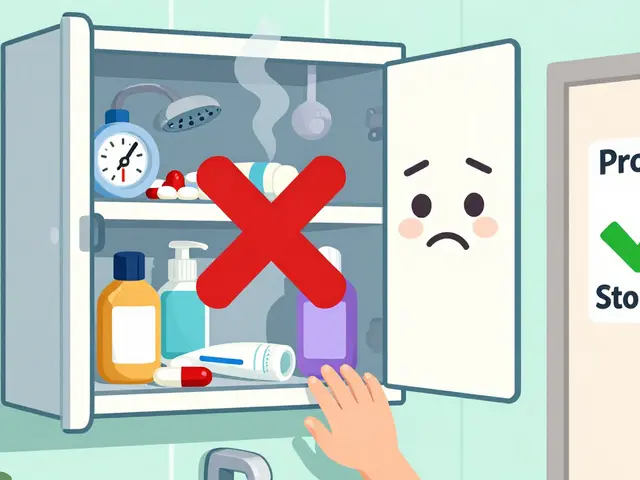
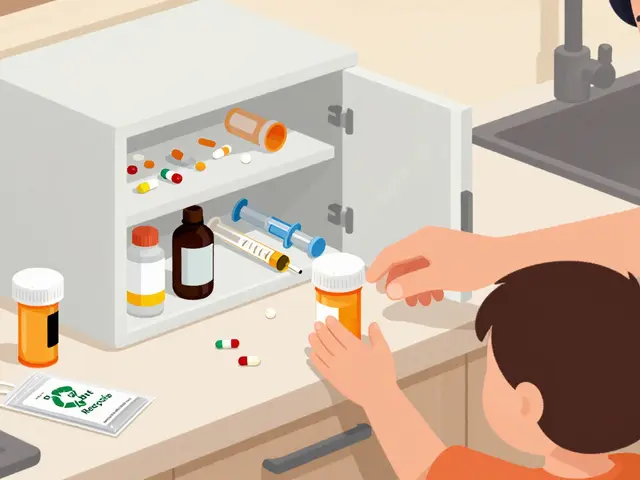
Keeping expired medications in your medicine cabinet isn’t just messy-it’s dangerous. A child finds a bottle of old painkillers. A teenager takes a pill they found in the bathroom cabinet. A neighbor digs through your trash and pulls out your prescription bottle. These aren’t hypotheticals. In Australia, over 1,500 children under 10 are treated in emergency rooms each year after accidentally swallowing someone else’s medicine, according to the Australian Poison Information Centre. And that’s just the tip of the iceberg. Expired or unused drugs don’t just sit there quietly. They pose risks to your family, your community, and even your local water supply.
Why You Can’t Just Toss Medications in the Trash or Flush Them
| Method | Risk | Environmental Impact |
|---|---|---|
| Throwing in regular trash | Easy access for kids, pets, or thieves | Chemicals leach into soil and groundwater |
| Flushing down the toilet | Only safe for a few high-risk drugs (like fentanyl patches) | Contaminates waterways-80% of Australian rivers now show traces of pharmaceuticals |
| Pouring liquids down the sink | Spills, leaks, accidental ingestion | Direct entry into sewer systems and water treatment plants |
Most medications aren’t designed to break down easily in nature. Even after they expire, many still contain active ingredients that can harm aquatic life, disrupt hormones in wildlife, and eventually find their way into drinking water. The Australian Water Quality Centre found detectable levels of antibiotics, antidepressants, and painkillers in over 70% of tested waterways in Victoria and New South Wales. This isn’t a problem far away-it’s in your tap water.
Step-by-Step: Safe Home Disposal for Most Medications
If you don’t have immediate access to a take-back program, here’s how to dispose of pills, capsules, and liquids safely at home-using simple items you already have.
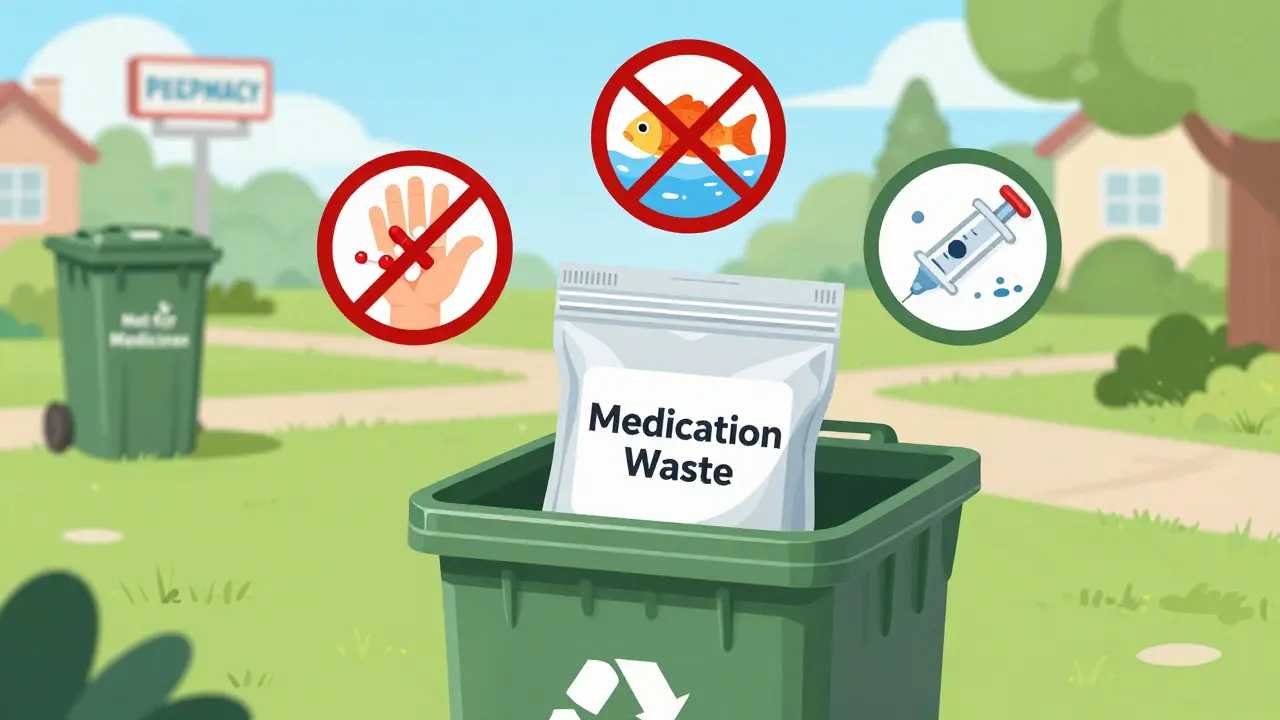
- Remove the medication from its original container. Don’t just pour pills into a bag. Take them out. This prevents someone from recognizing the drug by the bottle label.
- Mix with an unappealing substance. Use one of these: used coffee grounds, cat litter, or dirt. For every standard prescription bottle (about 20-30 pills), mix with at least one cup of the substance. This makes it smell bad, look gross, and feel gritty-so no one will want to dig through it.
- Seal it in a leak-proof container. Use a resealable plastic bag (at least 2-mil thick) or an empty margarine tub. If you’re disposing of liquid medicine, pour it into the mixture and stir well. Then seal the container tightly. No leaks. No drips.
- Black out all personal info. Use a permanent marker to cover your name, prescription number, pharmacy name, and dosage on the empty bottle. Don’t just scribble-it needs to be completely unreadable. This protects your privacy and stops identity theft.
- Put it in your general household trash. Not recycling. Not compost. Not the bin outside your front door. Your regular garbage bin, on collection day. This ensures it goes to a landfill with proper containment, not into water systems or open dumps.
It takes less than 10 minutes per bottle. And it’s far safer than leaving them lying around.
Special Cases: Needles, Inhalers, and Liquid Medicines
Not all medications follow the same rules.
Needles and syringes: Never toss them loose in the trash. Use a rigid plastic container like an empty laundry detergent bottle (with a tight cap). Label it clearly with a marker: "SHARPS-DO NOT RECYCLE." Seal it and put it in your regular trash. Many pharmacies, including Chemist Warehouse and Priceline, offer free sharps disposal bins-just ask at the counter.
Inhalers: These are pressurized. If crushed in a trash compactor, they can explode. Don’t puncture them. Don’t burn them. Take them to a local pharmacy that accepts hazardous waste. Most major chains have drop-off boxes for inhalers. If you’re unsure, call ahead.
Liquid medications: Mix them with coffee grounds or cat litter in a sealed container. Avoid pouring them down the drain. If the liquid is thick or syrupy, add a little water to thin it out before mixing-it helps the absorbent material work better.
Insulin and temperature-sensitive drugs: These don’t need special treatment beyond sealing them well. Just make sure they’re fully mixed into the absorbent material to prevent leakage.
Take-Back Programs: The Best Option (When Available)
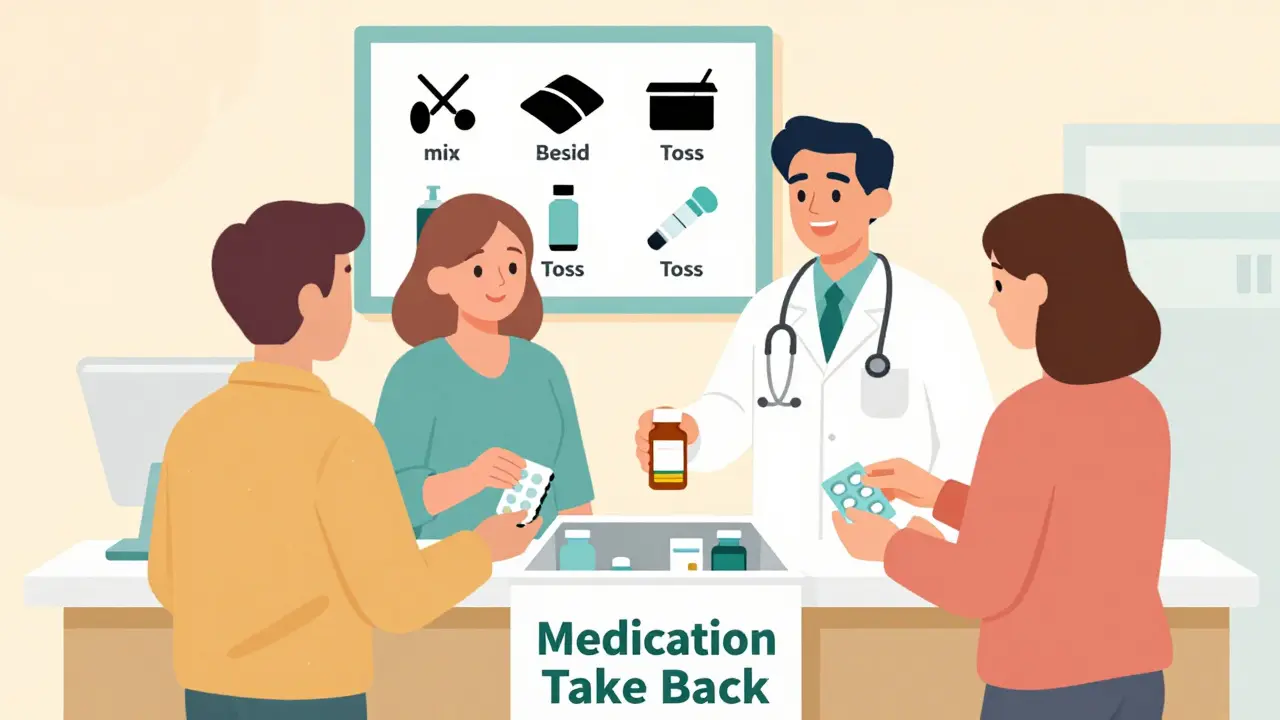
The safest, most environmentally responsible way to dispose of medications is through a take-back program. These are run by pharmacies, hospitals, or local councils and use professional incineration to destroy drugs completely.
In Australia, permanent drop-off points exist at:
- Over 80% of major pharmacy chains (Chemist Warehouse, Priceline, Terry White Chemmart)
- Some local council waste facilities (check your council website)
- Hospital pharmacies (often open to the public)
You can drop off pills, patches, creams, and liquids-no questions asked. No need to show ID. No charge. Just bring your expired meds in their original containers. The pharmacy handles the rest.
There’s also the National Medicines Take Back Day, held twice a year-in April and October. In 2025, the next event is on Saturday, April 26. On that day, hundreds of locations across Melbourne, Sydney, Brisbane, and Perth open their doors for free drop-offs. It’s the easiest day of the year to clean out your medicine cabinet.
What Not to Do
Here are the top mistakes people make-and why they matter:
- Don’t crush pills. Crushing releases dust and fumes. Some medications are time-release. Crushing them can make them dangerous to handle.
- Don’t flush unless it’s on the official list. Only fentanyl patches, oxycodone, and a few other high-risk drugs are approved for flushing in Australia. The list is small. If you’re not sure, don’t flush.
- Don’t donate expired meds. Even if they look fine, expired drugs can lose potency or become unsafe. No pharmacy or charity in Australia accepts them.
- Don’t keep "just in case." If you haven’t used it in over a year, it’s probably expired. Holding onto old antibiotics or painkillers increases the risk of misuse or accidental overdose.
How to Prevent Expired Medications in the First Place
The best disposal method is never needing to dispose of them.
- Buy only what you need. If your doctor prescribes a 30-day supply, don’t refill early unless necessary.
- Check expiration dates when you pick up prescriptions. Ask the pharmacist: "Is this still good for six months?"
- Use a pill organizer with date labels. It helps you track what’s been taken and what’s left.
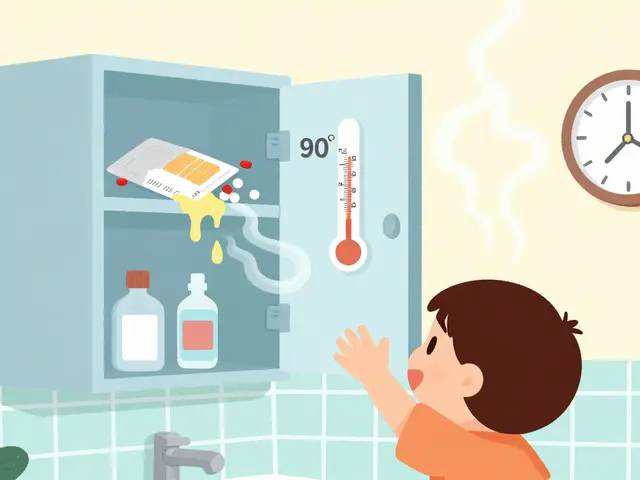
- Keep a small box in your medicine cabinet labeled "To Dispose." Add expired or unused meds as you find them. Once a month, check the box and take it to a drop-off point.
Resources You Can Use Right Now
You don’t have to guess how to do this. Here are reliable, up-to-date resources:
- Medicines Line (Australia): 1300 633 424 (24/7 advice on disposal and safety)
- Safe Medication Disposal Finder: Visit medicines.org.au/disposal to find your nearest drop-off location.
- Local Council Waste Services: Search your council’s website for "hazardous waste" or "medication disposal"-many offer free drop-off days.
- Pharmacies: Just ask. Most have a disposal bin behind the counter.
If you’re ever unsure-call Poison Information. It’s free, confidential, and available 24/7: 13 11 26.
Final Thought: Your Action Matters
One bottle of expired painkillers might seem insignificant. But when millions of households do the same thing-flushing, tossing, hoarding-it adds up. Australia’s waterways are already contaminated. Children are still getting into old meds. Opioid misuse still happens because someone left a bottle on the counter.
Proper disposal isn’t just about following rules. It’s about protecting your family, your neighbors, and the environment. You don’t need to be an expert. You don’t need special tools. Just take five minutes. Mix it. Seal it. Black it out. Toss it.
That’s how you make a real difference.
Can I recycle empty medicine bottles?
No. Most medicine bottles are made of plastic that’s contaminated with drug residue, even after cleaning. Recycling facilities don’t accept them. Remove the label, rinse if you want, but throw the bottle in your general waste bin. Some pharmacies offer bottle recycling programs-ask at your local Chemist Warehouse or Priceline.
What if I have a lot of expired meds?
Don’t wait. Take them to a pharmacy drop-off point or wait for National Medicines Take Back Day. If you’re overwhelmed, break it into batches. Dispose of one cabinet drawer at a time. Keep a disposal box in your bathroom and add to it monthly. It’s easier than trying to do it all at once.
Is it safe to mix medications with cat litter?
Yes. Cat litter is dense, absorbent, and smells unpleasant-perfect for deterring anyone from digging through your trash. Use regular clay-based litter, not clumping or scented types, unless that’s all you have. The scent doesn’t affect safety-just make sure the mixture is thick enough that you can’t see any pills or capsules.
Do I need to remove the pill foil from blister packs?
No. You can leave pills in their foil blister packs. Just put the entire pack into the coffee grounds or cat litter mixture. Seal it in a bag. The foil won’t interfere with disposal. Just make sure the personal info on the box is covered with a permanent marker.
What should I do if someone swallows an expired medication?
Call Poison Information immediately: 13 11 26. Don’t wait for symptoms. Don’t try to induce vomiting. Have the medication container ready when you call. They’ll tell you exactly what to do. Most expired meds aren’t deadly, but some can still cause serious reactions-especially in children or people with allergies.
If you’re unsure about any medication, call 13 11 26. Always. Better safe than sorry.


waneta rozwan January 16, 2026
Okay but let’s be real-how many people actually do this? I’ve seen grandmas keep expired antibiotics for ‘just in case’ like they’re gold bars. And don’t even get me started on the guy who flushed his entire OxyContin stash because ‘the toilet’s easier.’ We’re not just talking about responsibility here-we’re talking about collective denial. This post should be mandatory reading before you’re allowed to own a medicine cabinet.
Nicholas Gabriel January 16, 2026
I’m so glad someone finally laid this out clearly-thank you! Please, please, please: remove the labels, mix with coffee grounds, seal in a bag, and toss it in the trash. Don’t flush. Don’t crush. Don’t hoard. And yes, even if it’s ‘just’ ibuprofen-it’s still a chemical that doesn’t belong in our water. I’ve been doing this for years, and I’ve started leaving little notes in my neighbors’ mailboxes with the link to the disposal finder. Small actions, huge impact. We owe it to the kids, the fish, and the future.
Cheryl Griffith January 18, 2026
I used to just throw meds in the trash until my nephew found a bottle of my old painkillers last year. He was five. We spent three hours in the ER. They said it was lucky he only swallowed one. Since then, I’ve got a sealed box in my bathroom labeled ‘To Dispose.’ Every month, I drop it off at Priceline. It’s not a big deal. Five minutes. One trip. But it means my house isn’t a hazard zone anymore. Please, just do it. Your family will thank you.
swarnima singh January 19, 2026
its funny how we care about the environment but still keep pills in our drawers like theyre holy relics... we are so disconnected from the consequences of our laziness... the water is poisoned because we dont want to take 5 mins to mix it with cat litter... its not hard... its just easier to pretend its not our problem... the earth doesnt care about your convenience...
Isabella Reid January 20, 2026
Love that this includes the part about blister packs-so many people think they need to remove every pill. Nope. Just toss the whole pack in with the coffee grounds. Also, I’ve been using empty yogurt tubs to seal liquids. Works great. And yes, I do call Poison Info before I even Google anything. Seriously, 13 11 26 is your friend. No shame. No judgment. Just safety. Australia’s got this right. We should all be doing better.
Jody Fahrenkrug January 20, 2026
Been doing the coffee grounds thing since last year. Super easy. I keep a jar next to the sink. Add expired stuff as I find it. Every 2-3 months, I take it to Chemist Warehouse. No drama. No guilt. Just done. Also, I stopped buying 90-day supplies unless I really need them. Less waste, less clutter. Simple.
Kasey Summerer January 21, 2026
So let me get this straight… we’re supposed to mix my grandma’s heart meds with cat litter… and then throw it in the trash… like it’s a science experiment gone wrong? 😅 I mean, I get it. But also… who has that much time? I just put mine in a Ziploc and hope for the best. 🤷♂️
Corey Chrisinger January 22, 2026
It’s interesting how we treat medicine like it’s disposable consumer goods. But we wouldn’t toss a bottle of bleach in the trash without sealing it. Why is this different? Maybe it’s because we’ve been conditioned to think of pills as harmless-until they’re not. The real tragedy isn’t the environmental impact-it’s that we only care when someone gets hurt. By then, it’s too late. We need systemic change, not just individual habits. But hey, this guide? Still a damn good start.
Travis Craw January 23, 2026
i always forget to black out the labels… but i do rinse the bottles… maybe that’s enough? i dont know… i just try…
Christina Bilotti January 25, 2026
Wow. A whole post about mixing pills with cat litter? How quaint. In Sweden, we have centralized pharmaceutical incineration hubs-no one wastes time with coffee grounds. Maybe if you spent less time obsessing over trash and more time demanding policy reform, we wouldn’t need these ‘DIY disposal hacks’ in the first place. But sure, keep your little DIY rituals. They’re adorable.
brooke wright January 25, 2026
Wait-so I can’t recycle the bottles? But they’re #1 plastic! I’ve been rinsing them for years! 😭 I just threw 12 bottles in the recycling bin last week. Are they contaminating the whole batch now? I feel so guilty. Can I take them back? Please tell me I can fix this.