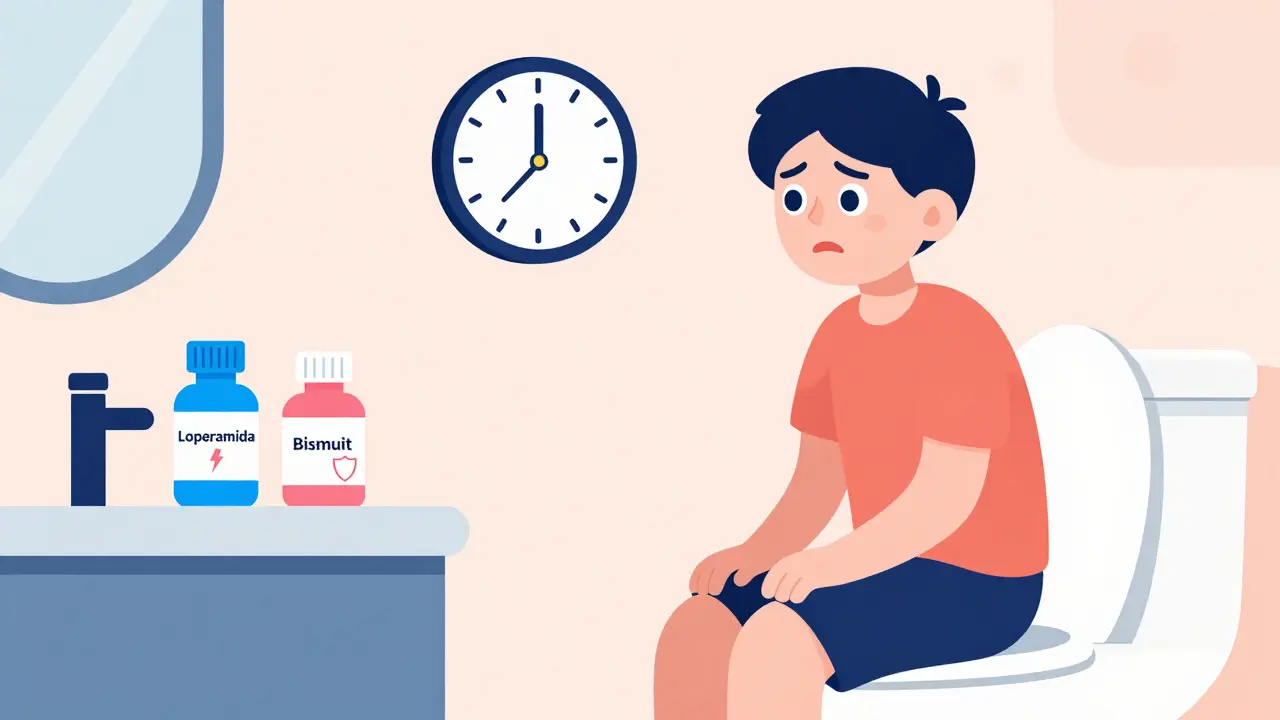
Diarrhea is more than just an inconvenience; it’s your body’s way of flushing out irritants. But when you’re stuck in the bathroom every hour, that biological function quickly turns into a crisis. Over-the-counter (OTC) medications can stop the chaos, but using them incorrectly can actually trap dangerous pathogens inside your gut. Knowing exactly which pill to take-and more importantly, when to put the bottle down and call a doctor-is the difference between a quick recovery and a hospital visit.
This guide breaks down the two main OTC options, how they work, and the specific red flags that mean you need professional medical help immediately.
The Two Main OTC Options: How They Work
Not all diarrhea meds are created equal. The market is dominated by two primary ingredients with very different mechanisms. Understanding this distinction helps you choose the right tool for your specific symptoms.
Loperamide (marketed as Imodium) is a synthetic opioid agonist. It works by binding to receptors in your large intestine to slow down gut movement. By increasing intestinal transit time by up to 70%, it gives your colon more time to absorb water from your stool. This makes it highly effective for reducing the frequency of bathroom visits, often cutting them by 40-60% within 24 hours. It kicks in fast, usually within 30 to 60 minutes.
Bismuth Subsalicylate (found in Pepto-Bismol and Kaopectate) takes a multi-pronged approach. It coats the gastrointestinal lining, absorbs toxins, reduces inflammation, and fights certain bacteria like E. coli and Campylobacter. While it might not stop the flow as aggressively as loperamide, it offers broader relief for accompanying symptoms like nausea and stomach cramps.
| Feature | Loperamide (Imodium) | Bismuth Subsalicylate (Pepto-Bismol) |
|---|---|---|
| Primary Action | Slows gut motility | Coats gut, kills bacteria, reduces inflammation |
| Best For | Rapid reduction of stool frequency | Nausea, cramps, traveler's diarrhea |
| Onset Time | 30-60 minutes | Variable, generally slower |
| Side Effects | Constipation, dizziness | Blackened stools/tongue (harmless) |
| Max Daily Dose (Adults) | 8 mg | 8 doses (approx. 12 mL liquid or 8 tablets) |
How to Take OTC Meds Safely
Effectiveness relies on strict adherence to dosing protocols. More is not better; in fact, exceeding limits can be dangerous.
For loperamide, the standard adult protocol is 4mg after the first loose stool, followed by 2mg after each subsequent unformed stool. Do not exceed 8mg in a 24-hour period without a prescription. If symptoms persist beyond 48 hours, stop taking it. For children, loperamide is FDA-approved for ages 6 and older (liquid) and 12 and older (caplets), but always consult a pediatrician first.
For bismuth subsalicylate, adults typically take 30mL of liquid or two tablets every 30 minutes as needed, up to eight doses in 24 hours. Note that this medication contains salicylates, similar to aspirin. Avoid it if you are allergic to aspirin, have bleeding disorders, or are giving it to children recovering from chickenpox or flu-like symptoms due to the risk of Reye’s syndrome.
A common mistake is combining these medications. Never take loperamide and bismuth subsalicylate together unless directed by a doctor, as this increases the risk of toxicity and masks serious symptoms.
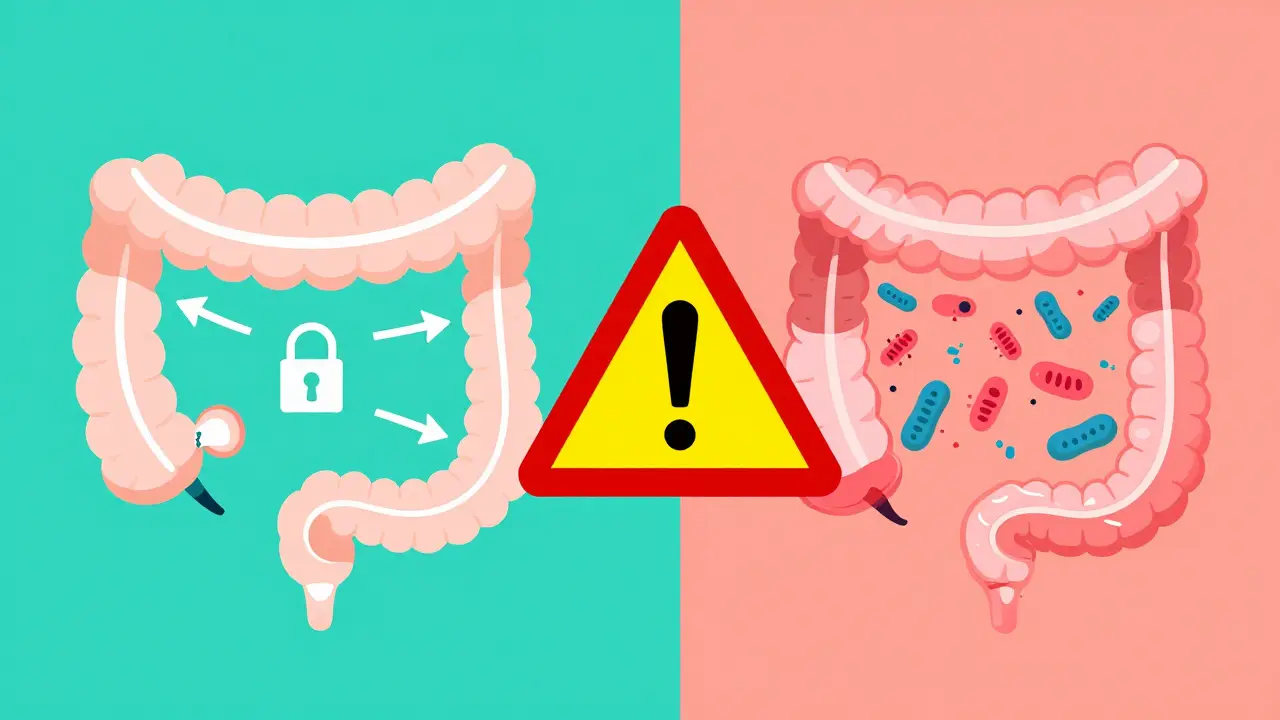
Critical Red Flags: When to Stop Self-Treating
OTC meds are for symptomatic relief, not curing underlying infections. Using them when you have a serious infection can prolong the illness or lead to severe complications like toxic megacolon. You must stop self-treatment and seek medical care if you experience any of the following:
- Bloody or black tarry stools: This indicates inflammation or bleeding in the digestive tract, possibly from inflammatory bowel disease (IBD) or a severe bacterial infection like Shigella.
- Fever above 100.4°F (38°C): A fever suggests your body is fighting an invasive pathogen. Slowing the gut traps these pathogens.
- Severe abdominal pain: Cramping is normal, but sharp, localized, or persistent pain is not.
- Signs of dehydration: Dark urine, extreme thirst, dry mouth, dizziness, or little to no urine output for 8+ hours.
- Duration: Diarrhea lasting more than 48 hours in adults or 24 hours in children requires evaluation.
According to the Mayo Clinic, anti-diarrheals should never be used if you have bloody stools or a high fever. Dr. Kyle Staller, a gastroenterologist at Massachusetts General Hospital, warns that trapping pathogens in the gut during an infectious episode can significantly worsen the outcome.

Hydration: The Most Important Treatment
Meds stop the flow, but they don’t replace what you’ve lost. Dehydration is the primary danger of diarrhea, especially for the elderly and young children. Water alone isn’t enough because it doesn’t replace lost electrolytes like sodium and potassium.
Use oral rehydration solutions (ORS) containing approximately 75mmol/L of sodium. Brands like Pedialyte or generic store brands work well. If you don’t have ORS, the WHO recommends mixing 6 teaspoons of sugar and half a teaspoon of salt into one liter of clean water. Sip slowly rather than gulping to avoid triggering vomiting.
Avoid dairy, high-fiber foods, caffeine, and alcohol during the acute phase. These can irritate the gut further. Once symptoms subside, reintroduce bland foods gradually. The BRAT diet-Bananas, Rice, Applesauce, and Toast-is a classic recommendation because these foods are low-fiber and easy to digest.
Special Considerations for Travelers
If you are traveling internationally, the stakes are higher. Traveler’s diarrhea affects 20-50% of international visitors, often caused by E. coli strains resistant to local antibiotics. Bismuth subsalicylate is particularly useful here because it has prophylactic properties. Taking it before meals can reduce the risk of developing diarrhea by up to 65%.
However, if you develop severe symptoms while abroad, do not rely solely on OTC meds. Seek local medical attention promptly, as you may require prescription antibiotics like azithromycin or rifaximin, which are far more effective against resistant bacterial strains.
Can I give OTC diarrhea medicine to my toddler?
Generally, no. The NHS and FDA advise against using loperamide for children under 12 without direct medical supervision due to the risk of paralytic ileus (stopped gut movement). For toddlers, focus exclusively on hydration with pediatric oral rehydration solutions and contact your pediatrician if symptoms last more than 24 hours.
Why does Pepto-Bismol turn my tongue black?
This is a harmless side effect caused by the bismuth reacting with sulfur in your saliva to form bismuth sulfide. It also causes black stools. It goes away shortly after you stop taking the medication and is not a sign of internal bleeding.
Is it safe to take Imodium every day?
No. OTC anti-diarrheals are for short-term use only (up to 48 hours). Chronic daily use can mask serious conditions like IBD or colon cancer and leads to dependency or severe constipation. Long-term management requires a doctor’s diagnosis and prescription treatment.
What should I eat when I have diarrhea?
Stick to bland, low-fiber foods. Bananas, white rice, applesauce, toast, boiled potatoes, and plain crackers are good options. Avoid spicy, fatty, or high-fiber foods, as well as dairy products, until your digestive system fully recovers.
When does diarrhea become an emergency?
Seek immediate emergency care if you experience signs of severe dehydration (confusion, fainting, rapid heartbeat), blood in your stool, severe abdominal pain, or a fever over 102°F (38.9°C). Also seek help if you cannot keep any fluids down for more than 12 hours.



Kris Wong May 17, 2026
Imodium is literally just a synthetic opioid that slows your gut so you don't poop. 🤯 They want us to trap the toxins inside our bodies instead of letting nature take its course. It's all about control, not health. The big pharma companies are scared of people actually getting rid of the pathogens they introduce into the food supply. 💊🚫
Danny S May 18, 2026
:( This article is dangerously misleading by suggesting these OTC meds are safe without mentioning the government surveillance angle. Bismuth subsalicylate contains salicylates which are tracked in your blood work for 'health monitoring' purposes. Do not trust the FDA guidelines on dosage. They are testing new chemical compounds on the public under the guise of 'diarrhea treatment'. Stay awake and read between the lines. :)
Jeremiah Cassandra May 20, 2026
Ah yes, because nothing says 'medical expertise' like reading a blog post written by someone who probably hasn't seen a patient since 1999. 🙄 But sure, let's pretend that loperamide isn't basically morphine for your intestines. I mean, if you really want to keep the bacteria in there to marinate, go ahead. Just don't come crying to me when you get toxic megacolon because you thought 'more is better'. Typical American approach to healthcare: ignore the symptoms until you're dying. 🇬🇧💀
charles robert May 21, 2026
The diarrhea is merely a physical manifestation of the soul's inability to hold onto the past. When we flush, we release trauma. But Imodium? Imodium is fear. It is the ego trying to control the uncontrollable flow of existence. Why do we resist the natural rhythm of expulsion? We are afraid of losing control, but in doing so, we become constipated in spirit as well as body. 🌑🌀 The black tongue from Pepto is the shadow self emerging. Embrace it or deny it, but know that the gut knows what the mind refuses to accept.
Warren Brewer May 21, 2026
Hey everyone! I just wanted to share that hydration is super important. Drink water with electrolytes. Pedialyte is good. Don't eat spicy food. Be kind to your tummy. If you feel bad, see a doctor. Take care! 😊
Mark Ronson May 21, 2026
Hello friends! As someone who has traveled extensively, I can confirm that bismuth subsalicylate is indeed very helpful for traveler's diarreah. However, one must be cautious of the side effects such as black stools which is harmless but alarming to some. Also, please note that combining medications without medical advice can lead to toxicity. It is essential to follow the dosing instructions carefully. Hydration with ORS is crucial. Remember to listen to your body and seek professional help if symptoms persist. Health is wealth afterall! 🌍✨
Mikey Mann May 23, 2026
There is a profound lesson here about balance. We rush to stop the discomfort, yet we forget that the body is intelligent. It wants to cleanse itself. Perhaps the real cure isn't a pill, but a change in how we live. Slow down. Eat clean. Trust your gut, literally and metaphorically. The BRAT diet is not just food; it is a return to simplicity. Bananas, Rice, Applesauce, Toast. Basic. Fundamental. Grounded. In a world of chaos, find your blandness. 🍌🍚
Mollie Louise May 25, 2026
I completely agree with the emphasis on hydration because dehydration is truly the biggest risk factor here, especially for our little ones and elderly family members who might not communicate their thirst levels effectively! 🥺 It is so important to remember that while these medications can provide temporary relief, they are not substitutes for proper medical attention if you have any red flags like fever or bloody stools. Let's support each other by sharing accurate information and reminding our loved ones to sip slowly rather than gulp those rehydration solutions to avoid triggering vomiting. Together we can make healthier choices and ensure that everyone feels supported during these uncomfortable times! 💪❤️
Christina Moran May 26, 2026
i used to think pepto was just for heartburn but now i know its great for stomach bugs too. my mom always gave me this when i was sick traveling abroad. does anyone else notice the taste is kinda weird? like chalky mint? anyway glad to know about the black tongue thing so i dont freak out next time lol. thanks for the tips!