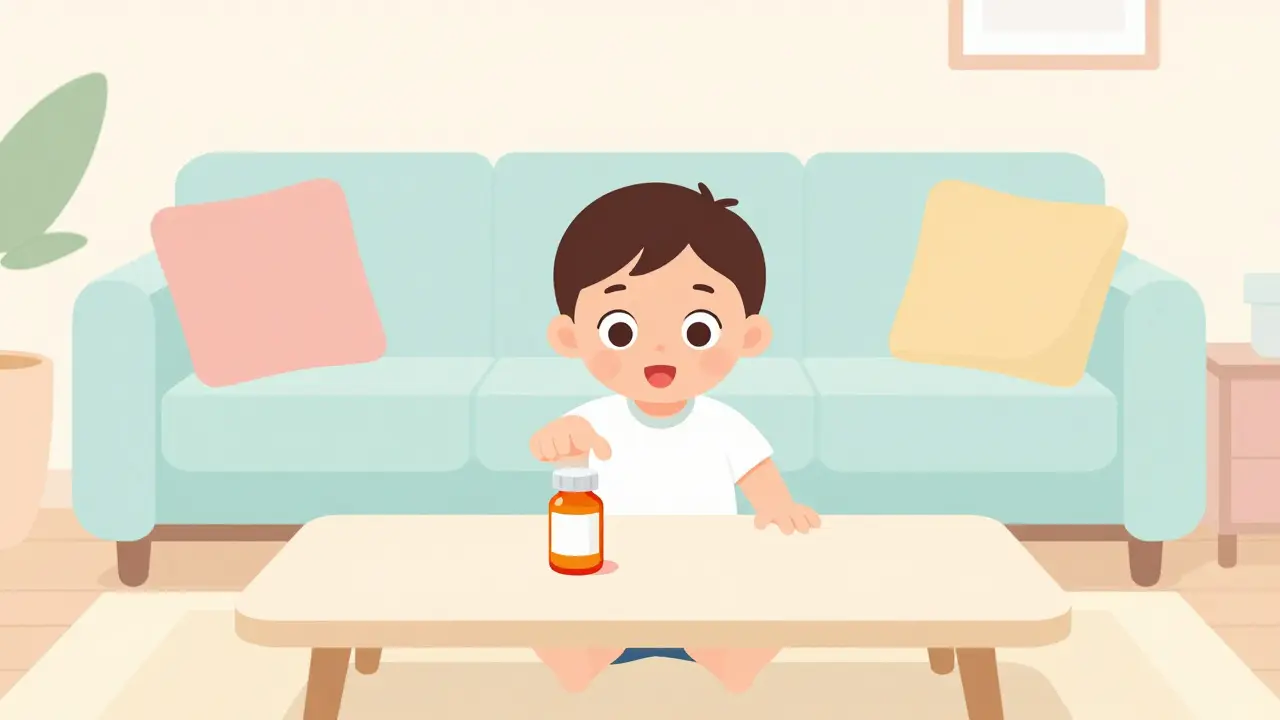
Key Takeaways for Parents
- Store all medicines in locked cabinets at least 4 feet off the ground.
- Use only the dosing device (syringe or cup) that comes with the specific medication.
- "Child-resistant" does not mean child-proof; some kids can open these caps by age 3.5.
- Keep the Poison Control number (1-800-222-1222 in the US) saved in your phone.
- Dispose of unused meds immediately through official take-back programs.
The Danger of the "Kitchen Spoon"
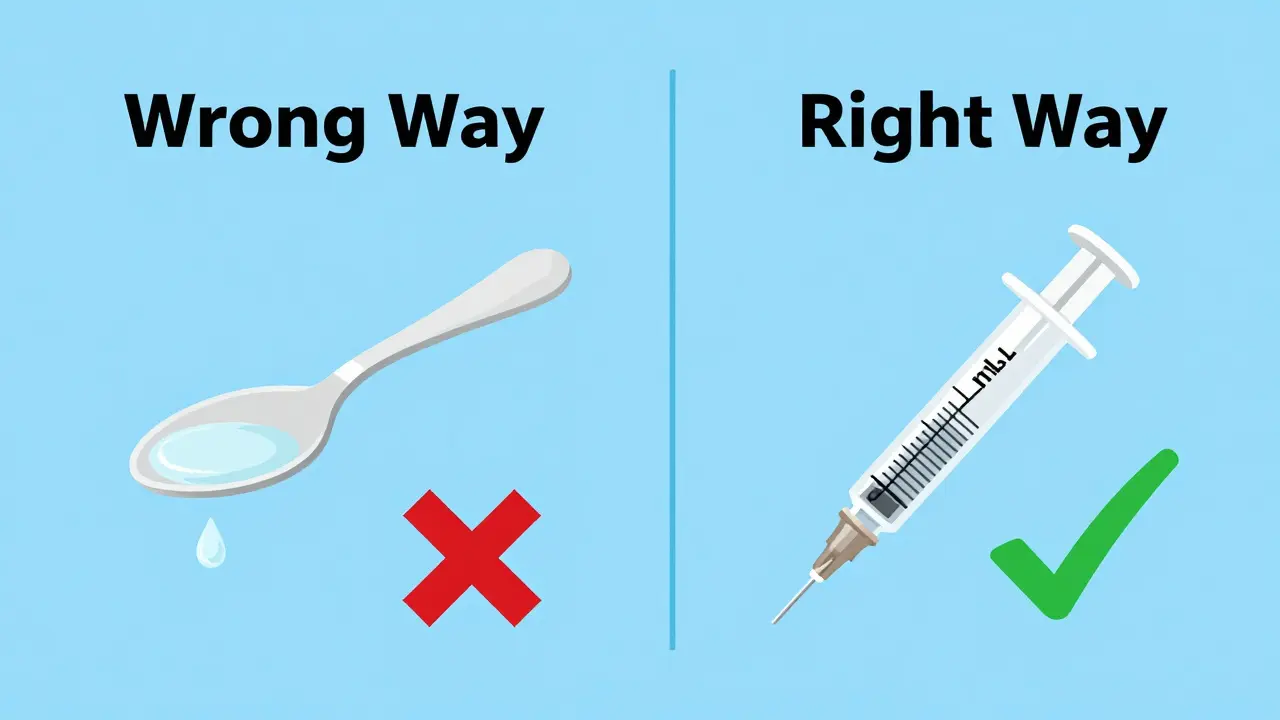
One of the most common ways kids end up in the ER isn't because they stole a pill, but because of a dosing mistake. pediatric medication overdose is frequently caused by using household items to measure liquid medicine. Research shows that nearly 80% of liquid medication errors involve using kitchen spoons instead of standardized tools. A "teaspoon" from your silverware drawer can vary wildly in volume, leading to a dangerous under-dose or a toxic over-dose.
To avoid this, always use the mL (milliliters) measurement. The PROTECT Initiative, a major effort by the CDC, has pushed pharmaceutical companies to move away from teaspoons and tablespoons on labels. If you have an old bottle that still uses "teaspoons," it's time to be extra cautious or double-check the mL conversion. Only use the oral syringe or dosing cup provided with that specific bottle. Different brands have different concentrations; using a cup from a different medication is a recipe for a mistake.
Storage Strategies That Actually Work
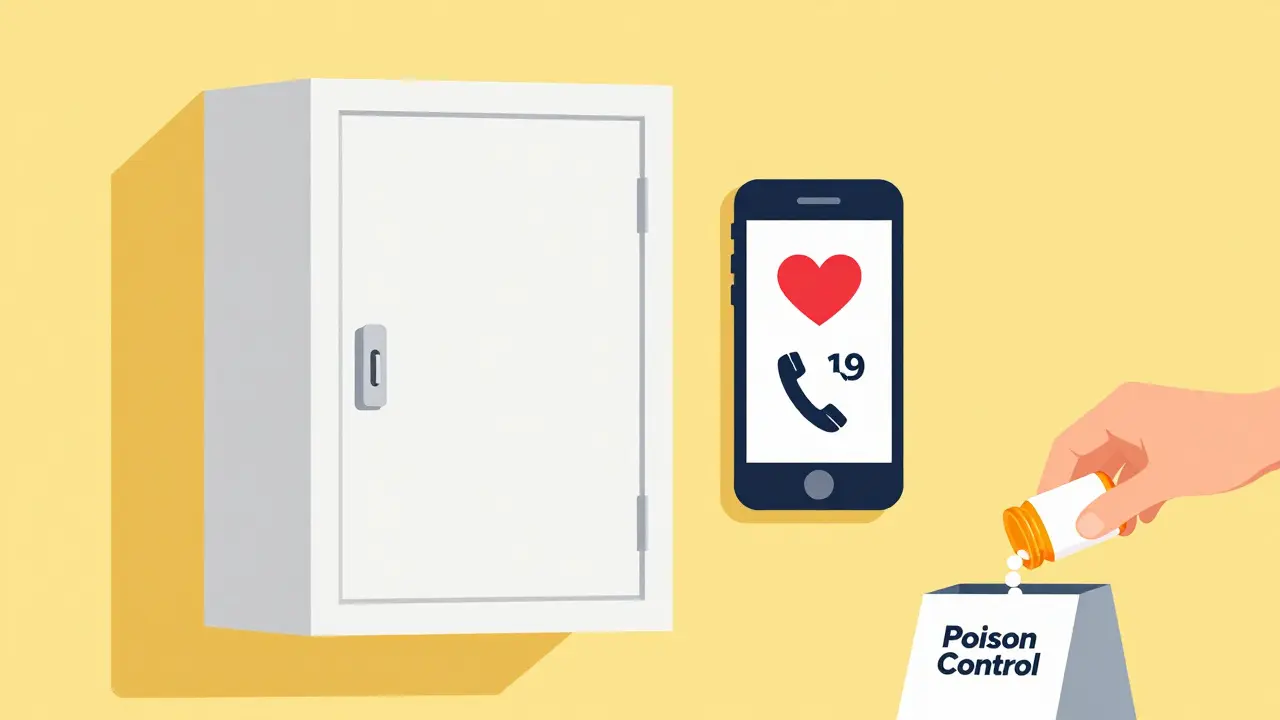
We've all heard the advice to "keep medicine up high," but for a determined toddler, a countertop is just a stepping stone. Real safety requires a physical barrier. The gold standard is a locked cabinet located at least 4 feet above the floor. This removes the temptation and the opportunity.
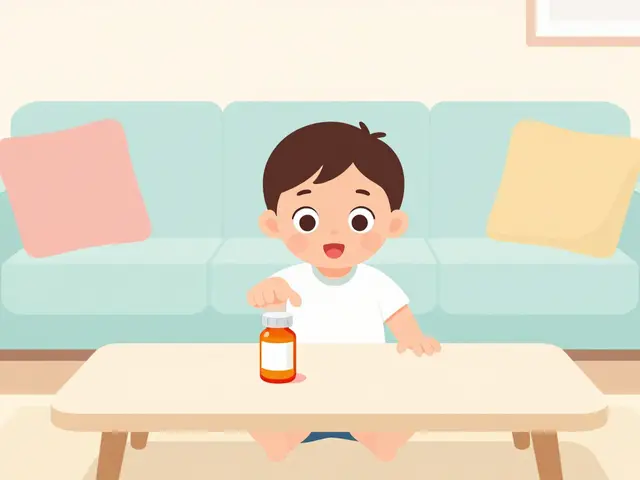
A common mistake parents make is leaving a bottle on the nightstand or coffee table "just for a few days" while a child is sick. This is often when accidents happen. The "Up and Away" campaign emphasizes that medications should be returned to their secure home immediately after every single dose. Even if you think the cap is secure, remember that about 10% of children can bypass child-resistant packaging by the time they are 42 months old. These caps are designed to slow children down, not to be an impenetrable vault.
| Storage Method | Risk Level | Why? |
|---|---|---|
| Nightstand / Countertop | Critical | Easy access; high visibility for curious children. |
| High Shelf (Unlocked) | Moderate | Children use chairs or furniture to climb. |
| Child-Resistant Cap Only | Moderate | Not all children are deterred; caps can fail or be left loose. |
| Locked Cabinet (4ft+ High) | Low | Creates two barriers: height and a physical lock. |
Recognizing and Responding to an Overdose
Knowing the signs of an overdose can be the difference between a scare and a tragedy. For common medications like acetaminophen (Tylenol) or diphenhydramine (Benadryl), symptoms can be subtle at first. Look for extreme drowsiness, unusual irritability, or vomiting. If the medication involved was an opioid, the danger is even more immediate, often presenting as shallow breathing or a pinpoint pupil response.
If you suspect an overdose, do not wait for symptoms to appear. Your first move should be to contact Poison Control or emergency services. If you are dealing with a potential opioid overdose, naloxone is a life-saving medication that can reverse the effects. While often associated with adults, the FDA has approved it for children. The American Academy of Pediatrics now recommends that parents of children prescribed opioids also have naloxone on hand and know how to use it.
The Danger of Concentration Confusion
Have you ever noticed that "Infant's" and "Children's" versions of the same medicine often have different strengths? This is a major trap. About 42% of dosing errors happen because caregivers confuse these concentrations. For example, if you give a child a dose of infant acetaminophen using a children's dose guideline, you might be giving them too much or too little depending on the formula.
Always read the label for the "concentration" (e.g., 160 mg per 5 mL). If the bottle in your hand doesn't match the instructions you were given by your doctor, stop and call your pharmacist. It is better to spend five minutes on the phone than five hours in the emergency room.
Cleaning Out the Medicine Cabinet
Unused medications are ticking time bombs. Whether it's a leftover antibiotic from last year or a prescription for a relative who no longer lives with you, old meds need to go. The safest way to handle this is through professional take-back programs. Many pharmacies now have secure kiosks where you can drop off unused pills and liquids.
If a take-back program isn't available, check the packaging for disposal instructions. Some medications have specific requirements to prevent them from leaching into the water supply. Never flush medication down the toilet unless the label explicitly tells you to do so. Removing the clutter from your cabinet doesn't just protect your kids; it prevents adults from taking the wrong medication by mistake.
Are child-resistant caps 100% effective?
No. Child-resistant packaging is designed to make it difficult for children under five to open the container, but it is not child-proof. Data shows that some children can open these caps by age 3 or 4. They should be used as one layer of protection, not the only one.
What is the best way to measure liquid medicine?
Always use the dosing syringe or plastic cup that comes specifically with that medication. Never use a kitchen spoon, as they are not standardized and can lead to significant dosing errors.
What should I do if I think my child swallowed medicine?
Immediately call your local poison control center or emergency services. Have the medication bottle in hand so you can tell the operator exactly what was taken, the concentration, and the estimated amount. Do not induce vomiting unless instructed by a professional.
Where is the safest place to store medicine in a house?
The safest location is a locked cabinet or box stored at least 4 feet above the ground, completely out of the sight and reach of children.
How do I dispose of old medications safely?
Use a community drug take-back program or a pharmacy kiosk. If these aren't available, follow the specific FDA disposal guidelines on the medication's packaging to ensure the chemicals don't harm the environment.
Next Steps for a Safer Home
If you're not sure where to start, take an hour this weekend to do a "medicine sweep." Walk through every room-including the guest bathroom and the bedside tables-and move every single medication into one locked, high cabinet. Update your phone contacts with the Poison Control number. If you have a child prescribed a high-risk medication like an opioid, talk to your doctor about co-prescribing naloxone and learning how to administer it. These small, concrete changes create a massive safety net for your family.



Divyanshu Giri April 24, 2026
This is a total lifesaver for new parents!! Keep the kids safe and happy 🌟
Ajinkya Joshi April 25, 2026
Wow, imagine needing a whole guide to figure out that putting pills in a locked box is a good idea. Truly ground breaking stuff here 🙄
Caroline Duvoe April 26, 2026
everyone knows this already 🙄
Ally Warren April 27, 2026
It is interesting how we treat the home as a sanctuary, yet it is often the most dangerous place for a curious mind. The paradox of protection is that the more we hide, the more they want to find.
RAJESH MARAVI April 29, 2026
Actuallly some kidz are way smarter than 3.5 years old... my nefew opend a bottle at 2!! This info is basically useless and way too late for some of us lol!!
Chidi Prosper May 1, 2026
We absolutely need to spread this awareness. Many people in my community still rely on traditional measurements and don't realize how dangerous a simple kitchen spoon can be. Let's push for standardized dosing tools everywhere!
Olayinka Ibukunoluwa Mercy May 1, 2026
Thank you so much for sharing this vital information!!! ❤️ It is so important to keep our little ones safe, and having that Poison Control number saved is just a basic must-have for every household!!! 🛡️✨
Amy Fredericks May 1, 2026
I love how the guide suggests a "medicine sweep." It's such a practical way to get organized and ensures no forgotten bottles are hiding in guest rooms. We can all do this together!
Dan Wizard May 3, 2026
I find myself wondering about the long-term psychological impact of such strict containment, although I completely agree that safety comes first when dealing with toxic substances, and perhaps we should also consider how to educate children about the dangers of medicine in an age-appropriate way so they don't just see it as a forbidden fruit.
Mike Arrant May 4, 2026
Listen, if you're still using kitchen spoons in 2024, you're basically failing as a parent. Just buy the damn syringe and stop making excuses for why your kid is in the ER.
Mayur Pankhi Saikia May 6, 2026
The obsession with "mL" is simply a bourgeois preference... most people manage fine with a spoon, and this a-la-carte safety guide is just over-complicating basic common sense!!!
Odicha ude Somtochukwu May 8, 2026
It is most imperative that we maintain a high standard of vigilance, as the health of our children is our greatest wealth. I strongly encourage every parent to implement these rigorous storage protocols immediately!!!
Anastasios Kyriacou May 9, 2026
too long didnt read but probly just lock it up lol