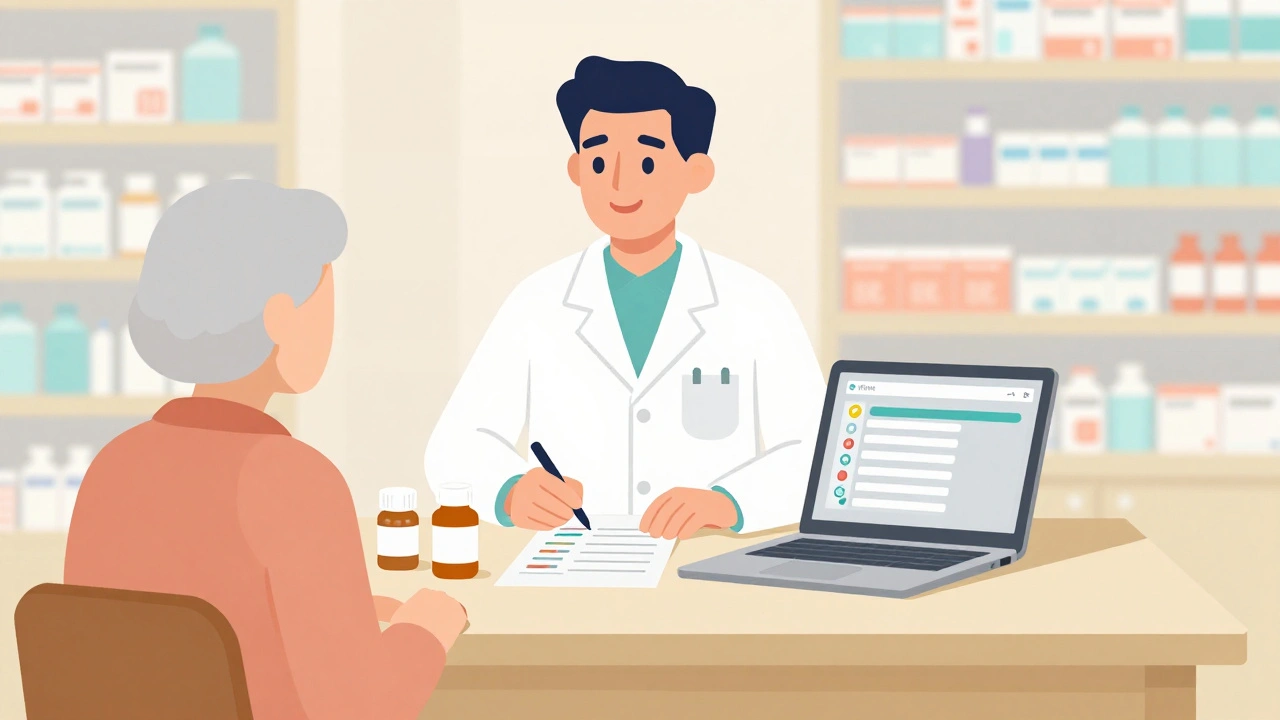
Every year, thousands of people end up in the emergency room because of medication mistakes - not because they took too much, but because they didn’t know what they were taking. Your pharmacist knows this better than anyone. And yet, most people walk into the pharmacy, hand over a script, pick up their pills, and leave without asking a single question. That’s a missed opportunity - and it’s dangerous.
Why Your Pharmacist Is Your Best Medication Safety Net
You see your doctor maybe once or twice a year. But you visit your pharmacy an average of 17 times a year. That’s more than double the number of doctor visits. Your pharmacist sees your full medication list every time you pick up a prescription. They know if you’re taking five different blood pressure pills, three painkillers, and a supplement that could make them all dangerous together. They’re trained to spot those red flags - and they’re the last line of defense before a mistake becomes a crisis.In 2023, a study of Veterans Affairs medical centers found that pharmacist-led consultations prevented over 1,200 serious drug reactions in just one year. Each of those interventions saved an average of $1,250 in hospital costs. And that’s not even counting the lives that were spared. These aren’t theoretical numbers. These are real people who didn’t end up in the hospital because their pharmacist asked, “Have you been taking this with your heart medication?”
What Happens During a Pharmacy Consultation?
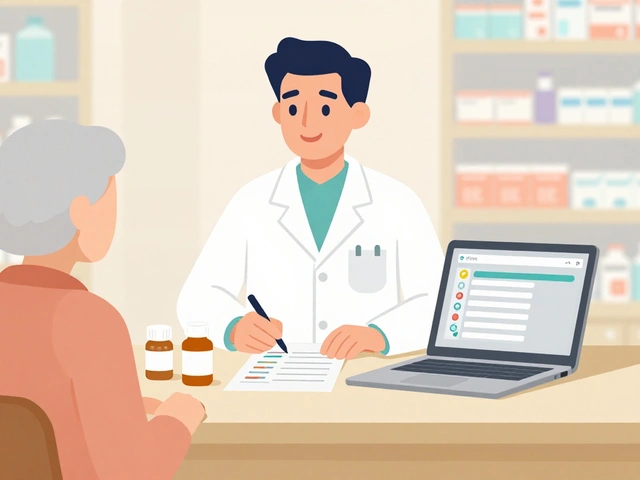
A consultation isn’t just a quick chat at the counter. It’s a structured, private conversation - usually 15 to 20 minutes long - where your pharmacist sits down with you, reviews every pill you take, and asks the hard questions:- Are you taking all your meds as prescribed?
- Are you skipping doses because they’re too expensive?
- Do you know what each pill is for?
- Have you noticed any new side effects - dizziness, nausea, confusion?
- Are you using over-the-counter drugs or supplements that might interact?
They’ll check for dangerous combinations - like mixing statins with grapefruit juice, or taking NSAIDs with blood thinners. They’ll flag if you’re on too many sedatives or if your diabetes meds are outdated. They’ll even help you simplify your routine. If you’re taking eight pills a day, they might find a combination pill that cuts it down to three. That’s not just convenient - it’s life-saving.
And it’s not just about prescriptions. A 2022 survey found that 76% of patients who had a full medication review improved their adherence. That means they actually took their meds as directed. That’s the difference between managing a condition and letting it spiral out of control.
Who Should Use This Service?
You don’t need to be sick or in crisis to benefit. If you’re taking three or more prescription medications - especially for chronic conditions like diabetes, high blood pressure, heart disease, or depression - you should be scheduling a consultation. The same goes for anyone over 65, anyone who’s been recently hospitalized, or anyone who’s seen multiple doctors. Each provider might prescribe something without knowing what the others have ordered.Medicare Part D covers these services for eligible patients - which includes anyone with multiple chronic conditions and taking multiple medications. But even if you’re not on Medicare, many private insurers now cover them too. In 2023, 43% of commercial insurance plans offered some form of medication therapy management. Ask your pharmacy. It’s free if your plan covers it. And if they say no, ask them to check again - coverage is expanding fast.
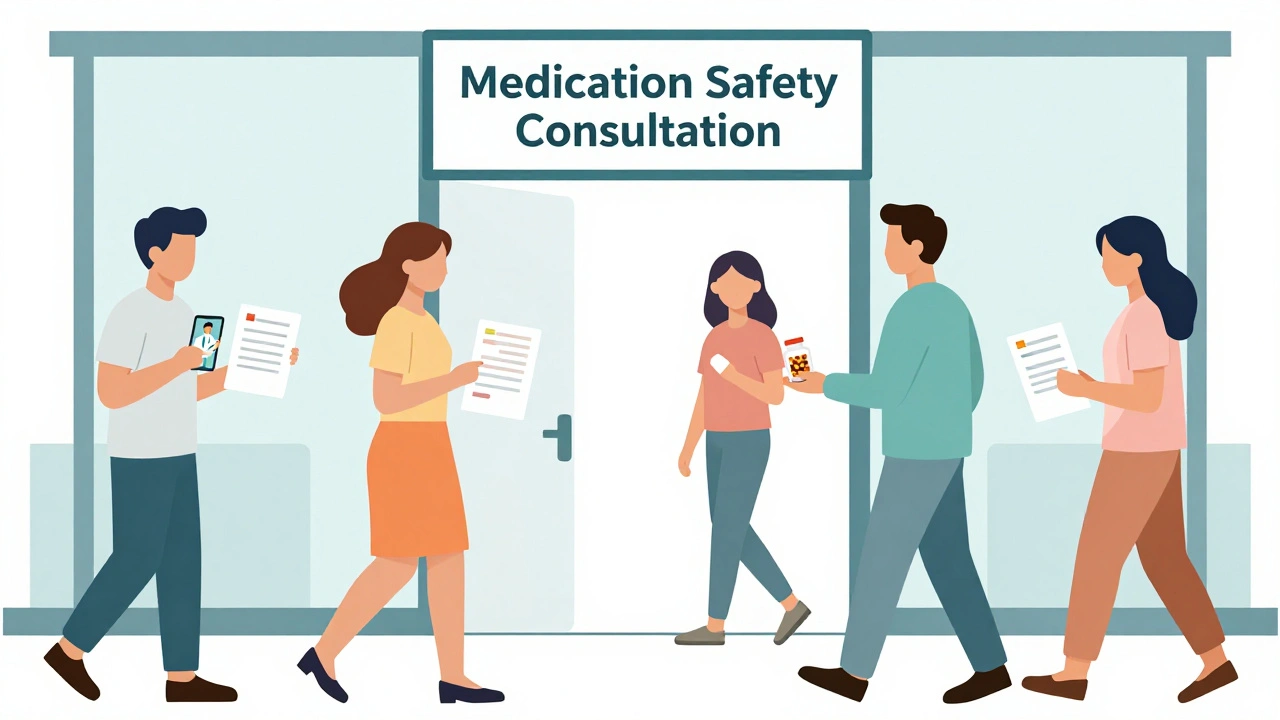
How to Get the Most Out of Your Consultation
Don’t wait for them to call you. Take control. Here’s how:- Bring your complete list. Include every prescription, OTC pill, vitamin, herb, or supplement. Don’t assume they know what you’re taking. Write it down. Even the little things - like melatonin or fish oil - matter.
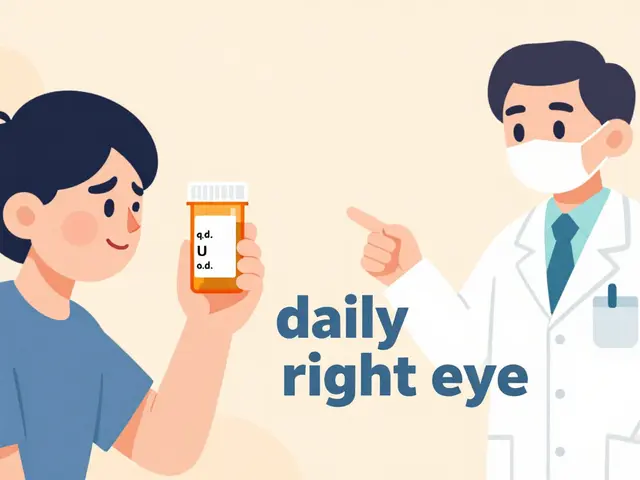
- Ask the big questions. “What’s this for?” “What happens if I miss a dose?” “Is there a cheaper version?” “Could this interact with anything else I take?”
- Ask for a written plan. A good consultation ends with a personal medication record and action plan. This isn’t just for you - it’s a document you can give to any new doctor or emergency room.
- Schedule regularly. Don’t wait until something goes wrong. Book one every six to twelve months. If your meds change, schedule one right away.
Some pharmacies offer dedicated consultation hours - often early morning or late afternoon - to avoid crowds. Others let you book online. If your pharmacy doesn’t advertise it, ask. Many don’t promote it because they assume you don’t know it’s free.
What If You’re Not Covered?
Even if your insurance doesn’t pay for it, the service is still worth it. Most pharmacies offer basic consultations at no charge - especially if you’re a regular customer. You’re not just paying for pills; you’re paying for expertise. And that expertise can save you thousands in hospital bills down the line.One patient in Melbourne told her pharmacist she’d been feeling dizzy for weeks. Turns out, her new blood pressure med was interacting with a common herbal supplement she’d been taking for “better sleep.” The pharmacist switched her to a different med and suggested a non-drug sleep strategy. She saved $200 a month and stopped feeling like she was going to pass out.
Barriers - and How to Overcome Them
The biggest problem? Time. Pharmacists are busy. In high-volume stores, some only have six minutes per patient - far below the 15 minutes needed for a proper review. That’s why you need to be proactive. Call ahead. Ask for a consultation slot. Say you’re on multiple medications and want to make sure everything’s safe.Another issue? Fragmented records. Your pharmacist might not know about a new prescription your doctor gave you last week. That’s why bringing your own list is so important. Don’t rely on them to pull everything together. You’re the only one who knows your full picture.
And yes - some pharmacists still work in noisy, open spaces. But 68% of community pharmacies now have private consultation rooms. If yours doesn’t, ask if they can move to the back, or schedule your visit during a quieter time.
The Bigger Picture: Pharmacists Are Part of Your Care Team
Healthcare is moving toward team-based care. More hospitals and clinics are now including pharmacists as part of the core team. In 2023, 61% of health systems had pharmacists working directly with doctors - something that was rare just five years ago. Community pharmacies are catching up. When you use a consultation service, you’re not just getting advice - you’re becoming an active participant in your own safety.Pharmacists don’t just fill prescriptions. They catch errors doctors miss. They find cheaper alternatives. They help you understand your treatment. They’re the only healthcare provider who sees your full medication history every single time you walk in the door.
Don’t treat your pharmacy like a vending machine. Treat it like part of your medical team. Because it is.
Is a pharmacy consultation free?
Yes, if you’re eligible. Medicare Part D covers comprehensive medication reviews for people with multiple chronic conditions and taking multiple medications. Many private insurers now cover similar services too. Even if your plan doesn’t pay, most pharmacies offer basic consultations at no cost - especially for regular customers. Always ask.
How often should I get a medication review?
At least once a year - and anytime your medications change. If you’ve been hospitalized, started a new drug, or noticed side effects like dizziness, confusion, or nausea, schedule a consultation right away. People on five or more medications should aim for a review every six months.
What should I bring to my consultation?
Bring a complete list of everything you take: all prescriptions, over-the-counter drugs (like ibuprofen or antacids), vitamins, supplements, and herbal remedies. Include dosages and how often you take them. Also bring your insurance card and any recent lab results or doctor’s notes. Don’t rely on memory - write it down.
Can my pharmacist change my prescription?
No - but they can recommend changes. If your pharmacist spots a problem - like a dangerous interaction or an outdated dose - they’ll contact your doctor with a suggestion. In 22 U.S. states, pharmacists now have limited authority to adjust certain medications (like blood pressure or diabetes drugs) under a collaborative agreement. In Australia, pharmacists can provide advice but can’t prescribe. Always let your doctor make the final call, but let your pharmacist be your advocate.
Do I need to make an appointment?
It’s best to. Walk-in consultations are often rushed or unavailable. Call ahead and ask if they offer scheduled medication reviews. Many pharmacies have dedicated times - like Tuesday afternoons or Saturday mornings - for these services. If they say no, ask why. It might mean they don’t offer it yet - but they might start if enough people ask.
Can I get a consultation over the phone or video?
Yes. Since the pandemic, 62% of pharmacies now offer virtual consultations. This is especially helpful if you’re homebound, have mobility issues, or live far from a pharmacy. Ask if your pharmacy offers telehealth medication reviews. The process is the same - you’ll still need your full medication list ready - but you can do it from your couch.
What if my pharmacist finds a problem?
They’ll explain the risk and suggest a solution - like switching to a different drug, adjusting the dose, or stopping something unnecessary. Then they’ll contact your doctor with a formal recommendation. You’ll get a copy of the report. You’re not obligated to follow their advice, but if your doctor agrees, you’ll get a new prescription. In many cases, they’ll also help you find a cheaper alternative - saving you hundreds a year.
Can a pharmacist help me save money on meds?
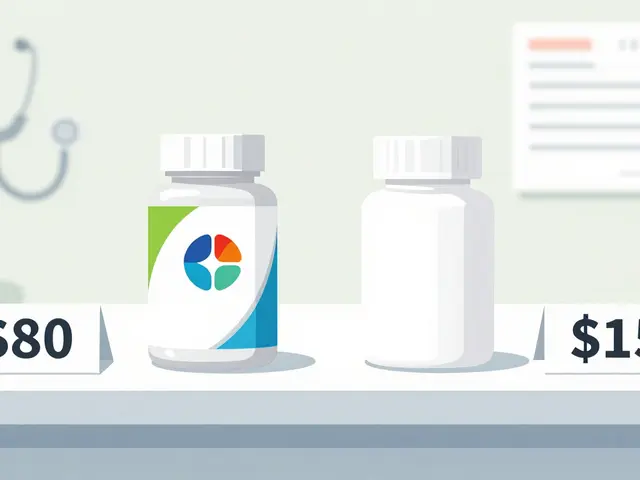
Absolutely. Pharmacists know about generic alternatives, manufacturer coupons, patient assistance programs, and mail-order options. One patient saved $200 a month just by switching to a generic version of their blood thinner. Another found a 90-day supply through a pharmacy program that cut their monthly cost in half. Don’t assume you’re stuck with the price on the label - ask your pharmacist for options.






Francine Phillips December 3, 2025
Wow I didn’t even know this was a thing
Makenzie Keely December 4, 2025
This is absolutely critical information-and I’m shocked more people don’t know about it. Pharmacists aren’t just dispensers; they’re clinical experts trained to catch interactions, redundancies, and dangerous combinations that doctors miss because they’re juggling 20 patients an hour. I used to think, ‘I’ll just read the label,’ but after my mom ended up in the ER from mixing a common OTC sleep aid with her beta-blocker, I learned the hard way. Now, every time I pick up a script, I ask for a med review. It takes 15 minutes. It could save your life. And yes-it’s often free. If your pharmacy says no, ask for the manager. They’re legally allowed to offer this under Medicare Part D and many private plans. Stop treating your pharmacy like a vending machine. You wouldn’t skip a doctor’s appointment for your heart meds-don’t skip this either.
Katherine Gianelli December 6, 2025
Y’all I’ve been doing this for years and it’s changed my life. I’m on six meds for diabetes, hypertension, and depression-and honestly? I was overwhelmed. My pharmacist sat me down, found two duplicates, switched me to a combo pill that cut my daily count from eight to three, and even hooked me up with a coupon that saved me $180/month. She didn’t just fix my meds-she gave me a printed sheet with colors and times and a little calendar. I hang it on my fridge. My sister just started using it too. If you’re taking more than three pills? Go. Right now. Don’t wait until you’re dizzy or confused. That’s how you end up in the hospital. Your pharmacist wants to help-they just need you to ask.
Joykrishna Banerjee December 8, 2025
How quaint. In India, we have no such luxury-pharmacists are often just clerks who can’t even spell ‘hypertension.’ And now you want me to believe that in the U.S., a pharmacy employee with a 2-year degree is somehow a ‘medication safety net’? Please. Doctors prescribe. Pharmacists dispense. That’s it. This is just corporate wellness theater wrapped in Medicare jargon. Also, ‘consultation’? Sounds like a way to upsell supplements. I’ve seen it. They push omega-3s like they’re magic. Don’t fall for the hype. Your doctor is the expert-not the guy behind the counter who’s trying to hit his KPIs.
Myson Jones December 9, 2025
Thank you for this thoughtful and well-structured overview. I appreciate the emphasis on patient agency and the clear delineation between what pharmacists can and cannot do. In my professional experience working in community health, I’ve observed that when patients are equipped with accurate, accessible information-and empowered to ask questions-their adherence and outcomes improve dramatically. The statistic regarding 76% improved adherence following a medication review is particularly compelling. I would only add that while insurance coverage is expanding, systemic barriers such as understaffing and lack of reimbursement models still impede universal access. Advocacy and awareness remain essential.
parth pandya December 9, 2025
hey i never knew this was free! i always thought you had to pay. i go to the pharmacy like 3x a week for my blood pressure and diabetes meds. i just grab and go. i just asked my pharmacist today and she said yeah we do it for free if you ask. she wrote down all my meds on a paper and showed me what was dup and what i could drop. i was like wow. i saved 3 pills a day. also she got me a generic for my blood thinner that cost 20 bucks instead of 180. i feel so dumb for not asking sooner. thanks for the post.
Albert Essel December 11, 2025
I’ve been a pharmacy technician for over a decade, and I can confirm: pharmacists are the most underutilized resource in healthcare. We see every prescription you fill, every OTC purchase, every supplement you buy. We catch interactions, duplicate therapies, and dosage errors that even EHRs miss. I once caught a patient on three different anticoagulants-two of them prescribed by different specialists who didn’t know about each other. I called both doctors, got the meds reconciled, and saved the patient from a possible stroke. We don’t get paid enough. We don’t get thanked enough. But we’re here. And we’re watching. Please-ask for help. Don’t wait for a crisis.
Gavin Boyne December 11, 2025
So let me get this straight. We’ve turned pharmacists into glorified medication auditors because our healthcare system is so broken that doctors don’t talk to each other, patients don’t know what they’re taking, and insurance companies won’t pay for coordination of care. Brilliant. We’ve created a system where the only person who knows your full meds is the guy who’s been standing behind a counter for 12 hours straight, trying to refill 40 prescriptions before lunch. And now we’re patting ourselves on the back for not dying? This isn’t innovation. This is damage control. But hey-if you want to avoid the ER, just ask nicely. Maybe they’ll have time for you after they finish the 300 other things they’re supposed to do. Thanks, capitalism.
Rashi Taliyan December 12, 2025
OMG I JUST DID THIS LAST WEEK AND I CRIED. I’ve been taking that one pill for anxiety for 8 years and never knew it was making my blood pressure spike. My pharmacist didn’t just fix it-she held my hand, called my doctor, got me a new script in 20 minutes, and even gave me a little notebook to track my mood. I didn’t know I was this sick. I thought it was just ‘life.’ But she saw it. She cared. And now I sleep. I breathe. I’m not scared to leave the house anymore. I don’t know how to thank you for writing this. I’m telling everyone. Everyone. This isn’t just advice. It’s a lifeline.