Medication Absorption: How Your Body Takes in Drugs and Why It Matters
When you swallow a pill, it doesn’t just disappear and start working. Medication absorption, the process by which a drug enters your bloodstream from its site of administration. Also known as drug absorption, it’s the first step that determines whether your medicine will actually help you—or sit in your gut doing nothing. If absorption is slow, weak, or blocked, even the most powerful drug becomes useless. That’s why two people taking the same pill at the same dose can have completely different results.
Several things control how well your body absorbs medication. Your stomach acid, the food you ate an hour before, your gut health, even your age and body weight all play a role. For example, some drugs like doxycycline won’t absorb properly if taken with dairy or antacids. Others, like opioids, can cause constipation that slows down how fast they move through your system. And if you’re obese, your body may handle DOACs like apixaban or rivaroxaban differently—dosing isn’t one-size-fits-all. Then there’s the route: a fentanyl patch delivers medicine through your skin, while an inhaler sends it straight to your lungs. Each path has its own absorption rules.
Even small changes can throw off absorption. Taking a pill with grapefruit juice can make some drugs too strong. Skipping meals might stop certain antibiotics from working right. And if you have kidney or liver issues, your body may not process the drug the same way after it’s absorbed. That’s why acetaminophen dosing needs to be adjusted in people with kidney problems, and why tirzepatide works better in some people because of how it’s absorbed and processed over time.
Understanding medication absorption isn’t just science—it’s personal. It explains why your headache medicine works after lunch but not after breakfast. Why your blood thinner needs to be taken at the same time every day. Why your doctor asked if you eat high-fat meals when prescribing your cholesterol drug. This isn’t about memorizing facts. It’s about making sure your treatment actually works.
Below, you’ll find real, practical guides that break down how absorption affects everything from pain relief to weight loss, from asthma inhalers to blood thinners. These aren’t textbook explanations. They’re clear, no-fluff breakdowns of what happens inside your body—and what you can do to make sure your meds work the way they should.
Fiber Supplements and Medication Absorption: How to Separate Doses
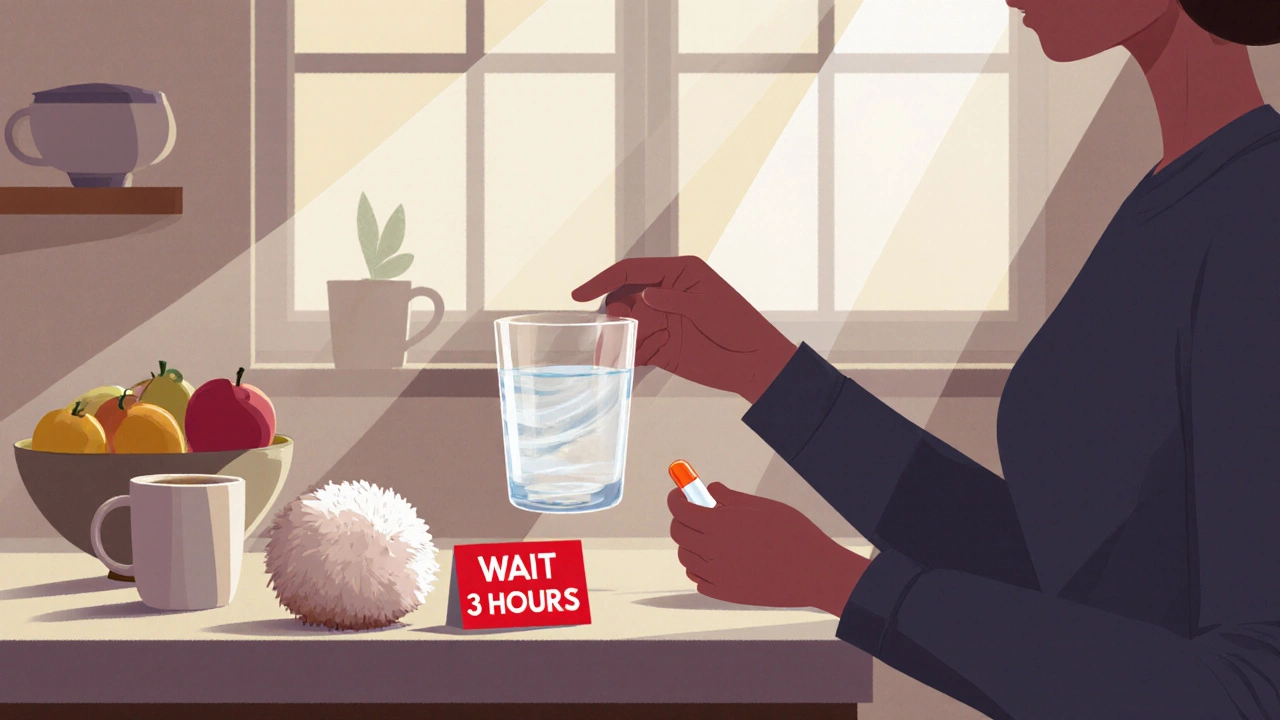
Fiber supplements can block your medications from being absorbed. Learn which drugs are affected, how far apart to take them, and how to make this simple timing rule work in your daily routine.