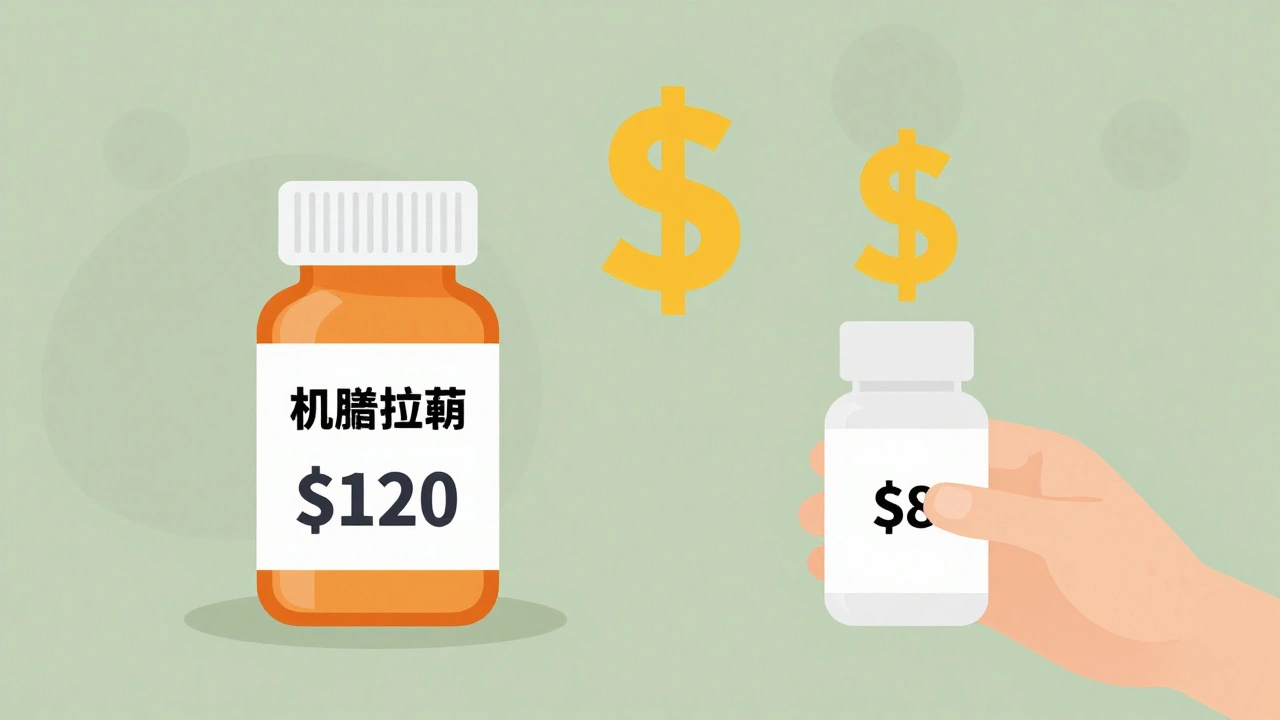
Imagine needing a daily pill to manage your blood pressure. The brand-name version costs $120 a month. You pay $40 out of pocket because of your insurance plan. Then you find out the generic version does the exact same thing - same active ingredient, same FDA approval - and costs $8 a month. Your out-of-pocket cost drops to $5. That’s not a trick. That’s real. And it happens every day across the U.S.
Generics Are the Hidden Hero in Your Medicine Cabinet
Nearly 9 out of 10 prescriptions filled in the U.S. are for generic drugs. That’s not a small fraction. That’s the norm. But here’s the part most people don’t realize: even though generics make up 90% of prescriptions, they account for just 13% of total drug spending. The rest? Brand-name drugs. That’s the math behind why generics save the system billions.
In 2023, the average out-of-pocket cost for a generic prescription was $7.05. For a brand-name drug? $27.10. That’s nearly four times more. And that’s just the average. Some generics cost as little as $3. Sildenafil Citrate, the generic version of Viagra, dropped from $50 per pill to $3.07. Emtricitabine/Tenofovir, used for HIV prevention, went from $20 to $2.13. These aren’t outliers. They’re standard.
And here’s the kicker: 93% of all generic prescriptions cost $20 or less out of pocket. Over 80% are under $20. For most people, that’s less than a coffee run. But if generics didn’t exist? You’d be paying hundreds - sometimes thousands - more every year.
What Happens When a Brand-Name Drug Loses Its Patent?
When a drug’s patent expires, other companies can legally make the same medicine. They don’t have to spend millions on clinical trials. They don’t need to pay for flashy TV ads. So they sell it for a fraction of the price.
Take efavirenz, emtricitabine, and tenofovir - the combo used to treat HIV. Before generics, a 30-day supply cost about $1,000. After generics hit the market? $65. That’s a 94% drop. The FDA estimated that single switch saved patients and insurers $131 million in one year.
Same story with Pantoprazole, a common acid reflux drug. At Albertsons, it’s $44. At a direct-to-consumer pharmacy like Health Warehouse? $9.20. That’s 79% less. Rosuvastatin, a cholesterol pill, costs $110 at Walgreens. Online? $7.50. You’re not getting a lesser product. You’re getting the same medicine, just without the marketing markup.
Why Are You Still Paying Too Much? (Hint: It’s Not the Drug)
Here’s where it gets frustrating. Even when generics are available, many people still pay way more than they should. Why? Because of how insurance plans are built.
Some plans put generics on the same tier as brand-name drugs. That means you pay a higher copay - even though the drug costs the pharmacy a fraction of the price. One study found that when insurers moved generics to higher cost tiers, patient spending jumped by 135%, even as drug prices fell by 38%. That’s backwards logic.
Medicare Part D is a big offender. In 2018, it spent $2.6 billion more than it needed to because patients were paying more than Costco’s cash price for the same generic drugs. In fact, 53% of 90-day fills under Medicare cost more than what Costco charged members - people without insurance. That’s not a typo. People with insurance paid more than those without.
Why? Because of how rebates and pharmacy benefit managers (PBMs) work. The list price of a drug is inflated. The pharmacy gets a rebate from the manufacturer. But that rebate doesn’t go to you. It goes to the middleman. So you’re stuck paying based on the inflated price - even though the real cost is far lower.
DTC Pharmacies Are the Secret Weapon
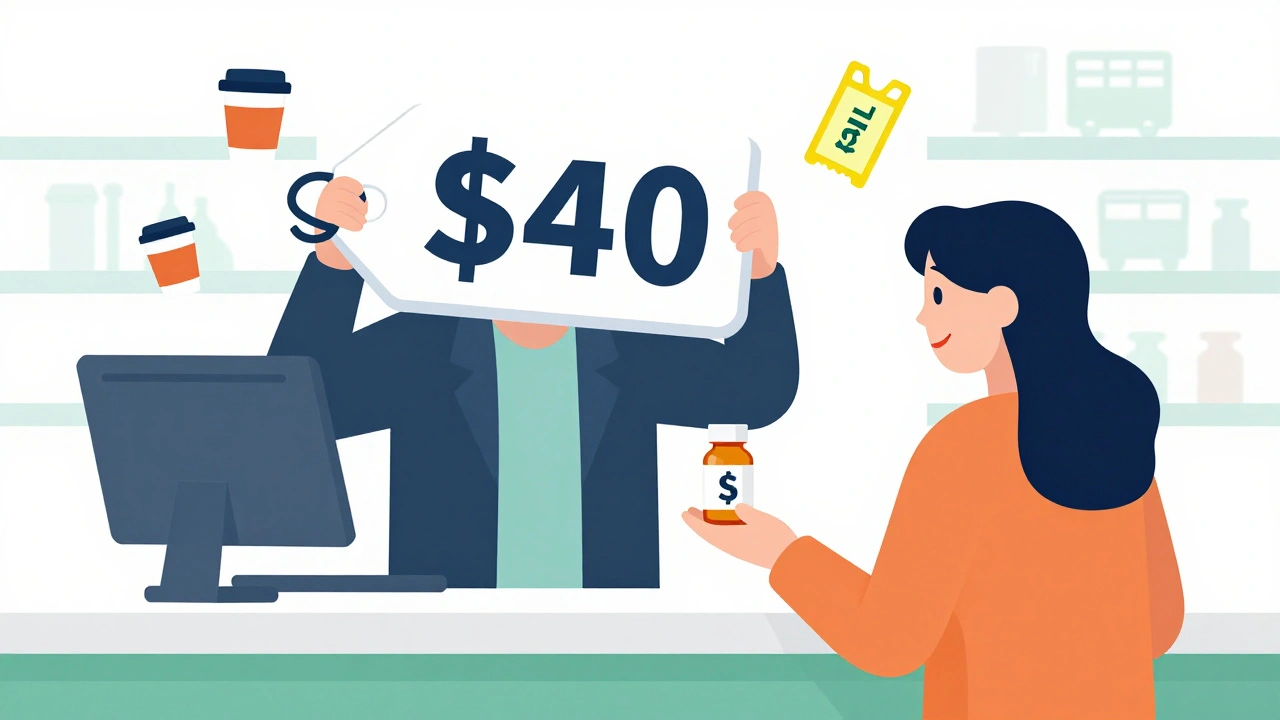
If you’re paying $40 a month for a generic you could get for $8, you’re not being smart - you’re being misled.
Direct-to-consumer (DTC) pharmacies like Health Warehouse, MCCPDC, or Blink Health cut out the middleman. They buy in bulk, skip the retail markup, and pass savings straight to you. Their median savings? 76% for expensive generics and 75% for common ones.
Compare these prices:
- Pantoprazole 20mg: $44 at Albertsons → $9.20 at MCCPDC
- Rosuvastatin 5mg: $110 at Walgreens → $7.50 at Health Warehouse
- Metformin 500mg: $35 at CVS → $4.50 at Blink Health
These aren’t scams. These are identical pills. Same manufacturer, same batch, same FDA approval. The only difference? Who’s pocketing the profit.
The Bigger Picture: Why the U.S. Is an Outlier
The U.S. pays nearly three times more for prescription drugs than 33 other wealthy countries. That’s not because we’re sicker. It’s because our system is broken.
Other countries negotiate prices directly with manufacturers. The U.S. lets PBMs and insurers play a game of hide-the-price. Even though generics dominate the market, the system still lets middlemen inflate costs.
Here’s another twist: in the U.S., patients pay a higher share of the cost for generics (41.8%) than for brand-name drugs (32.1%) - even though generics are cheaper. Why? Because insurance plans treat them as if they’re expensive. That’s not about cost. That’s about design.
What You Can Do Right Now
You don’t need to wait for policy changes. You can start saving today.
- Ask your pharmacist: “Is there a generic version?” Even if your doctor didn’t prescribe one, it’s likely available.
- Use a price comparison tool like GoodRx, Blink Health, or SingleCare. They show cash prices at nearby pharmacies - often lower than your insurance copay.
- Try a DTC pharmacy. Many offer mail-order generics for $5-$15 a month, with free shipping.
- If you’re on Medicare, check Costco’s cash prices. You don’t need a membership to use their pharmacy prices - just walk in and ask.
- Never assume your copay is the lowest price. Sometimes, paying cash is cheaper than using insurance.
One woman in Toronto told me she was paying $38 a month for her diabetes meds. She switched to a DTC pharmacy. Now she pays $6. That’s $384 a year saved. She used it to buy a new pair of running shoes. Not a luxury. A reward for taking control.
The Bottom Line
Generics aren’t just cheaper. They’re life-changing. They let people afford their meds. They keep people out of the ER. They prevent financial ruin.
The system is rigged - but not beyond repair. And you don’t need to wait for Congress to fix it. You can start today by asking one simple question: Is there a generic?
If the answer is yes - and it almost always is - then you’re already on the path to saving hundreds, even thousands, every year. That’s not magic. That’s medicine. And it’s yours for the taking.




nina nakamura December 13, 2025
Generics are a scam designed by Big Pharma to make you think you’re saving money while they just shift the profit to PBMs. The FDA approval? Meaningless. Same active ingredient? Sure. But the fillers? Different. And those fillers cause side effects no one talks about. You think you’re getting the same pill? You’re not. You’re a lab rat.
Rawlson King December 14, 2025
People don’t understand that the real issue isn’t the drug cost-it’s the insurance structure. If your plan puts generics on Tier 3, you’re being exploited. The pharmacy pays $2 for the pill, you pay $40, and the PBM pockets the difference. It’s not about generics being cheap. It’s about the system being rigged to make you pay more even when you’re doing everything right.
Constantine Vigderman December 14, 2025
OMG YES THIS!! I was paying $50 for my blood pressure med until I found Blink Health-now I pay $5.50 and it ships to my door!! I felt like I’d won the lottery 😍 I told my mom and she’s still mad I didn’t tell her sooner. Why does no one talk about this??
Casey Mellish December 16, 2025
It’s fascinating how the U.S. healthcare system inverts logic. In Australia, generics are automatically substituted unless the doctor specifies otherwise. Here, you have to fight for it. And even then, your insurer often doesn’t cover the lowest price. It’s not incompetence-it’s intentional. The system profits from confusion.
Emily Haworth December 17, 2025
They’re watching you. Every time you search GoodRx, they track it. Then they raise the ‘cash price’ just for you. I tried switching to a DTC pharmacy and my copay went UP the next month. Coincidence? I don’t think so. 🕵️♀️💊
Tom Zerkoff December 18, 2025
It is imperative to recognize that the structural inefficiencies inherent in the pharmaceutical supply chain are not merely operational but deeply ideological. The conflation of market-driven pricing with public health outcomes has resulted in a moral hazard wherein patient access is subordinated to profit maximization. One must therefore advocate for transparent pricing models and institutional accountability to restore equitable access to essential therapeutics.
Ronan Lansbury December 19, 2025
Did you know the FDA doesn’t require bioequivalence testing for every single generic? They test one batch. One. And then approve thousands of batches from different factories. You think your $3 pill is the same? It might be made in a plant that got cited for contamination last year. The FDA is a rubber stamp. And you’re the guinea pig.
Yatendra S December 20, 2025
Life is a series of invisible transactions. The pill you swallow is not just chemistry-it is a symbol of surrender to a system that commodifies survival. You think you’re saving $384? No. You’re just avoiding bankruptcy while the architects of this machine sip champagne in their high-rises. The real question: Who are you saving for? And at what cost to your soul?
kevin moranga December 21, 2025
Guys, I just want to say-you’re all doing amazing just by even looking into this stuff. Seriously. I used to pay $120 for my diabetes meds too, until I found out Costco’s cash price was $12. I cried. Not because I was sad-I was just so mad I didn’t know sooner. But now I tell everyone. My cousin switched and bought her kid a bike. My neighbor got her cat’s meds for $3. It’s not magic. It’s just knowing where to look. And you? You’re already ahead because you’re asking. Keep going. You’ve got this. 💪❤️
Cole Newman December 21, 2025
Bro you’re all missing the point. The real scam is that your doctor doesn’t even know the cash price. I asked mine and she said ‘I just write the script.’ So you’re stuck guessing. Next time, go to the pharmacy first. Ask for the cash price. If it’s lower than your copay, pay cash. No insurance. No hassle. Just save money. Simple.