Amisulpride: Uses, Side Effects, and How It Compares to Other Antipsychotics
When you hear Amisulpride, a selective dopamine receptor antagonist used primarily for schizophrenia and depressive episodes with negative symptoms. Also known as Solian, it's not your typical antipsychotic—it targets specific dopamine pathways without overloading others, which is why it’s often chosen when other drugs cause too many movement side effects. Unlike older antipsychotics that hit every dopamine receptor hard, Amisulpride is picky. It focuses on D2 and D3 receptors in the brain’s limbic system, which helps with emotional flatness, social withdrawal, and lack of motivation—symptoms many patients struggle with even when hallucinations are under control.
This makes it different from Clozapine, a powerful but high-risk antipsychotic used only when other treatments fail. Clozapine works wonders for treatment-resistant schizophrenia, but it demands weekly blood tests because of the risk of agranulocytosis. Amisulpride doesn’t need that kind of monitoring, which is why many doctors try it first if someone has negative symptoms and hasn’t responded well to SSRIs or other second-generation drugs. It’s also not like Risperidone, a commonly prescribed antipsychotic that can cause weight gain and muscle stiffness. Risperidone is broader in action, affecting more receptors, which means more side effects. Amisulpride, at low doses, can actually help with depression without the sedation or weight gain you see with olanzapine or quetiapine. That’s why some psychiatrists use low-dose Amisulpride off-label for major depression with prominent negative symptoms, especially when other antidepressants haven’t worked.
It’s not perfect, though. At higher doses, Amisulpride can cause restlessness, insomnia, or increased prolactin levels—which might lead to breast swelling or missed periods. But compared to many other antipsychotics, the risk of metabolic issues like high blood sugar or cholesterol is lower. If you’ve tried several meds and kept hitting walls with side effects, Amisulpride might be the one that finally fits.
The posts below cover real-world comparisons, dosing tips, and how Amisulpride stacks up against other treatments like Paroxetine, Clozapine, and even non-drug approaches. You’ll find honest breakdowns of what works, what doesn’t, and what to watch out for—no fluff, no marketing, just what patients and doctors actually deal with.
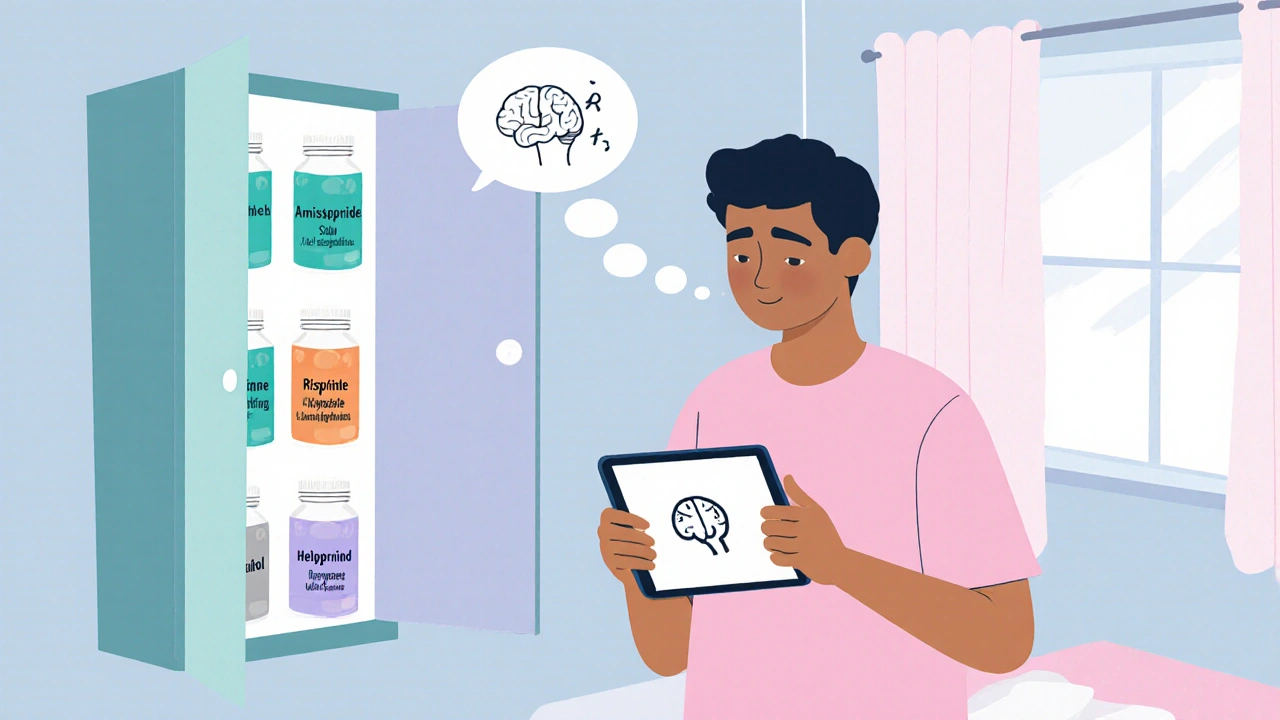
Amisulpride vs Other Antipsychotics: Best Alternatives Compared
A comprehensive comparison of Amisulpride (Solian) with its main antipsychotic alternatives, covering mechanisms, side effects, costs, and practical tips for choosing the right medication.