Disulfiram: What It Is, How It Works, and What You Need to Know
When you hear disulfiram, a medication prescribed to help people stop drinking alcohol by making it physically unpleasant to consume. Also known as Antabuse, it doesn't cure alcohol dependence—but it creates a powerful deterrent. If someone taking disulfiram drinks even a small amount of alcohol, their body can't break it down properly. This leads to a buildup of acetaldehyde, which causes flushing, nausea, vomiting, headache, and sometimes rapid heartbeat. These reactions start within minutes and can last for hours. It’s not a magic fix, but for many, the fear of this reaction is enough to stay sober.
Disulfiram works best when it’s part of a larger plan. It’s not something you take on your own after a bad night out. It’s usually prescribed alongside counseling, support groups, or behavioral therapy. People who use it successfully are often those who are highly motivated to quit and have a strong support system. It’s also not for everyone. If you have liver disease, severe heart conditions, or psychosis, your doctor will likely avoid it. And because it stays in your system for days, you can’t just skip a dose if you’re planning to drink. Even products like mouthwash, cough syrup, or certain foods with alcohol can trigger a reaction.
Drug interactions are a big concern with disulfiram. It doesn’t just react with alcohol—it can also interfere with some antidepressants, anticonvulsants, and even certain antibiotics. That’s why your doctor needs to know every medication, supplement, or remedy you’re using. The side effects aren’t always obvious at first. Fatigue, drowsiness, or a metallic taste in the mouth can be early signs. If you feel unusually unwell while taking it, don’t ignore it. There’s also a risk of nerve damage over time, which can cause numbness or tingling in your hands or feet. Monitoring isn’t optional—it’s part of the treatment.
What you’ll find in the posts below is a collection of real-world insights that connect to disulfiram’s place in modern care. You’ll see how it fits alongside other treatments for alcohol withdrawal, what safety warnings matter most, and how medication interactions can quietly put someone at risk. You’ll also learn how to spot early signs of trouble, how to read drug safety labels, and why some people need more than just a pill to stay on track. This isn’t just about one drug—it’s about understanding how medications work in the real world, with all their risks, trade-offs, and hidden details.
Medications for Alcohol Use Disorder: How They Reduce Relapse Risk - and When They Don’t
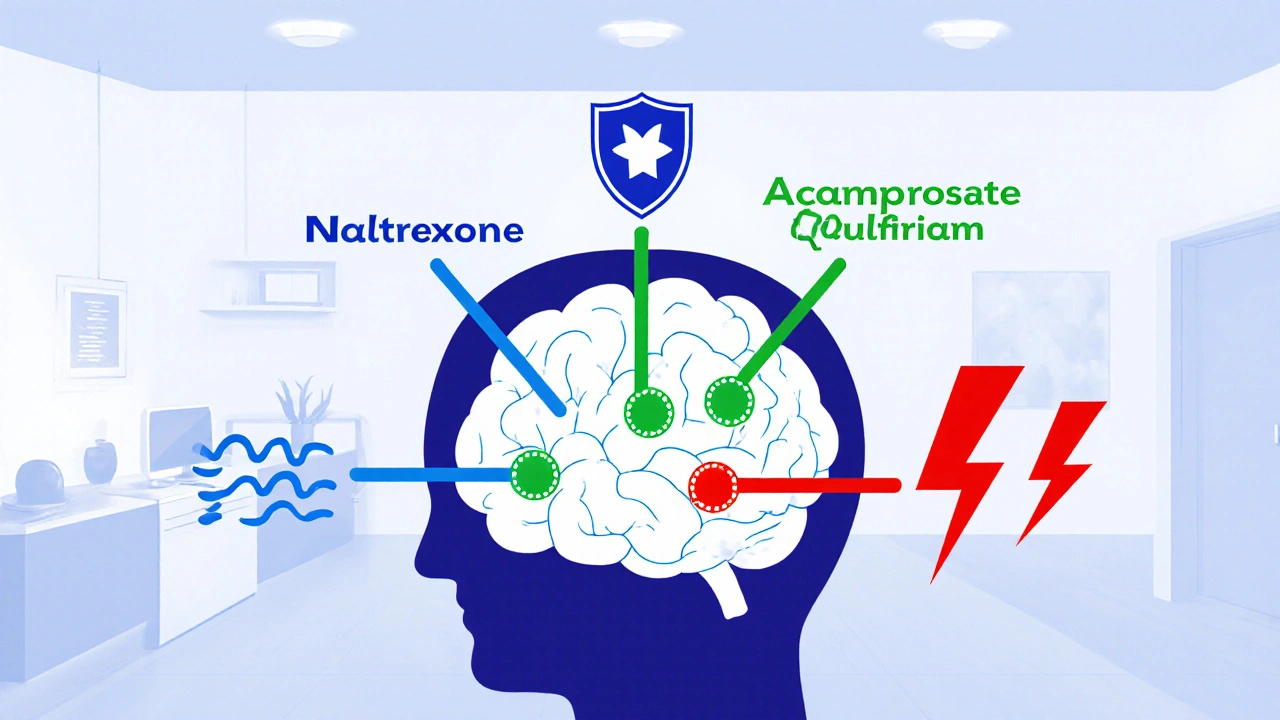
Naltrexone, acamprosate, and disulfiram can reduce relapse risk in Alcohol Use Disorder - but only if used correctly. Learn how they work, who they help, and why so few people get them.