Dry Eyes: Causes, Treatments, and What Really Helps
When your eyes feel gritty, burning, or like there’s sand in them, you’re likely dealing with dry eyes, a common condition where your eyes don’t produce enough tears or the tears evaporate too quickly. Also known as keratoconjunctivitis sicca, it’s not just an annoyance—it can mess with your ability to read, drive, or even stare at a screen without discomfort. This isn’t just about being tired. Dry eyes happen when your tear film—the thin layer that coats your eye—breaks down. That film has three layers: oil, water, and mucus. If any one of them is off, your eyes dry out.
Most people think dry eyes are caused by not crying enough, but the real culprits are often hidden. tear production, the process by which your lacrimal glands make the watery part of tears slows down with age, after certain surgeries, or because of meds like antihistamines or antidepressants. Then there’s eyelid inflammation, a condition called blepharitis that blocks the oil glands along your eyelashes. When those glands clog, your tears evaporate fast. Screen time makes it worse—people blink 60% less while staring at devices. Air conditioning, wind, and even low humidity in winter dry out your eyes faster than you realize.
What helps? Not all drops are created equal. artificial tears, over-the-counter eye drops that mimic natural tears can give quick relief, but if they’re full of preservatives, they can irritate your eyes more over time. Look for preservative-free options if you need to use them more than four times a day. Warm compresses and gentle eyelid scrubs help unblock oil glands—this isn’t a myth, it’s backed by clinical studies. Some people benefit from tiny plugs inserted into tear ducts to keep tears on the eye longer. And if your dry eyes are linked to autoimmune conditions like Sjögren’s syndrome, you’ll need more than drops—you’ll need a doctor’s plan.
What you won’t find working? Rubbing your eyes, using redness-relief drops long-term, or assuming it’s just "dry air." Dry eyes don’t fix themselves. Left untreated, they can lead to corneal scratches, infections, or vision blurring. The good news? Most cases respond well to simple, consistent care. You don’t need expensive gadgets or miracle cures—just the right understanding of what’s going wrong and how to fix it.
Below, you’ll find real, practical advice from trusted sources on how to manage dry eyes without falling for hype. From what to avoid in eye drops to how to adjust your environment, these posts give you what actually works.
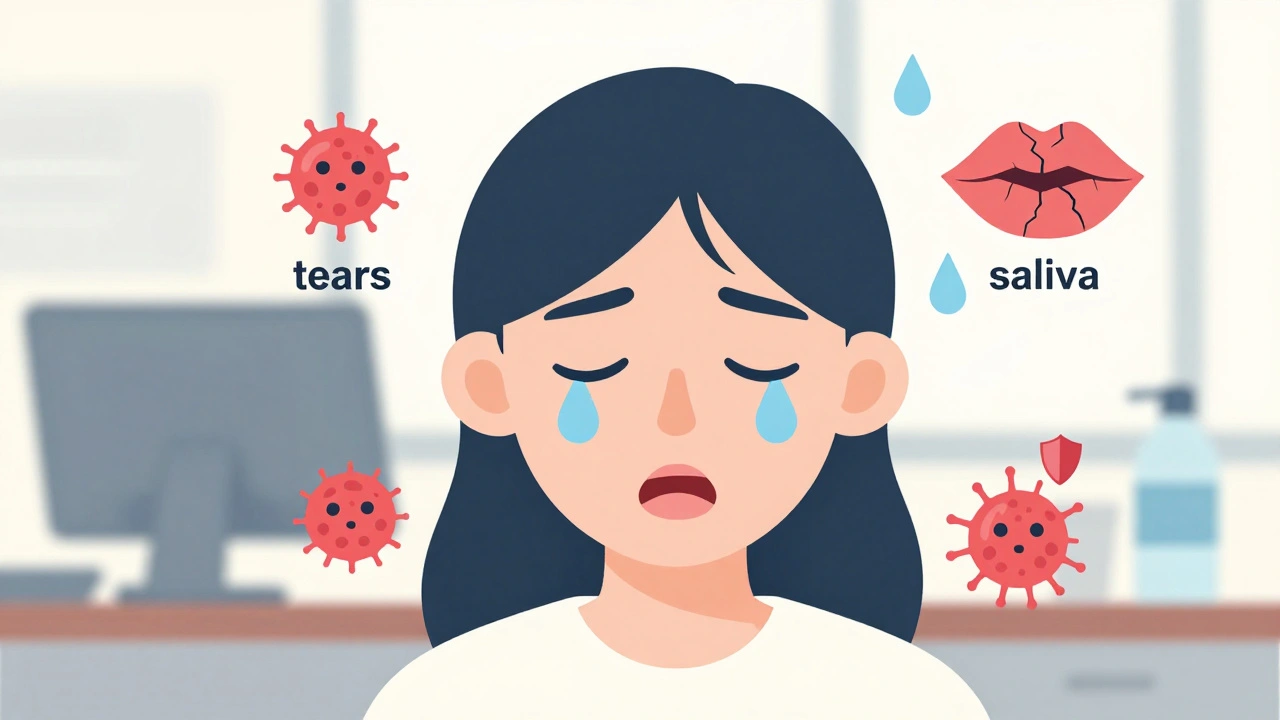
Sjögren’s Syndrome: What It Is, How It Affects Your Body, and What You Can Do
Sjögren’s Syndrome is an autoimmune disease that attacks moisture-producing glands, causing chronic dry eyes, dry mouth, fatigue, and joint pain. Learn how it's diagnosed, managed, and why early detection matters.