Dry Mouth: Causes, Medications, and What You Can Do
When your mouth feels like cotton, you’re dealing with dry mouth, a condition where your salivary glands don’t make enough saliva. Also known as xerostomia, it’s not just discomfort—it’s a warning sign that something in your body is off. Saliva isn’t just for comfort. It protects your teeth, helps you swallow, and fights off bacteria. Without it, you’re at risk for cavities, gum disease, and even trouble eating or speaking.
One of the biggest culprits behind dry mouth is medication side effects, a common reaction to dozens of prescription and over-the-counter drugs. Antidepressants, blood pressure pills, antihistamines, and especially opioid side effects, like constipation and drowsiness, often include reduced saliva flow. If you’re on more than one med, the risk multiplies. Even common OTC sleep aids or allergy pills can leave your mouth parched by bedtime. Dehydration is another obvious trigger—skip water long enough, and your body cuts back on saliva first.
It’s not just about drinking more water. While staying hydrated helps, it won’t fix the root cause if your meds are the problem. Some people try sugar-free gum or special mouthwashes, but those are temporary fixes. The real solution? Know what’s causing it. If you’ve noticed dry mouth starting after a new prescription, talk to your pharmacist. They can check for interactions and suggest alternatives. In some cases, switching one drug makes all the difference. And if you’re using opioids for pain, dry mouth is so common it’s practically expected—but that doesn’t mean you have to live with it.
What you’ll find below are real, practical posts that connect dry mouth to the medications, health conditions, and daily habits that cause it. You’ll learn how fiber supplements can make it worse, why acid reducers might be hiding in plain sight as the cause, and how to spot when dry mouth is a red flag for something deeper. No fluff. Just what works—and what to avoid.
Sjögren’s Syndrome: What It Is, How It Affects Your Body, and What You Can Do
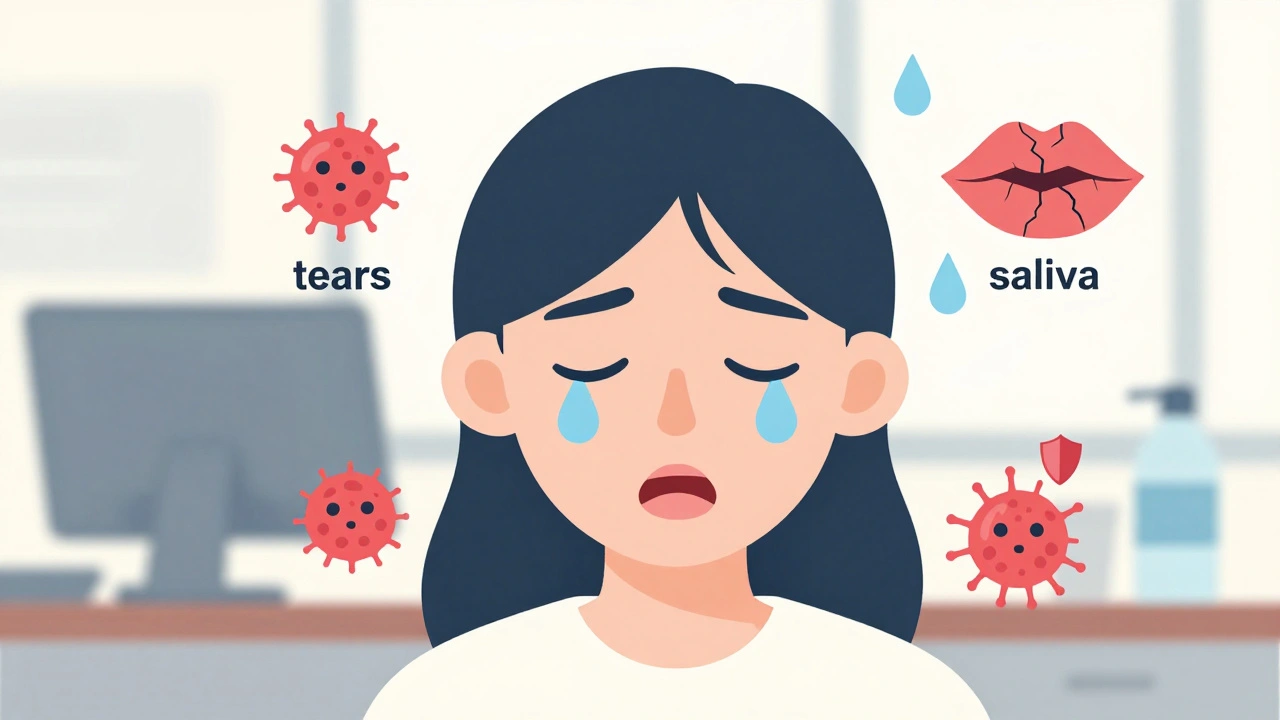
Sjögren’s Syndrome is an autoimmune disease that attacks moisture-producing glands, causing chronic dry eyes, dry mouth, fatigue, and joint pain. Learn how it's diagnosed, managed, and why early detection matters.